


 May 2 2023, 10:21 PM, updated 3y ago


A top-secret atomic bunker has opened to the public in Denmark. Built to withstand a nuclear attack, it's now an astonishing subterranean museum that sheds light on Cold War paranoia.
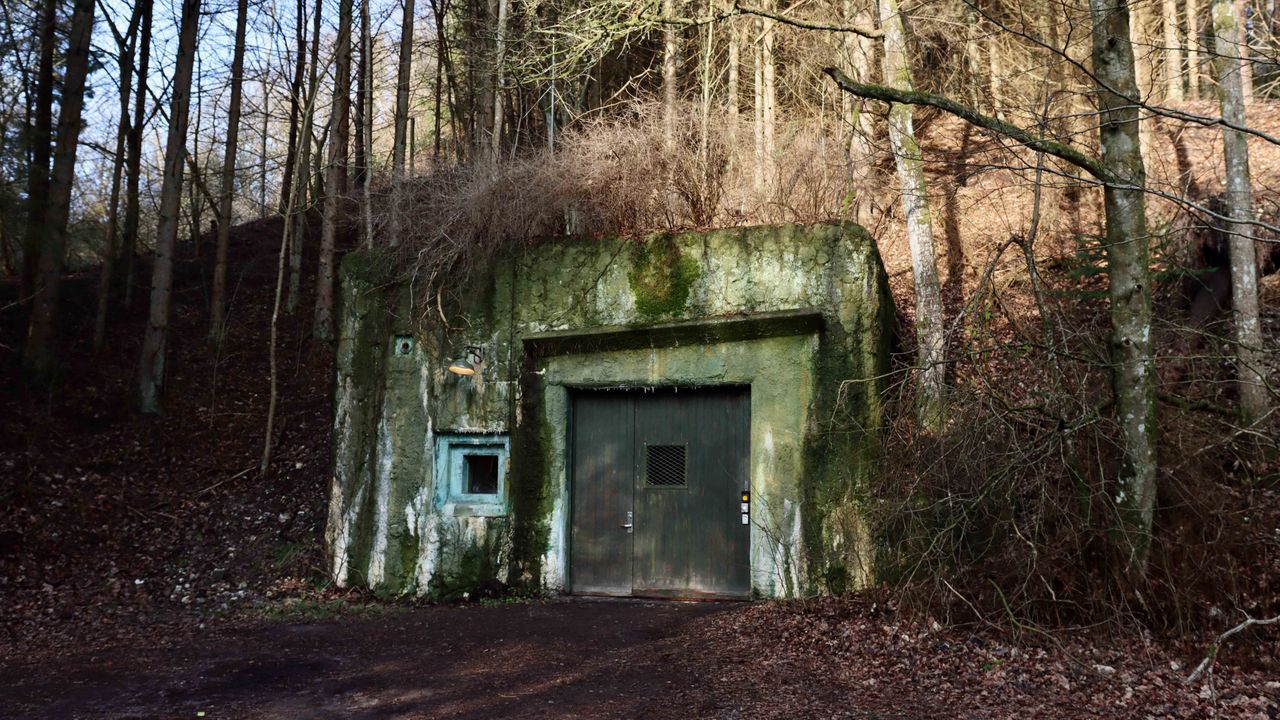
Hidden in northern Jutland's Rold Forest, some 400km north-west of Copenhagen, is the sprawling bunker complex of Koldrigsmuseet REGAN Vest (The Cold War Museum REGAN West). Secretly built in the 1960s at the height of Cold War tensions, this is where the Danish government and even the queen would have been evacuated if nuclear war broke out.
Regan Vest was built in the early 1960s at the height of Cold War tensions (Credit: Adrienne Murray Nielsen)
The plan was to run the country from inside this shelter, 60m below ground, and its very existence was kept hushed for decades until it was finally revealed in 2012. After years of preparations, it opened to the public for the first time in February 2023 as a museum. Only 50,000 visitors are permitted annually, and access has been limited to small groups of 10 on 90-minute guided tours that explore 2km of the labyrinthine bunker system. It's an eye-opening journey into the heart of a Cold War-era time capsule.
Stepping out of the train station in the small town of Skørping, I jumped straight into a taxi for the short ride to Rold Forest. The local driver had never heard of the mysterious bunker, and with no phone signal, we ended up driving around in circles trying to find it. Luckily, before long we chanced upon the road leading towards a cluster of dark metal and glass buildings partly obscured in the hillside that's home to the smart new visitor centre.
Under towering woodland and a brilliant blue sky, I trampled along a short track to the bunker's entrance, a spot that would once have been guarded by policemen armed with pistols and hand grenades. The weathered concrete doorframe had turned green with moss and damp, and it was so ordinary looking that the expansive tunnel network it concealed was all the more astounding.
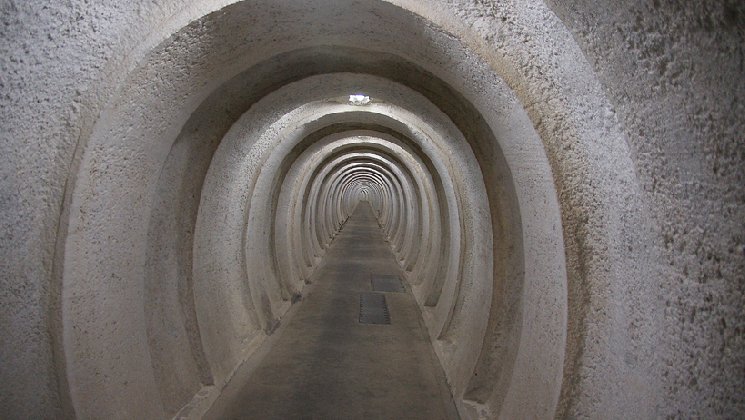
The curved and ribbed walls were designed to slow down the pressure wave of a nuclear blast (Credit: Adrienne Murray Nielsen)
And that's why REGAN Vest is so unique. Other government bunkers exist, he explained, but have been updated, had contents removed, or aren't open to the public.
Thankfully World War Three didn't occur and the facility was only used for practice drills, though it remained on standby right until 2003, when it was eventually taken out of service. Nine years later, the long-held secret came to an end and then came almost decade-long preparations to preserve the bunker as museum.
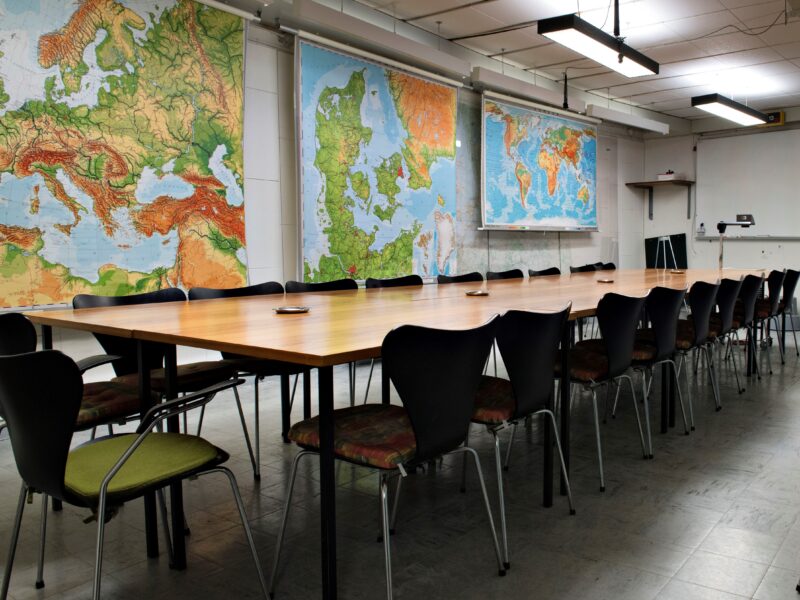
Although I have memories of the Berlin Wall falling, as a 1980s child, the Cold War was an era I'd never really known. However, entering the bunker's "Situation Room" was a stark lesson. Military maps of Scandinavia and the Soviet Union covered the walls, ready for meetings that never took place.
"If you look at the map, and remember how the division in Germany was, then Denmark is a frontline country," explained Frandsen.
This was a time of fear and paranoia, but also preparedness. From basements in kindergartens to military forts, approximately 14,000 Cold War-era structures were erected across Denmark – and I was surprised to learn that another similarly large complex exists, called Regan Øst (East).
"I cannot tell you much more about that, because it's still in operation and it's kept secret," said Frandsen.

The cafeteria would have played birdsong recordings to improve the wellbeing of workers (Credit: Adrienne Murray Nielsen)
https://www.bbc.com/travel/article/20230501...-nuclear-bunker
This post has been edited by kimochi ii: May 2 2023, 10:22 PM
 Quote
Quote


 0.0174sec
 0.45
0.45
 5 queries
 GZIP Disabled