

 Apr 13 2023, 02:44 PM, updated 3y ago


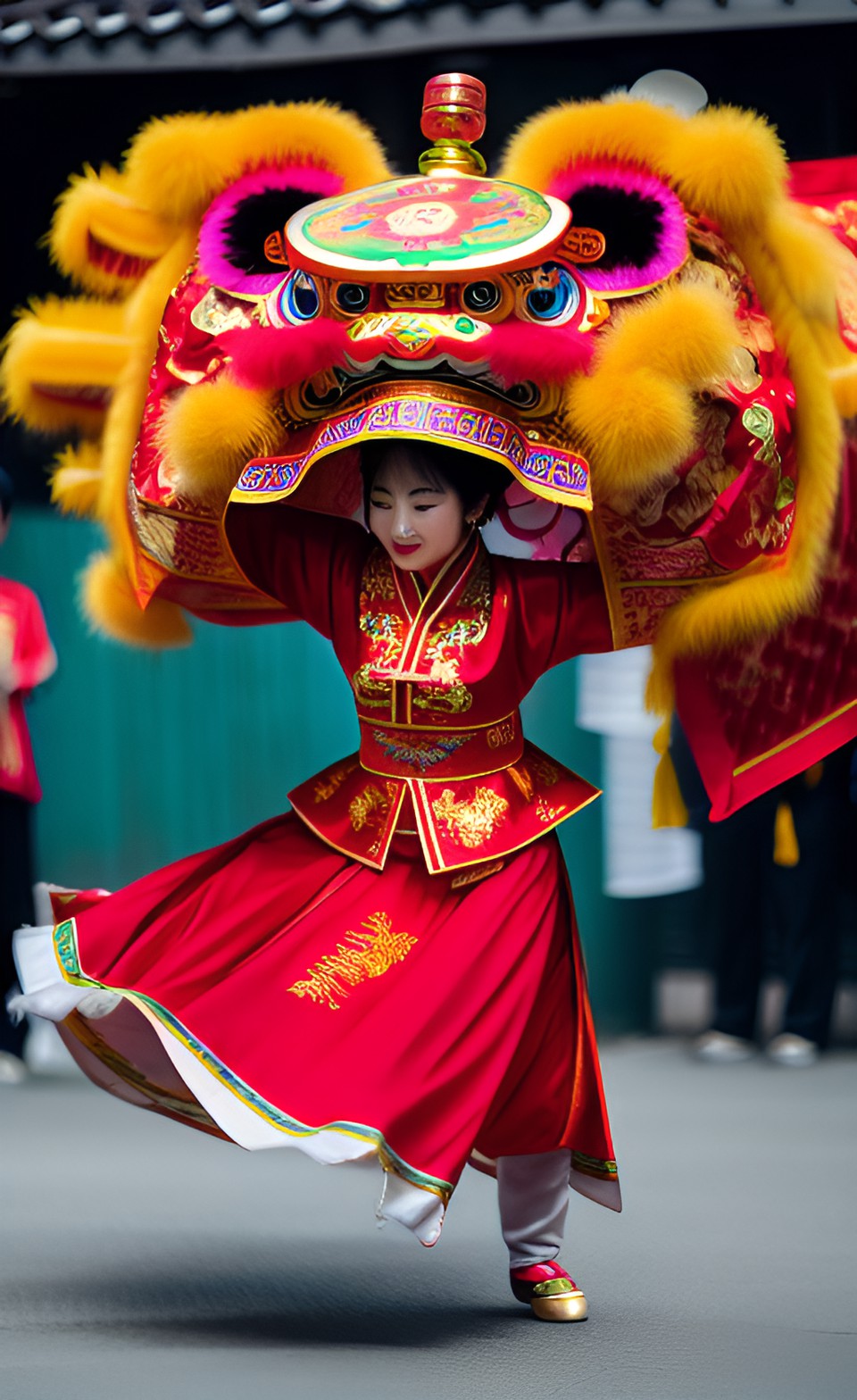
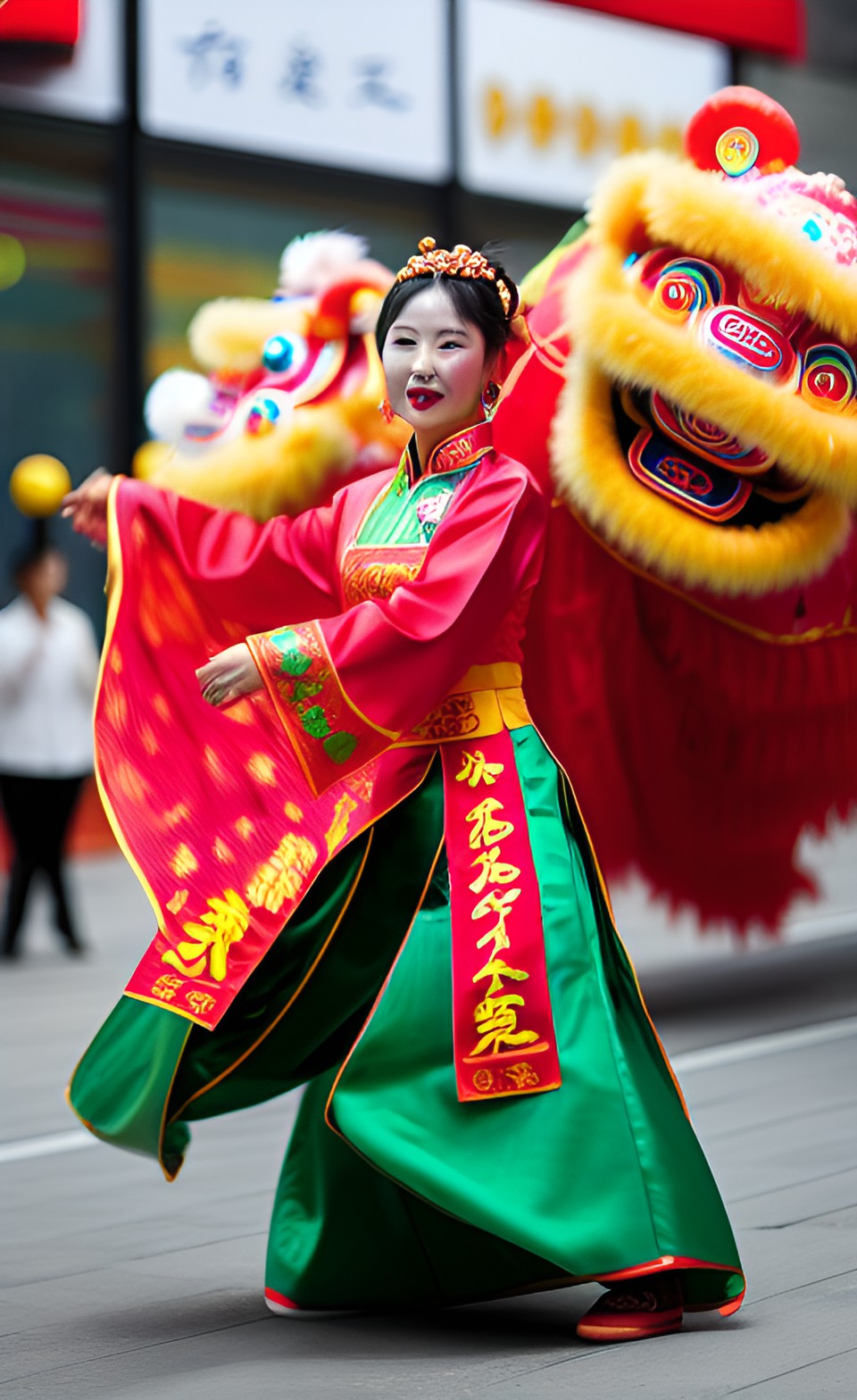
Freelance illustrator Amber Yu used to make 3,000 to 7,000 yuan ($430 to $1,000) for every video game poster she drew. Making the promotional posters, published on social media to attract players and introduce new features, was skill-intensive and time-consuming. Once, she spent an entire week completing one illustration of a woman dressed in traditional Chinese attire performing a lion dance — first making a sketch on Adobe Photoshop, then carefully refining the outlines and adding colors.
But since February, these job opportunities have vanished, Yu told Rest of World. Gaming companies, equipped with AI image generators, can create a similar illustration in seconds. Yu said they now simply offer to commission her for small fixes, like tweaking the lighting and skewed body parts, for a tenth of her original rate.
Recent breakthroughs in AI image generation, with the release of programs such as DALL-E 2, Midjourney, and Stable Diffusion in 2022, have enabled users to produce impeccable drawings from text prompts. In the past few months, Chinese video game companies, from tech giants like Tencent to indie game developers, have begun using these programs to design and create video game characters, backdrops, and promotional materials.
The rise of AI art has created widespread anxiety in China’s video game art industry. Artists are crucial to game production, be it for conceptualizing characters or drawing background elements like cityscapes or signs. Given the high quality of AI-produced artwork, many in the industry are wondering how long they will be able to keep their jobs, seven game illustrators told Rest of World. Artists joke that they should switch careers to peddling rice noodles on the street instead, several of the illustrators said.
“AI is developing at a speed way beyond our imagination,” Xu Yingying, illustrator at an independent game art studio in Chongqing, told Rest of World. Xu’s studio produces designs for major game developers in China. Five of the studio’s 15 illustrators who specialize in character design were laid off this year, and Xu believes the adoption of AI image generators was partly to blame. “Two people could potentially do the work that used to be done by 10,” she said.
Chinese tech giants, such as Tencent and NetEase, that own large video-game publishing divisions, have been researching how to cut game development costs with artificial intelligence for years. NetEase’s Naraka: Bladepoint, an action-adventure battle royale game, rolled out a temporary feature in March that allowed players to create new “skins” for avatars using the company’s in-house AI program. Following a criminal investigation against a prominent voice actor, allegedly because of a business dispute, gaming companies miHoYo and NetEase used AI to generate the voices of his characters.
A spokesperson at NetEase told Rest of World the company had applied AI-based technologies to assist game animation, and the models are trained using its proprietary or licensed resources. “Our goal has been to develop better tools to enable our talented teams of art designers and illustrators to create assets faster or more efficiently during the game development process,” the spokesperson said. Tencent and miHoYo did not respond to requests for comments.
AI-generated art was so skilled that some illustrators talked about giving up drawing altogether. “Our way of making a living is suddenly destroyed,” said a game artist in Guangdong, speaking on condition of anonymity for fear of being identified by her employer, to Rest of World. Yu, the freelance illustrator, said it was “despicable” that algorithms — trained on vast datasets that took humans decades to produce — were on the verge of replacing the artists themselves. Still, Yu plans to train AI programs with her own drawings to improve her productivity. “If I’m a top-notch artist, I might be able to boycott [them]. But I have to eat.”
Illustrators say employers are encouraging them to use AI image generators to boost their productivity. At Xu’s studio, for example, AI generators create clothes and accessories from human-illustrated character sketches. Game designers also use AI programs to draw treasure chests and gold coins, a Shanghai-based illustrator told Rest of World.
The Guangdong-based game artist, who works at a leading gaming company, said that previously, employees could draw a scene or a character in a day; now, with the help of AI, they could make 40 a day for their bosses to choose from. “I wish I could just shoot down these programs,” the artist told Rest of World, after getting off work late one night. She said fear of impending layoffs had made her colleagues more competitive; many stayed at work late, working longer hours to try to produce more. “[AI] made us more productive but also more exhausted,” she said.
https://restofworld.org/2023/ai-image-china...o-game-layoffs/
AI is already taking video game illustrators’ jobs
 Quote
Quote












 0.0237sec
 0.61
0.61
 5 queries
 GZIP Disabled