


 Apr 25 2021, 02:29 PM, updated 5y ago


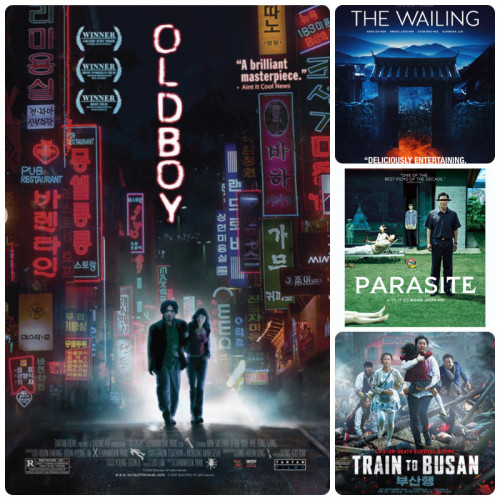
'Oldboy', 'The Wailing', 'Parasite' and 'Train to Busan' are among the acclaimed Korean films to release in the last two decades that have found international success. – Posters from IMDB, April 24, 2021
AROUND last month I was in a Zoom conference session with creatives from the Philippines and one of the presentations was by 34-year-old Congressman Christopher de Venezia, whom everyone was just calling Cong Toff.
In a way he is their Syed Saddiq, the millennial politician, but with a difference. Cong Toff – a former child actor who was in the theatre and filmmaking scene since childhood – was really pushing the creative industry agenda in the Philippines.
He mentioned something quite specific during the presentation on how he and his team had already readied a bill to be tabled. The bill is an adaptation of South Korea’s Kocca (Korea Creative Content Agency) that unites all the different creative agencies under a single and clear national policy. Not to mention all of this is happening during the pandemic.
In fact, seeing that the Philippines had already readied a bill based on Kocca, and if they stick to it, made me believe they will soon be the next creative powerhouse in this Southeast Asian region. They’ll no longer be competing with Indonesia or Thailand, but with South Korea and Japan.
Then, just last week I read an article by Hang Kasturi in the New Malaysian Herald chastising our film industry’s obsession with Oscars and awards in general, while pointing out the South Korean ‘hallyu’ and how it took a long time for them to achieve what they have today.
I guess the timing is just perfect to write something on the South Korean model, the Kocca model especially.
I have heard the term Kocca before. In Ipoh last year, during a talk by Datuk Kamil Othman, the former director-general of Finas.
He was talking about how our creative industries here in Malaysia are fragmented verticals under different agencies and ministries, each with its own silos with no horizontal integration. He did mention a way to unite all of them with an agency that works horizontally. Something like what the South Koreans did with Kocca.
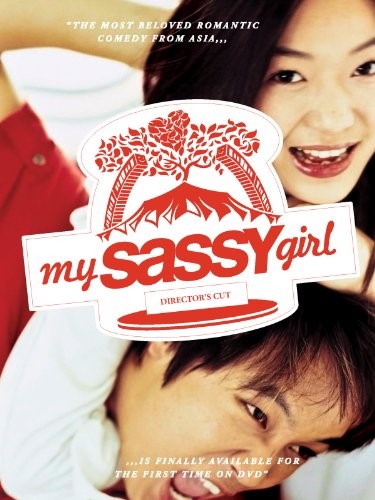
2001 romantic comedy 'My Sassy Girl.' – IMBD pic
“In 2001, there was a delegation of Malaysian government officials who visited Seoul, South Korea,” Kamil starts our conversation. “We were part of MDEC (Malaysia Digital Economy Corporation), as I was with MDEC at that time, we went together with several government officials from the Ministry of Energy, Water and Communications, who wanted to know about their broadband policy and so forth. The minister at that time was Datuk Leo Moggi, now Tan Sri.”
Although I was already aware of this timeline, it still baffles me that we have sent officials to South Korea during the start of their cultural and creative revolution of sorts.
“But, as a side agenda, we were given a briefing about this thing called the ‘Korean Culture Content Export Policy’ (note: the actual naming of the policy might be slightly different) and the Korea Culture & Content Agency (Kocca in a different form). Notice that the word ‘culture’ is no longer there in the current version of the agency. It was a government initiative but was allowed to operate as an independent professional body. It was set up to integrate and align the various channels by which Korean culture is spread to the world.”
It is not that our officials did not know about what the South Koreans did, it's just that the idea failed to materialise due to various circumstances. The fact that Kamil did become the director-general for Finas and has been promoting the Korean model and has several times shared that MDEC had created a creative industry masterplan based on this since 2002, shows something else is at play here.
“Now, Kocca did not subsume or dismantle the respective agencies, but the agencies are all aligned under a centralised policy which was discharged and monitored by Kocca.”
That’s the concept there. Kocca acts as an umbrella agency that ensures each respective agency follows the objectives set by the policy.
“Their objective, as I could remember, is trustworthy. Anytime you see something Korean, it is trustworthy.”
This actually reminds me of Japanese education’s philosophy which was also one word, ‘integrity’. No need to complicate things. The goal is to create trustworthiness with the South Korean brand.
“They told us at that time K-pop must overtake J-pop by 2006. Their theatres must be performed in New York, LA and so on. People will get to know the Korean dances, cultures and all that. Game developers are encouraged to create historical-based models and games. For literature, as many Korean books need to be translated.”

According to Datuk Kamil Othman, the Korean representatives he met were promoting both Rain and BoA as the next superstars, and they were. – Wikimedia Commons pix
“And all this while each individual agencies just do what they normally do?”
“Yes, these are just conduits to culture. Kocca told the film industry to just continue making films, but make one movie that will overtake Hollywood. Kocca told the music industry to overtake J-pop, to mine their talents and groom them in singing and dancing lessons, these are left to the hands of the music people’s expertise.”
“It shows intentionality on their part, it is not just empty goals, they strategised towards those goals.”
“It was very strategic. Also at that time they were thinking about the unification with North Korea. This cultural export policy is also planting the seeds towards the unification and there are one people, one nation. By the way, have you watched the film ‘Shiri’ (1999)? It was one of the products of the policy to create a blockbuster Korean film.”
“No, I haven’t.” But later I did find out that one of my favourite Korean dramas, ‘Iris’ (2009) was based on the concept of ‘Shiri’. It was about the clandestine nature of spies and secret agents between South and North Korea in conflict, while seeding the sentiment of wanting to achieve unification.
“‘Shiri’, for all intents and purposes is a Hollywood action movie with the exception of kimchi. There’s a scene where a shoot-out happened in a kimchi warehouse. If you watch even ‘The Avengers’ there will be a scene with the American flag, or the US Army. In Korea it is their culture and economic output instead.”
I know that the US Army does give out grants, share technology and loan their big guns to be shown in Hollywood movies. It is in the same mould in South Korea but for culture. As long as the content shows an aspect of Korean culture in it, there is an amount of funding they’ll get.
Which is why it is not surprising to notice suddenly within the last 10 years there is a proliferation of South Korean culture here in Malaysia.
More Korean restaurants are popping up. Korean food is becoming more well-known. Korean language classes are getting more popular. Tourism to South Korea. South Korean popular fashion and beauty products. People using Korean words in daily life (yes, I’ve heard this in real life).
There was once even some random Ramadan time TV show which they brought random Korean Muslims to talk for no reason except that they are Koreans.
The policy literally trickled down from affecting the manufacturing industry, cultural and creative industry, to the normal everyday people of Korea. Back to the idea of anything Korean is trustworthy.
“Yes, the idea is not new. Every film would have a Hyundai car. People will be using Samsung handphone. Those are the conditions. Underlying that is their skilling policy where they send Koreans abroad. It was not a surprise that Bong Joon-ho’s ‘Parasite’ (2019) won Best Picture in the Academy Awards. He was already there in the USA, as a student and filmmaker for some time.”
“Yeah, it is not like he’s a total random stranger who suddenly won out of nowhere.”
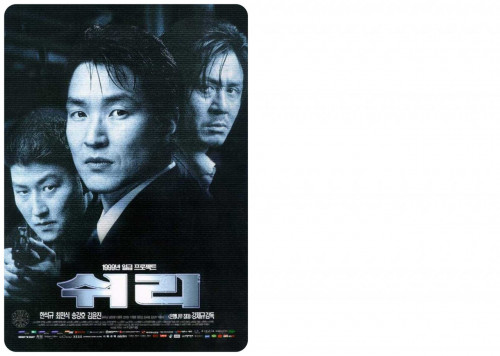
The poster for the action-thriller 'Shiri' from 1999. – IMDB pic
“Also, the policy included the setting up of Kocca offices in different countries. This is equivalent of Malaysia giving Matrade the ability to sell Malaysian content. Matrade is everywhere, but if anyone today goes to one of their offices and asks about Malaysian films, or theatre, they will reroute you elsewhere. When I was in Finas this was one of the things I wanted to do, rather than Finas setting up a separate office, we can share with Matrade, or even the tourism office. As they are everywhere.”
“Why need to build a new building when we can already share, right?
“Now, on funding. The money, all the funding does not entirely comes from the government. Most of it comes from the industry itself, the investors.
“Meaning that the whole system doesn’t rely on the government forever. There’s the early seed money, and the business minded people in the agency need to ensure the system is self-sustainable.”
“It was a strategic and concerted effort. Bukan cacamarba. They connect the investments, the tax incentives. They make things to happen organically. Rather than what we are doing here, we are giving out fishes rather than teaching how to fish. If there’s a crisis, just give out money. Not saying it is not good, but not like that, without strategy to connect the blocks.”
It is quite short-term minded here in Malaysia. The South Korean government at that time understood you have to put the money in front, put the policy and systems in place to ensure it will work 10, 20, 50 years ahead.
The fact that Korea Culture & Content Agency was changed to Korea Creative Content Agency shows the evolution it went—from focusing on promoting culture, to now the idea is already ingrained and they no longer have to emphasise culture in their name, just focus on the contents.
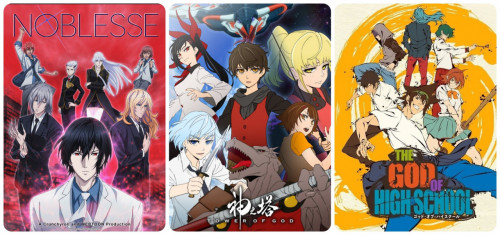
Noblesse (2020), Tower of God (2020), and The God of Highschool are three highly-popular recent anime from South Korea. Are these early signs that South Korea is even catching up to Japan’s anime industry? – Posters taken from IMBD
This made me wonder, are we Malaysians incapable of forward-thinking?
“In the early days of the Korean films, there were a lot of violent films, blood splattering, bodies being impaled and so on. Why do you think is that?” asked Kamil.
“I’m not sure, is it to capture the Hollywood feel?” I’m just throwing out guesses.
“Not really, I did ask them directly, and they said it is to give the jobs to their special effects (SFX) people, visual effects (VFX) people. In Malaysia we have so many SFX companies, but who is using them? To the point we need to outsource them.”
It was not just vertical disconnection between the main creative fields, but also things like that go across them like 3D, animation, fashion, design and in education etc. For example, everyone needs a fashion designer, film sets need them, literature needs to know them and how they work, music videos and live performances need them, theatre needs them, game design needs them, but how many fashion designers are actually integrated in the larger creative field? Outside of celebrity culture?
“My little theory is, let’s take skills development. The guy who does 3D animations can also be used for games, prototyping cars for Proton, create theme park simulations, training simulations, education modules and so on. The stage actor can be a TV and cinema actor, music video actor…”
“And also voice acting for animation and games,” I added. Which also makes sense in terms of South Korea, where K-pop singers smoothly transition into acting roles, it is not to take advantage of their popularity (I feel a sudden cough coming when thinking about Malaysia), but they can actually act.
“The dance choreographer can work in films, with musicians, with theater and so on. When we spend on dancing, we only see dancing, we don’t see it can be applied in theatre, films. But if we make all that horizontal (the education), then the vertical part is the chaining (the specific industry), we will be able to cover all.”
“Koreans are not afraid to make period films and dramas. Here in Malaysia all of us are doing contemporary setting due to the cost. Yes it is expensive, but in Korea they know the props, costumes and so on can be recycled for the next production.”

Available on Netflix, Kingdom is a fusion of period drama and zombie thriller. – Pic courtesy of Netflix
“It is like a sharing system, a pay-it-forward system even if it is slightly incorrect. Where the current production team would help some other random production team in the future. That’s really cool, actually.”
Similarly to integrating the manufacturing industry into the Korean media, this shows even from the sense of horizontal application of skills between creative fields that is happening there that we can emulate here. It starts from education, talent mining, then a system that goes vertically to support each other. I guess for now this is the conclusion we have to take and ponder upon, can we make this happen in Malaysia?
There is actually more to this conversation. It was a nearly three-hour-long session. Especially on Finas, and what development means. On intellectual property, book adaptation into films, Korean producers bringing a bag full of scripts to hand out to international producers in large film festivals, getting feedback from the industry and so on.
But those conversations and ideas I will include in the other articles here in The Vibes going forward, as it is an idea worth revisiting and reframing to show its potential to all Malaysians. Have a fun Ramadan, everyone. – The Vibes, April 24, 2021
TLDR
» Click to show Spoiler - click again to hide... «

https://www.thevibes.com/articles/culture/2...uk-kamil-othman
 Quote
Quote





 haram haram everything




 0.0283sec
 0.78
0.78
 5 queries
 GZIP Disabled