

 Mar 23 2021, 08:50 PM, updated 5y ago


2022 completed
Delay again
June 2023
7 years to construct
So long
!
The Gemas-Johor Bahru Electrified Double Track project along 192 kilometres across four districts, namely, Segamat, Kluang, Kulai and Johor Bahru, has started in Dec 2016 and is expected to be completed in June 2023, thus it will complete the Electrified Double Track route on the west coast of Malaysia.
-- BERNAMA
KTM EDT Project is Progressing Well - Southern Malaysia (Electrified Double Track) - Feb 2021
Feb 4, 2021
KTM ETS - Electrified Double Track Project Update - Gemas to Johor Bahru
Oct 28, 2020
EDT Project @ Southern Johor featuring The HSR station designs between KL to Iskandar Puteri
Dec 15, 2020


The EDTP involves replacing the current single rail line with a double track, and laying
electrical cabling along a 197 kilometre stretch of track between Johor Bahru and the town
of Gemas in Negri Sembilan.
While small, Gemas is at an important crossroads between
Malaysia’s two major rail arteries, called the West Coast and East Coast lines, respectively.
Beyond allowing more trains to ply the route, these upgrading works will enable dieselpowered trains to be replaced with faster electrical equivalents.
The Gemas-Johor Bahruroute is the final piece of the existing Keretapi Tanah Melayu Berhad (KTMB) network to
be upgraded and, once complete, there will be a continuous connection running from the
southern tip of the Peninsula all the way to Padang Besar on the Thai border in the north.

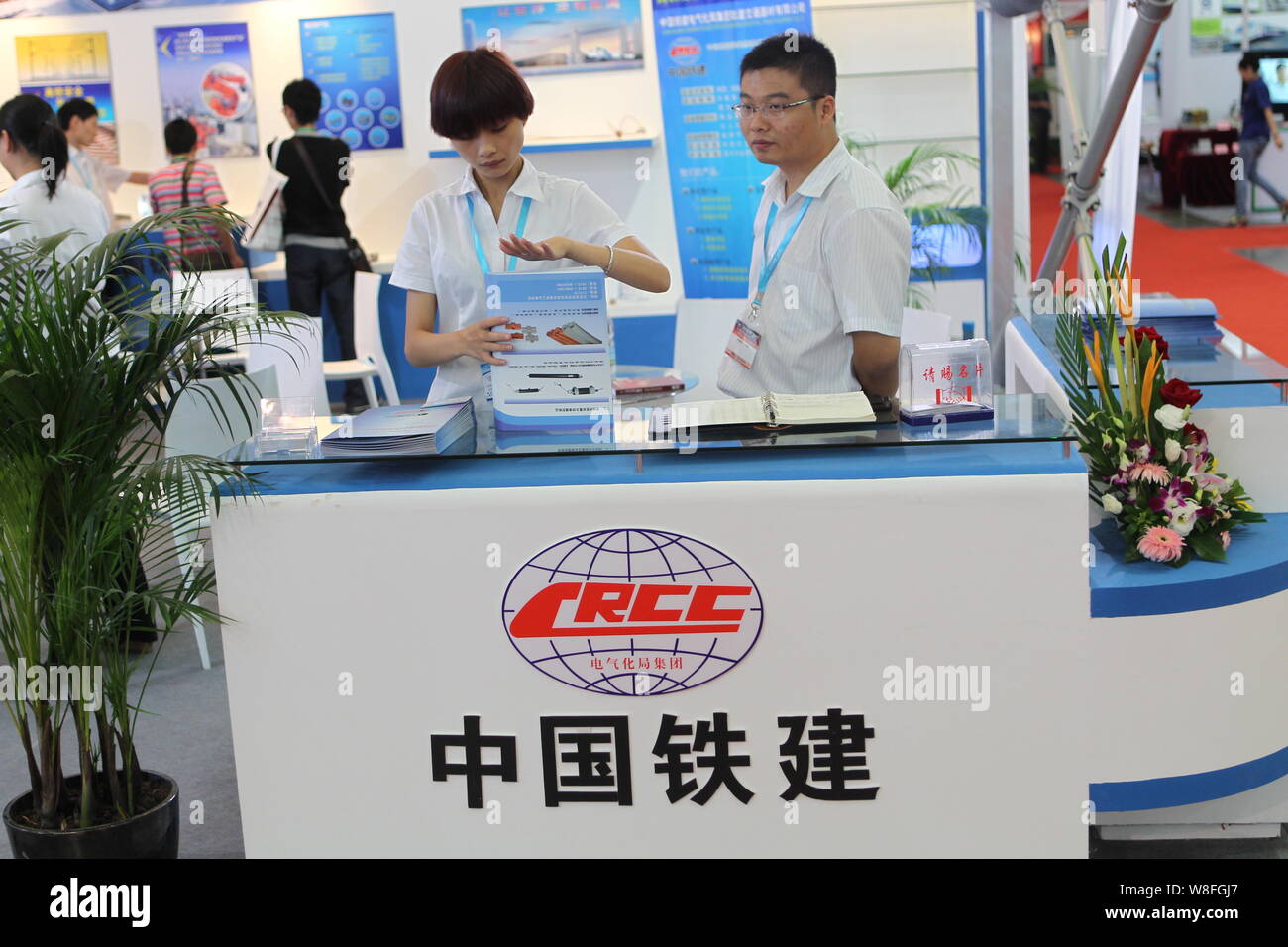

Originally estimated at RM 9.43 billion, the EDTP was awarded during former Prime
Minister Najib Razak’s tenure, to a Chinese consortium which comprised the China Railway
Construction Corporation, China Railway Engineering Corporation and China
Communication Construction.
However, unlike the ECRL and other Chinese-constructed
rail projects in the region, the Gemas-Johor Bahru EDTP is not financed by Chinese loans
but instead fully paid by the Malaysian federal budget.
Upon coming to power, the Pakatan Harapan administration agreed to proceed with the
contract, albeit with a 20 percent discount.
The project, now estimated at RM 7.5 billion,
kicked off a few months after the May 2018 General Election.
As stipulated by the contract’s requirements, 50 per cent of the project’s value must be
undertaken by local firms. The SIPP-YTL consortium has been appointed as the Malaysian
sub-contractor to complete civil works along the route, including train stations.
This consortium consists of SIPP Rail Sdn Bhd and Syarikat Pembenaan Yeoh Tiong Lay Sdn
Bhd (YTL).
YTL has past experience constructing rail projects in Malaysia, including the
rail link between Sepang International Airport and KL Sentral.5 SIPP Rail is a private firm
owned by Sultan Ibrahim of Johor.
THE POTENTIAL BENEFITS
Upon completion, the EDTP will allow the new Electric Train Service (ETS) to travel at a
maximum speed of 140 kilometres per hour. As passenger train services between Kuala
Lumpur and Johor Bahru will call at stations along the route, the average travelling speed
is likely to be approximately 100 kilometres per hour.
While not a high-speed rail link, the ETS is still twice the average speed of the existing diesel passenger trains. Consequently,
travelling time between Kuala Lumpur and Johor Bahru along this route will be shortened
from the current 7 to 4 hours. This will provide an attractive alternative to inter-state buses,
which currently require 4.5 hours to go between the two cities even without traffic
congestion.
The Gemas-Johor Bahru EDTP is touted as a catalyst to spur economic development in the
central part of Johor. The North-South Expressway passes through Johor’s West Coast
districts, facilitating logistics and industrial activities between Johor Bahru and towns like
Batu Pahat and Muar. In contrast, the Gemas-Johor Bahru line cuts through central Johor –
via the districts of Segamat, Kluang and Kulai – which are not well-served by existing
transport links.
Once operational, residents living in towns along the route will be able to commute daily to
Johor Bahru. This transport option would be increasingly attractive if KTMB decides to
provide hourly or half-hourly commuter services, similar to the KTMB Komuter services
on offer in the Klang Valley and between Northern Perak and Perlis. Looking at past
experience, the Ipoh-Padang Besar EDTP completed in 2015 enabled annual ridership to
more than double from 1,692,000 in 2014 to 3,933,000 in 2018.
With the upgrades, the line’s freight capacity would also expand considerably. An
electrified and double-tracked railway network between Gemas and Johor Bahru would also
facilitate large-scale cargo shipments between Malaysia’s two largest ports, Port Klang near
Kuala Lumpur and Tanjung Pelepas west of Johor Bahru.
Industries which produce goods on a voluminous scale stand to benefit particularly from the
increased capacity. Given that land prices in greater Johor Bahru are relatively expensive,
these industries may be encouraged to relocate to towns along the railroad such as Segamat,
Kluang, and Kulai.
Kluang district, for instance, announced plans to establish a new
industrial park for light industries.9 In addition, in 2019 the Iskandar Malaysia investment
corridor was expanded to include parts of Kluang district.
Improved rail capacity along this route could also revitalise the stalled Segamat Inland Port
(SIP). Launched in 1999 and roughly equidistant between Port Klang and PTP, SIP ceased
operations in 2006, partly due to freight capacity constraints arising from the single-track
network.
The federal government has announced plans to rejuvenate the dry port and,
should the plan be successful, the SIP could encourage firms to establish or relocate their
production lines to northern Johor, where land costs are generally cheaper. The wider
Segamat district was incorporated into the East Coast Economic Region in 2018, and if
successfully rejuvenated, SIP could serve as a transhipment hub for the East Coast and
Southern Pahang.
For example, Padang Besar Container Terminal in Perlis is a dry port
serving as a transhipment hub for goods in Southern Thailand to be exported through Penang
port. The terminal has a rail link to Penang Port and contributes 30 to 40 per cent of the
latter’s annual container volume.
Increased passenger numbers could also open up greenfield sectors such as agri-tourism.
Zenxin Organic farm located in Kluang district, for instance, claims to be the largest organic
farm in Malaysia.
Beyond catering to domestic tourists, travellers from Singapore
represent a larger market if successfully tapped.
In addition to work on the tracks, the project envisions ambitious upgrades to the train
stations along the route.
There are 12 existing stations between Gemas and Johor Bahru,
and the EDTP will also construct a new railway station in Senai, near Johor’s airport, to
complement upcoming residential and industrial developments within the area.
This post has been edited by plouffle0789: Dec 8 2021, 09:57 PM
 Quote
Quote





 0.0155sec
 0.85
0.85
 5 queries
 GZIP Disabled