In conjunction with lifestyle management, once-weekly semaglutide helped people with obesity lose a significant amount of weight, the Semaglutide Treatment Effect in People with Obesity (STEP) 1 study found.
» Click to show Spoiler - click again to hide... «
In a double-blind trial of 1,961 adults with a body mass index (BMI) of 30 or higher, adults on 2.4 mg of weekly semaglutide lost an average 14.9% of baseline body weight after 68 weeks of treatment versus only 2.4% for a group on placebo and lifestyle intervention alone (treatment difference -12.4%, 95% CI -13.4 to -11.5, P<0.001), reported Robert Kushner, MD, of Northwestern University Feinberg School of Medicine in Chicago, and colleagues.
A total of 86.4% of adults on semaglutide were able to cut at least 5% of their baseline body weight during the trial compared with only 31.5% of those adhering to lifestyle intervention alone, the researchers wrote in the study online in the New England Journal of Medicine.
Beyond that, almost 70% of those on semaglutide plus lifestyle intervention achieved a 10% or more weight loss, and more than half were able to lose 15% of their baseline body weight.
In total, adults on semaglutide treatment lost an average 33.7 lb (15.3 kg) by week 68, while those in the placebo/lifestyle intervention group saw only a modest 5.7 lb (2.6 kg) weight loss (estimated treatment difference -30 lb [-12.7 kg], 95% CI -13.7 to -11.7).
Within only the first 4 weeks of treatment initiation, those on semaglutide had more than a 2% reduction in body weight, and continued to lose weight throughout the 68-week trial.
In addition to weight loss, semaglutide also improved cardiovascular risk factors including greater reductions in waist circumference, BMI, systolic and diastolic blood pressures, HbA1c, fasting plasma glucose, C-reactive protein, and fasting lipid levels, as well as physical functioning scores and quality of life.
"I was surprised and gratified to see the unprecedented results from the medication," Kushner told MedPage Today. "The fact that 50% of participants were able to lose at least 15% of initial body weight and one-third lost at least 20% body weight is a game changer."
"Semaglutide is by far the most effective drug intervention we have seen for weight management," he continued. "We know that a lot of the health concerns we see in people who struggle with their weight, such as type 2 diabetes, hypertension, GERD [gastroesophageal reflux disease], and arthritis of the weight-bearing joints, are improved by losing at least 10% of their body weight. In this study, nearly 70% of participants were able to achieve this 10% weight loss threshold by taking semaglutide."
https://www.medpagetoday.com/primarycare/obesity/91146“Everyone is suddenly showing up 25 pounds lighter. What happens when they stop taking #Ozempic?????”, US radio and television talk show host Andy Cohen tweeted last year.
Rumours are also rife that celebrity Kim Kardashian’s dramatic weight loss was attributed to Ozempic.
And on TikTok, the hashtags #ozempic, #ozempicweightloss, and #ozempichallenge had over 500 million views combined at press time. There are also reports of an Ozempic shortage due to increased demand.
But here’s the thing:
Ozempic is not a weight loss medication – it’s a drug to treat Type-2 diabetes in adults.‘Not a substitute for diet and exercise’Speaking to FMT, Lim En Ni, 33, chief pharmacist and engagement director of Alpro Pharmacy said: “Ozempic contains semaglutide, which is a ‘Glucagon-like peptide 1 receptor agonist’ (GLP-1 RA) and it mimics the glucagon hormone in our body. A lot of people think it’s an insulin injection but it’s not.”

She added that glucagon and insulin are equally important to manage the body’s blood glucose.
Ozempic is available in various doses from 0.25 mg to 2 mg per dose, and is administered once weekly by injection.
“Additionally, semaglutide is also available in the form of tablets. This is sold under the brand name ‘Rybelsus’ and for daily consumption.”
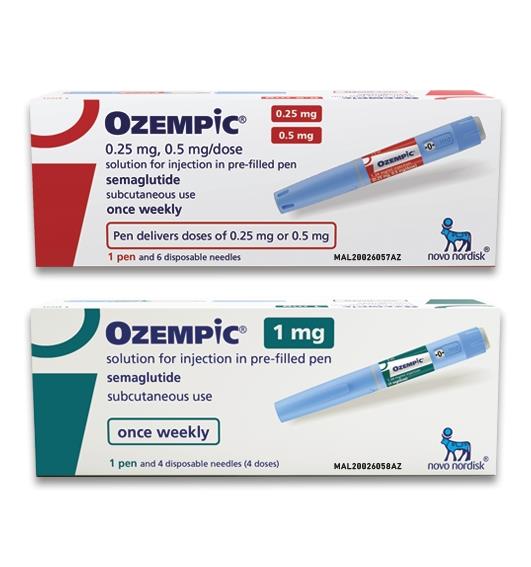
Ozempic and Rybelsus are registered medicines in Malaysia and can be purchased in pharmacies with a doctor’s prescription.
“The key here is that the public should not choose a medicine based on what is viral on social media,” she cautioned, adding that “semaglutide is not a substitute for diet and exercise.”
‘Why do you want to put yourself through all these?’So, the question is: how does Ozempic cause weight loss?
According to Dr Ashwini Nair Prabhakaran, deputy medical director of online consultation platform, DOC2US, Ozempic suppresses the hunger centre in the brain responsible for appetite and craving.

It also gives an individual a feeling of ‘satiety’ or fullness because stomach emptying is delayed. This means that the food remains in the stomach for a longer period before it is digested.
“Ozempic is supposed to treat type-2 diabetes. And in adults with type-2 diabetes and established cardiovascular diseases, it is known to reduce the risk of major adverse cardiovascular events (MACE),” the 30-year-old said.
She added that it is not specifically labelled as a weight loss drug and using it “off-label” to lose weight can pose a problem.
“Off-label prescription is the use of medications for a purpose other than what it was originally designed for and outside of their licensed indications,” she shared, adding that off-label use, if any, is on the onus of the medical practitioner, based on their clinical judgement and done in good faith.
Ozempic causes side-effects such as nausea, vomiting, and diarrhoea among others. “So, for a non-diabetic, why do you want to put yourself through all these for no proper reason?”
Since it has gained popularity as a weight loss medication, Ashwini and her colleagues from DOC2US have encountered more young adults – especially women – seeking Ozempic to lose weight.
One young and healthy 18-year-old female with a normal body mass index (BMI) of 21 wanted an Ozempic prescription to lose weight because exercising was too ‘troublesome’, she said.
“She needed something easier such as a once-a-week-injection and explained that she just wanted to ‘fit in better’ with her group of friends,” she said.
Ashwini educated the young woman about Ozempic, adding that the right way to lose weight was by eating healthily and being physically active.
“She recently got back to me to say thank you as she would have blindly taken Ozempic if I didn’t talk her out of it during our consultation session.”
No magic formulaMeanwhile, Chua Kai Jia, 34, a dietitian with Alpro Pharmacy, said Ozempic worked for weight loss by suppressing one’s appetite. “So, what happens when they stop taking it? There are high chances that they will gain the weight back.”

And
when it comes to losing weight, the formula remains simple. “It’s about balancing the amounts of calories you consume and burn.”According to Chua, the “Malaysian Healthy Plate” concept which emphasises on “suku-suku separuh” is a good general guideline to follow.
“It is recommended that you fill half of your plate with vegetables and fruits, a quarter with protein and the other quarter with carbohydrates,” she shared.
She added that “eliminating triggers” is also helpful. “Keep healthy food options near you instead of ice cream. You tend to eat more of what is convenient for you.”
“Although adopting a healthier lifestyle can be challenging because it means changing your habits, I believe that it’s more sustainable.”
Source: Ozempic: meant for diabetes but used for weight loss 

 Feb 12 2021, 08:57 AM, updated 5y ago


 Quote
Quote










 0.0206sec
 0.36
0.36
 5 queries
 GZIP Disabled