

 Mar 5 2020, 02:24 PM, updated 6y ago


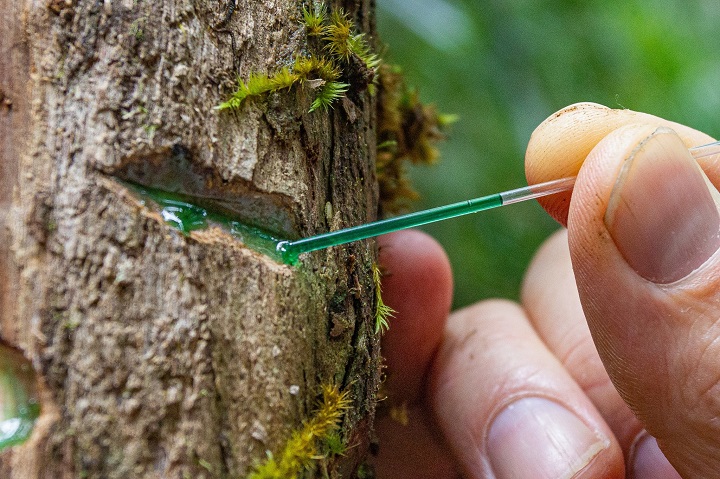
Tiberium is real
 dark green sap that is rich concentrated in valuable nickle
 Not many may be aware, but Malaysia is officially recognised as the 12th most megadiverse (biodiversity-rich) country in the world. This green crown was bestowed to the equatorial nation for harbouring the majority of the Earth’s species along with high numbers of endemic species.
According to the Malaysia Biodiversity Information System, the full extent of the country’s flora diversity is not fully known but it is estimated to consist of at least 15,000 species.
Due to this, new species of plants continue to be discovered in the region, such as the Phyllanthus rufuschaneyi – the tree that bleeds metal.
The accidental discovery of the metal-bleeding tree
In 2013, a staff at Kinabalu Park planted a bunch of Phyllanthus plants of unknown species in the garden. The plant was collected from an unknown location near the Kinabalu Park boundary.
Around that time, a group of scientists led by Dr Antony van der Ent, a researcher at the University of Queensland, were collecting plant samples of plants around Sabah to look for hyperaccumulators.
Hyperaccumulators are plants that have evolved to take up usually toxic metals like nickel and zinc into their stems, leaves and even seeds. They don’t just tolerate these toxic metals though, they crave it. The roots of these hyperaccumulators eagerly soak up the metal from the soil, and no one really knows why.
Scientists think that it could be an evolutionary trait to fight off pests, or even help in the uptake of potassium from the soil.
What scientists found in the plant was the evidence of a strong nickel hyperaccumulator, among the strongest known globally with the exciting potential for future agromining, where metal is extracted through plants.
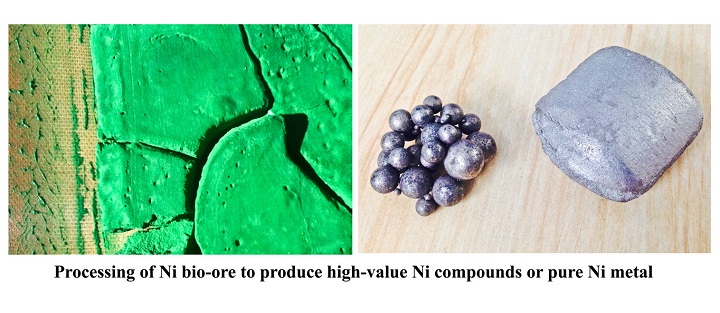
So when you cut into the Phyllanthus rufuschaneyi tree, it ‘bleeds’ a dark blue-green sap full of nickel. This nickel-rich sap is also far more concentrated than nickel ores currently used in the world’s metal smelters.
The Phyllanthus rufuschaneyi species was discovered again during scientific fieldwork in 2015 at Lompoyou Hill in the Kinabalu Park. This time the plant was growing abundantly. Further testing revealed that the metal-bleeding tree was the best known tropical ‘metal crop’ due to some pretty advantageous characteristics.
For one, the tree has extremely high levels of nickel accumulation. It also grows pretty fast and has tolerance for exposed conditions on eroded soils.
Once the scientists realised metal nickel-philia trait of this plant, they set up a small farm near Pahu village in Sabah. They also grew Phyllanthus rufuschaneyi plants collected from the wild inside pots filled with ultramafic soil, which is soil with high concentrations of trace elements.
Every 6 to 12 months, a farmer takes a piece of these metal-collecting trees for nickel extraction. According to The New York Times, the farmers could hold in their hands roughly 200 kilograms of nickel citrate after purification, which is potentially worth thousands of dollars on international markets.
green sauce
Now need to find a tree that bleeds Gold

This post has been edited by Einjahr: Mar 5 2020, 02:25 PM
 Quote
Quote





















 0.0256sec
 0.51
0.51
 5 queries
 GZIP Disabled