🇮🇩 Before Grindr, Indonesia’s LGBT folk used zines to search for love, friendshipSource:
https://www.scmp.com/news/asia/southeast-as...nes-search-love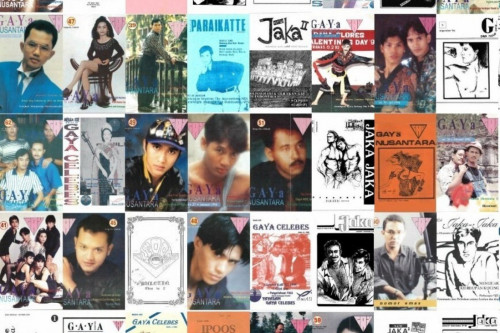
When Indonesian researcher Ais last year came across
a trove of retro LGBTQ zines in Bali, he was taken by the significance of the find.
One of the covers, which featured two men embracing, would be considered more than risqué for Indonesia, where although homosexuality is not illegal – except in sharia-ruled Aceh province – it is generally
considered a taboo subject.“Suddenly, it felt like I was a part of something bigger than myself,” said Ais, 29, who does not want to reveal his full name due to the sensitivity of the matter, of his discovery of the zines.
“Turns out I have a history.”LGBTQ zines, or community-based publications printed in small batches, were
distributed across the Indonesian archipelago during the 1980s and 1990s, a sign of
more permissive times in the world’s largest Muslim-majority nation.
The country has
over time become less tolerant of the LGBTQ community, with some politicians in recent years being more vocal about Islam playing a large role in the state.
The discovery of the LGBTQ zines gave Ais and Beau Newham, an Australian who works in HIV prevention and support, the impetus to digitise as many copies as they could to give the publications a second lease on life online. Their website, Queer Indonesia Archive (QIA), went live last June.
“If it’s any sort of material that reflects the stories of queer Indonesians and
we can digitise it, we will,” said Newham, 34. “That’s the premise.”
Equipped with four scanners and aided by volunteers, fundraising and non-governmental grants, the duo has found more than 18 titles of Indonesian LBGTQ zines and the archive has
reached 30 gigabytes.Ais said the group usually goes to the head of the community that produced the zine to ask if they would share copies.
The first LGBTQ zine in Indonesian history was published in 1982 and was called G: Gaya Hidup Ceria (G: Happy Lifestyle), according to Dede Oetomo, a gay scholar who founded the longest-running zine GAYa NUSANTARA, which finally went online in 2014.
Though they never received mainstream recognition, the zines circulated freely from Java island (Jaka Zine) to Sulawesi (GAYa Celebes), containing poems to personal ads, where people in search of a partner would post basic information and photos of themselves.
“I was happy, because I could get lots of friends. In hindsight, those
bulletins did what the social media apps are doing today,” Dede said, referring to gay dating apps such as Grindr.
To evade Indonesian authorities, the zines were called a “series of books”, instead of bulletins, Dede said, adding this was the closest they came to self-censorship.
“I’m glad Queer Indonesia Archive is doing this. We never had such skills,” he added.
Archiving these zines has been soul-searching for Ais, who said his
exposure to queer communities in recent years has always
centred on queer persecution.While the Queer Indonesia Archive has not yet raised any ire with the authorities, “we’re in a perpetual fear of backlash”, Newham said.
There has been a rise in discrimination and violent attacks against Indonesia’s LGBTQ community in recent years. Police have prosecuted members of the community under anti-pornography and other laws.
More than 1,800 cases of persecution of LGBTQ Indonesians occurred between 2006 and 2017, advocacy group Arus Pelangi reported in September 2019.
A survey by the Pew Research Center think tank last year showed that
80 per cent of Indonesians believe homosexuality
“should not be accepted by society”.
After the Covid-19 pandemic ends, Ais and Newham plan to start recording audio accounts of older members of LGBTQ communities.
“We want to archive more of our history in an inclusive manner,” Ais said. “Through QIA, I hope to make people
more aware of Indonesia’s queer history.” 

 May 20 2021, 12:25 PM


 Quote
Quote











 0.0231sec
 0.39
0.39
 5 queries
 GZIP Disabled