Welcome Guest ( Log In | Register )

53 Pages « < 46 47 48 49 50 > » Bottom

Outline · [ Standard ] · Linear+

 🏳️‍🌈 LGBTQ Community, Discussion regarding LGBTQ

views
     
TSinternaldisputes
post Apr 27 2021, 08:38 AM

he/his/him
******
Senior Member
1,723 posts

Joined: Oct 2010
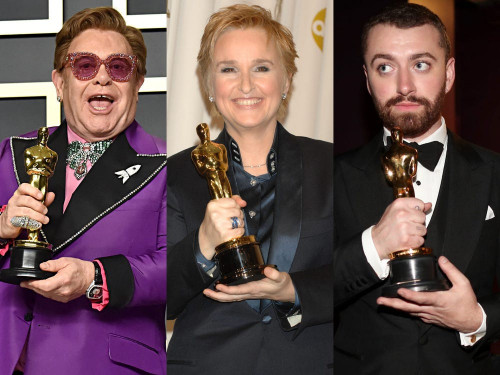
🇺🇸 8 openly LGBTQ people who won Oscars

user posted image

Elton John has won the best original song award twice in his career.

In 1995, the best original song category was Elton John's to win because three of his songs from "The Lion King" were nominated. In the end, the famous gay icon and Tim Rice won for "Can You Feel the Love Tonight?" He dedicated the award to his grandmother who died the week before.

In 2020, John won another best original song award for "(I'm Gonna) Love Me Again," which he wrote with his longtime collaborator Bernie Taupin for his musical biopic, "Rocketman." In his acceptance speech, John thanked his longtime partner, David Furnish, and their sons.

Melissa Etheridge took home the Academy Award for best original song in 2007.

After coming out as a lesbian in 1993, Etheridge continued a long career in music. In 2006, her song "I Need to Wake Up" premiered in the documentary film "An Inconvenient Truth," which profiled Al Gore and global warming.

"This feels as good as you think it does," Etheridge said in her speech before thanking her wife, who was in the audience.

In 2016, Sam Smith won best original song for "Writing's on the Wall."

Smith, who identifies as gay and non-binary, wrote a song called "Writing's on the Wall" for the 2015 James Bond movie, "Spectre," with fellow songwriter Jimmy Napes.

"I stand here as a proud, gay man and I hope one day we can all stand as equals," Smith said in their speech.

While accepting the Academy Award, Smith wrongly said they were the first gay person to win an Oscar, which was met with backlash on social media. They later apologized.

Read more @ https://www.insider.com/lgbtq-oscar-winners-2021-4
ashangel39
post Apr 27 2021, 09:41 AM

Getting Started
**
Junior Member
92 posts

Joined: Oct 2008
QUOTE(lmaonade @ Apr 25 2021, 02:04 PM)
Hey, anyone with information regarding the laws same-sex marriages outside of Malaysia? Lets say I get married to a US citizen and obtain PR status through a fiancé visa, will my Malaysian citizenship be revoked? I highly doubt Malaysia recognizes same-sex marriages and we're not allowed to obtain other citizenships.
*
You don't have to surrender your citizenship if you're only getting a PR. You can be a PR of any country and still hold a Malaysian citizenship. Being a PR means you have permission to stay in a country on a long term basis without having to go through visa renewal every few months. You'll still be traveling with your Malaysian passport.

Where else if you're a citizen, you'll have all the rights of a citizen and your original citizenship from Malaysia will be revoke which means you'll be switching over to US identifications and surrendering your Malaysian ones.

The differences between a PR and a citizen is huge. There's a lot of processes to go through and years spent in a country before you can even obtain a PR or citizenship.

Here's something to help you understand the differences. US Permanent Resident vs Citizen

This post has been edited by ashangel39: Apr 27 2021, 09:45 AM
TSinternaldisputes
post Apr 28 2021, 09:29 AM

he/his/him
******
Senior Member
1,723 posts

Joined: Oct 2010
🇯🇵 Japan's Olympic chief marks pride week with LGBTQ event
Source: https://japantoday.com/category/tokyo-2020-...ith-lgbtq-event

user posted image

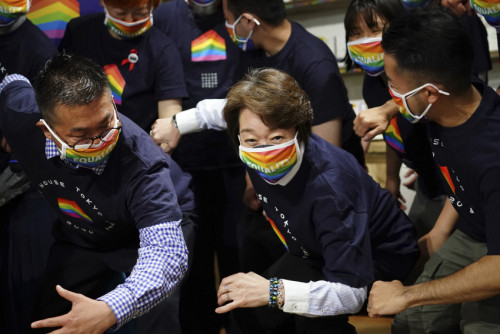
The head of the Tokyo Olympics on Tuesday took part in an event marking Japan's LGBTQ pride week at a center in the capital, as activists and dozens of lawmakers pushed for an equality law to be enacted before the games begin in less than three months.

Seiko Hashimoto visited Pride House Tokyo, an international initiative to provide a place for LGBTQ people and others to connect during the games. The first Pride House was set up during the 2010 Winter Games.

Japan is the only country in the Group of Seven major industrialized nations where same-sex marriages are not legally recognized. A Japanese court ruled last month that same-sex marriage should be allowed under the constitution, although the ruling has no immediate legal effect.

"We need to take action now,” Hashimoto said, adding that she wants people to remember the Tokyo Games as a “turning point in achieving diversity and harmony, including understanding for LGBTQ” issues. Hashimoto toured Pride House and met with LGBTQ activists, including athletes, for talks.

Elsewhere in Tokyo, over 40 lawmakers and their aides from the governing and opposition parties — all wearing matching rainbow-colored facemasks — as well as activists and supporters gathered in person and online for what they called a Rainbow Parliament event to push for enactment of an LGBTQ equality act. Tennis great and equal rights advocate Billie Jean King also sent a video message of support.

Late last month, activists submitted a petition with over 106,000 signatures to the governing and opposition parties calling for an equality law before the Tokyo Games begin on July 23. They say momentum for the legislation is growing as Japan gets more attention over its handling of gender equality, diversity and other rights issues.

“We hope to speed up an enactment of the equality act," said Yuri Igarashi, co-chair of the Japan Alliance for LGBT Legislation.

Kanako Otsuji, a lesbian lawmaker from the main opposition Constitutional Democratic Party of Japan, said she was a target of bullying at school. “I was often called a ‘manly girl’ and bullied," she said.

“Many people cannot speak up because of fear of discrimination. Then how can we change the situation? Legal protection is the only way,” she said. “For the children of the next generation to not face this kind of bullying, we need anti-discrimination laws.”

Many sexual minorities still hide their sexual identities in Japan, fearing discrimination at school, work and even from their families. In addition, transgender people must have their reproductive organs removed before their gender can be changed on official documents — a requirement that international medical experts and human rights groups criticize as inhumane.

Aki Nomiya, a transgender activist, said people whose appearances and official records don't match feel especially vulnerable. “Unless we are free of fear of prejudice and discrimination, we cannot live peacefully," she said.

Gon Matsunaka, who heads Pride House Tokyo and led Hashimoto on the tour, said the sports world remains unfriendly to LGBTQ people because of its gender specificity.

“In many sports, players are divided between men and women. In sports, masculinity is often emphasized because of competition in speed and power, and sexual minorities are often made fun of or harassed," Matsunaka said.
TSinternaldisputes
post Apr 30 2021, 08:32 AM

he/his/him
******
Senior Member
1,723 posts

Joined: Oct 2010
QUOTE(FLYING PANTIES @ Apr 30 2021, 08:25 AM)
🇺🇸 CEO Fired After Publicly Harassing Gay Teen for Wearing Dress to Prom
Source: https://www.out.com/news/2021/4/28/ceo-fire...ring-dress-prom


The Tennessee CEO of a telehealth technology firm was fired after he was captured on video harassing a teen who was wearing a dress for prom. According to a reports in The Daily Mail and elsewhere, Sam Johnson, 46, was fired from his position at VisuWell after video of his exchange with Dalton Stevens, 18, at the Harpeth Hotel lin Franklin ast Saturday went viral with the help of Kathy Griffin.

The video was recorded by Steven’s boyfriend, Jacob Geittman, and shows Johnson following and hurling homophobic insults at a clearly distraught Stevens. Johnson later denied the allegations despite the video, claiming the teens had been using foul and vulgar language around families and children, and that the video was edited.

The confrontation was underway when Geittman started recording.

“You look like an idiot,” Johnson can be heard saying.

When Stevens says he is “gorgeous,” Johnson mockingly responds “are you?”

Johnson then attempts to knock the phone from Geittman’s hand, apparently hitting Stevens in the arm.

Geittman told WKRN his boyfriend Stevens wore the floor-length red dress because it was a very special occasion for the couple.

“He did his big ‘prom-posal’ and asked me to prom,” Geittman explained. “And he decided he was going to wear a dress, and I’m like okay! You’re going to look good in it!”

“I was very confident,” Stevens said. “I knew that I felt beautiful, and I felt great.”

Geittman posted the video to TikTok, and it gained a big boost when it was tweeted by Kathy Griffin who also identified Johnson, his wife, and his now-former job.
*
TSinternaldisputes
post May 1 2021, 01:02 PM

he/his/him
******
Senior Member
1,723 posts

Joined: Oct 2010
🇿🇦 Africa’s LGBTQ communities need more protection and support
Source: https://www.aljazeera.com/opinions/2021/4/3...ion-and-support

user posted image

On April 22, Them, an online publication, reported that four gay men had been murdered in South Africa in less than a month. The disturbing report made national headlines after a local government official, the spokesperson for the Gauteng Department of Cooperative Governance and Traditional Affairs, Castro Ngobese, shared a link to the story on Twitter alongside a fist emoji and the caption “Aluta Continua” (the struggle continues).

LGBTQ activists and allies in South Africa immediately condemned the tweet celebrating hate crimes, and the opposition Democratic Alliance Party called for Ngobese’s suspension. Gauteng MEC for Cooperative Governance and Traditional Affairs, Lebogang Maile, meanwhile, released a statement on April 23 promising to “address the matter” of the “unfortunate and inappropriate Tweet”.

Ngobese’s tweet received nationwide attention not only because it revealed a government official’s unapologetic homophobia, but also because it was emblematic of the widespread and stubborn resistance to the establishment of LGBTQ rights in South Africa.

South Africa’s constitution prohibits unfair discrimination on the grounds of sexual orientation and guarantees equality for gay and lesbian people. Same-sex marriages are legal and transgender people can change their sex description and gender marker in the national birth register. Nevertheless, the LGBTQ community has long been subjected to hate speech, discrimination, and grotesque violence in the country. Moreover, many South Africans still perceive LGBTQ individuals as inherently immoral and “un-African”, and thus pay little attention to the abuse they endure on a daily basis in the country.

It is time for South Africa to respond decisively to this growing problem by adopting preventive measures against homophobic hate speech and hate crimes.

The Gay and Lesbian Alliance of South Africa has urged the parliament to pass a proposed hate crimes law. The Prevention and Combating of Hate Crimes and Hate Speech Bill 2018 aims to outlaw hate crimes and hate speech on grounds of race, gender identity and sexual orientation, among others. The bill’s ratification has been delayed due to concerns that it may inhibit freedom of speech.

South Africa’s ruling African National Congress (ANC) party has always been progressive in this sphere and should demonstrate bold moral leadership by ratifying the planned hate crimes bill without further delay.

It must also use every single tool at its service to raise awareness about LGBTQ rights at home and abroad, as this persecuted community’s most fundamental human rights are under threat not only in South Africa but across the continent.

Indeed, in many African countries, colonial anti-LGBTQ laws and attitudes are still in full force, and LGBTQ individuals continue to be routinely targeted by government authorities, religious groups and those who claim to be fighting to preserve “traditional values”.

The endless stigmatisation of homosexuals and the presentation of unfounded links between LGBTQ communities and public health or socioeconomic crises are deplorable and inhumane. The persistent and unjust framing of LGBTQ individuals as threats to a society’s wellbeing serves only to hide the discrimination and persecution they suffer at the hands of those very same societies.

Moreover, the continent-wide discrimination prevents most LGBTQ individuals from obtaining gainful employment, leaving them struggling to make ends meet.

In South Africa, for instance, the monthly earnings of gender nonconforming, gay or bisexual men are, on average, 30 percent lower than that of gender conforming heterosexual men. Worse still, LGBTQ people also suffer from higher rates of suicide, rape and violence.

Despite these extensive impediments, the African Union has steered clear of providing strong leadership on this longstanding and largely unresolved human rights matter.

This is why the ANC government, which takes pride in its support for human rights at home and abroad, has a responsibility to assume the leadership position on this issue and help facilitate positive change in South Africa and beyond.

LGBTQ Africans deserve to enjoy the rights and freedoms enshrined in the African Charter on Human Rights just like cisgender heterosexual Africans.

While Ngobese is just one person who tweeted a hateful opinion in his personal capacity, he represents so many in South Africa and across the continent who are determined to deny LGBTQ Africans the most fundamental human rights. The South African government should take action without delay to ensure Ngobese and others like him do not define what Africa and Africans stand for.

The views expressed in this article are the author’s own and do not necessarily reflect Al Jazeera’s editorial stance.
TSinternaldisputes
post May 1 2021, 01:12 PM

he/his/him
******
Senior Member
1,723 posts

Joined: Oct 2010
🇺🇸 Can Gay Bars Survive Without Sex in the Air? An Interview with Jeremy Atherton Lin
Source: https://www.intomore.com/culture/can-gay-ba...y-atherton-lin/

user posted image

Just like so many of our private parts, gay nightlife is on the rise again!

I recently told you about a Hell’s Kitchen club called the Q, which is planning to open when we’re safely out of lockdown. And let me now advise you that promoter Daniel Nardicio has taken over the old Escuelita space on 41st Street and 9th Avenue and is looking towards an October opening.

(I also hear the Boxers owner has taken over the closed Therapy space for some new life, plus the long-running leather club the Eagle NYC has been approved to do a ground floor expansion that will accommodate a kitchen and sit-down eating section.)

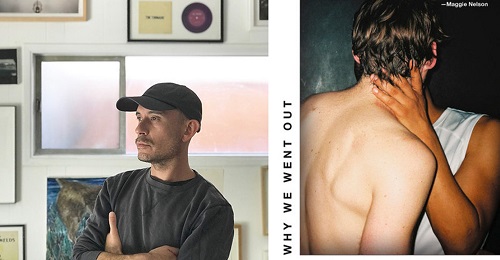
With a gay Roaring Twenties about to explode—not just in NYC, but everywhere–Jeremy Atherton Lin’s nocturnal memoir Gay Bar: Why We Went Out is as perfectly timed as a two-hour top-shelf Happy Hour.

The New York Times rave called the book “beautiful, lyrical…Atherton has a five-octave, Mariah Carey-esque range for discussing gay sex.”

This is the first book for the author–an essayist/editor—and each chapter is set in a particular bar, whether it be in London, L.A., or San Francisco. I asked Atherton some questions about the art of gay-barring and ended up hangover-free.

Hi, Jeremy. Congratulations on your book! Has the possibility of sex traditionally been the number one motivation for going to a gay bar?

I’d like to think so. I know some people are mad at me for writing from that angle–like they’d rather I’d written about searching for an alternative family, not a hot daddy. But the sex was an important motivation, not just for going to bars, but writing the book. For me, though, the sexy stuff took some time, because when I first went out — and I was taken out, you know, identified and taken along — it was more to see and be seen. This was the ’90s and a lot of us were terrified of disease. So you put it exactly right — the possibility of sex, if not actually having any. And then up through writing the book, up to the pandemic, I continued to go out for the frisson, for the feeling there could be trouble in store.

Today, with everyone looking at Grindr on their phones, is the sexual urgency at bars completely gone?

I’m pretty “meh” about dick pics. I want to be surprised. That’s not about being a size queen, I’m talking about the tease. About seduction rather than vetting. And humor — and changing your mind about somebody. Online, we’re so self-contained. I went out to be led astray. I have a feeling that the urge for spontaneity will kick back in now that we’ve had nothing but screens.

When we fully come out of lockdown, do you predict a wild sense of abandon in gay nightlife?

Maybe. I think for the young, that’s a possibility. I’m old enough that the thought of being cheek by jowl is kind of terrifying. One thing my book addresses is how nightlife took a while to recover from the height of the AIDS crisis; how that slick, contagion-free aesthetic took over by the ’90s. Smooth bartenders, smooth bar fixtures, everything low-risk and wipe-clean. Of course, there was rave, and scuzzy rock-and-roll queer nights started happening in New York, as you know. So there’ll be that kind of stuff — the roving, illicit, peripheral parties. But I’m never one to cancel the mainstream spot for the basic gays. And those kinds of bars, the ones able to reopen in the first place, may face challenges in getting everything right, to allow for a sense of abandon and bonhomie, and make it feel effortless. Then again, maybe I’m just being cautious and everyone else is going to pile in.

Many gay bars now have nights where guys congregate to watch RuPaul’s Drag Race on a big screen. Is it weird that so much of gay nightlife has basically turned into communal TV watching?

I know, totally. I was doing that myself. To my shame — to not be focusing on local talent and site-specific artistry. But you know, I found it reassuring to be in a room full of gays who cackle at the same things— to be reminded that we as a people still get camp. I’m a bit sentimental about that resonance, this thing of interpreting pop culture for ourselves. That bond over spectating together, it’s a loose and caustic connection that I really do appreciate, as opposed to any far-reaching notion of community.

Do other countries do gay bars better than the U.S.?

I don’t think so. Berlin is fun, I get it, and Amsterdam. They’re raunchier, probably. And I’d love to hang out in Mexico City and in South Africa. One of the main differences in UK bars is that the drag queens tend to sing rather than lip-sync. It’s old school, working-class, vaudevillian. But you know, I am very attached to a good old American beer bust.

With modern gays finding other ways to connect [Internet, apps, etc.] than my generation did, are gay bars less important?

Probably, honestly — to them, anyway. I mean, I’m sure there are new modern gays who never used a fake ID to get into a gay bar and still have never been to one past their 21st birthday. I’m sure they’re fluid and queerer than gay, and all kinds of new positive, lovely things. But that more antiquated gay culture — in its archness, its facades, its reliance on not just sex but sensibility, on language and pastiche — I continue to appreciate its allure and would like to think it has repositories around the world. Gay, despite its problems, has given the world a lot.

We deserve a place to drink.
TSinternaldisputes
post May 4 2021, 09:25 AM

he/his/him
******
Senior Member
1,723 posts

Joined: Oct 2010
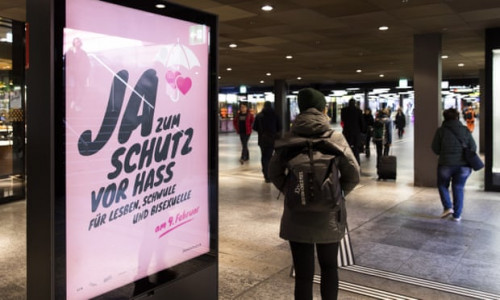
🇨🇭 Switzerland to hold referendum on same-sex marriage
Source: https://www.theguardian.com/world/2021/apr/...me-sex-marriage

user posted image

Switzerland will hold a referendum on whether to push ahead with same-sex marriage after opponents forced the government to hold a binding vote on a 2020 law allowing gay couples to marry.

The Swiss parliament passed a bill recognising same-sex marriage last December, several years after most other western European states.

On Tuesday, the country’s federal chancellery announced that critics of the law had gathered 61,027 valid signatures in favour of putting the matter to a national vote.

Under Switzerland’s system of direct democracy, members of the public can veto parliamentary decisions via a referendum if they manage to collect 50,000 valid signatures within 100 days of the official publication of the act.

The federal chancellery will in May set a date for the plebiscite, which would not be held before September. Swiss citizens are sent envelopes stuffed with ballot papers and voter information about four times a year, asking them to cast their vote on a range of questions.

The push for the same-sex referendum came from a cross-party initiative, campaigning with the slogan “Yes to marriage and family, no to marriage for everyone”, which decries same-sex marriages as “fake” and argues only a man and a woman can enter a “natural” bond for life.

The law passed in December also grants lesbian couples access to sperm donation, which opponents said would create a slippery slope: “What next?”, asks the campaign’s website. “Surrogate motherhood for gay couple – the degradation of women to the status of a purchasable birthing machine?”

Operation Libero, a liberal political movement launched in the aftermath of the Swiss immigration referendum in October 2014, has said it will campaign to keep the law in place.

A petition launched by Operation Libero, stating that “it is important that people in Switzerland can get married irrespective of their sexual orientation or gender identity”, has gathered 100,000 signatures this month.

In a November 2020 poll by the LGBT umbrella organisation Pink Cross, 82% of respondents expressed approval of same-sex marriage in strong or mild terms.

Most western European countries have over the last two decades introduced laws allowing couples of the same sex to marry, with the Netherlands leading the way in 2001. France legalised same-sex unions in 2013, followed by England and Wales in 2014, and Germany in 2017.
TSinternaldisputes
post May 7 2021, 10:57 AM

he/his/him
******
Senior Member
1,723 posts

Joined: Oct 2010
🇺🇸 Disney unveils LGBT rainbow-colored toys and clothes as Pride Month approaches
Source: https://www.christianpost.com/news/disney-u...nd-clothes.html


The Walt Disney Company, well-known for its family-friendly programming and theme parks, is promoting a series of toys and clothes for children decorated with the LGBT rainbow flag ahead of Pride Month.

Disney, which produces several television programs and movies designed for children and operates several theme parks worldwide that cater to children and families, has unveiled the Rainbow Disney Collection.

The catalog of apparel and toys features rainbow-colored merchandise designed to honor the upcoming annual Pride Month in June that celebrates the LGBT community and movement.

“The countdown to Pride Month is on with a colorful array of Pride products available now!” the Disney Parks Twitter feed announced Monday.

Several rainbow-colored hearts accompanied the announcement of the company’s Pride Month collection. Additionally, the Twitter account noted that “The Walt Disney Company is giving funds as part of our ongoing commitment to organizations around the world that support LGBTQ+ communities.”

The pro-LGBT organizations Disney is donating to are listed on the Rainbow Disney Collection’s website. The advocacy groups supported by Disney include GLSEN, Diversity Role Models, Minus18, BeLonG To Youth Services, ARELAS and the It Gets Better Project.

Disney Parks, Experiences and Products Communications Manager Anthony Armenia elaborated on the Pride Month merchandise in a post on the Disney Parks Blog Monday.

The blog features several pictures of the merchandise, which includes a Mickey Mouse “Love” T-shirt.

On that particular shirt, the “o” in the world love is replaced by Mickey Mouse ears bathed in the rainbow colors. The rest of the shirt features pictures of Mickey Mouse’s face in different colors of the rainbow.

In Disney’s pride collection, other apparel includes a sweatsuit with a hoodie and pants decorated with the word “Love” that also features rainbow-colored Mickey Mouse ears instead of an “O,” and shirts with the Pixar Animation Studios logo in rainbow colors.

The collection also features a rainbow-colored depiction of the character “Stitch” accompanied by the phrase “Ohana Means Family” illuminated in rainbow colors.

“Starting this month, the incredible diversity of our fans will also be celebrated around the world with products rolling out from licensees and retailers including Amazon, BoxLunch, Funko, Kohl’s, and Torrid, with more to come in Europe and Latin America,” Armenia wrote. “In June, our friends at Funko will have a plethora of new Pop! Vinyl figures in screaming color including Stitch and Wall-E.”

The collection of Pop! Vinyl figures consist of rainbow-colored toys resembling Disney and Pixar characters.

In recent years, Disney has made overtures to the LGBT community by introducing LGBT characters in its programming.

The Disney-Pixar animated film “Onward," released in March 2020, featured a lesbian character, making it the first film produced by the animation studio to feature an LGBT character.

Later in 2020, Pixar’s short film “Out” became the animation studio’s first production to feature a gay lead character.

Also, the Disney Channel cartoon “The Owl House” became the network’s first cartoon to feature a bisexual main character after the show’s creator identified the sexual orientation of the protagonist last summer.

Before introducing LGBT characters in its animated programming geared toward younger children, the Disney Channel depicted a same-sex teen romance on the live-action TV series “Andi Mack.”

Disney is not the only company that markets heavily toward children to promote Pride Month or LGBT advocacy. In 2019, Cartoon Network used its Twitter account to promote Pride Month.

A year earlier, the network’s animated show “Steven Universe” became the first children’s show to feature a same-sex wedding proposal. More recently, Cartoon Network worked with a social justice advocacy organization to create four comic strips asserting that there are multiple gender identities.

Earlier this year, the Nickelodeon series “Blues Clues and You” unveiled a song designed to teach children the alphabet while promoting LGBT advocacy.

“The ABC song w/ Blue” contained lyrics explaining that “P is full of pride.” In the on-screen graphics accompanying the song, the letter “P” is featured in rainbow colors and surrounded by flags representing the transgender, asexual, pansexual, intersex and gender-fluid communities and other LGBT identity groups.
TSinternaldisputes
post May 8 2021, 02:22 PM

he/his/him
******
Senior Member
1,723 posts

Joined: Oct 2010
🇲🇾🇹🇼 Overseas release brings Malaysian LGBTQ film to the screen
Source: https://asia.nikkei.com/Life-Arts/Arts/Over...m-to-the-screen
user posted image

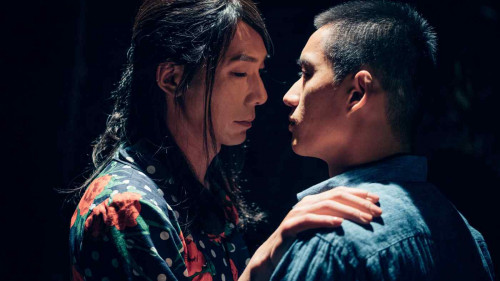
KUALA LUMPUR -- "We were well aware from the start that the subject matter would have had its challenges in Malaysia and most other Asian territories," says Jin Ong, the producer of "Miss Andy" (2020), a Malaysian-Taiwanese film about the life of a transgender woman living in Kuala Lumpur. The film was released in Taiwan on Jan. 8 to circumvent a likely ban in predominantly Muslim Malaysia, where the LGBTQ community still struggles for equality.

Directed by Teddy Chin, "Miss Andy" follows in the footsteps of controversial Malaysian Chinese filmmakers such as Lau Kek Huat and Wee Meng Chee (also known as Namewee). Both also turned to Taiwan, one of the most LGBTQ-friendly countries in Asia, to release films that could not be screened in straight-laced Malaysia, where gay and transgender activity remain taboo topics.

The community rejoiced on Feb. 25, when the Federal Court -- Malaysia's highest judicial body -- unexpectedly invalidated a Selangor State law that criminalized "intercourse against the order of nature." The court's ruling that the law was unconstitutional was hailed as a historic development by Malaysian gay rights activist Numan Afifi. But LGBTQ activity remains largely illegal, and Prime Minister Muhyiddin Yassin's Perikatan Nasional government has recently strengthened criminal penalties.

Cinema and the visual arts are under particular scrutiny. For example, a 2018 ruling by the Malaysian film censorship board reinforced earlier restrictions, ensuring that movie content concerning LGBTQ activity is likely to be deleted. As a consequence, films like "Miss Andy" that expose the sad reality of one of Southeast Asia's most shunned communities can only be shown in foreign markets. 

"Miss Andy," produced by MM2 Entertainment of Singapore, is one of the first Malaysian films to use a mak nyah (Malay slang for a transgender woman) as a protagonist. The film has been in the can for more than a year because of its controversial topic and cinema closures caused by COVID-19 social distancing protocols.

"While it's shot in Malaysia, the issues that plague the transgender community are common in a lot of other places, and Taiwan being one of Asia's most LGBTQ-friendly countries made it the perfect launchpad for the film to highlight their plight," says Jin.

"Miss Andy" follows a handful of earlier Malaysian LGBTQ films. "Bukak Api" (2000) directed by Osman Ali, was the first independent documentary to depict the life of Malaysian transgender people, and "I Don't Want to Sleep Alone" (2006), a Malaysian-Taiwanese coproduction directed by Tsai Ming-Liang, depicted the homosexual attraction that a Bengali migrant worker develops for a homeless man to whom he gives shelter.

"Waris Jari Hantu" (2007) by Suhaimi Baba mixed supernatural folklore with the story of a man who wants to become a woman and eventually undergoes a sex change operation. "Dalam Botol" (2011), directed by Khir Rahman, tells the story of a gay man who changes his sex to please his partner, and then regrets his decision when the latter falls in love with another girl.

"Miss Andy" casts a powerful light on the tribulations that LGBTQ people must face daily in one of the Southeast Asian nations that disregards them the most. In the film, 55-year-old Andy, played by Lee Lee-zen,completes his transition into a woman called Evon five years after the death of his wife. Andy's son and daughter cannot cope with the shame of having a transgender father, and shun Evon. If that was not enough, the degrading sex work that Evon must resort to in order to make ends meet turns grimmer and more violent day after day.

The film's opening scene pulls no punches as we follow Evon from the street, where she is almost killed for refusing to service a client, to a police station where she is harassed and ordered to strip naked in front of a group of foul-mouthed Malay officers who want to body-search her.

But sweet-natured Evon is far from being the monster that society thinks she is. Although she needs income from sex work to pay the bills she owns a decent home, and has regular work driving a delivery van. She has friends too, including a joyful fellow trans woman and a handsome and gentle work companion called Teck (Jack Tan), who is hearing impaired and with whom she shares a feeling of being a "lesser" human.

"Prior to doing research for this particular film, I didn't know that the LGBTQ community faces legal challenges in Malaysia," says Lee. "A heterosexual person can conduct himself/herself in a normal and courageous way when it comes to his/her pursuit of love. So why are LGBTQ individuals, [who are] also perfectly normal people, forbidden from loving someone of their choice and doing things of their interest," says Lee.

"But all of the above is forbidden in Malaysia, as well as many other countries, which is very saddening to me."

The movie's plot also incorporates the evergreen issue of illegal migration to Malaysia. Evon gets a chance to regain some balance in her life when she serendipitously meets Sophia (Ruby Lin), an illegal Vietnamese worker, and her son Kang (Kyzer Tou). Starving, and on the run from Sophia's abusive husband, the two gladly accept Evon's assistance and end up becoming her housemates -- a choice that leads to a new set of bittersweet consequences.

"Miss Andy" earned international acclaim at several movie festivals in 2020, including the Osaka Asian Film Festival, the New York Asian Film Festival, the Taiwan International Queer Film Festival, the Kaohsiung Film Festival, and the Hong Kong Lesbian and Gay Film Festival. But it is unlikely to receive a premiere in Malaysia, where LGBTQ themes are mostly embraced only by independent film producers.

"As a filmmaker, it would be amazing to see my work change public opinion and making a direct/measurable impact on larger society," says Kuala Lumpur-based LGBTQ activist and filmmaker Justice Khor, whose short film "Lonesome" (2020) focused on Malaysian LGBTQ people's experiences of the COVID-19 lockdown in what he describes as "a metaphor [for] LGBTQ's oppressions & experience."

"Lonesome" was funded and showcased by the Southeast Asia Queer Cultural Festival 2021, an online virtual festival in February and early March organized by ASEAN SOGIE Caucus, a network of human rights activists from Southeast Asia.

Khor, who says his immediate priority is to create content that rings true to the Malaysian LGBTQ community and to himself, laments Malaysia's strict censorship laws. "I doubt [that] my work, [which] actively presents important social and political issues, would survive their cuts," he says, referring to the country's film censorship board.

Chen Yih Wen, a Kuala Lumpur-based director whose "Eyes on the Ball" (2019) depicted the story of a visually impaired Malaysian football team, also took up LGBTQ issues in the short film "She Ain't Heavy, She's My Brother" (2017) about a Malaysian Chinese trans man. Chen is now completing a documentary called "Shh...Diam!" about a celebrated Malaysian LGBTQ punk rock band.

Chen has also secured support from outside Malaysia -- "Shh...Diam!" is being produced by Alex Lee, co-founder of the Doc Edge Film Festival in New Zealand, with Hong Kong-based director Ruby Yang, winner of an Oscar in 2006 for "The Blood of Yingzhou District" (2006) as creative producer. It also has the backing of the Hong Kong Documentary Initiative.

"With the release of ["Shh...Diam!"] we plan to run an impact campaign to provide a positive portrayal of the community and spark change in perception and attitude towards LGBTQ people, and that there will be legal recognition for them," says Chen. "We hope the film can be used as an educational toolkit to discuss queer issues in a supportive environment with professional and guided knowledge."

skyblue8
post May 9 2021, 09:24 AM

Getting Started
**
Junior Member
55 posts

Joined: Jun 2013


QUOTE(internaldisputes @ May 8 2021, 02:22 PM)
🇲🇾🇹🇼 Overseas release brings Malaysian LGBTQ film to the screen
Source: https://asia.nikkei.com/Life-Arts/Arts/Over...m-to-the-screen

user posted image

KUALA LUMPUR -- "We were well aware from the start that the subject matter would have had its challenges in Malaysia and most other Asian territories," says Jin Ong, the producer of "Miss Andy" (2020), a Malaysian-Taiwanese film about the life of a transgender woman living in Kuala Lumpur. The film was released in Taiwan on Jan. 8 to circumvent a likely ban in predominantly Muslim Malaysia, where the LGBTQ community still struggles for equality.

Directed by Teddy Chin, "Miss Andy" follows in the footsteps of controversial Malaysian Chinese filmmakers such as Lau Kek Huat and Wee Meng Chee (also known as Namewee). Both also turned to Taiwan, one of the most LGBTQ-friendly countries in Asia, to release films that could not be screened in straight-laced Malaysia, where gay and transgender activity remain taboo topics.

The community rejoiced on Feb. 25, when the Federal Court -- Malaysia's highest judicial body -- unexpectedly invalidated a Selangor State law that criminalized "intercourse against the order of nature." The court's ruling that the law was unconstitutional was hailed as a historic development by Malaysian gay rights activist Numan Afifi. But LGBTQ activity remains largely illegal, and Prime Minister Muhyiddin Yassin's Perikatan Nasional government has recently strengthened criminal penalties.

Cinema and the visual arts are under particular scrutiny. For example, a 2018 ruling by the Malaysian film censorship board reinforced earlier restrictions, ensuring that movie content concerning LGBTQ activity is likely to be deleted. As a consequence, films like "Miss Andy" that expose the sad reality of one of Southeast Asia's most shunned communities can only be shown in foreign markets. 

"Miss Andy," produced by MM2 Entertainment of Singapore, is one of the first Malaysian films to use a mak nyah (Malay slang for a transgender woman) as a protagonist. The film has been in the can for more than a year because of its controversial topic and cinema closures caused by COVID-19 social distancing protocols.

"While it's shot in Malaysia, the issues that plague the transgender community are common in a lot of other places, and Taiwan being one of Asia's most LGBTQ-friendly countries made it the perfect launchpad for the film to highlight their plight," says Jin.

"Miss Andy" follows a handful of earlier Malaysian LGBTQ films. "Bukak Api" (2000) directed by Osman Ali, was the first independent documentary to depict the life of Malaysian transgender people, and "I Don't Want to Sleep Alone" (2006), a Malaysian-Taiwanese coproduction directed by Tsai Ming-Liang, depicted the homosexual attraction that a Bengali migrant worker develops for a homeless man to whom he gives shelter.

"Waris Jari Hantu" (2007) by Suhaimi Baba mixed supernatural folklore with the story of a man who wants to become a woman and eventually undergoes a sex change operation. "Dalam Botol" (2011), directed by Khir Rahman, tells the story of a gay man who changes his sex to please his partner, and then regrets his decision when the latter falls in love with another girl.

"Miss Andy" casts a powerful light on the tribulations that LGBTQ people must face daily in one of the Southeast Asian nations that disregards them the most. In the film, 55-year-old Andy, played by Lee Lee-zen,completes his transition into a woman called Evon five years after the death of his wife. Andy's son and daughter cannot cope with the shame of having a transgender father, and shun Evon. If that was not enough, the degrading sex work that Evon must resort to in order to make ends meet turns grimmer and more violent day after day.

The film's opening scene pulls no punches as we follow Evon from the street, where she is almost killed for refusing to service a client, to a police station where she is harassed and ordered to strip naked in front of a group of foul-mouthed Malay officers who want to body-search her.

But sweet-natured Evon is far from being the monster that society thinks she is. Although she needs income from sex work to pay the bills she owns a decent home, and has regular work driving a delivery van. She has friends too, including a joyful fellow trans woman and a handsome and gentle work companion called Teck (Jack Tan), who is hearing impaired and with whom she shares a feeling of being a "lesser" human.

"Prior to doing research for this particular film, I didn't know that the LGBTQ community faces legal challenges in Malaysia," says Lee. "A heterosexual person can conduct himself/herself in a normal and courageous way when it comes to his/her pursuit of love. So why are LGBTQ individuals, [who are] also perfectly normal people, forbidden from loving someone of their choice and doing things of their interest," says Lee.

"But all of the above is forbidden in Malaysia, as well as many other countries, which is very saddening to me."

The movie's plot also incorporates the evergreen issue of illegal migration to Malaysia. Evon gets a chance to regain some balance in her life when she serendipitously meets Sophia (Ruby Lin), an illegal Vietnamese worker, and her son Kang (Kyzer Tou). Starving, and on the run from Sophia's abusive husband, the two gladly accept Evon's assistance and end up becoming her housemates -- a choice that leads to a new set of bittersweet consequences.

"Miss Andy" earned international acclaim at several movie festivals in 2020, including the Osaka Asian Film Festival, the New York Asian Film Festival, the Taiwan International Queer Film Festival, the Kaohsiung Film Festival, and the Hong Kong Lesbian and Gay Film Festival. But it is unlikely to receive a premiere in Malaysia, where LGBTQ themes are mostly embraced only by independent film producers.

"As a filmmaker, it would be amazing to see my work change public opinion and making a direct/measurable impact on larger society," says Kuala Lumpur-based LGBTQ activist and filmmaker Justice Khor, whose short film "Lonesome" (2020) focused on Malaysian LGBTQ people's experiences of the COVID-19 lockdown in what he describes as "a metaphor [for] LGBTQ's oppressions & experience."

"Lonesome" was funded and showcased by the Southeast Asia Queer Cultural Festival 2021, an online virtual festival in February and early March organized by ASEAN SOGIE Caucus, a network of human rights activists from Southeast Asia.

Khor, who says his immediate priority is to create content that rings true to the Malaysian LGBTQ community and to himself, laments Malaysia's strict censorship laws. "I doubt [that] my work, [which] actively presents important social and political issues, would survive their cuts," he says, referring to the country's film censorship board.

Chen Yih Wen, a Kuala Lumpur-based director whose "Eyes on the Ball" (2019) depicted the story of a visually impaired Malaysian football team, also took up LGBTQ issues in the short film "She Ain't Heavy, She's My Brother" (2017) about a Malaysian Chinese trans man. Chen is now completing a documentary called "Shh...Diam!" about a celebrated Malaysian LGBTQ punk rock band.

Chen has also secured support from outside Malaysia -- "Shh...Diam!" is being produced by Alex Lee, co-founder of the Doc Edge Film Festival in New Zealand, with Hong Kong-based director Ruby Yang, winner of an Oscar in 2006 for "The Blood of Yingzhou District" (2006) as creative producer. It also has the backing of the Hong Kong Documentary Initiative.

"With the release of ["Shh...Diam!"] we plan to run an impact campaign to provide a positive portrayal of the community and spark change in perception and attitude towards LGBTQ people, and that there will be legal recognition for them," says Chen. "We hope the film can be used as an educational toolkit to discuss queer issues in a supportive environment with professional and guided knowledge."
*
Wow I want to watch this!

leftycall9
post May 9 2021, 01:00 PM

Left of leftist
******
Senior Member
1,046 posts

Joined: Jun 2010
QUOTE(internaldisputes @ May 8 2021, 02:22 PM)
🇲🇾🇹🇼 Overseas release brings Malaysian LGBTQ film to the screen
Source: https://asia.nikkei.com/Life-Arts/Arts/Over...m-to-the-screen

user posted image

KUALA LUMPUR -- "We were well aware from the start that the subject matter would have had its challenges in Malaysia and most other Asian territories," says Jin Ong, the producer of "Miss Andy" (2020), a Malaysian-Taiwanese film about the life of a transgender woman living in Kuala Lumpur. The film was released in Taiwan on Jan. 8 to circumvent a likely ban in predominantly Muslim Malaysia, where the LGBTQ community still struggles for equality.

Directed by Teddy Chin, "Miss Andy" follows in the footsteps of controversial Malaysian Chinese filmmakers such as Lau Kek Huat and Wee Meng Chee (also known as Namewee). Both also turned to Taiwan, one of the most LGBTQ-friendly countries in Asia, to release films that could not be screened in straight-laced Malaysia, where gay and transgender activity remain taboo topics.

The community rejoiced on Feb. 25, when the Federal Court -- Malaysia's highest judicial body -- unexpectedly invalidated a Selangor State law that criminalized "intercourse against the order of nature." The court's ruling that the law was unconstitutional was hailed as a historic development by Malaysian gay rights activist Numan Afifi. But LGBTQ activity remains largely illegal, and Prime Minister Muhyiddin Yassin's Perikatan Nasional government has recently strengthened criminal penalties.

Cinema and the visual arts are under particular scrutiny. For example, a 2018 ruling by the Malaysian film censorship board reinforced earlier restrictions, ensuring that movie content concerning LGBTQ activity is likely to be deleted. As a consequence, films like "Miss Andy" that expose the sad reality of one of Southeast Asia's most shunned communities can only be shown in foreign markets. 

"Miss Andy," produced by MM2 Entertainment of Singapore, is one of the first Malaysian films to use a mak nyah (Malay slang for a transgender woman) as a protagonist. The film has been in the can for more than a year because of its controversial topic and cinema closures caused by COVID-19 social distancing protocols.

"While it's shot in Malaysia, the issues that plague the transgender community are common in a lot of other places, and Taiwan being one of Asia's most LGBTQ-friendly countries made it the perfect launchpad for the film to highlight their plight," says Jin.

"Miss Andy" follows a handful of earlier Malaysian LGBTQ films. "Bukak Api" (2000) directed by Osman Ali, was the first independent documentary to depict the life of Malaysian transgender people, and "I Don't Want to Sleep Alone" (2006), a Malaysian-Taiwanese coproduction directed by Tsai Ming-Liang, depicted the homosexual attraction that a Bengali migrant worker develops for a homeless man to whom he gives shelter.

"Waris Jari Hantu" (2007) by Suhaimi Baba mixed supernatural folklore with the story of a man who wants to become a woman and eventually undergoes a sex change operation. "Dalam Botol" (2011), directed by Khir Rahman, tells the story of a gay man who changes his sex to please his partner, and then regrets his decision when the latter falls in love with another girl.

"Miss Andy" casts a powerful light on the tribulations that LGBTQ people must face daily in one of the Southeast Asian nations that disregards them the most. In the film, 55-year-old Andy, played by Lee Lee-zen,completes his transition into a woman called Evon five years after the death of his wife. Andy's son and daughter cannot cope with the shame of having a transgender father, and shun Evon. If that was not enough, the degrading sex work that Evon must resort to in order to make ends meet turns grimmer and more violent day after day.

The film's opening scene pulls no punches as we follow Evon from the street, where she is almost killed for refusing to service a client, to a police station where she is harassed and ordered to strip naked in front of a group of foul-mouthed Malay officers who want to body-search her.

But sweet-natured Evon is far from being the monster that society thinks she is. Although she needs income from sex work to pay the bills she owns a decent home, and has regular work driving a delivery van. She has friends too, including a joyful fellow trans woman and a handsome and gentle work companion called Teck (Jack Tan), who is hearing impaired and with whom she shares a feeling of being a "lesser" human.

"Prior to doing research for this particular film, I didn't know that the LGBTQ community faces legal challenges in Malaysia," says Lee. "A heterosexual person can conduct himself/herself in a normal and courageous way when it comes to his/her pursuit of love. So why are LGBTQ individuals, [who are] also perfectly normal people, forbidden from loving someone of their choice and doing things of their interest," says Lee.

"But all of the above is forbidden in Malaysia, as well as many other countries, which is very saddening to me."

The movie's plot also incorporates the evergreen issue of illegal migration to Malaysia. Evon gets a chance to regain some balance in her life when she serendipitously meets Sophia (Ruby Lin), an illegal Vietnamese worker, and her son Kang (Kyzer Tou). Starving, and on the run from Sophia's abusive husband, the two gladly accept Evon's assistance and end up becoming her housemates -- a choice that leads to a new set of bittersweet consequences.

"Miss Andy" earned international acclaim at several movie festivals in 2020, including the Osaka Asian Film Festival, the New York Asian Film Festival, the Taiwan International Queer Film Festival, the Kaohsiung Film Festival, and the Hong Kong Lesbian and Gay Film Festival. But it is unlikely to receive a premiere in Malaysia, where LGBTQ themes are mostly embraced only by independent film producers.

"As a filmmaker, it would be amazing to see my work change public opinion and making a direct/measurable impact on larger society," says Kuala Lumpur-based LGBTQ activist and filmmaker Justice Khor, whose short film "Lonesome" (2020) focused on Malaysian LGBTQ people's experiences of the COVID-19 lockdown in what he describes as "a metaphor [for] LGBTQ's oppressions & experience."

"Lonesome" was funded and showcased by the Southeast Asia Queer Cultural Festival 2021, an online virtual festival in February and early March organized by ASEAN SOGIE Caucus, a network of human rights activists from Southeast Asia.

Khor, who says his immediate priority is to create content that rings true to the Malaysian LGBTQ community and to himself, laments Malaysia's strict censorship laws. "I doubt [that] my work, [which] actively presents important social and political issues, would survive their cuts," he says, referring to the country's film censorship board.

Chen Yih Wen, a Kuala Lumpur-based director whose "Eyes on the Ball" (2019) depicted the story of a visually impaired Malaysian football team, also took up LGBTQ issues in the short film "She Ain't Heavy, She's My Brother" (2017) about a Malaysian Chinese trans man. Chen is now completing a documentary called "Shh...Diam!" about a celebrated Malaysian LGBTQ punk rock band.

Chen has also secured support from outside Malaysia -- "Shh...Diam!" is being produced by Alex Lee, co-founder of the Doc Edge Film Festival in New Zealand, with Hong Kong-based director Ruby Yang, winner of an Oscar in 2006 for "The Blood of Yingzhou District" (2006) as creative producer. It also has the backing of the Hong Kong Documentary Initiative.

"With the release of ["Shh...Diam!"] we plan to run an impact campaign to provide a positive portrayal of the community and spark change in perception and attitude towards LGBTQ people, and that there will be legal recognition for them," says Chen. "We hope the film can be used as an educational toolkit to discuss queer issues in a supportive environment with professional and guided knowledge."
*
There's one malay movie called Dalam Botol. Was it about transgender too?
TSinternaldisputes
post May 9 2021, 01:50 PM

he/his/him
******
Senior Member
1,723 posts

Joined: Oct 2010
QUOTE(skyblue8 @ May 9 2021, 09:24 AM)
Wow I want to watch this!
*
Yeah me too! Too bad it won't screen in Malaysia. sweat.gif

QUOTE(leftycall9 @ May 9 2021, 01:00 PM)
There's one malay movie called Dalam Botol. Was it about transgender too?
*
It's about a cisgender gay man who cut his didi to please his boyfriend but ended up regretting the decision. So I guess it is about transgender a bit. sweat.gif
TSinternaldisputes
post May 11 2021, 08:45 AM

he/his/him
******
Senior Member
1,723 posts

Joined: Oct 2010
🇺🇸 US reverses Trump policy, restores LGBTQ healthcare protections
Source: https://www.aljazeera.com/news/2021/5/10/us...are-protections

user posted image

The United States will protect gay and transgender people against sex discrimination in healthcare, the Biden administration announced on Monday, reversing a Trump-era policy that sought to narrow the scope of legal rights in sensitive situations involving medical care.

Health and Human Services Secretary Xavier Becerra said the action restores protections under a provision of the Affordable Care Act, also known as Obamacare, against sexual discrimination in healthcare.

“It simply says what everyone already should know: You should not discriminate against people,” Becerra told CNN. “That includes those based on sexual orientation or gender identity and when it comes to healthcare – we want to make sure that’s the case.”

The new policy represents a reversal of a reversal. The Department of Health and Human Services (HHS) under Trump in June 2020 issued a rule that lifted some anti-discrimination protections under Obamacare, a law signed by former President Barack Obama in 2010.

In 2016, the Obama administration introduced rules that made clear that LGBTQ people would be protected under the federal healthcare discrimination provision. The Trump-era rule reversed those provisions of the law that extended civil rights protections in healthcare to cover areas including gender identity and abortion.

“So now it’s clear, there’s no ambiguity: You cannot discriminate against people based on sexual orientation or gender identity,” Becerra added.

HHS said in a statement on Monday that its Office for Civil Rights made the decision in light of a June 2020 US Supreme Court ruling and subsequent court decisions.

The Supreme Court last year delivered a watershed victory for LGBTQ rights and a defeat for Trump’s administration, ruling that a longstanding federal law barring workplace discrimination protects gay and transgender employees.

“The Supreme Court has made clear that people have a right not to be discriminated against on the basis of sex and receive equal treatment under the law, no matter their gender identity or sexual orientation,” Becerra said in the statement.

Despite that ruling, the Trump administration had proceeded to try to narrow the legal protections against healthcare discrimination, issuing rules that narrowly defined “sex” as biological gender. A federal judge had blocked those rules from taking effect, although Trump administration officials argued that as a legal matter, healthcare discrimination was a separate issue from the employment case the Supreme Court decided.

The Trump administration had defined “sex” to mean gender assigned at birth, thereby excluding transgender people from the law’s umbrella of protection.

Monday’s action means that the HHS Office for Civil Rights will again investigate complaints of sex discrimination on the basis of sexual orientation and gender identity. Hospitals, clinics and other medical providers can face government sanctions for violations of the law.

Under the Obama-era rule, a hospital could be required to perform gender-transition procedures such as hysterectomies if the facility provided that kind of treatment for other medical conditions.

LGBTQ groups say explicit protections are needed for people seeking gender transition treatment, and even for transgender people who need care for illnesses such as diabetes or heart problems.

More than 1.5 million Americans identify as transgender, according to the Williams Institute, a think-tank focusing on LGBTQ policy at the UCLA School of Law. A bigger number – 4.5 percent of the population – identify as lesbian, gay, bisexual or transgender, according to Gallup.


This post has been edited by internaldisputes: May 11 2021, 08:46 AM
TSinternaldisputes
post May 11 2021, 08:15 PM

he/his/him
******
Senior Member
1,723 posts

Joined: Oct 2010
🇩🇪 German priests defy Vatican ban and bless same-sex unions
Source: https://edition.cnn.com/2021/05/11/europe/g...-grm/index.html

user posted image

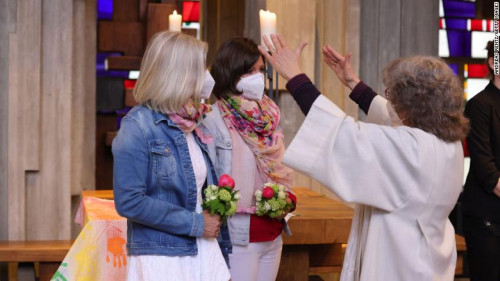
Berlin, Germany — The Catholic Church has lost touch with the "living reality" of LGBT+ people, said one of more than 100 German priests who are defying the Vatican this week by blessing same-sex couples.

In a move that angered liberals within the 1.3 billion-member church, the Vatican's doctrinal office said in March that priests cannot bless same-sex unions in lieu of marriage, despite ministers doing so in countries such as Germany.

"If we say that God is love, I cannot tell people who embrace loyalty, unity and responsibility to each other that theirs is not love, that it's a fifth-or sixth-class love," said Christian Olding, a priest in the western city of Geldern.

"I look forward to the blessing. We're going have all forms of relationships: Classic heterosexual marriages, divorced and remarried couples, unmarried couples and yes, also same-sex couples," Olding told the Thomson Reuters Foundation.

"We're going have the whole diversity of love."

Priests and dioceses all over Germany have joined the "Liebe Gewinnt" or "Love Wins" initiative, with blessings taking place this week in cities like Berlin, Munich and Cologne, home to Germany's largest archdiocese, as well as rural areas.

The March ban on blessings, which Pope Francis approved, sparked dissent within the church and surprised many because he has been more conciliatory towards gay people than perhaps any other pontiff.

The Pope has held meetings with gay couples and encouraged those who want to raise their children in the church to do so. In 2013, he made the now-famous remark "Who am I to judge" about gay people seeking God and trying to live by the church's rules.

The church teaches that being gay is not inherently sinful but forbids same-sex sexual activity.

In March, more than 2,000 priests, theologians and other members of the Catholic Church in Germany and Austria signed a petition in favor of blessing same-sex couples.

"When someone says that something cannot be discussed anymore, I find that unreasonable and inappropriate," Olding said, adding that the church had lost touch with its LGBT+ followers.

"I live in the centre of society. I don't want to be separated from the daily living reality of the people I accompany as a priest."

According to the Pew Research Center, a US-based think-tank, 86% of Germans think homosexuality should be accepted.
TSinternaldisputes
post May 13 2021, 06:38 PM

he/his/him
******
Senior Member
1,723 posts

Joined: Oct 2010
QUOTE(demamkuning @ May 13 2021, 08:11 AM)
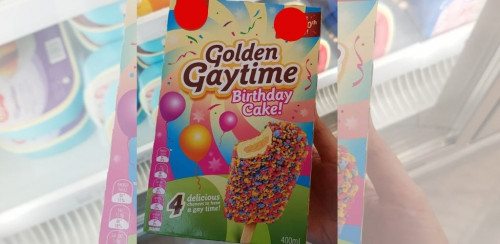
🇲🇾 PPIM Mohon Penjelasan Penggunaan Perkataan ‘Gay’ Pada Aiskrim. Memang Melampau!
Source: https://sinarplus.sinarharian.com.my/fyi/pp...emang-melampau/

user posted image

MENGEJUTKAN dan ini antara berita yang heboh diperkatakan dalam media sosial sejak dua menjak ini

Jika tidak, masakan Ketua Aktivis Persatuan Pengguna Islam Malaysia (PPIM), Datuk Nadzim Johan bangkit meminta sebuah syarikat pengeluar aiskrim popular menjelaskan penggunakan perkataan ‘gay’ pada produk mereka.

Tegas Nadzim, syarikat tersebut seharusnya lebih sensitif terhadap penggunaan perkataan tertentu bagi mengelakkan berlakunya salah faham atau pertelingkahan antara kaum.

Katanya, terdapat banyak perkataan lain yang boleh digunakan bagi menggambarkan keriangan saat menikmati hidangan aiskrim.

“Saya mengharapkan agar mereka tampil memberi penjelasan terhadap pemilihan perkataan itu kerana bimbang produk tersebut turut dimakan oleh golongan kanak-kanak.

“Kita ini hidup dalam masyarakat majmuk, seharusnya sebarang penggunaan perkataan atau tindakan perlu dilakukan dengan teliti sebelum dipasarkan.

“Sekiranya tiada alasan kukuh, tindakan serius perlu diambil kerana perkara ini turut melibatkan kesucian agama Islam,” jelasnya.

Mengikut pandangan warganet, penggunaan perkataan tersebut dilihat seperti cubaan syarikat terbabit untuk menggalak dan menyokong golongan lesbian, gay, biseksual dan transgender (LGBT).

Menerusi tinjauan kami semalam, tertera kenyataan ‘Golden Gaytime’ dan ‘Delicious Chances To Have A Gay Time!” pada bahagian hadapan kotak aiskrim tersebut.

Produk makanan tersebut dijual di tempat terbuka bersama dengan beberapa jenama lain di sebuah pasar raya di Kuala Lumpur.

Pun demikian, aiskrim tersebut tidak dipromosikan di laman rasmi Instagram jenama terbabit.

Difahamkan produk tersebut turut mendapat tentangan di republik Indonesia pada tahun 2018.

Dijual pada harga RM43.90 sekotak, aiskrim tersebut hadir dipercayai telah berada di pasaran Malaysia sejak akhir tahun 2020.
*
sweat.gif

Anyway, Selamat Hari Raya! HOPE Y'ALL HAVE A GAY TIME!
TSinternaldisputes
post May 15 2021, 09:17 AM

he/his/him
******
Senior Member
1,723 posts

Joined: Oct 2010
QUOTE(billyboy @ May 14 2021, 12:01 PM)
🇲🇾 PAS Politician Deactivates Social Media Accounts After Netizens Find Gay Porn In His “Likes”
Source: https://worldofbuzz.com/pas-politician-deac...n-in-his-likes/

user posted image

Nothing is anonymous when you’re on social media.

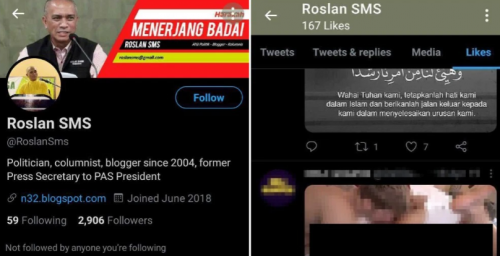
Selangor PAS Secretary and political columnist, Roslan Shahir or popularly known as Roslan SMS has deactivated his Twitter and Facebook account following a debacle that led to netizens being shocked by his “likes”.

It all started when Roslan tweeted against Segambut MP, Hannah Yeoh who suggested that the National Security Council allow immediate family members to visit the grave of their loved ones in the same district on Hari Raya. After she tweeted this, Roslan quoted the tweet and told Hannah Yeoh to not go overboard if she wants to win the vote of Malays.

“This is not Qingmeng or All Souls Day. Aidilfitri will not be cancelled or be any lesser without grave visitations. The health and safety of the rakyat is more important. Understand this before politicising every situation.”

While there were some netizens who supported his statement, there were many who condemned him saying that all Hannah Yeoh did was make a point based on humanity and not politics. The situation took an immediate turn for the south when a simple tweet that said: “Check out his likes” surfaced.

To the shock of Malaysians, there were countless gay pornography videos and images in the politician’s “Likes” section on Twitter.

Just as Twitter users were demanding an explanation from him, Roslan deactivated both his Twitter and Facebook accounts. PAS and Roslan are yet to release a statement on this issue.
*
The only thing worse than a homophobe is an internalized homophobe. sweat.gif


This post has been edited by internaldisputes: May 15 2021, 09:26 AM
billyboy
post May 15 2021, 09:21 AM

Look at all my stars!!
*******
Senior Member
2,220 posts

Joined: Apr 2006
seperty Joseph McCarthy


https://en.wikipedia.org/wiki/Joseph_McCarthy

From 1950 onward, McCarthy continued to exploit the fear of Communism and to press his accusations that the government was failing to deal with Communism within its ranks. McCarthy also began investigations into homosexuals working in the foreign policy bureaucracy, who were considered prime candidates for blackmail by the Soviets.[71] These accusations received wide publicity, increased his approval rating, and gained him a powerful national following.

tapi sendiri LGBT ?
ashangel39
post May 17 2021, 09:22 AM

Getting Started
**
Junior Member
92 posts

Joined: Oct 2008
QUOTE(internaldisputes @ May 13 2021, 06:38 PM)
sweat.gif

Anyway, Selamat Hari Raya! HOPE Y'ALL HAVE A GAY TIME!
*
Selamat Hari Raya to all those who are celebrating!

Dah start la tu. Must've run out of things to pick on.
sorbonne
post May 17 2021, 07:01 PM

New Member
*
Newbie
46 posts

Joined: Apr 2015
Happy IDAHOBIT. smile.gif


TSinternaldisputes
post May 18 2021, 07:13 PM

he/his/him
******
Senior Member
1,723 posts

Joined: Oct 2010
🇪🇺 14 of the biggest, brightest and most proudly queer performances in Eurovision history

Eurovision 2020 may be cancelled, but the contest’s queer legacy remains something to celebrate. Here, we list the first, best and most significant LGBT+ performers from Ketil Stokkan and Dana International to t.A.T.u and Conchita Wurst.

To some it’s a source of amusement, to others a camp spectacular, but for many, the Eurovision Song Contest has come to represent a celebration of queer identity.

While many parts of Europe remain bitterly divided on LGBT+ rights, the contest has served as a beacon of inclusion beamed directly into millions of homes on an annual basis.

But while we’d like nothing more right now than to build bridges, come together and celebrate diversity, unfortunately the 65th edition of the contest has become a casualty of the COVID-19 pandemic.

With Eurovision 2020 not be going ahead as planned, we’re taking a trip back through time to look at some of the best and most significant queer moments the contest has produced.

Ketil Stokkan, ‘Romeo’ (Norway 1986)


The first LGBT-themed performance at Eurovision came at the 1986 contest, two years before Section 28 would ban all mention of homosexuality in British schools.

Norwegian singer Ketil Stokkan made history by performing alongside drag troupe the Great Garlic Girls — providing the first glimpse of LGBT+ identity at Eurovision.

The track “Romeo” was nothing to write home about musically, coming in a solid 12th place.

Stokkan now works as a school teacher, while the Great Garlic Girls are still going strong after 39 years — albeit, with some changes to their line-up.

Krista Siegfrids, ‘Marry Me’ (Finland 2013)


There’s a song with a message, and then there’s “Marry Me”.

Krista Siegfrids underlined how straight allyship should work in 2013 with her campy pop bop, utilising her entire performance as a not-particularly-subtle protest in favour of equal marriage, which skirted right under Eurovision’s rules banning political gestures.

The track sees Siegfrids beset by male suitors, singing about her desire to get married. However, the final drop-the-mic twist reveals the object of her desires — a female backing dancer. After sharing an on-screen kiss with her, the singer shouts: “Ding dong!”

Ding dong indeed, Krista.

The song finished 24th in the final, but it’s definitely not the points received that matter with this one. Same-sex weddings finally became legal in Finland in 2017.

Conchita Wurst, ‘Rise Like a Phoenix’ (Austria 2014)


Well, it’s the one you’ve been waiting for. Eurovision’s drag superstar.

When the bearded Austrian drag artist known as Conchita Wurst stepped onto the stage in Copenhagen, it was to some snarky remarks from commentators – but few were still laughing as she sang her final note.

So many parts of “Rise Like a Phoenix” are iconic, from the perfect staging to the orchestration, that it seems almost reductive to reduce Conchita to her queerness.

But there’s no escaping the fact that the artist became a true symbol of the contest’s inclusiveness, and to this day remains one of the only Eurovision winners who can boast of having performed for both the European Parliament and the United Nations.

As she raised the trophy, Conchita declared: “This night is dedicated to everyone who believes in a future of peace and freedom. You know who you are — we are unity and we are unstoppable.”

We couldn’t have put it better ourselves.

Read more @ https://www.pinknews.co.uk/2020/05/16/eurov...conchita-wurst/


Added on
Eurovision 2021 starts tomorrow with semi-final 1! The final show will be on Sunday, around 3am local time. You can catch all the shows on the official Eurovision channel.

53 Pages « < 46 47 48 49 50 > » Top
 

Change to:
| Lo-Fi Version
0.0432sec    0.37    5 queries    GZIP Disabled
Time is now: 2nd December 2025 - 11:43 AM