🇲🇾🇹🇼 Overseas release brings Malaysian LGBTQ film to the screenSource:
https://asia.nikkei.com/Life-Arts/Arts/Over...m-to-the-screen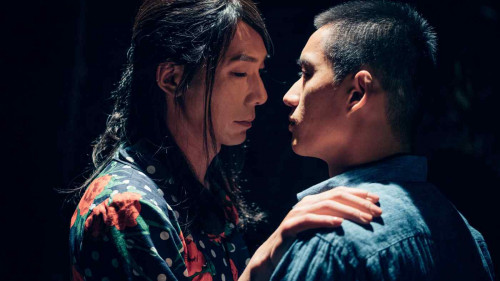
KUALA LUMPUR -- "We were well aware from the start that the subject matter would have had its challenges in Malaysia and most other Asian territories," says Jin Ong, the producer of "Miss Andy" (2020), a Malaysian-Taiwanese
film about the life of a transgender woman living in Kuala Lumpur. The film was released in Taiwan on Jan. 8 to circumvent a likely ban in predominantly Muslim Malaysia, where the LGBTQ community still struggles for equality.
Directed by Teddy Chin, "Miss Andy" follows in the footsteps of controversial Malaysian Chinese filmmakers such as Lau Kek Huat and Wee Meng Chee (also known as Namewee). Both also turned to Taiwan, one of the most LGBTQ-friendly countries in Asia, to release films that could not be screened in straight-laced Malaysia, where gay and transgender activity remain taboo topics.
The community rejoiced on Feb. 25, when the Federal Court -- Malaysia's highest judicial body -- unexpectedly invalidated a Selangor State law that criminalized "intercourse against the order of nature." The court's ruling that the law was unconstitutional was hailed as a historic development by Malaysian gay rights activist Numan Afifi. But LGBTQ activity remains largely illegal, and Prime Minister Muhyiddin Yassin's Perikatan Nasional government has recently strengthened criminal penalties.
Cinema and the visual arts are under particular scrutiny. For example, a 2018 ruling by the Malaysian film censorship board reinforced earlier restrictions, ensuring that movie content concerning LGBTQ activity is likely to be deleted. As a consequence, films like "Miss Andy" that expose the sad reality of one of Southeast Asia's most shunned communities can only be shown in foreign markets.
"Miss Andy," produced by MM2 Entertainment of Singapore, is
one of the first Malaysian films to use a mak nyah (Malay slang for a transgender woman) as a protagonist. The film has been in the can for more than a year because of its controversial topic and cinema closures caused by COVID-19 social distancing protocols.
"While it's
shot in Malaysia, the issues that plague the transgender community are common in a lot of other places, and Taiwan being one of Asia's most LGBTQ-friendly countries made it the perfect launchpad for the film to highlight their plight," says Jin.
"Miss Andy" follows a handful of earlier Malaysian LGBTQ films. "Bukak Api" (2000) directed by Osman Ali, was the first independent documentary to depict the life of Malaysian transgender people, and "I Don't Want to Sleep Alone" (2006), a Malaysian-Taiwanese coproduction directed by Tsai Ming-Liang, depicted the homosexual attraction that a Bengali migrant worker develops for a homeless man to whom he gives shelter.
"Waris Jari Hantu" (2007) by Suhaimi Baba mixed supernatural folklore with the story of a man who wants to become a woman and eventually undergoes a sex change operation. "Dalam Botol" (2011), directed by Khir Rahman, tells the story of a gay man who changes his sex to please his partner, and then regrets his decision when the latter falls in love with another girl.
"Miss Andy" casts a powerful light on the tribulations that LGBTQ people must face daily in one of the Southeast Asian nations that disregards them the most. In the film, 55-year-old Andy, played by Lee Lee-zen,completes his
transition into a woman called Evon five years after the death of his wife. Andy's son and daughter cannot cope with
the shame of having a transgender father, and shun Evon. If that was not enough, the
degrading sex work that Evon must resort to in order to make ends meet turns grimmer and more violent day after day.
The film's opening scene pulls no punches as we follow Evon from the street, where she is
almost killed for refusing to service a client, to a police station where she is harassed and
ordered to strip naked in front of a group of foul-mouthed Malay officers who want to body-search her.
But sweet-natured Evon is far from being the monster that society thinks she is. Although she needs income from sex work to pay the bills she owns a decent home, and has regular work driving a delivery van. She has friends too, including a joyful fellow trans woman and a handsome and gentle work companion called Teck (Jack Tan), who is hearing impaired and with whom she shares a feeling of being a "lesser" human.
"Prior to doing research for this particular film,
I didn't know that the LGBTQ community faces legal challenges in Malaysia," says Lee. "A heterosexual person can conduct himself/herself in a normal and courageous way when it comes to his/her pursuit of love. So why are LGBTQ individuals, [who are] also perfectly normal people, forbidden from loving someone of their choice and doing things of their interest," says Lee.
"But all of the above is forbidden in Malaysia, as well as many other countries, which is very saddening to me."
The movie's plot also incorporates the evergreen issue of
illegal migration to Malaysia. Evon gets a chance to regain some balance in her life when she serendipitously meets Sophia (Ruby Lin), an illegal Vietnamese worker, and her son Kang (Kyzer Tou). Starving, and on the run from Sophia's abusive husband, the two gladly accept Evon's assistance and end up becoming her housemates -- a choice that leads to a new set of bittersweet consequences.
"Miss Andy"
earned international acclaim at several movie festivals in 2020, including the Osaka Asian Film Festival, the New York Asian Film Festival, the Taiwan International Queer Film Festival, the Kaohsiung Film Festival, and the Hong Kong Lesbian and Gay Film Festival. But it is unlikely to receive a premiere in Malaysia, where LGBTQ themes are mostly embraced only by independent film producers.
"As a filmmaker, it would be amazing to see my work change public opinion and making a direct/measurable impact on larger society," says Kuala Lumpur-based LGBTQ activist and filmmaker Justice Khor, whose short film "Lonesome" (2020) focused on Malaysian LGBTQ people's experiences of the COVID-19 lockdown in what he describes as "a metaphor [for] LGBTQ's oppressions & experience."
"Lonesome" was funded and showcased by the Southeast Asia Queer Cultural Festival 2021, an online virtual festival in February and early March organized by ASEAN SOGIE Caucus, a network of human rights activists from Southeast Asia.
Khor, who says his immediate priority is to create content that rings true to the Malaysian LGBTQ community and to himself, laments Malaysia's strict censorship laws. "I doubt [that] my work, [which] actively presents important social and political issues, would survive their cuts," he says, referring to the country's film censorship board.
Chen Yih Wen, a Kuala Lumpur-based director whose "Eyes on the Ball" (2019) depicted the story of a visually impaired Malaysian football team, also took up LGBTQ issues in the short film "She Ain't Heavy, She's My Brother" (2017) about a Malaysian Chinese trans man. Chen is now completing a documentary called "Shh...Diam!" about a celebrated Malaysian LGBTQ punk rock band.
Chen has also secured support from outside Malaysia -- "Shh...Diam!" is being produced by Alex Lee, co-founder of the Doc Edge Film Festival in New Zealand, with Hong Kong-based director Ruby Yang, winner of an Oscar in 2006 for "The Blood of Yingzhou District" (2006) as creative producer. It also has the backing of the Hong Kong Documentary Initiative.
"With the release of ["Shh...Diam!"] we
plan to run an impact campaign to provide a positive portrayal of the community and spark change in perception and attitude towards LGBTQ people, and that there will be legal recognition for them," says Chen. "We hope the film can be used as an educational toolkit to discuss queer issues in a supportive environment with professional and guided knowledge."


 Aug 27 2020, 12:21 PM


 Quote
Quote

 0.0849sec
 0.61
0.61
 6 queries
 GZIP Disabled