
Welcome Guest ( Log In | Register )

1032 Pages « < 596 597 598 599 600 > » Bottom

Outline · [ Standard ] · Linear+

Investment StashAway Malaysia, Multi-Region ETF at your fingertips!

views
     
ironman16
post Feb 17 2021, 01:06 PM

Look at all my stars!!
*******
Senior Member
2,437 posts

Joined: Sep 2016


QUOTE(GrumpyNooby @ Feb 17 2021, 12:13 PM)
It is a feeder fund feeding into that ETF.

Affin Hwang New China Tracker Fund:
https://nadiablob.blob.core.windows.net/fun...FFS_NCTFHCF.pdf
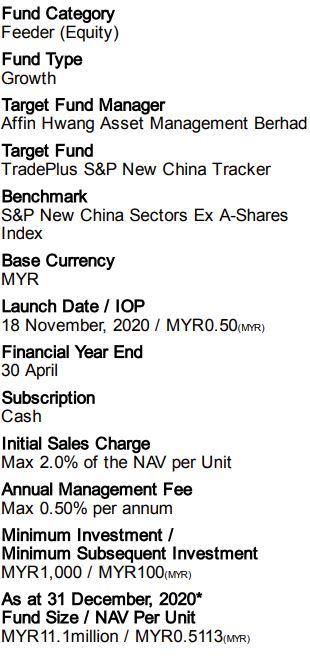
user posted image
*
ya , i know but seen like i not familiar with etf, so stick to this mutual fund first.... sweat.gif

QUOTE(Hoshiyuu @ Feb 17 2021, 12:19 PM)
Yeap looking at it too, just found it at https://affinhwangam.com/invest-with-us/lis...tails?q=NCTFHCF

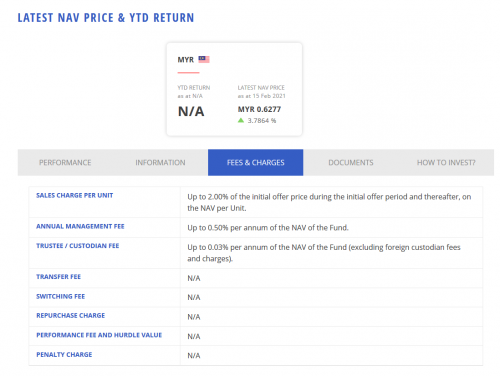
This product was launched very recently at 2020 Nov compared to the ETF which was launched Jan 2019 (AFAIK)
user posted image
Fees wise they seem to match each other on management fee, so there is just the difference in sale charge. You seem to get to buy at RM100 increments too after initial investment.

It does mention about 6.8% of your investment is held in cash/money market funds/deposits instead of all in, so maybe there is a tiny bit of difference?
*
i think may b not berbaloi sikit seen it charge 2 times in affin , but nvm, now is promo period, 0% sales charge....in dulu... bruce.gif
GrumpyNooby
post Feb 17 2021, 01:09 PM

10k Club
********
All Stars
12,387 posts

Joined: Feb 2020
QUOTE(ironman16 @ Feb 17 2021, 01:06 PM)
ya , i know but seen like i not familiar with etf, so stick to this mutual fund first.... sweat.gif
i think may b not berbaloi sikit seen it charge 2 times in affin , but nvm, now is promo period, 0% sales charge....in dulu... bruce.gif
*
If your holding are substantial, to be cost effective is buy the ETF directly.

Same discussion have be done over and over between ARKK ETF and Affin Hwang WS - Global Disruptive Innovation Fund - MYR Hedged
ironman16
post Feb 17 2021, 01:22 PM

Look at all my stars!!
*******
Senior Member
2,437 posts

Joined: Sep 2016


QUOTE(GrumpyNooby @ Feb 17 2021, 01:09 PM)
If your holding are substantial, to be cost effective is buy the ETF directly.

Same discussion have be done over and over between ARKK ETF and Affin Hwang WS - Global Disruptive Innovation Fund - MYR Hedged
*
i know, but not so familiar with the etf at this moment, .....so wait i kaji dulu..... sweat.gif

and budget oso not so enough, wait settle my debt coming jun, baru i rclxm9.gif
mojo86
post Feb 17 2021, 01:42 PM

Getting Started
**
Junior Member
102 posts

Joined: Jan 2011
Based on everyone's experience with Stashaway, does it matter if I time when to add money to my portfolio? Like if the market is down then I add money..or does it not matter?

If yes, is it better then to add money every month instead of putting the whole sum in?
DragonReine
post Feb 17 2021, 01:59 PM

just another dog on the Internet
*******
Senior Member
2,610 posts

Joined: Aug 2011
QUOTE(mojo86 @ Feb 17 2021, 01:42 PM)
Based on everyone's experience with Stashaway, does it matter if I time when to add money to my portfolio? Like if the market is down then I add money..or does it not matter?

If yes, is it better then to add money every month instead of putting the whole sum in?
*
1) Time in the market > Timing the market. As last year's Covid-19 dip and recent surge in profits from KWEB proved, it's not really possible to time the market accurately unless you can see the future. However the irrefutable truth is that every day you delay putting investments in order to wait for a dip is losing a day where your money can work for you.

2) Lump sum vs ringgit/dollar cost averaging (splitting the whole sum over several payments) is mostly a question of your ability to withstand volatility and how secure you feel about investing a large sum knowing that it might lose value in short term. If you're the kind that feels uneasy about giving a lump sum to the point you lose sleep and you get anxiety, then DCA. If you have a heart of steel and aren't afraid of short term losses because you're aiming for long term profits, then lump sum on average usually profits more than DCA.

note: setting aside part of your monthly income to invest monthly is not DCA, DCA is for those who already have a sum of cash on hand but split up payments.

This post has been edited by DragonReine: Feb 17 2021, 02:04 PM
lee82gx
post Feb 17 2021, 03:05 PM

I guess I'm special
*******
Senior Member
3,117 posts

Joined: Jul 2005
From: Penang


QUOTE(DragonReine @ Feb 17 2021, 01:59 PM)
1) Time in the market > Timing the

note: setting aside part of your monthly income to invest monthly is not DCA, DCA is for those who already have a sum of cash on hand but split up payments.
*
I'm so proud of you!
polarzbearz
post Feb 17 2021, 06:36 PM

Gracie
*******
Senior Member
4,816 posts

Joined: Apr 2007


QUOTE(DragonReine @ Feb 17 2021, 01:59 PM)
.....

note: setting aside part of your monthly income to invest monthly is not DCA, DCA is for those who already have a sum of cash on hand but split up payments.
*
How is monthly fixed contributions not a DCA? What you described is also exactly DCA since it also involves periodically investing a set amount of money regardless of the market price of the securities being purchased
victorian
post Feb 17 2021, 06:49 PM

Look at all my stars!!!
*******
Senior Member
5,596 posts

Joined: Apr 2011
From: Kuala Lumpur


QUOTE(DragonReine @ Feb 17 2021, 01:59 PM)
1) Time in the market > Timing the market. As last year's Covid-19 dip and recent surge in profits from KWEB proved, it's not really possible to time the market accurately unless you can see the future. However the irrefutable truth is that every day you delay putting investments in order to wait for a dip is losing a day where your money can work for you.

2) Lump sum vs ringgit/dollar cost averaging (splitting the whole sum over several payments) is mostly a question of your ability to withstand volatility and how secure you feel about investing a large sum knowing that it might lose value in short term. If you're the kind that feels uneasy about giving a lump sum to the point you lose sleep and you get anxiety, then DCA. If you have a heart of steel and aren't afraid of short term losses because you're aiming for long term profits, then lump sum on average usually profits more than DCA.

note: setting aside part of your monthly income to invest monthly is not DCA, DCA is for those who already have a sum of cash on hand but split up payments.
*
It does not matter whether you have a lump-sum cash or you are investing from your monthly income. Both are dollar cost averaging.

lee82gx
post Feb 17 2021, 06:54 PM

I guess I'm special
*******
Senior Member
3,117 posts

Joined: Jul 2005
From: Penang


It is "all in" if you have no more spare cash. But at the same time obviously it achieves the dca effect, no doubt.

This is some thing I've been preaching for some time and finally someone thinks I'm right lol.
DragonReine
post Feb 17 2021, 07:00 PM

just another dog on the Internet
*******
Senior Member
2,610 posts

Joined: Aug 2011
QUOTE(polarzbearz @ Feb 17 2021, 06:36 PM)
How is monthly fixed contributions not a DCA? What you described is also exactly DCA since it also involves periodically investing a set amount of money regardless of the market price of the securities being purchased
*
IMO it's not accurate when it comes to the psychology behind the investment strategy of DCA.

Monthly contribution from income or earnings from that month is actually a form of lump sum, but because it's steady contribution at fixed periods, its considered averaging (you don't time the market, but contribute regularly without caring the performance of the unit on the particular day you invest). However because it's money you don't have on hand until you get your income, it's not fitting with the strategy of DCA.

I'll try to illustrate what I mean by this.

Investor A earns monthly RM2k. Every month when he received income, he sets aside RM200 to invest on the 1st day of next month. The RM200 isn't deducted from existing savings or sums of money he might be keeping, so it's lump sum.

Investor B received RM6k in the form of a commission bonus. Because she feels that she'd rather put the money all to work at once, she invests the full sum of RM6k immediately. This is the lump sum strategy that most people are familiar with.

Investor C also received RM6k bonus. However because she doesn't feel comfortable with the idea of investing the entire amount in one go, she puts the RM6k in Simple which is low risk to earn dividends, and sets up a monthly deduction of RM200 to deduct from Simple into her investment portfolio, periodically topping up Simple when she gets bonuses or extra money. This is "true" strategy of DCA, where the investor slowly deducts from a pool of money that they planned to invest because they don't trust the strategy and risk of lump sum investment.

===

of course this is all semantics, in reality it's a psychological and financial safeguard to prevent yourself from investing at a bad time and/or panicking when your investments have a bad time laugh.gif Monthly income contribution or monthly deduction from savings pool, both work to make you invest regularly and to average out your investments so losses are minimised and it doesn't go beyond your risk appetite.


Just invest smartly and within your means, and within your comfort zone laugh.gif

This post has been edited by DragonReine: Feb 17 2021, 07:15 PM
Hoshiyuu
post Feb 17 2021, 07:15 PM

wow i unlocked this
******
Senior Member
1,210 posts

Joined: Nov 2011
J.L. Collins has some good insight here at the linked timestamp below about DCA if anyone has interest to just listen to a discussion on the definition and why he doesn't like it.

https://www.youtube.com/watch?v=MJ28_ilqJ8g&t=2220s
DragonReine
post Feb 17 2021, 07:22 PM

just another dog on the Internet
*******
Senior Member
2,610 posts

Joined: Aug 2011
QUOTE(Hoshiyuu @ Feb 17 2021, 07:15 PM)
J.L. Collins has some good insight here at the linked timestamp below about DCA if anyone has interest to just listen to a discussion on the definition and why he doesn't like it.

https://www.youtube.com/watch?v=MJ28_ilqJ8g&t=2220s
*
Oh yes, recommend this, is a very good video 👍 watched last year and gave me some good insight
jutamind
post Feb 17 2021, 08:05 PM

Look at all my stars!!
*******
Senior Member
2,429 posts

Joined: Jul 2007
I've recently taking profit from my SA portfolio (TWR 11.xx, taking profit amount of RM 730). This amount is the "profit" amount (current value - net deposit).

After transaction is completed, I check my portfolio again. This time TWR reduced a bit to 10.xx as expected but total returns still show RM 6xx. Question: why is total return not reduced to close to the net deposit amount, ie less/no profit since I've withdrawn the profit part from the portfolio?
thecurious
post Feb 17 2021, 08:14 PM

Regular
******
Senior Member
1,617 posts

Joined: Mar 2020
QUOTE(jutamind @ Feb 17 2021, 08:05 PM)
I've recently taking profit from my SA portfolio (TWR 11.xx, taking profit amount of RM 730). This amount is the "profit" amount (current value - net deposit).

After transaction is completed, I check my portfolio again. This time TWR reduced a bit to 10.xx as expected but total returns still show RM 6xx. Question: why is total return not reduced to close to the net deposit amount, ie less/no profit since I've withdrawn the profit part from the portfolio?
*
While waiting for any sifu, when you sell, you are not taking profits only. Stashaway has to sell units, which has principal and profit or loss portion attached to each unit.
When you sell, you redeem part of your principal and profit.
So the reduction wont be completely from your profit only.
So there is no pure taking profits.
jutamind
post Feb 17 2021, 08:16 PM

Look at all my stars!!
*******
Senior Member
2,429 posts

Joined: Jul 2007
So how do we take profit then especially from the profit part only?

QUOTE(thecurious @ Feb 17 2021, 08:14 PM)
While waiting for any sifu, when you sell, you are not taking profits only. Stashaway has to sell units, which has principal and profit or loss portion attached to each unit.
When you sell, you redeem part of your principal and profit.
So the reduction wont be completely from your profit only.
So there is no pure taking profits.
*
thecurious
post Feb 17 2021, 08:16 PM

Regular
******
Senior Member
1,617 posts

Joined: Mar 2020
QUOTE(jutamind @ Feb 17 2021, 08:16 PM)
So how do we take profit then especially from the profit part only?
*
You can't. Or at least none that I know of.
wahsai
post Feb 17 2021, 08:41 PM

New Member
*
Junior Member
15 posts

Joined: Jan 2008


QUOTE(DragonReine @ Feb 17 2021, 01:59 PM)
1) Time in the market > Timing the market. As last year's Covid-19 dip and recent surge in profits from KWEB proved, it's not really possible to time the market accurately unless you can see the future. However the irrefutable truth is that every day you delay putting investments in order to wait for a dip is losing a day where your money can work for you.

2) Lump sum vs ringgit/dollar cost averaging (splitting the whole sum over several payments) is mostly a question of your ability to withstand volatility and how secure you feel about investing a large sum knowing that it might lose value in short term. If you're the kind that feels uneasy about giving a lump sum to the point you lose sleep and you get anxiety, then DCA. If you have a heart of steel and aren't afraid of short term losses because you're aiming for long term profits, then lump sum on average usually profits more than DCA.

note: setting aside part of your monthly income to invest monthly is not DCA, DCA is for those who already have a sum of cash on hand but split up payments.
*
The same amount of investment over constant time interval is DCA, be it from cash on hand or salary.

Holding your cash while waiting for mild retracements or a deep pullback for entry trigger (value cost averaging) might not be doable from monthly income. I do this with my cash savings, value proportional to the retracements (either kweb, ijr or xly) , as these are among the highest weightages), and DCA from monthly salaries.

polarzbearz
post Feb 17 2021, 10:07 PM

Gracie
*******
Senior Member
4,816 posts

Joined: Apr 2007


QUOTE(victorian @ Feb 17 2021, 06:49 PM)
It does not matter whether you have a lump-sum cash or you are investing from your monthly income. Both are dollar cost averaging.
*
QUOTE(lee82gx @ Feb 17 2021, 06:54 PM)
It is "all in" if you have no more spare cash. But at the same time obviously it achieves the dca effect, no doubt.

This is some thing I've been preaching for some time and finally someone thinks I'm right lol.
*
QUOTE(DragonReine @ Feb 17 2021, 07:00 PM)
IMO it's not accurate when it comes to the psychology behind the investment strategy of DCA.

Monthly contribution from income or earnings from that month is actually a form of lump sum, but because it's steady contribution at fixed periods, its considered averaging (you don't time the market, but contribute regularly without caring the performance of the unit on the particular day you invest). However because it's money you don't have on hand until you get your income, it's not fitting with the strategy of DCA.

I'll try to illustrate what I mean by this.

Investor A earns monthly RM2k. Every month when he received income, he sets aside RM200 to invest on the 1st day of next month. The RM200 isn't deducted from existing savings or sums of money he might be keeping, so it's lump sum.

Investor B received RM6k in the form of a commission bonus. Because she feels that she'd rather put the money all to work at once, she invests the full sum of RM6k immediately. This is the lump sum strategy that most people are familiar with.

Investor C also received RM6k bonus. However because she doesn't feel comfortable with the idea of investing the entire amount in one go, she puts the RM6k in Simple which is low risk to earn dividends, and sets up a monthly deduction of RM200 to deduct from Simple into her investment portfolio, periodically topping up Simple when she gets bonuses or extra money. This is "true" strategy of DCA, where the investor slowly deducts from a pool of money that they planned to invest because they don't trust the strategy and risk of lump sum investment.

===

of course this is all semantics, in reality it's a psychological and financial safeguard to prevent yourself from investing at a bad time and/or panicking when your investments have a bad time laugh.gif Monthly income contribution or monthly deduction from savings pool, both work to make you invest regularly and to average out your investments so losses are minimised and it doesn't go beyond your risk appetite.

Just invest smartly and within your means, and within your comfort zone laugh.gif
*
Actually DCA covers more than just "splitting lump sum into smaller amounts". Strictly by definition, even the means of "regularly investing fixed amount regardless of market conditions" is a form of DCA itself

https://www.merriam-webster.com/dictionary/...ost%20averaging
https://dictionary.cambridge.org/dictionary...-cost-averaging

But then again - let's agree that regardless of what definitions - psychologically just don't get emotional when investing is so damn true. Invest within one's means and risk appetite and don't panic tongue.gif
SUSxander83
post Feb 18 2021, 01:56 AM

Blast off like a rocket
*******
Senior Member
6,427 posts

Joined: Jan 2003
From: Autobiography!!!
KWEB and IJR signals re entering coming soon
backspace66
post Feb 18 2021, 05:56 AM

Look at all my stars!!
*******
Senior Member
2,139 posts

Joined: Nov 2007


DCA when you have money of course achieve same effect if you look at one side of the equation.

DCA when you already have the money is moving from one asset to another, it is important to know if that other asset is generating return as well or not.

Think about TOTAL RETURN. Not just return in the investment you DCA into. There goes my 2 kupang.

This post has been edited by backspace66: Feb 18 2021, 06:10 AM

1032 Pages « < 596 597 598 599 600 > » Top
 

Change to:
| Lo-Fi Version
0.0249sec    0.39    6 queries    GZIP Disabled
Time is now: 7th December 2025 - 11:42 AM