Welcome Guest ( Log In | Register )

27 Pages « < 6 7 8 9 10 > » Bottom

Outline · [ Standard ] · Linear+

 [UPDATE]Japanese Language Learners/JLPT Discussion, Sharing and discussion of the language

views
     
chinti
post Oct 9 2018, 10:23 PM

Tarak Drama, Kita Bikin Drama
******
Senior Member
1,653 posts

Joined: Aug 2008
From: My Fantasy World


looking at the response here im guessing many are beginners and a lot of banana (cant read kanji/chinese words)
so i thought i will come provide some 漢字 lesson whenever im free (im pretty occupied with work and cycling)

the goal is to help you read manga or light novel hence kanji is very important thumbsup.gif
for words that you don't understand, try asking and i will reply whenever i can, or search on google/dictionary on your own

we gonna start from elementary 1 kanji which consist of 80 characters
disclaimer *all contents are from an elementary school book*

うんこと勉強しましょう!(うんことべんきょうしましょう!)(Let's study with poop!) biggrin.gif
小学1年生 (しょうがく1ねんせい)

「一」
» Click to show Spoiler - click again to hide... «


「二」
» Click to show Spoiler - click again to hide... «


「三」
» Click to show Spoiler - click again to hide... «


「四」
» Click to show Spoiler - click again to hide... «


「五」
» Click to show Spoiler - click again to hide... «


This post has been edited by chinti: Oct 9 2018, 10:30 PM
TSsweet_pez
post Oct 10 2018, 05:54 PM

何を見ているの
Group Icon
Staff
4,277 posts

Joined: Jun 2007
From: 地獄だ
QUOTE(chinti @ Oct 9 2018, 10:23 PM)
looking at the response here im guessing many are beginners and a lot of banana (cant read kanji/chinese words)
so i thought i will come provide some 漢字 lesson whenever im free (im pretty occupied with work and cycling)

the goal is to help you read manga or light novel hence kanji is very important  thumbsup.gif
for words that you don't understand, try asking and i will reply whenever i can, or search on google/dictionary on your own

we gonna start from elementary 1 kanji which consist of 80 characters
disclaimer *all contents are from an elementary school book*

うんこと勉強しましょう!(うんことべんきょうしましょう!)(Let's study with poop!)  biggrin.gif
小学1年生 (しょうがく1ねんせい)

「一」
» Click to show Spoiler - click again to hide... «


「二」
» Click to show Spoiler - click again to hide... «


「三」
» Click to show Spoiler - click again to hide... «


「四」
» Click to show Spoiler - click again to hide... «


「五」
» Click to show Spoiler - click again to hide... «

*
Owhhh thanks for the effort Chinti! It'll certainly be helpful to some of the members; keep it up biggrin.gif
chinti
post Oct 10 2018, 08:49 PM

Tarak Drama, Kita Bikin Drama
******
Senior Member
1,653 posts

Joined: Aug 2008
From: My Fantasy World


alright, so i figured the example sentences used in the Let's study with poop book is a bit hard for beginner sad.gif
therefore, i decided to change to a much easy and straightforward book to use here rclxms.gif (yes i got a lot of study materials, i will try and see which is suitable for everyone here)
let's try again  rclxms.gif

「一」
» Click to show Spoiler - click again to hide... «


「右」
» Click to show Spoiler - click again to hide... «


「雨」
» Click to show Spoiler - click again to hide... «


「円」
» Click to show Spoiler - click again to hide... «


「王」
» Click to show Spoiler - click again to hide... «


「音」
» Click to show Spoiler - click again to hide... «


「下」
» Click to show Spoiler - click again to hide... «


「火」
» Click to show Spoiler - click again to hide... «


「花」
» Click to show Spoiler - click again to hide... «


「貝」
» Click to show Spoiler - click again to hide... «


TSsweet_pez
post Oct 11 2018, 09:21 AM

何を見ているの
Group Icon
Staff
4,277 posts

Joined: Jun 2007
From: 地獄だ
QUOTE(chinti @ Oct 10 2018, 08:49 PM)
alright, so i figured the example sentences used in the Let's study with poop book is a bit hard for beginner  sad.gif
therefore, i decided to change to a much easy and straightforward book to use here  rclxms.gif (yes i got a lot of study materials, i will try and see which is suitable for everyone here)
let's try again  rclxms.gif

「一」
» Click to show Spoiler - click again to hide... «


「右」
» Click to show Spoiler - click again to hide... «


「雨」
» Click to show Spoiler - click again to hide... «


「円」
» Click to show Spoiler - click again to hide... «


「王」
» Click to show Spoiler - click again to hide... «


「音」
» Click to show Spoiler - click again to hide... «


「下」
» Click to show Spoiler - click again to hide... «


「火」
» Click to show Spoiler - click again to hide... «


「花」
» Click to show Spoiler - click again to hide... «


「貝」
» Click to show Spoiler - click again to hide... «

*
I find this [下] sometimes can be quite hard to know which is the right pronunciation. No doubt if I've studied the word eg. 下手 I'll know it's pronounced as ”へ”. But when it's a new word... sweat.gif

And 火花 vs 花火 = Kanji terbalik and meaning is different. Spark vs fireworks. This is how Japanese is so interesting laugh.gif

This post has been edited by sweet_pez: Oct 11 2018, 09:22 AM
chinti
post Oct 11 2018, 01:02 PM

Tarak Drama, Kita Bikin Drama
******
Senior Member
1,653 posts

Joined: Aug 2008
From: My Fantasy World


QUOTE(sweet_pez @ Oct 11 2018, 09:21 AM)
I find this [下] sometimes can be quite hard to know which is the right pronunciation. No doubt if I've studied the word eg. 下手 I'll know it's pronounced as ”へ”. But when it's a new word...  sweat.gif

And 火花 vs 花火  = Kanji terbalik and meaning is different. Spark vs fireworks. This is how Japanese is so interesting laugh.gif
*
I understand where u coming from, sometimes I just try read all differently and see which one sounds more accurate lol
TSsweet_pez
post Oct 11 2018, 04:46 PM

何を見ているの
Group Icon
Staff
4,277 posts

Joined: Jun 2007
From: 地獄だ
QUOTE(chinti @ Oct 11 2018, 01:02 PM)
I understand where u coming from, sometimes I just try read all differently and see which one sounds more accurate lol
*
Hahahahaha so I guess sometimes there's no other options but to do it this way laugh.gif

I'd like to check with you - other than Takoboto - is there any other electronic dictionary/ app that you're using? Or can recommend?

Also have an issue with Lesson 24 of Minna no Nihongo - confusion on:

あげます - give
もらいます - receive
くれます -favour

I'd like to clarify:

- If I receive say, a card from Satou-san, then I use "くれます" instead of "あげます" (saying Satou-san gave me a card). Because similarly to English there's 2 ways of putting it. For example:

I received a card from Satou-san.
Satou-san gave me a card.

Both carries the same meaning but with the subject switched around.

In one of the App's note it says that this line is wrong:

QUOTE
私は佐藤さんにカードをあげました -x (wrong sentence)


Thus can I say that whenever me, or my family members receive something from a 3rd party, it's always to use くれます? And no あげます is ever used? Even if I'm saying "Mr Satou gave me a card."?

Omg so confusing cry.gif


ChocChristy
post Oct 11 2018, 06:09 PM

Casual
***
Junior Member
307 posts

Joined: Aug 2011


QUOTE(sweet_pez @ Oct 11 2018, 04:46 PM)
Hahahahaha so I guess sometimes there's no other options but to do it this way laugh.gif

I'd like to check with you - other than Takoboto - is there any other electronic dictionary/ app that you're using? Or can recommend?

Also have an issue with Lesson 24 of Minna no Nihongo - confusion on:

あげます - give
もらいます - receive
くれます -favour

I'd like to clarify:

- If I receive say, a card from Satou-san, then I use "くれます" instead of "あげます" (saying Satou-san gave me a card). Because similarly to English there's 2 ways of putting it. For example:

I received a card from Satou-san.
Satou-san gave me a card.

Both carries the same meaning but with the subject switched around.

In one of the App's note it says that this line is wrong:
Thus can I say that whenever me, or my family members receive something from a 3rd party, it's always to use くれます? And no あげます is ever used? Even if I'm saying "Mr Satou gave me a card."?

Omg so confusing cry.gif
*
私は佐藤さんにカードをあげました

This one means I gave Satou-san a card.

It should be 私は佐藤さんにカードをもらいました. (I received a card from Satou-san).


If you want to say Satou gave me a card, it would be

佐藤さんにカードをくれました。 (Satou-san gave me a card)

But other than that, yes you are right, use くれます when you are saying someone is giving you or your family something.

e.g. 佐藤さんは姉にプレセントをくれました。 (Satou-san gave my sister a present).

あげます is only used when you are referring to yourself giving someone else something.

Hope this clears up your confusion!

This post has been edited by ChocChristy: Oct 11 2018, 07:26 PM
chinti
post Oct 11 2018, 07:13 PM

Tarak Drama, Kita Bikin Drama
******
Senior Member
1,653 posts

Joined: Aug 2008
From: My Fantasy World


QUOTE(sweet_pez @ Oct 11 2018, 04:46 PM)
Hahahahaha so I guess sometimes there's no other options but to do it this way laugh.gif

I'd like to check with you - other than Takoboto - is there any other electronic dictionary/ app that you're using? Or can recommend?

Also have an issue with Lesson 24 of Minna no Nihongo - confusion on:

あげます - give
もらいます - receive
くれます -favour

I'd like to clarify:

- If I receive say, a card from Satou-san, then I use "くれます" instead of "あげます" (saying Satou-san gave me a card). Because similarly to English there's 2 ways of putting it. For example:

I received a card from Satou-san.
Satou-san gave me a card.

Both carries the same meaning but with the subject switched around.

In one of the App's note it says that this line is wrong:
Thus can I say that whenever me, or my family members receive something from a 3rd party, it's always to use くれます? And no あげます is ever used? Even if I'm saying "Mr Satou gave me a card."?

Omg so confusing cry.gif
*
I hardly use any dictionary lol.
For your question, chocchristy already explained it quite well.

This is how I remember how to use agemasu and moraimasu when I first started, aG(ive)emasu meaning give so it's always used when u r giving someone something. Mor(eceive)aimasu meaning receive so use it when u r on the receiving end.

My understanding is moraimasu is used when the subject is anyone, kuremasu when the subject is you or someone within your family members
ChocChristy
post Oct 11 2018, 07:49 PM

Casual
***
Junior Member
307 posts

Joined: Aug 2011


QUOTE(chinti @ Oct 11 2018, 07:13 PM)
I hardly use any dictionary lol.
For your question, chocchristy already explained it quite well.

This is how I remember how to use agemasu and moraimasu when I first started, aG(ive)emasu meaning give so it's always used when u r giving someone something. Mor(eceive)aimasu meaning receive so use it when u r on the receiving end.

My understanding is moraimasu is used when the subject is anyone, kuremasu when the subject is you or someone within your family members
*
Oh, that's a good way to remember! Thanks for sharing.

That reminds me, あげます can also be used when the receiving party is someone else not related to you.

e.g. 佐藤さんは竹森さんにカードをあげました。(Satou-san gave Takemori-san a card)


But be aware, there's magic involved when you ask your friend A if friend B gave them something.

e.g. 「竹森さん、佐藤さんがあなたにカードをくれたんだった?」 ("Takemori-san, Satou-san gave you a card?")

In this case, it's as if the speaker (you), is taking the perspective of Takemori-san (the listener/the one you are speaking to), hence くれます. You can't use あげます in this situation.

The first example in this post where あげます was used, the listener (the person you are talking to) is not Takemori (the subject/receiver of the card), so you can use あげます.

This post has been edited by ChocChristy: Oct 11 2018, 07:53 PM
TSsweet_pez
post Oct 12 2018, 01:22 PM

何を見ているの
Group Icon
Staff
4,277 posts

Joined: Jun 2007
From: 地獄だ
QUOTE(ChocChristy @ Oct 11 2018, 06:09 PM)
» Click to show Spoiler - click again to hide... «

Hope this clears up your confusion!
*
Thanks ChocChristy. Probably should rephrase my question/ clarification. That's pretty much what I learnt in class - あげます、もらいます、くれます no issue in understanding the usage/ purpose but, more on confusion in terms of who is the receiver and who is the giver hmm.gif

How do one identity in the sentence - the receiver and giver?

QUOTE(chinti @ Oct 11 2018, 07:13 PM)
I hardly use any dictionary lol.
For your question, chocchristy already explained it quite well.

This is how I remember how to use agemasu and moraimasu when I first started, aG(ive)emasu meaning give so it's always used when u r giving someone something. Mor(eceive)aimasu meaning receive so use it when u r on the receiving end.

My understanding is moraimasu is used when the subject is anyone, kuremasu when the subject is you or someone within your family members
*
What I've learnt in class - あげます、もらいます、くれます is spoken among peers/ same level. For example to give: あげます is between seniors/ peers/ friends etc. To your boss/ management eg. it will be さしあげます and there's another term referring to a lower rank eg. pets (although now pets have 'upgraded status' as part of family members thus the use is あげます).

As mentioned in above reply - the confusion is who is the receiver and giver hmmm
chinti
post Oct 12 2018, 01:57 PM

Tarak Drama, Kita Bikin Drama
******
Senior Member
1,653 posts

Joined: Aug 2008
From: My Fantasy World


QUOTE(sweet_pez @ Oct 12 2018, 01:22 PM)
Thanks ChocChristy. Probably should rephrase my question/ clarification. That's pretty much what I learnt in class - あげます、もらいます、くれます no issue in understanding the usage/ purpose but, more on confusion in terms of who is the receiver and who is the giver hmm.gif 

How do one identity in the sentence - the receiver and giver?
What I've learnt in class -  あげます、もらいます、くれます  is spoken among peers/ same level. For example to give: あげます is between seniors/ peers/ friends etc. To your boss/ management eg. it will be さしあげます and there's another term referring to a lower rank eg. pets (although now pets have 'upgraded status' as part of family members thus the use is あげます).

As mentioned in above reply - the confusion is who is the receiver and giver hmmm
*
私はchintiさんにお金をあげました。in this case you are the giver im the receiver.
私はsweet pezさんにお金をもらいました。in this case im the receiver you are the giver.
sweet pezさんは私にお金をくれました。 in this case im the receiver you are the giver.

あげます use when you wan to say someone give something to someone or you give something to someone. cannot use this if you are the receiver
もらいます use when receiver is you or anyone else
くれます use when receiver is you or your family member

giverはreceiverにobjectをあげます
giverはreceiverにobjectをくれます
giverに・から <-- see the special case, only もらいます use に・から on the giver

i think thats what you are looking for in order to identify the sentence.

as for keigo, i suggest you don't venture into it yet until the basic is strong. keigo is very hard and even some japanese r confused about it

This post has been edited by chinti: Oct 12 2018, 01:59 PM
ChocChristy
post Oct 12 2018, 02:10 PM

Casual
***
Junior Member
307 posts

Joined: Aug 2011


Ah, so the confusion is between the は and に. I think Chinti gave some good examples and explanation. You use the particles to identify which is giver and which is receiver.

は is a topic marking particle, as you would have learnt. So anything before it is the main topic of the sentence.
MasBoleh!
post Oct 13 2018, 06:53 PM

Look at all my stars!!
*******
Senior Member
3,599 posts

Joined: Jun 2009
From: MYBoleh.NET
For beginner, can watch this. Try not to read the subtitle and listen to what she said. From there try to gauge the meaning. I find that she speak rather slow hence it suit those beginners smile.gif


arubin
post Oct 15 2018, 01:32 PM

Holy Pastafarian
****
Senior Member
670 posts

Joined: Oct 2007
From: Church of the Flying Spaghetti Monster


Interesting. So there's a Japanese language interest thread here.

Here's an idea - quite a few Karaoke places here have Japanese songs. Ever considered having a Japanese only karaoke outing? Its one way to practice and build your confidence.
tass
post Oct 15 2018, 02:39 PM

Getting Started
**
Junior Member
184 posts

Joined: Feb 2011
QUOTE(arubin @ Oct 15 2018, 01:32 PM)
Interesting. So there's a Japanese language interest thread here.

Here's an idea - quite a few Karaoke places here have Japanese songs. Ever considered having a Japanese only karaoke outing? Its one way to practice and build your confidence.
*
Which Karaoke places have Japanese songs? Does it have actual Japanese writings? As I know some of the Karaoke which have Japanese songs is not in japanese writings.
sacwoc
post Oct 15 2018, 02:42 PM

Casual
***
Junior Member
306 posts

Joined: May 2011
QUOTE(sweet_pez @ Oct 12 2018, 01:22 PM)
Thanks ChocChristy. Probably should rephrase my question/ clarification. That's pretty much what I learnt in class - あげます、もらいます、くれます no issue in understanding the usage/ purpose but, more on confusion in terms of who is the receiver and who is the giver hmm.gif 

How do one identity in the sentence - the receiver and giver?
What I've learnt in class -  あげます、もらいます、くれます  is spoken among peers/ same level. For example to give: あげます is between seniors/ peers/ friends etc. To your boss/ management eg. it will be さしあげます and there's another term referring to a lower rank eg. pets (although now pets have 'upgraded status' as part of family members thus the use is あげます).

As mentioned in above reply - the confusion is who is the receiver and giver hmmm
*
さしあげます - this is business Japanese. Would suggest you to stay out of this till you get the basics right. For me the most difficult part is still the partilces like に、を、が、は、etc. I cannot really explain why a sentence have to be like that, but when someone speaks to me, I do understand what it means. smile.gif
arubin
post Oct 15 2018, 02:54 PM

Holy Pastafarian
****
Senior Member
670 posts

Joined: Oct 2007
From: Church of the Flying Spaghetti Monster


QUOTE(tass @ Oct 15 2018, 02:39 PM)
Which Karaoke places have Japanese songs? Does it have actual Japanese writings? As I know some of the Karaoke which have Japanese songs is not in japanese writings.
*
All karaoke places have Japanese songs. The only question is how wide of a selection and how updated their library is.

Some of the newer songs have the option to set the language so you can request romanji lyrics. Some of them might have kana written above the kanji in the lyrics for easier reading. For those that don't have, you can always google the lyrics online.

I have been doing this to either the annoyance or amusement of my friends when we go for karaoke. Sing very very badly in Japanese. laugh.gif

But hey, it builds one's confidence to speak it in public. icon_rolleyes.gif
tass
post Oct 15 2018, 05:21 PM

Getting Started
**
Junior Member
184 posts

Joined: Feb 2011
QUOTE(arubin @ Oct 15 2018, 02:54 PM)
All karaoke places have Japanese songs. The only question is how wide of a selection and how updated their library is.

Some of the newer songs have the option to set the language so you can request romanji lyrics. Some of them might have kana written above the kanji in the lyrics for easier reading. For those that don't have, you can always google the lyrics online.

I have been doing this to either the annoyance or amusement of my friends when we go for karaoke. Sing very very badly in Japanese. laugh.gif

But hey, it builds one's confidence to speak it in public. icon_rolleyes.gif
*
The reason I asked is my experience with actual Japanese Karaoke back in 2010. There's this Karaoke shop name "Yumekukan" in Sri Hartamas which uses JoySound machine. So this JoySound karaoke machine only have Japanese songs (No BM, English, Chinese songs). Me and my friends does visit frequently to sing anime songs.

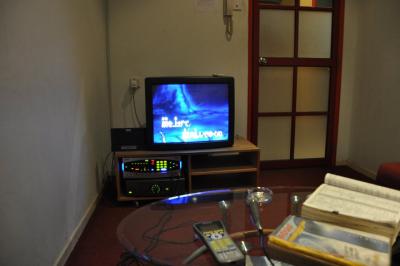
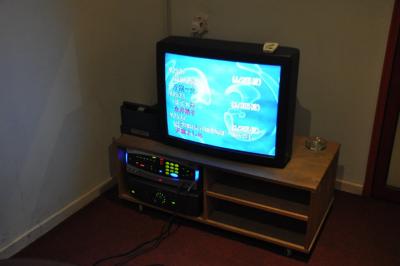
Below which I snapshot the actual place (Now already closed down).
Attached Image Attached Image
Attached Image

Man, I really missed this place. After that I not sure any Karaoke places does have kind of JoySound Machine..


ChocChristy
post Oct 15 2018, 05:35 PM

Casual
***
Junior Member
307 posts

Joined: Aug 2011


QUOTE(sacwoc @ Oct 15 2018, 02:42 PM)
さしあげます - this is business Japanese. Would suggest you to stay out of this till you get the basics right. For me the most difficult part is still the partilces like に、を、が、は、etc. I cannot really explain why a sentence have to be like that, but when someone speaks to me, I do understand what it means. smile.gif
*
Fascinating, right? I've realised, even as I am just at an elementary level of proficiency, I realised I can just identify when a sentence is off maybe not grammatically correct. I don't even listen enough of any Japanese stuff, I think. So no idea how I acquire that.

Think it's the same for other languages too, like BM and BI.

I'm trying to figure out how to acquire that so I can teach BI to my students better.
arubin
post Oct 15 2018, 05:47 PM

Holy Pastafarian
****
Senior Member
670 posts

Joined: Oct 2007
From: Church of the Flying Spaghetti Monster


QUOTE(tass @ Oct 15 2018, 05:21 PM)
The reason I asked is my experience with actual Japanese Karaoke back in 2010. There's this Karaoke shop name "Yumekukan" in Sri Hartamas which uses JoySound machine. So this JoySound karaoke machine only have Japanese songs (No BM, English, Chinese songs). Me and my friends does visit frequently to sing anime songs.

Below which I snapshot the actual place (Now already closed down).
Attached Image Attached Image
Attached Image

Man, I really missed this place. After that I not sure any Karaoke places does have kind of JoySound Machine..
*
Ah, wish I had more friends interested in doing this. But I'm the only one in my circle who likes J-pop at the moment. sad.gif

27 Pages « < 6 7 8 9 10 > » Top
 

Change to:
| Lo-Fi Version
0.0271sec    0.62    6 queries    GZIP Disabled
Time is now: 9th December 2025 - 11:59 AM