Welcome Guest ( Log In | Register )

Bump Topic Topic Closed RSS Feed

Outline · [ Standard ] · Linear+

> Military Thread V26

views
     
Mai189
post Apr 14 2019, 09:10 AM

New Member
*
Newbie
0 posts

Joined: Aug 2018
These are all minor contracts for small number of purchases of gap fillers including that APC with a 105mm turret. My guess is that this is an election boost. Nothing revolutionary at all e.g. the 19070-80 era Type 309 subs. But they are indeed gap filler which ought to bought a long time ago.

How many additional Guardians were bought?

This post has been edited by Mai189: Apr 14 2019, 09:11 AM
Mai189
post May 15 2019, 09:15 PM

New Member
*
Newbie
0 posts

Joined: Aug 2018
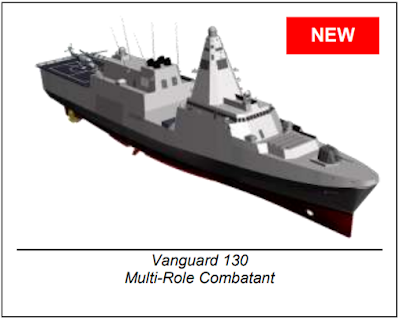
Singapore Technologies Engineering Marine introduces the Vanguard 130 frigate/destroyer for Singapore RSN's Multi Role Project Vessel project

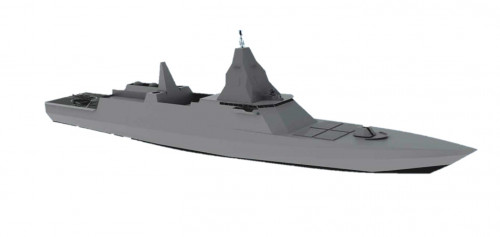
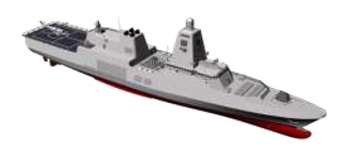
This was discussed previously. The MRCV is supposed to be a carrier for large USVs, UAVs, helicopters in addition to having powerful anti-air, anti-surface and sub-surface suite capabilities. This requires a ship much larger than the current Formidables. Design/s released by Singapore's Mindef attest to this:


user posted image

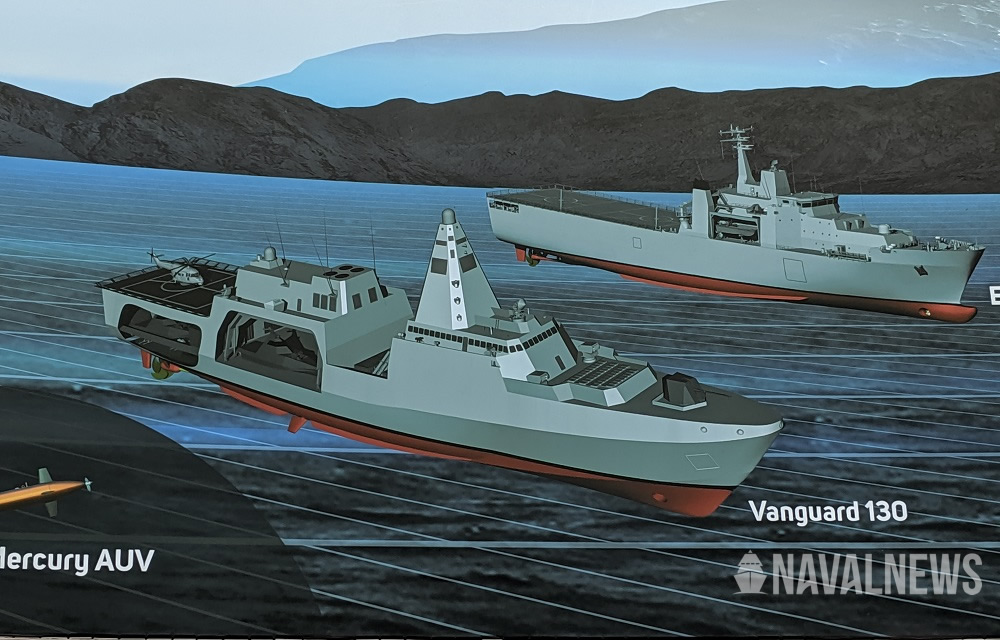
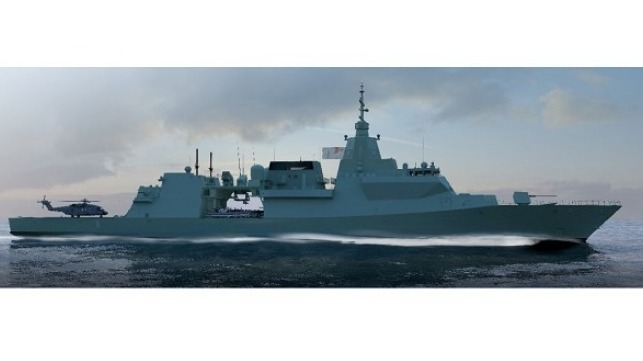
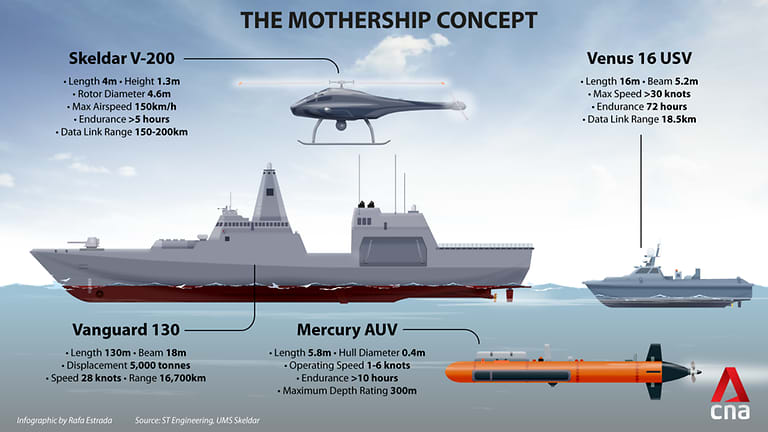
At Imdex 2019, ST Engineering Marine introduces Vanguard 130 clearly aimed at the MRCV project. (In ST's nomenclature "130" refers to the length of between 130m to 140m. An example is Endurance 140 LPD - the endurance class is 145m long). Vanguard 130 probably displaces 6000-7000 tons at full displacement - destroyer range. Other ships in the same class include Australia's Hobart destroyer and Hunter class heavy frigates.

user posted image

user posted image

The first MRCV will be ready by 2025. All 6 MRCVs will be ready by 2030 and the Victory class will be retired.

Other points to note. There are more than 48 to 64 cells for anti air weapons or even surface to surface weapons (SSMS). The ship still seems to carry the deck launched SSMs. The ship seems to be carrying two large USVs in a central cargo/launch by similar to the Type 26:

user posted image


* Do note ST's designs above are not exactly drawn to scale. But you get the picture when the ship is 130-140m long.

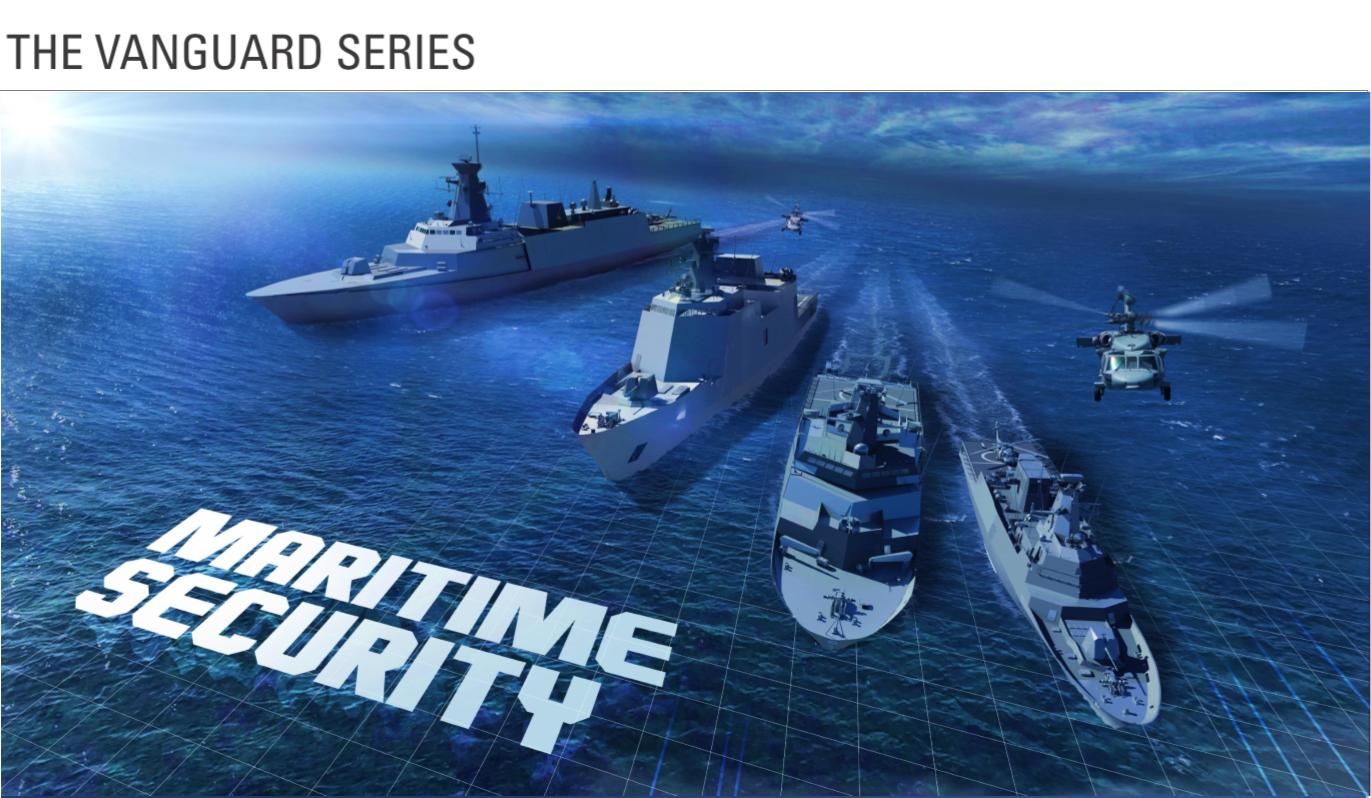
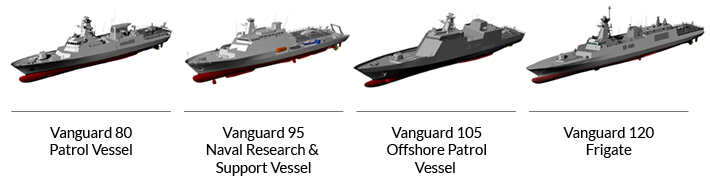
Other Vanguard class ships here:

user posted image

user posted image

In other news from Imdex, it is reported that Sg will increase its sub-surface capabilites read: more Type 218SGs on the way. Poseidon P8s have also been seen flying around in SG - possibly undergoing tests for an incoming MPA purchase by RSN.

Mai189
post May 15 2019, 09:21 PM

New Member
*
Newbie
0 posts

Joined: Aug 2018
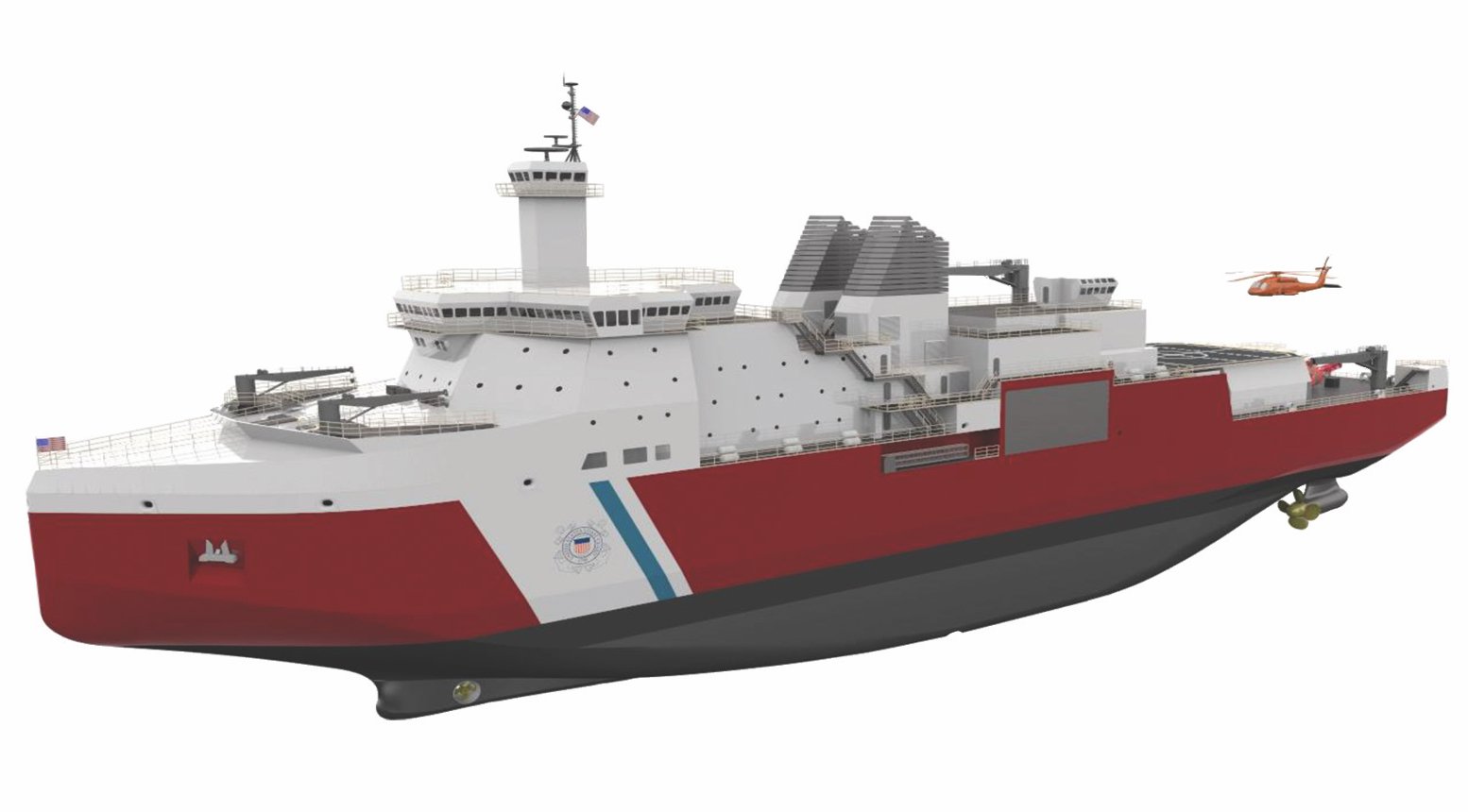
ST Engineering wins up to USD $1.9 billion contract to build icebreakers for U.S. Navy

SINGAPORE (Reuters) - Singapore Technologies Engineering Ltd said on Wednesday it has won a contract worth up to $1.94 billion to build as many as three icebreaker ships for the U.S. Navy.
The U.S. Department of the Navy awarded VT Halter Marine, ST Engineering’s shipbuilding business in Mississippi, a $746 million contract for the detail design and construction of the U.S. Coast Guard (USCG) polar security cutter, the Singapore-based company said in a statement.

The first ship is due for delivery in 2024, said ST Engineering. It said the contract is worth $1.94 billion, including options for two more vessels with estimated delivery dates of 2025 and 2027.

The United States has two operational icebreakers - the Polar Star, which is more than 42 years old, and the Healy.
ST Engineering shares were up 1.6 percent in morning trade at S$3.82, while the broader market was up 0.2 percent.

https://www.reuters.com/article/us-st-engin...y-idUSKCN1S007E

https://news.usni.org/2019/04/23/vt-halter-...uard-icebreaker

user posted image

Mai189
post May 19 2019, 11:08 PM

New Member
*
Newbie
0 posts

Joined: Aug 2018
QUOTE(Fat & Fluffy @ May 18 2019, 02:17 PM)

*
Akan datang for Singapore's RSAF - already tested with Aussie F35:


Mai189
post May 19 2019, 11:33 PM

New Member
*
Newbie
0 posts

Joined: Aug 2018
QUOTE(Fat & Fluffy @ May 19 2019, 11:19 AM)
I will view Singapore Technologies Engineering Marine's Vanguard 130 heavy frigate/destroyer as a baseline standard to fit RSN's requirements. I think the final look and design may or may not be this. If you look at Singapore's LMV, there is still some difference when compared to the Fearless OPVs. The baseline Formidable/La Fayette design then was 110metres and about 3000 tons. The final design is about 115metres and 3500 tonnage - it is likely between 3500 tons to 4000 tons now with the new systems and weaponry added to the Formidable class.

It is possible that ST may partner with SAAB or Naval Group to offer a joint design. Interesting times for those doing procurement. Baseline tonnage should be between 5000 to 5500 tonnage. When fully loaded i.e. with all its USVs, UUVs, UAVs, helicopters, etc. it ought to be >6000 tons.

There is an even sleeker Vanguard 130 or is this Vanguard 140:

user posted image

A typical RSN naval battlegroup in 2030 will be something like this - all networked:

1) 1 Endurance 170 LHD (which is slightly larger than the Dokdo LHD in tonnage-wise)
2) 1 Vanguard class heavy frigate/destroyer
3) 1 Formidable class frigate (which will undergo mid-life upgrade->becomes even more formidable)
4) 1 or 2 Independance class LMVs
5) 1 Invincible class submarine

supported by a MPA; likely the P8 Poseidon.

Who'd know? The tiniest country in South East Asia will be deploying the most powerful navy in the region in terms of firepower, technology and capability.

Remember this is before FPDA - the Aussies and the brits come into the picture.

This post has been edited by Mai189: May 19 2019, 11:34 PM
Mai189
post May 20 2019, 05:19 AM

New Member
*
Newbie
0 posts

Joined: Aug 2018
Good video by Singapore Technologies Engineering Marine of how helicopter/s and Unmanned Surface Vessels (USV), Unmanned Aerial Vehicles (UAV) and Unmanned Underwater Vehicles (UUV) works when deployed by a RSN navy ship (imagine this is the MRCV):


It is the next phase of naval combat people.. and Singapore is pushing the boundaries by implementing it in the Asia Pacific region. Btw, those stealthy USVs can be loaded with Spike NLOS to take out frigates and even destroyers...or at least get mission kills!


Mai189
post May 20 2019, 10:48 AM

New Member
*
Newbie
0 posts

Joined: Aug 2018
All the USV need to do is do a mission kill...esp w r t to a critical ship system..see what damage a minior collision can do a AB destroyer forcing it to back to port. And we are talking about an anti tank round here.
Mai189
post May 21 2019, 08:09 PM

New Member
*
Newbie
0 posts

Joined: Aug 2018
QUOTE(KLthinker91 @ May 20 2019, 07:06 PM)
Warhead too small to do much, same criticism for the Hellfire missile

The Fitz wasn't hit by a "minor" collision by the way, it was a very serious one

Thing about the USV is how far can it really see, being a small surface vessel? And how many can the ship carry?
*
Why cant a spike or hell fire designed to take out MBTs cause a similar degree of damage? As shared, they do not need to sink a ship but damage it enough so as to kill the mission. Well timed shots at key locations e.g. bridge, sensors, engines etc.can terminate the mission or even leave the ship vulnerable to more attacks.

If spikes and hell fires are already popping attack boats <30m in size, I dont see how such missiles are not a significant threat to naval warships esp.when carried by small and stealthy USVs. Navies already consider rpgs a grave threat. A marine spike nlos can be fired 25-30 km away.

To my mind, the future main threat to a naval ship lies not in SSMs but Uav or USV swarms that are hard to detect from far and hard to knock out when close or at least before they shoot their warload at a naval ship.

The USVs carried by the MRCV are at least 16 metres (Venus USV) at least with high sea states and much bigger than a littoral USV like the Protector class - at least 4 Spikes.

This post has been edited by Mai189: May 21 2019, 08:12 PM
Mai189
post May 21 2019, 10:15 PM

New Member
*
Newbie
0 posts

Joined: Aug 2018
QUOTE(KLthinker91 @ May 21 2019, 08:56 PM)
I sincerely hope this is wrong

or maybe the 9 billion includes, I dunno, lots of other things

Dassault offered this same price to India for 36 Rafales, btw
With a warhead that small it would be relying on a lot of luck to hit something important.

Something the size of a Kongsberg Penguin would be much more impressive.

30km is quite short in marine ranges.

2 USVs isn't a "swarm"

A UAV would be more useful for surveillance use.

No, I really don't see this as a fantastic step up that can beat a similar-sized frigate equipped with capable AMS such as SeaRAM.
*
How many ships in the region let alone the RMN are equipped with SeaRam? At any rate, I have never read RAM missile shooting down a missile as tiny as an atgm i.e. slightly larger than an artillery shell. Have you?

In the first place, it will not be easy to locate a tiny stealthy USV esp. in congested waters amongst bigger ships.

Have you even considered what a hole or ensuing damage an atgm can do to a thin hulled naval ship vis a vis a 60 plus ton tank that it will tear apart from within? Even <25 mm cannons can punch holes in the skin of most naval ships.

How many naval warship are there in the region that can withstand the pummeling of more than even 1 atgm and still fight?

I was referring to a future naval threat in fact even aerial threat in a generic sense when i referenced uav swarm. In fact, what is to stop a country with such tech from doing so since it can be very effective. Singapore, China and the US are pursuing long range persistent USVs that can stay in water for weeks.

No. To ignore such assymeteric new threats to naval ships is foolhardy. Having such a capability from USVs is a means to an end but certainly deadly when used in the right context.
.


Mai189
post May 22 2019, 05:30 AM

New Member
*
Newbie
0 posts

Joined: Aug 2018
QUOTE(KLthinker91 @ May 21 2019, 10:41 PM)
Was thinking more about destroying the USV itself. RAM (at least, the later blocks) is well suited for anti-drone defence. For something that can destroy this size of missile, possibly Phalanx, certainly Oto Melara STRALES can.

A ship is not a tank. Even with a tank, what ATGMs want to achieve is a relatively small diameter penetration that destroys the equipment and kills the crew inside, also hopefully detonating ammunition. The compact nature of the tank amplifies the effect. A ship is very big, unlike a small and cramped tank, and there's plenty of places an ATGM can hit and not damage anything of serious consequence. So yes most of the time you will be punching holes and that's it.

A Spike modded for naval use would almost certainly have a high-explosive frag warhead instead of an armour-piercing one. Even so, it's only equivalent to about a 57mm shell. It might damage some equipment but again, it's the luck of the draw. Ships have taken bigger hits and survived with only some degradation in combat ability.

So yeah, a lot of naval warships in the region can withstand an ATGM hit and continue fighting.

Well like I said, you are thinking hypothetically of a generic drone swarm whereas I am thinking of the Vanguard 130 and its two USVs. Ultimately I think UAVs would have been more useful.
*
No. I am talking about the 2 large USVs carried by the MRCV. The MRCC can carry more depending on its final capacity.

Haha Care to show me even phalanx engaging an artillery shell? Yes, it can be used against the USV. But thats difficult to detect when said USV is launching missiles 10 to 30 km away. In the context of our region, you may not be able to distinguish them or see them amongst the clutter of maritime shipping..rcs smaller than a sampan.

I do know not how you can equate a 57mm shell with a atgm even if the atgm even as you say it will punch holes snd thats it...id like to see the size of tbat hole esp when it can tear apart smaller ships e.g. fast attack crafts.

Sure naval ships have damage mitigation measures . But how many ships can carry on the fight with that kind of damage to its super-structure? Id said this numerous times in my preceding posts. You only need a mission kill.

Im pretty sure say..a Lekui class will limp back to port with that kind of hit. Kedah? Not a chance..It will sink or scuttle anything else.

Modern atgms can in fact be configured to selectively hit specific parts of the ship..optical guided. How it is linked to onboard USV systems and the nnothership..im not privy/sure.


Mai189
post May 22 2019, 08:12 PM

New Member
*
Newbie
0 posts

Joined: Aug 2018
QUOTE(KLthinker91 @ May 22 2019, 07:20 AM)
I made a mistake; a 57mm shell is comparable to an ATGM in terms of explosive weight, but I'm revising that thought as that might be more applicable to smaller ATGMs like 1st-gen Metis.

The Spike NLOS might be more comparable with a 76mm shell or a Hellfire missile. Still, although Hellfires can destroy small boats it still doesn't kill ships.

Phalanx is used on land to shoot down mortar bombs, artillery shells, and large rockets. A large artillery shell is about the size of a Spike missile body not counting the fins, so it would probably be engageable by Phalanx. I'd guess that RAM could do it too, because the fins are quite a large target.

INS Hanit survived a hit from a real antiship missile, a C-802, and managed to return to port. It's about the size of a Kedah class.

A good hit might cause some fatalities, maybe knock down a radar, but the warhead is so small that it probably won't do much more than that. Again, you're depending mainly on luck.

I dunno, a helicopter-sized UAV might be more useful. It can give better surveillance from the air, and it could carry a larger missile.
*
Excellent example. The INS Hanit survived given where the warhead landed. The ensuing fires crippled the propulsion system on board the ship, etc. Did not I not prove my point? I said that all that is needed is a mission kill. The INS Hanit has to go back to port and not continue fighting. In a real war scenario, it becomes a sitting duck and unable to fulfil whatever mission that was given to it.

I'm also of the view that a warhead of an anti-tank missile is probably more penetrative.

Here is a real case study of how a Kornet ATGM completely destroyed a 26m naval/coast guard vessel. How does a gaping 26-30m firey inferno looks for a naval ship? Still can fight? It may well sink a Kedah or Lekiu class ship. How about 2 ATGMS? How about 4 ATGMS?


http://www.navyrecognition.com/index.php/n...ornet-atgm.html
Mai189
post May 22 2019, 08:57 PM

New Member
*
Newbie
0 posts

Joined: Aug 2018
QUOTE(KLthinker91 @ May 22 2019, 08:40 PM)
The difference is that the missile which hit Hanit was about 20 times larger than an ATGM. 3 times faster as well which affects interception and hit probability and kinetic energy.

And a Kedah class OPV is about 3 times bigger than a boat of that size.

Sure you MIGHT be able to hit something if you're very very lucky. And then again, you might not.

Compare this against say an armed helicopter or couple of armed UAVs which could carry more powerful and longer ranged missiles, see further and be more versatile in capability?

End of the day, are two remote speedboats which carry ATGMs worth the exchange for, eg, an S-70 Seahawk like the Formidables carry?
*
So what if the kedah class is 3 times larger? Can it continue the fight with that kind of blast? I do not knoe how many times i need to iterate this - the objective is to achive a mission kill. If the kedah sinks, it is an added bonus.

And why wont hard to detect 2 USVs not worth an exchange with a large ship? They are supposrd to shoot and scoot! An S-70 may have an higher larger rcs let alone the possible loss of lives. And why cant an S-70 not work with the USVs to take out a target? I know this may seem distant in RMN but many navies in the world are networked for a fight.
Mai189
post May 23 2019, 07:43 PM

New Member
*
Newbie
0 posts

Joined: Aug 2018
QUOTE(KLthinker91 @ May 22 2019, 11:37 PM)
Vulnerable areas are more spread out, the ship might be less structurally affected, damage control capability would be much higher. So you might be able to hit something if you're very very lucky. And then again, you might not. You might damage something critical beyond repair, and then again, you might not.
It might, because as I say again, the blast from an ATGM is quite small. There's a good reason why you don't see antiship missiles of this size other than the LCS's Hellfire.
Better to achieve a total kill than settle for a mission kill.
Read properly, I'm talking about bringing 2 USVs to the fight versus bringing a helicopter.
However an S-70 is more capable, can accomplish many other missions such as ASW and transport and aerial surveillance, isn't potentially affected by jamming, has much more range, and can carry much larger missiles or torpedoes to achieve a total kill.
Because the Vanguard 130 only has room for a helicopter hanger OR a USV hangar, it can't carry both.
*
Of course it "might" cause critical damage. If it can destroy a 26m patrol boat, why can it not cause a 26m gaping firey hole in a frigate or a Kedah. And that is just one atgm missile. Typically, a USV as large as a Venus 16 can carry 4 or more. And that "might" increases dramatically given the smallish ships (frigates and below) deployed in the region.

My point is that the aim of such tactic is to get a mission kill bar a total kill. I never said that one should not get a total kill. A mission kill can always result in a total kill later. What..you are going to wait for another opportunity when an gap for an attack presents itself before you in a hot war situation? Do not be ridiculous.

You get a better grasp of what I am proposing. It is not about platform versus platform anymore; rather bringing to the fore the entire force of the network. When the Vanguard deploys its USVs, UUVs and helicopters, they will be tied to a network i.e. sensors and shooters. It is not always the case that a harpoon must come from the Vanguard rather it can even be a sequential attack by the USVs and helicopter and/or ship.

No... it is slowly growing list of marine atgms..hellfires, Spike LR, Spike NLOS and now MMP.

A vanguard class will have room for both USVs and helicopter given its size and if it applies the same design it has implemented on the Endurance 140, the USVs can be stored in the hull of the ship. It is not for nothing Mindef's design showed the deployment of helicopter, UUVs, USVs and UAVs.

Mai189
post May 23 2019, 07:59 PM

New Member
*
Newbie
0 posts

Joined: Aug 2018
QUOTE(MilitaryMadness @ May 23 2019, 09:45 AM)
Of course can penetrate, but probably be a waste though. A shaped charge warhead is good for pinpoint armor penetration, but pretty useless for general demolition duty. That's why Anti-ship missiles use a HE-Frag warhead (usually with an incendiary casing sleeve) for the best results. The small size of a tank's interior causes the small impact of the plasma jet penetrator to do a lot of damage, but warships are large enough to absorb that kind of damage. Most of the damage done on a shaped charge warhead penetration is caused by the spalling of molten armor metal rather than the penetrator itself.

IMO, hitting a warship with a missile with a shaped charge (like an ATGM) will probably cause much, much smaller damage than a similar-sized missile with an HE-Frag warhead. In terms of damage, the impact from a ship's medium-caliber cannon is probably far more damaging to a warship than an ATGM.
*
The blast from a Kornet ATGM proves showcases a blast equal or more than that of a medium calibre cannon say 56mm.


QUOTE
Some ATGM are supersonic (I think Hellfire reach 1 mach+) but I think most problematic is most ATGM is either line of sight or at least need to be launched at a relatively short range so that the launcher's targeting laser is unaffected by the earth's curvature. In naval terms, 30 km is considered 'short-range' already and any attacker would already be inside a decent warship's defensive envelope.
Hmmm..the only naval cannon that can reach 30km is the 127mm cannon and limited by rate of fire. Recent models of ATGMs e.g. Spike LR2 can be fired from more than 5km away - more range than that of a CWIS.

The Pinoy's Spike ER has a range of more than 8km:


Spike NLOS does not even need to be in line of sight....

Has any anti missile missile system shot down a missile the size of an atgm?

Mai189
post May 23 2019, 08:11 PM

New Member
*
Newbie
0 posts

Joined: Aug 2018
Recent Spikes can also receive target data from remote target acquisition systems, such as airborne UAVs/USVs, or remotely operated via networked command and control systems ensuring pin-point accuracy.


Protector USV - 9m

Let us not kid ourselves regarding this threat.

8 Pages « < 6 7 8
Bump Topic Topic ClosedOptions New Topic
 

Change to:
| Lo-Fi Version
0.0192sec    0.44    7 queries    GZIP Disabled
Time is now: 9th December 2025 - 09:46 AM