Comments from PCB designer for LCD;
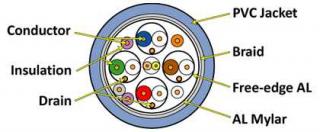
Critic about poor quality & cheap HDMI cable in the market now without HDMI specification compliance!!!
Especially china-made & even some Monster cable also without HDMI compliance .
As we know for our every PCB design must pass the imedance test in order to get the compliance approval or certificate.
Impedance Control is very important in HDMI signal, from the Processor to the Source including the cable,
bcs it is very High speed digital intense data rates which are traveling through the cable. (4pair of data clock must be 100ohm impedance)
Impedance, in particular, becomes a really important concern any time the cable length is more than about a quarter of the signal wavelength, and becomes increasingly important as the cable length becomes a greater and greater multiple of that wavelength. The signal wavelength, for one of the color channels of a 1080p HDMI signal, is about 16 inches2, making the quarter-wave a mere four inches--so impedance is an enormous consideration in getting HDMI signals to propagate along an HDMI cable without serious degradation.
There are a few considerations that start to cause real trouble:
1. Time: electricity doesn't travel instantaneously. It travels at something approaching the speed of light, and exactly how fast it travels depends upon the insulating material surrounding the wire. As the composition and density of that insulation changes from point to point along the wire, the speed of travel changes.
2. Resistance: electricity burns up in wire and turns into heat.
3. Skin effect: higher frequencies travel primarily on the outside of a wire, while lower frequencies use more of the wire's depth; this means that higher frequencies face more resistance, and are burned up more rapidly, than lower frequencies.
4. Capacitance: some of the energy of the signal gets stored in the wire by a principle known as "capacitance," rather than being delivered immediately to the destination. This smears out the signal relative to time, making changes in voltage appear less sudden at the far end of the wire than they were at the source. This phenomenon is frequency-dependent, with higher frequencies being more strongly affected.
5. Impedance: if the characteristic impedance of the cable doesn't match the impedance of the source and load circuits, the impedance mismatch will cause portions of the signal to be reflected back and forth in the cable. The same is true for variations in impedance from point to point within the cable.
6. Crosstalk: when signals are run in parallel over a distance, the signal in one wire will induce a similar signal in another, causing interference.
7. Inductance: just as capacitance smears out changes in voltage, inductance--the relationship between a current flow and an induced electromagnetic field around that flow--smears out changes in the rate of current flow over time.
Poor impedance control cable can affect the data/clock/time/ loss in every micro second signal change.
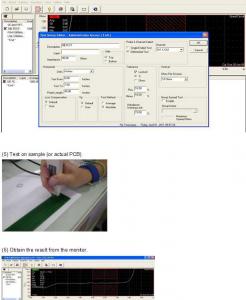
Good HDMI cable should be tested with critical parameters includes Impedance, Attentuation, Crosstalk & Skew in "Eye-Pattern" technique.
This post has been edited by superhifi77: Apr 12 2011, 02:41 PM Attached thumbnail(s)



 May 25 2009, 04:52 PM


 Quote
Quote


 0.0333sec
 0.34
0.34
 6 queries
 GZIP Disabled