QUOTE(sonyman @ Apr 17 2009, 08:14 AM)
hi saintos, how much are the psb image, are they expensive ?
i was planning to get either psb or paradigm. in the future, probably i be like you, plan and save, and then go all out, dont want to be half way half way,
good idea, once and for all yeah
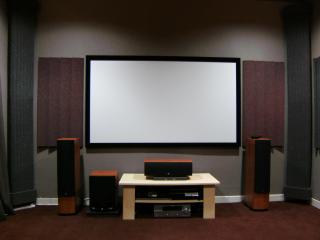
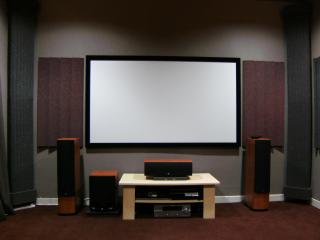
The Image Floorstanders is image T55 = RM 2600
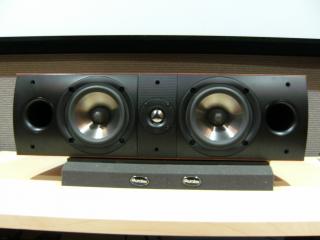
Image C 60 Centre = RM 1600
Subsonic 5i = RM 2500
Surround Bipole = RM 2150
And to answer what is the difference of bipolar surround speakers,
Advantages of Bipole Speakers
* The bipolar speakers are wired in phase and push out more air, resulting in a bit more bass.
* Bipolar speakers can be used as the main speakers.
* This design allows a bipolar speaker to provide the best of both worlds: a direct-speaker’s clarity and focus, and a dipole’s spaciousness.
* Bipolar speakers work in roughly the same way as direct-radiating speakers. They feature two sets of drivers pointed in different directions and wired in-phase, both pushing and pulling air at the same time. That gets sound moving toward the walls, ceiling, furniture, etc., introducing more sonic energy in more directions than you would with a direct-radiating speaker. In other words, you will got more sound coming at you from more directions. However, most of the sound is coming from the speakers themselves.
* Bipolar surround speakers use speaker drivers aimed towards the front and back of the room to achieve a diffuse sound-field like that created by the multiple surround speakers in movie theaters.
* Your room’s acoustics will affect these designs more than conventional direct-radiating speakers.
Added on April 17, 2009, 1:19 pmQUOTE(fourzee @ Apr 17 2009, 08:44 AM)
Great pics saintos..the psb rear speakers whats the different between dipole and normal speakers in term of sound quality used for rear spkrs..n how much is the psb s60 costs?
heres your answer
Advantages of Bipole Speakers
* The bipolar speakers are wired in phase and push out more air, resulting in a bit more bass.
* Bipolar speakers can be used as the main speakers.
* This design allows a bipolar speaker to provide the best of both worlds: a direct-speaker’s clarity and focus, and a dipole’s spaciousness.
* Bipolar speakers work in roughly the same way as direct-radiating speakers. They feature two sets of drivers pointed in different directions and wired in-phase, both pushing and pulling air at the same time. That gets sound moving toward the walls, ceiling, furniture, etc., introducing more sonic energy in more directions than you would with a direct-radiating speaker. In other words, you will got more sound coming at you from more directions. However, most of the sound is coming from the speakers themselves.
* Bipolar surround speakers use speaker drivers aimed towards the front and back of the room to achieve a diffuse sound-field like that created by the multiple surround speakers in movie theaters.
* Your room’s acoustics will affect these designs more than conventional direct-radiating speakers.
Disadvantages of Bipole Speakers
* Bipolar speakers are affected by your room’s acoustics more than conventional direct-radiating speakers. You are at the mercy of the room. Some may actually like this effect, but it is less accurate.
* Some argue that the midrange response of bipolar speakers are not as good, particularly as the main speakers. It is probably more suitable for surrounds.
* Bipole speakers do not have the sound-field of the dipole (not as open sounding).
Advantages of Dipole Speakers
* Dipolar create a more open space of sound without the listener being able to pinpoint the source of the sound.
* Unlike bipolar speakers, the drivers in dipoles aren’t moving in and out at the same time. One driver pushes air while the other pulls. So when the dipoles are placed properly, at 90° from the screen, directly to the left and right of the listener, they create a null zone—an area in which the sound coming from each speaker effectively cancels itself out, usually in the off-axis middle area facing the listener. The sound coming straight toward the listener’s ears is effectively dampened, and instead the listener hears virtually nothing but reflections from the room boundaries. So instead of perceiving sounds as coming from the speaker itself, the result is a diffuse sound-field.
* This design offers a more diffuse, spacious sound than a direct-radiating model. This is what surround speakers should do, after all. They are intended to reproduce ambient effects.
* Dipolar models are favored for THX-certified designs specifically because of their diffuse sound, which more accurately resembles what you would hear in a real movie theater.
* According to Dolby Laboratories: “Surround speaker placement, room acoustics, and personal preference are as important as the speakers’ radiating characteristic. These factors vary greatly, so Dolby Laboratories cannot recommend a particular speaker for home theater use.”
* Dipoles are a closer match to the surround speaker arrays found in movie theaters.
* Ambience and envelopment are the goals of surround speakers, not the 3D holographic rear stereo images. Dipoles do a better job at envelopment due to the sound being directed away from the listener. Having the forward and backwards firing sounds out-of-phase makes the speaker harder to pinpoint.
* Dipoles have a bigger surround sweet spot than direct radiating surrounds have.
Disadvantages of Dipole Speakers
* Dipoles are said to provide the most room filling ambient effect, but sacrifice a little bass as the drivers are wired out of phase.
* Some critics claim that dipolar speakers were invented in the old analog and matrixed surround sound days. Nowadays, most digital surround audio codecs are discrete with five or more channels. The diffuse sound-field of dipole speakers destroy this advantage.
* Others claim that dipoles were originally designed to create a diffuse sound-field in rooms that were acoustically treated to duplicate the effect of multiple direct radiating speakers in commercial theaters. However, even in many high-end home theaters, they do not treat the rooms that much. So the advantage of dipoles is limited.
This post has been edited by saintos: Apr 17 2009, 01:19 PM 

 Apr 5 2009, 11:27 PM


 Quote
Quote




 0.0407sec
 0.73
0.73
 7 queries
 GZIP Disabled