

 Dec 27 2017, 11:24 AM


Lectionary: 697
Reading 1 (1 Jn 1:1-4)
Beloved:
What was from the beginning,
what we have heard,
what we have seen with our eyes,
what we looked upon
and touched with our hands
concerns the Word of life —
for the life was made visible;
we have seen it and testify to it
and proclaim to you the eternal life
that was with the Father and was made visible to us—
what we have seen and heard
we proclaim now to you,
so that you too may have fellowship with us;
for our fellowship is with the Father
and with his Son, Jesus Christ.
We are writing this so that our joy may be complete.
Responsorial Psalm (Ps 97:1-2, 5-6, 11-12)
R. Rejoice in the Lord, you just!
The LORD is king; let the earth rejoice;
let the many isles be glad.
Clouds and darkness are around him,
justice and judgment are the foundation of his throne.
R. Rejoice in the Lord, you just!
The mountains melt like wax before the LORD,
before the LORD of all the earth.
The heavens proclaim his justice,
and all peoples see his glory.
R. Rejoice in the Lord, you just!
Light dawns for the just;
and gladness, for the upright of heart.
Be glad in the LORD, you just,
and give thanks to his holy name.
R. Rejoice in the Lord, you just!
Alleluia (See Te Deum)
R. Alleluia, alleluia.
We praise you, O God,
we acclaim you as Lord;
the glorious company of Apostles praise you.
R. Alleluia, alleluia.
Gospel (Jn 20:1a and 2-8)
On the first day of the week,
Mary Magdalene ran and went to Simon Peter
and to the other disciple whom Jesus loved, and told them,
"They have taken the Lord from the tomb,
and we do not know where they put him."
So Peter and the other disciple went out and came to the tomb.
They both ran, but the other disciple ran faster than Peter
and arrived at the tomb first;
he bent down and saw the burial cloths there, but did not go in.
When Simon Peter arrived after him,
he went into the tomb and saw the burial cloths there,
and the cloth that had covered his head,
not with the burial cloths but rolled up in a separate place.
Then the other disciple also went in,
the one who had arrived at the tomb first,
and he saw and believed.
REFLECTIONS: WORD Today
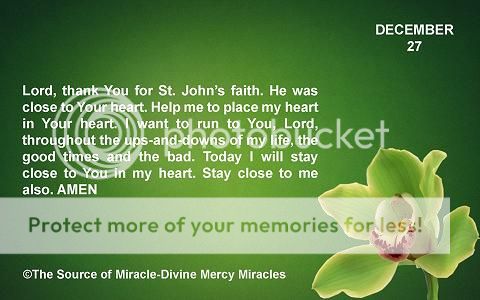
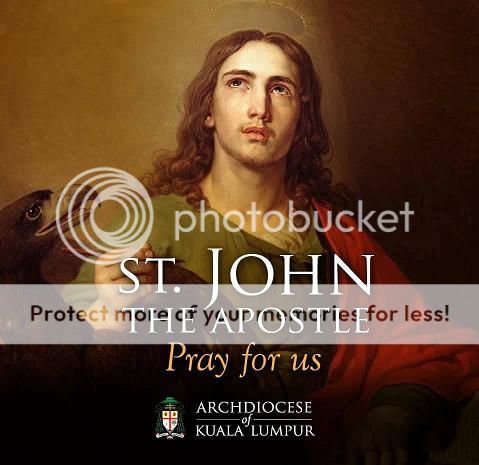
On this 3rd day of the Christmas Octave, the Church celebrates the Feast of St. John the Apostle and Evangelizer, "the one whom Jesus loved." He was the only apostle who was not martyred, and so he was able to write the majestic and profound 4th Gospel in the wise old age of 80+.
He also wrote three of the Epistles (1 John, 2 John, 3 John) and the Book of Revelation. He was the last apostle to die. He died in his nineties in Ephesus (west coast of modern Turkey.)
The Gospel of John is not a straight-line narration of the events of Jesus' life; it focuses on the theology of Christ's inseparable humanity and divinity. He testifies to us that Jesus is true God who became true man (John 1:1 & 14) and this God/man "is what we have heard and what we have seen - and touched with our own hands." (1 John 1:1) And in today's Gospel, St. John testifies that in the Resurrection, Jesus is alive forevermore, not just in spirit but in actual flesh and blood.
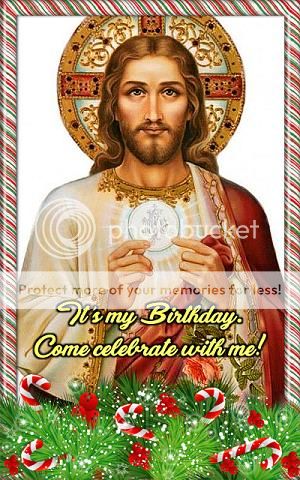
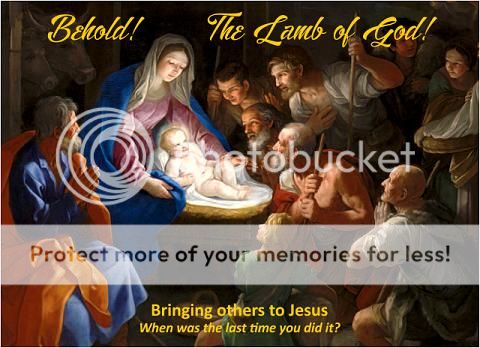
St. John is saying that Jesus is THE Ultimate Sacrament of God, the visible, audible and touchable Sign of the invisible and infinite God. This is the Christmas Mystery that the Catechism of the Catholic Church explains in paragraphs 525 and 526. At that first Christmas, the infinite God made Himself into a small, humble and poor baby in order to share in our frail humanity and to share with us His divinity.
And Jesus continues to do this today in the Sacrament of the Holy Eucharist. The Word made Flesh humbles Himself further into a thin slice of bread for each of us to eat in a much more intimate, one-on-one personal relationship. In St. John's Gospel, Jesus tells us, "I am the living bread which came down from heaven. If anyone eats of this bread, he will live forever; and the bread which I shall give for the life of the world is my flesh." (John 6:51)
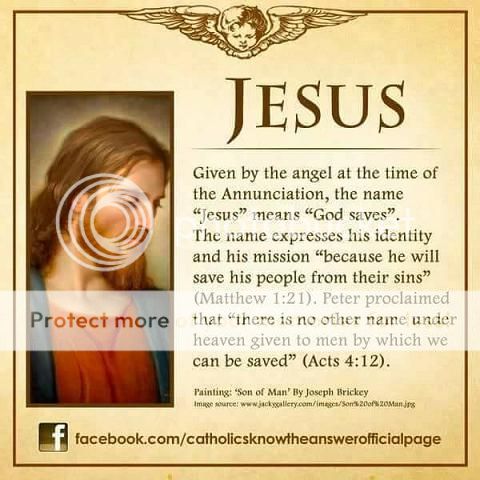
Pope Francis puts it this way: "The love of God is not something vague or generic; the love of God has a name and a face: Jesus Christ."
With the powerful life-giving graces Jesus the Eucharist brings into our humanity, we gain super-strength to endure in our journey to divinity. So come, we whom Jesus loves, let us continue celebrating Christmas with St. John and with the Eucharist - the Body and Blood of God with us - so that our Christmas joy may be complete.
O COME ALL YE FAITHFUL
Source: https://www.facebook.com/CatholicMassReflec...817314995232924
 Quote
Quote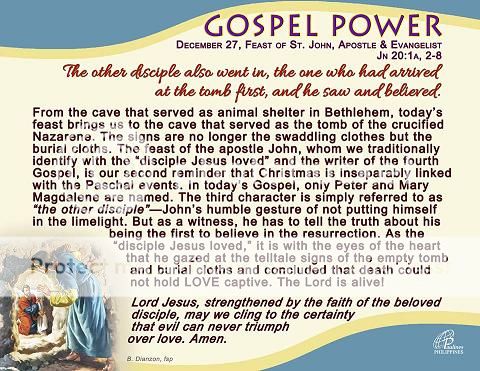




 0.1083sec
 0.52
0.52
 7 queries
 GZIP Disabled