Rheinmetall awarded Challenger 2 Life Extension Programme Assessment Phase Contract
Rheinmetall has been awarded a Challenger 2 Life Extension Programme (CR2 LEP) Assessment Phase contract by the United Kingdom Ministry of Defence.
The British Army is seeking to extend the service life of the Challenger 2 main battle tank through to 2035. During the Assessment Phase, Rheinmetall will develop solutions in line with user requirements set by the MOD.. The programme includes addressing existing obsolescence issues, with Rheinmetall offering options that will sustain the capability and effectiveness of the Challenger 2. The Assessment Phase contract is worth £23 million.
At the end of the Assessment Phase Rheinmetall will make an offer for the Demonstration, Manufacture and In Service contract phases. If successful, under current planning, this contract would see Rheinmetall becoming the Design Authority for the Challenger 2 and cover the modification of Challenger 2 tanks to Mk 2 standard.
Rheinmetall is currently involved in upgrading the technical and tactical performance of the Leopard 2 main battle tank for two major international customers and offers a wide array of cutting-edge systems. Continuous investment in research and development keep Rheinmetall at the forefront of modern tank technology, which the company plans to share with the British Army.
With its experience and technological wherewithal to take the lead in every aspect of the CR2 LEP, Rheinmetall is ideally placed to cover all the current lines of development, including assured long-term logistical support, which will maintain Britain’s longstanding expertise in tank development and design.
A key aspect of the Rheinmetall offer is to involve UK suppliers in the Assessment Phase, with a Rheinmetall systems engineering team based in the UK to support CR2 LEP and other programmes.
The Turkish Leopard 2A4 losses is surprising, SG and Indo here should take note.
The Turkish Leopard 2A4 are the first generation Leopard 2A4 with outdated armor. The Indonesian 42 Leopard 2A4 are ex-Swiss Pz87 made in the late 80s and early 90s. Another 61 units are upgraded to the Leopard 2RI with AMAP Composite Armor same as the Singapore Leopard 2SG.
An excerpts from Below The Turret Ring:
QUOTE
A big issue with the Turkish Leopard 2 tanks is the fact that they are outdated, they are not designed to resist currently available ATGMs and their armor is completely focused on protecting the frontal arc. It is not clear which armor package is fitted to the Turkish Leopard 2A4. While the late production Leopard 2A4 tanks received stronger armor inserts, all older production models were converted to the Leopard 2A4 configuration - without changing the armor composition! In fact even a few of the newly built Leopard 2A4 tanks were built with one of the older armor packages. Between 1979 and 1992 (the time were the Leopard 2 tank was series produced in Germany) three different generations of armor were used. It is not known if these are identical with single armor packages or mutliple different armor packages were used within a "technology generation". The first generation armor was introduced in 1979, while the second generation armor (1988) and third generation armor (1991) were exlusively used on Leopard 2A4 tanks.
More important than the technology used on a tank might be the tactics on how the tank is being used. The Turkish Leopard 2 tanks seem to be poorly employed, sitting always behind heaps of ground in a hull-down position. While a hull-down position is favourable in certain situations - such as symmetric warfare when the direction from which the enemy will approach is known - it is not a good idea for the tanks to remain in a static position without proper protection, when they can be attacked from the side and rear aswell. In the incident where two tanks were hit, the crew of the second tank was apparently not reacting at all - they simply ignored that the other Leopard 2 has been hit by an ATGM some time ago, the crew apparetnly didn't care about taking out the enemy ATGM team.
When using tanks in a static emplacement just for fire support, one should expect them to be used in a secured perimeter. If the tanks are not capable of securing the area by themselves, then infantry or other combat vehicles should take over the task. Surveillance and reconnaisance vehicles with thermal imagers should have no issues detecting enemy ATGM teams and infantry even at long distances. The Turkish Army doesn't seem to employ the tanks as part of a combined arms doctrine - tanks are always seen operating alone and not together with (mechanized or motorized) infantry. Instead the Leopard 2 tanks seem to play sitting ducks and serve as more expensive artillery replacement... a cheap 120 mm mortar carrier vehicle would probably be better suited for this job.
• The Indonesian Marines Corps is now equipped with the Type 90B multiple rocket system from China • System may be equipped with indigenously developed R-Han 122 B rockets
The Type 90B 122 mm multiple launch rocket system, similar to the one received by Indonesia in 2016. (NORINCO)
The Indonesian Marines Corps (Korps Marinir, or KORMAR) has taken delivery of four units of the Type 90B 122 mm (40-round) multiple rocket system (MRS) from China North Industries Corporation (NORINCO).
Sources within the service told IHS Jane's on 27 December that first test firings of the system are being conducted until the end of the month at various undisclosed locations throughout East Java.
The systems have been delivered under a 2015 contract signed between the Indonesian Ministry of Defence and NORINCO.
• Indonesia has concluded a series of initial training activities on the BTR-4 amphibious vehicle from Ukraine • Plans to acquire further vehicles is now being reviewed after encountering a number of teething issues
The Indonesian Marine Corps (Korps Marinir: KORMAR) has concluded initial training activities on its BTR-4 8x8 amphibious wheeled armoured personnel carriers (APCs), but is now reconsidering further acquisitions of the vehicle, a service official told IHS Jane's on 27 December.
The reconsideration follows KORMAR personnel reporting a number of issues with the platform during its initial training activities.
These included situations in which the APC is trimmed excessively by the bow when operated at full speed in the water.
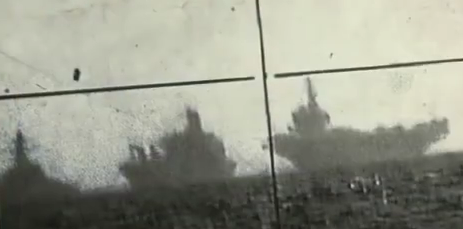
That time when a Singapore Navy submarine caught a U.S. Navy aircraft carrier off guard
It has long been rumored that a U.S. Navy aircraft carrier group was successfully tracked by a Singapore Navy submarine in South China Sea. The photo of the carrier coming into the periscope sights has now surfaced in a video by the Republic of Singapore Navy.
Screen grab from RSN video
The silent hunter was RSS Chieftain, a Sjöormen-class submarine that previously serve as HMS Sjöhunden in the Swedish Navy. Sold to Singapore in the 1990s, the submarine took the picture back in 2002.
The Indonesian Army (Tentara Nasional Indonesia - Angkatan Darat: TNI-AD) has taken delivery of another 16 Leopard 2 RI (Republic of Indonesia) main battle tanks (MBTs).
The vehicles, which are part of a contract for 61 MBTs of the type with Rheinmetall Defence, were unloaded at the Port of Tanjong Priok's vehicle-handling terminal on 28 December, said its operator, PT Indonesia Kendaraan Terminal.
According to an IHS Jane's report from September 2016, Indonesia had by then taken delivery of 24 Leopard 2 RI MBTs. Unloading of this latest tranche in December brings the number of tanks delivered to 40.
The TNI-AD is expected to receive its final tranche of Leopard 2 RI MBTs by March 2017.
APMM (Agensi penguatkuasaan maritim Malaysia) aka Malaysian maritime enforcement agency Special Task and Rescue posted up these pics. They seem to be using Sig 553s. They’re equipped with the Team Wendy Exfil Ballistic helmet and the Smith Elite OTW goggles which were provided by Cresdo, the company Irfan works for.
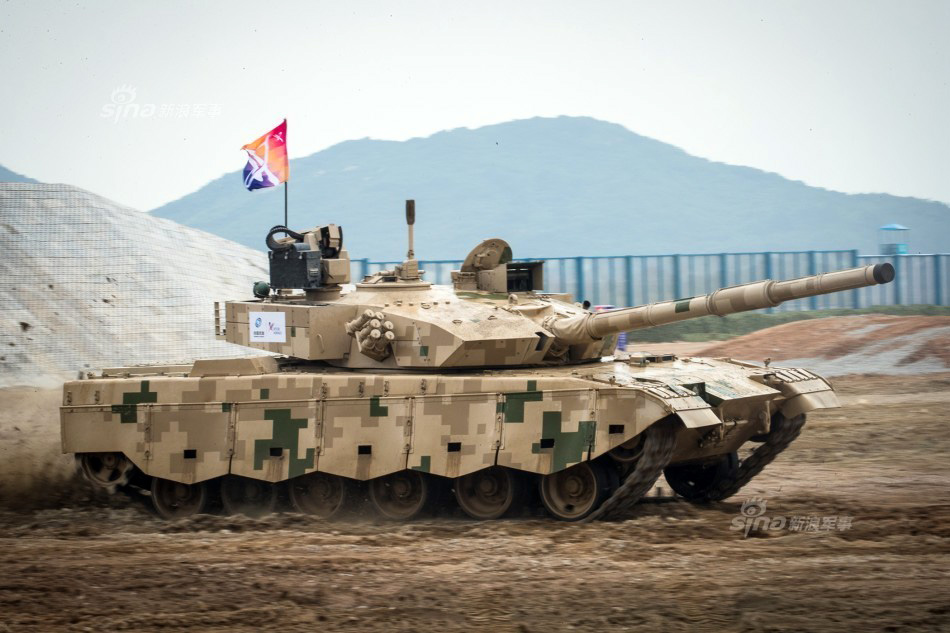
Thailand will purchase a total of 49 VT4 main battle tanks from China.
The army commander in chief of Thailand has announced that the country will purchase more military equipment from China. The Thai army had signed an agreement to purchase 28 VT-4 main battle tanks from China and in the second phase would procure more such tanks until it has a full fleet of 49 tanks in fiscal year 2017.
The army commander in chief of Thailand has announced that the country will purchase more military equipment from China. The Thai army had signed an agreement to purchase 28 VT-4 main battle tanks from China and in the second phase would procure more such tanks until it has a full fleet of 49 tanks in fiscal year 2017.
After problems with the delivery of 49 T-84 Oplot tanks ordered from Ukraine, the army committee which decides on military hardware procurements has opted to cut the number of tanks to be bought from Ukraine and buy more from China instead, said General Chalermchai, Thai army commander-in-chief.
However, the Ukrainian tank maker should be able to deliver all 49 tanks to the Thai army by October, 2017, added General Chalermchai.
The Royal Thai army ordered 49 T-84 Oplot from Ukraine in 2011 for USD240 million, although the production of the Thai tanks has been subject to serious delays due to conflict in Ukraine in 2014 and 2015.
The T-84 Oplot is main batle tank developed by the Ukrainian Company Kharkiv Morozov Machine Building Design Bureau, which is Ukraine's leading design authority for armoured fighting vehicles. The Oplot MBT armament includes a 125mm gun, 7.62mm coaxial machine gun and 12.7mm anti-aircraft machine gun.
Currently Thai army uses American-made M-41 since 1957. Thai army needs to replace this old tanks by new generation of main battle tanks.
SHAH ALAM: Gripen E for Malaysia. Back in October, the Defence Minister seemed to confirm that the MRCA selection was down to either the Typhoon or Rafale. However, due to the economic uncertainties, the decision for the MRCA was likely to be made by 2020.
At the same function, he also said the other candidates – the Super Hornet and Gripen (and also strangely, Sukhoi) were not being considered for the MRCA project. However since the green light for the MRCA is three years away (which include a general election which must be called by 2018), we can be sure that marketing for all of the fighters named will continue.
“By the year 2020 we have to make a decision on the [purchase of the] MRCAs. It’s an open secret that we are looking at either the [Dassault] Rafale, or the [BAE Systems’] Typhoon from the UK, but we don’t have to make the decision now. What we need to do is look at the affordability, and that depends on [the state of] our economy,” he said Hishammuddin also explained in the same press conference why Typhoon and Rafale were the final candidates. “There are other reasons why we did not look at the [latest] Sukhois, [Boeing F/A-18] Hornets and the Gripen, which is a Swedish plane, but the most important [factor] is that whatever we do, we must be able to explain to the public,” Hishammuddin said.
However, as funding for the programm remained hazy, the marketing for the MRCA will be a much smaller much like the stealth campaign ran during the 2005 to 2010 period. So whats this got to do with the Gripen E then? For more on Gripen E go here.
As you might be aware Saab had offered the C/D model together with the AEW package for the MRCA programme. They offered the C/D models as the E was not yet available. Now, with the MRCA programme pushed back to 2020, Saab’s offer now involved 18 of the E/F models. The new offer was made late last year to the Defence Ministry, industry sources told Malaysian Defence.
If selected, I am told, deliveries will take place after Sweden and Brazil, the two countries which had already signed the contract for the aircraft. During the launch of the E, it was reported that both countries will receive their first aircraft in 2019 so if we buy them it is possible for us to get our first by early 2021 (depending on various other circumstances of course).
As Saab is pursuing other opportunities, there is also the possibility that the delivery could be made beyond that. So why is Saab still pursuing the MRCA deal even though it is obvious that RMAF wants something else? Because, Saab thinks the Gripen is the most affordable for us – even in better times.
For example, Brazil is paying US$4.68 billion for 36 Gripen Es. The cost for 18 Es will be around US$2 billion, much cheaper than the other two engine alternatives. Furthermore, there is no need for RMAF to buy new weapons for these aircraft (just like Typhoon and Super Hornets) as the missiles, rockets and bombs in its inventory are already cleared and operational on the Gripen (it will be cleared for the E as well).
Acknowledging, the economic circumstances, the E offer does not include the AEW or even the MSA aircraft. Saab will likely offer them in a separate deal. In the meantime, Saab’s offer to lease C/D models to RMAF pending deliveries of the E, is still valid.
The Indonesian Navy inducted 3 new Fast Patrol Boats 45 meters KRI Tatihu 853, KRI Layaran 854 and KRI Madidihang 855 to its Eastern Fleet. The 3 Fast Patrol Boats were built by local shipyard PT Palindo Marine Batam.
MOSCOW, January 10 - RIA Novosti. Thailand Ministry of Defense to terminate the contract with Kiev on supply tanks "Oplot" because of the failure by the Ukrainian side of the agreement, according to Ukrainian edition of "News" referring to the statement by the head of the military department of the Thai Pravita Vongsumona.
According to General Vongsumona, according to the contract signed yet in 2011, the Thai army was to receive 49 tanks by October 2017, but began to supply problems. Last year, the Ukrainian side has provided only 20 "Oplots". In Bangkok, it said that the situation is mainly due to the internal situation in Ukraine.
After that the army committee of Thailand, making decisions about procurement of military equipment, reduced the volume of orders in the Ukraine, and then completely transferred to tanks in China. With China signed a contract to supply 28 armored VT-4 with the possibility of increasing the order.


 Military Thread V23
  Dec 24 2016, 05:09 PM


 Quote
Quote






 0.1191sec
 0.43
0.43
 7 queries
 GZIP Disabled