QUOTE(TrialGone @ Dec 31 2017, 03:47 PM)
Why not an even lower aperture and longer shutter speed to get larger dof? Or move your camera back to get larger dof and crop it out a little? D850 do have whooping 42mp afterall.
45MP actually
That is a very good question. The reason is image quality.
Every different lens has its own optimum/best performing range in terms of focal length and aperture. Nikon's older 18-55mm DX kit lens (the one i have, without internal focusing) performs best in terms of sharpness at 35mm, at f8-11 range. Wide open at f3.5 18mm it's actually quite soft. The non-ART Sigma 50mm 1.4 i used performs best at f4-5.6 in image quality when u factor in everything - the amount of chromatic aberration, image sharpness levels, amount of distortion and vignetting, center VS corner sharpness, and so on. That is why i stay in the f4-5.6 range when I'm in a studio setting on a tripod - I aim for the best image quality. If the depth of field is insufficient, then i will focus stack if it is practical to do so.
When im outside shooting casually, handheld, then I will make compromises - a photo that is accurately in focus is more important than noise levels or sharpness levels. So you open up the aperture to f/2.x range, and go up in ISO to keep the shutter speed high. Low noise levels is useless if your photo is off focus or blurred from movements due to low shutter speed. This difference in sharpness is not what you will normally notice immediately unless you pixel peep (unfortunately i have this habit) or you want to make large prints.
Most prime lenses don't perform well once you reach f/8 onwards and smaller, while normal zoom lenses (like the f2.8 24-70, or the 18-55 DX) tend to perform best at f/8-11 range. And, every lens will start to suffer from diffraction from f/13 for DX, f/16 for FX - you will lose sharpness and fine details as a result. I avoid that aperture range unless sharpness is not important for the occasion. Well, sharpness does not determine whether a photo is good or not, it's just an added bonus, something nice to have.
Technical knowledge will help u to decide to buy the right lens since no lenses are perfect. For example, on full frame, if you had to choose between Nikon's f2.8G 24-70mm and Tamron's f2.8 24-70 VC, then you need to know their differences in terms of optics and not just pure specs. The nikon one, wide open at f2.8 24mm has corner sharpness and distortion problems while performing better on the longer end at 40-70mm. The Tamron is the opposite - it performs strong at f2.8 24mm but at the long end from 50-70mm the image quality will be rather trashy. So the decision making will be based on whether you had the tendency to shoot at 24-50mm range (the Tamron is better suited for you) or you have the habit of zooming in a lot (the Nikon is better). If you rich and tuhao, then go ahead and buy the latest Nikon f2.8E 24-70mm.

QUOTE(TrialGone @ Dec 31 2017, 03:52 PM)
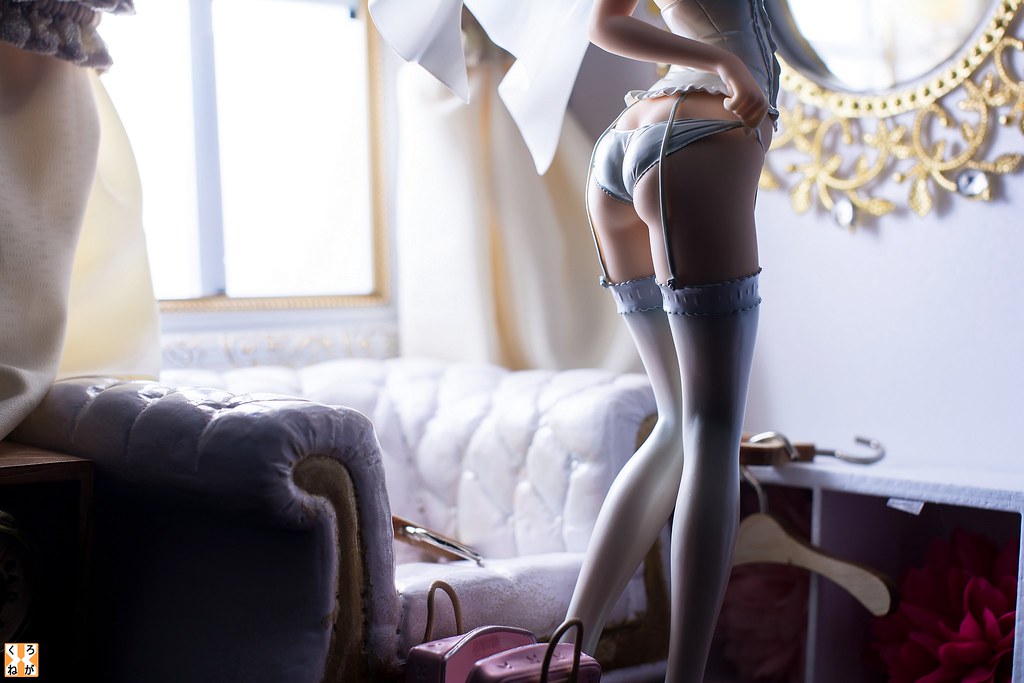
Not sure which part makes you think it's entry level. Almost no noise in the dark area with pleasant colour tone already giving hint possibly from full frame.
And why 24mm on figurine shots

?
Well that same exact shot can be done with my D5200 either, with barely much differences maybe except in dynamic range levels. I bought a full frame in order to be able to get good photos when in demanding low light situations, sort of trying to cover everything. My D5200, the good image quality limit for me is ISO 800-1000. 1600 is borderline acceptable. If i had to go above that, i rather not shoot at all unless the pics are only for social media.
Wide angles can be used for figurines too, but not every figurine. Those with a dynamic action pose will benefit greatly from a wide angle because it gives a sense of movement or action. Heck, that is what unique lenses like the Laowa f/4 15mm macro is for. To explore the world where macro and wide views are combined together. I'm planning to get an ultrawide lens myself soon within the next 2 or 3 months.
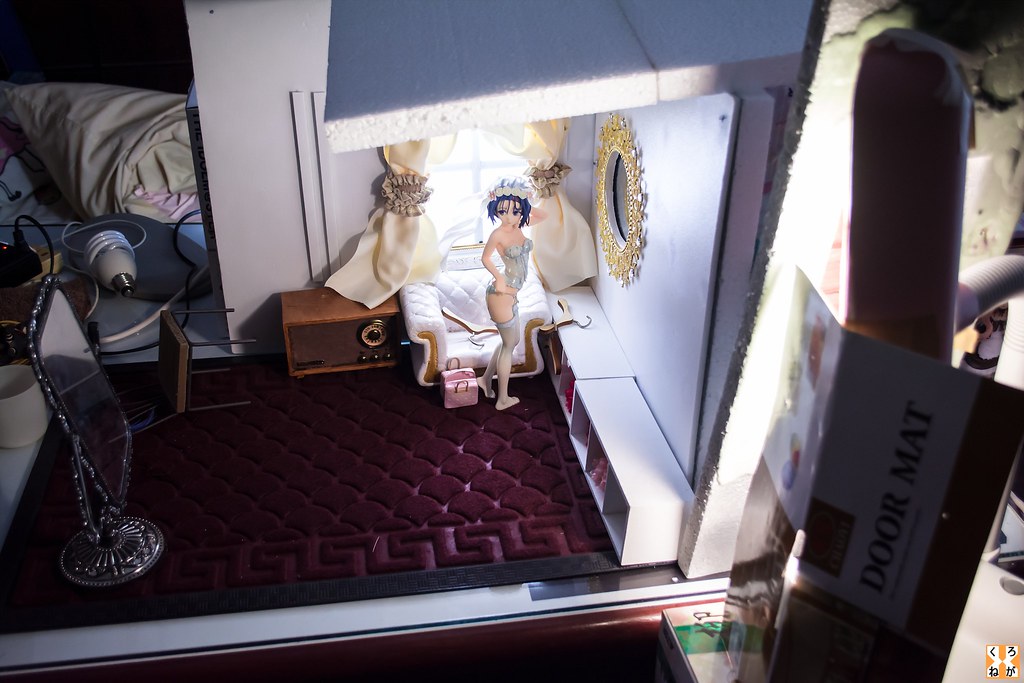
I also heard rumors of Nikon making a new f2.8 60mm macro lens due this year (probably to replace the f2.8G 60mm micro, which is already a very good lens), so that is what Im waiting for. Anywhere between 50-75 mm is excellent for 1/8 to 1/6 scale figure photography. 90mm macro is a bit too tight especially when u have a diorama background, otherwise I'd have taken a look at Tamron's offerings for macro glass. 90mm is better used for even smaller figures, 1/12 scale or smaller.
This post has been edited by EXkurogane: Jan 3 2018, 08:00 PM 

 Oct 19 2017, 10:02 PM


 The predecessor of the ART series. If it doesnt i might have to trade it in for something else, wont know until I try.
 Quote
Quote


 Learned much from you. I really appreciate the fact that you're good yet you're humble and willing to share. It is good to have you in this Nikon thread.
  But than, I want to upgrade my skill first before I upgrade my gear.




 )
)

 0.1256sec
 1.35
1.35
 7 queries
 GZIP Disabled