

 Secrets and origins of Benggali Bread, Not from Bengal but from Penang.
  Aug 31 2016, 01:44 PM, updated 10y ago


by intan amalina mohd ali
THERE are three secrets to Benggali bread, better known as Roti Benggali.
First, pay close attention the next time you dunk your slice of the bread into your coffee, curry, mutton soup, half-boiled eggs or anything else.
After that necessary wait of a second or two for the bread to absorb the liquid, observe how your slice holds firm.
Repeat the experiment with most other kinds of bread and they will probably break apart soggily.
This is why.
Many authentic recipes for the bread say that when the dough has risen to twice its volume after yeast is added, you have to pound it to squeeze out some of the carbon dioxide bubbles. This makes the dough dense again and it is why the bread is fluffy and yet stays firm enough after being dipped into gravy.
How much pounding to exert to make it fluffy yet dense is a trade secret, though.
The second secret is its name. Benggali bread does not come from Bengal. In fact, it has nothing to do with Bengal. It comes from Penang.
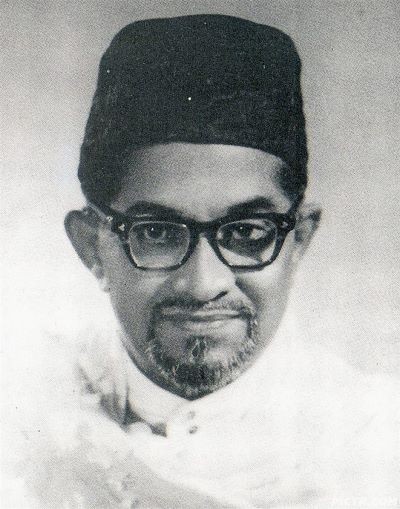
S. Mohamed Ismail, an Indian Muslim from Madras, India, started a bakery in George Town in 1928 to make this bread.
He was said to have formed a joint venture with his friends to start it up. He called it “panggali” bread.
In Tamil, “panggali” means shareholder or kin.
Over time, people forgot that it was “panggali” bread.
Somewhere along the market penetration process, the vibrant and multiracial fabric of pre-Independence society in Penang fell in love with this bread and they decided to make life easier for everyone by simply calling it Benggali bread.
Here is the final secret.
Mohamed Ismail’s wife was S.M. Shaharom Bee, the youngest sister of S.M. Zainul Abidin (1898-1969), who founded Umno with a few friends in 1946 when he was 48 years old. He became the party’s permanent chairman in 1948.
Zainul Abidin taught for 20 years at Penang Free School before becoming the headmaster of Francis Light School. He taught Tunku Abdul Rahman Putra Al-Haj and former Penang Chief Minister Tun Dr Lim Chong Eu too.
He was a teacher, scoutmaster, headmaster, politician and writer.
He became Penang’s Southwest Member of Parliament (Balik Pulau today) in 1955 in the first Malayan Parliament elections after the Tunku invited him to contest.
The Tunku offered him the post of Education Minister, but he declined because it was said he did not want to leave Penang.
Being brother-in-law to the owner of one of the most popular bakeries in town must have been good in one way or another. Zainul Abidin was already 30 when Benggali bread first hit the streets of Penang, but all trace of this connection seems to have gone missing.
Could loaves of freshly baked Benggali bread with mutton curry been the regular fare in those long-ago Umno meetings during the struggle for Independence?
This bread is still baked in that same colonial shop house in Transfer Road. Many parts of the original architecture are still evident inside despite the commercial ovens and stainless steel racks.
The bread recipe remains largely intact, but the blood ties of Mohamed Ismail to Benggali bread is long gone.
The company name went from being British Malaya Bakery to Malaya Bakery to Ismalia Bakery before it closed down for nearly 10 years.
In 2007, a new group of bakers reopened the same premises with the name Maliia Bakery.
Its chief executive officer M. Kumaresan Mariadas said that since the takeover almost a decade ago, the current management has introduced a variety of Benggali bread but their customers would always opt for the original version.
“Between 2012 to 2013, we introduced wholemeal, chocolate and charcoal Benggali bread but the classic white one is still the most popular.
“Customers occasionally try the other flavours but they always go back to the classic,” he added.
He said that outside of Penang, the company distributes to Kuala Lumpur, Selangor and Negeri Sembilan.
Benggali bread was sold on bicycles and carts in the old days, but Maliia Bakery now has a fleet of 20 food trucks and numerous vendors on motorcycles throughout Malaysia.
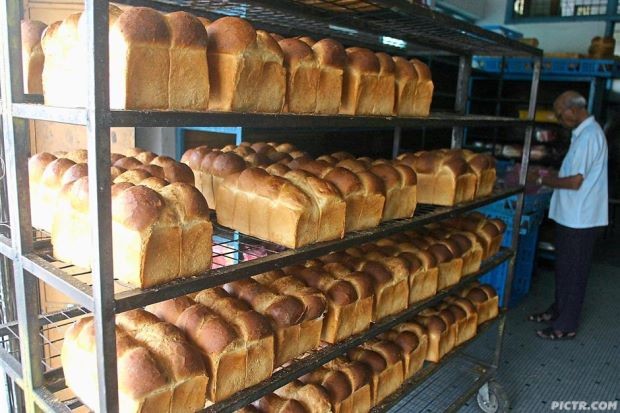
Ismalia Bakery’s ‘roti Benggali’, founded by Sheik Mohd Ismail (below) from Madras in 1928. It got its name from the Tamil word for shareholder or kin.
Source: http://www.thestar.com.my/news/nation/2016...gal-no-its-not/
 Quote
Quote


 0.0257sec
 0.20
0.20
 5 queries
 GZIP Disabled