QUOTE(Vrese @ Dec 5 2019, 11:16 AM)
Interesting what write there. I take some time to read it..

As someone who run a lot and has read the internet a lot I'm sure you know Jack Daniel (Not the alcohol drink). He has explain all this is details based on science and maths.
If you run 80% of your weekly volume on easy effort that still help you develop fat burning efficiency, capillaries and mitochondria as well. So there is no need for MAF method for that as all other training method also have this. Some of these people running at amazing time should be taken their talent into consideration as well and all other factor. For myself as I have no coming race, almost 100% of my running are on easy conversation pace.
Good training should increase VO2max not the opposite.
Thats what im thinking, since I run most of my run on easy conversation pace chest strap HRM will not have much use for me and it cost a boom on the wallet

that about to change my mind now since this HR thing really creating puzzle on me.
Someone who has run enough mileage should be efficient enough to burn more fat then glycogen at zone 3 and 4 (maybe even lower zone 5 not sure). It actually take years to develop yourself into a good marathon time. I do run really easy whole 10k from time to time but it didn't change the fact that the quality workout that really give you the improvement you want. Btw, what is your resting HR..
Still wondering where should set my max HR in my garmin..
Just picked up a forerunner 945 over the weekend. The amount of stats over the series 3 apple watch I was using makes for some interesting reading as I have been doubting the data on that watch for months now.
I was doing this JD red plan workout based on vdot 32 intensity yesterday - 10min E, 4xST, 2x(5minI+4min Jog+3min I+2min jog), 10min E. Optical HRM recorded a max of 191BPM - but this was in the middle of the 3rd interval and then it dropped back down 182BPM at the end of the interval (my pace was consistent) - for me this doesn't make sense. Moral of the story is - you have to look at the HR graph to see whether it passes the sanity check.
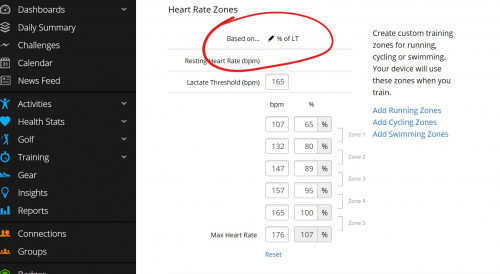
2019 was my year of aerobic base training, I was training for a half ironman from a very low fitness base so 90% of my running was done at a zone 2 conversational pace. This year, I would like to focus on my running which means more quality workouts but I'm still a believer in easy miles - since I'm in my mid 40s and I really need that recovery lol. That's why I need my training zones. Vdot works for me right now, because the difficulties feel just about right and I've run at those distances. HR just doesn't work right now because I'm not sure I can trust the data from my devices. If i get a chest strap then will update my HR zones. Right now I've set my HR zones for Garmin Connect based on %LTHR which i have guesstimated at about 169 which seems to make sense from an intensity point of view.
The other thing about using HR for training, it's effected by so many things Heat, sweat, hydration, stress... like this month, my min HR is up from 50 to something like 57 due to workplace stress and 1 month of detraining... Mat Salleh heart zones are not directly comparable unless you adjust for our heat and humidity.


 Sep 24 2018, 11:49 AM


 Quote
Quote


 0.0807sec
 0.28
0.28
 7 queries
 GZIP Disabled