Welcome Guest ( Log In | Register )

Bump Topic Topic Closed RSS Feed
120 Pages « < 47 48 49 50 51 > » Bottom

Outline · [ Standard ] · Linear+

> Military Thread V18

views
     
BorneoAlliance
post Oct 20 2015, 07:15 PM

New Member
*
Newbie
0 posts

Joined: Dec 2014

China, Russia, Iran Closing Gap with Smaller, Older U.S. Military

user posted image

QUOTE
These adversaries are “closing the technology gap” with the United States, the report added.

The size of the U.S. Navy fleet and the total number of Air Force squadrons have dwindled by more than half since the end of the Cold War. Of the 54 squadrons, less than half are combat ready.

Additionally, several Air Force planes have been in use for more than two decades, including the B-52 long-range bomber, the A-10 Warthog, and the F-15 Eagle fighter jet.

“These older planes are already vulnerable when operating against advanced adversary aircraft and air defense systems such as the Chinese J-20 stealth fighter and the Russian S-400 surface-to-air missile system,” the report said.


QUOTE
“Fighter aircraft in the next three to five years that have more capability than what we currently have sitting on the ramp,” he continued. “The F-35 will stay a generation ahead of them. F-22 will, too. Everything else we have will not stay ahead. The gap has closed.”

U.S. ground forces have also reduced their presence around the world amid budget cuts. The Army has decreased its forces in Europe by 35 percent since 2012 and has resorted to using British helicopters to complete training exercises. The cuts come as Russia continues to support separatists in the conflict in eastern Ukraine, which has claimed more than 8,000 lives since last April.


QUOTE
The Department of Defense is also spending less money on actual combat activity, the report notes. Civilian workers and contractors at the Pentagon now outnumber the 1.36 million active-duty personnel in the military.

A smaller and less prepared U.S. military has failed to deter aggressors overseas, as evidenced by Russia’s recent interventions and China’s militarization of the South Chia Sea, the report said.


http://freebeacon.com/national-security/ch...r-u-s-military/
BorneoAlliance
post Oct 20 2015, 07:28 PM

New Member
*
Newbie
0 posts

Joined: Dec 2014

INTERNATIONAL MILITARY REVIEW & ANALYSIS – SYRIA-IRAQ BATTLESPACE, OCT. 19.10.2015


QUOTE
In northern Syria, the pro-government forces consist of 60 000-strong grouping officially strengthened by Russian military equipment and weapons. SouthFront: Analysis & Intelligence has information that units of the Syrian Arab Army (SAA) have been bolstered by Russian military advisers, down to squad level in some artillery and special units.

In the Aleppo province, the SAA and its allies are seeking to lift the siege from the Kuweires Military Airport. On Ocotober 10 the SAA “Tiger forces” took control of the town of Jabboul. On October 15, the pro-government units captured the village of Tal Naam. On October 16, the villages of Qala’at Al-Najam, Abtayn were controlled by the SAA. At the moment the Syrian forces are clashing with militants in approximately 6.2km from the airport.

At least, 235 Jabhat al Nusra militants have been killed since the start of the Syrian advance in the Hama province. The strategic towns of Al-Mansoura and al-Lihaya came under control of the Syrian government. Also, the SAA captured the towns of Tal Sekik and Foru.


QUOTE
The SouthFront: Analysis & Intelligence sources report, Hezbollah units fighting against terrorists in Syria has received reinforcements and additional supplies of arms and equipment. This is a result of the growing role of Hezbollah and Iran-backed militia groups at the Syrian battlespace. As result of the heavhy clashes against Jabhat al Nusra, the Syrian forces captured the southtern part of the city of Kafr Nabudah. The pro-government forces’ advance is aimed on the strategic town of Khan Shaykhun olcated at the highway linking Damascus and Aleppo.


QUOTE
the Latakia province, the Syrian forces supported by the Russian warplanes pushed al Nusra militant s from Kafr Dalba and took control of the sector. Then, SAA and allies captured the villages of Salma and Jeb al-Ahmar. The ISIS militants were located in these areas. At the moment, Russian warplanes and the Syrian army units are moping up the area from the separate militant units.

In the Homs province, the Syrian forces are conducting military actions against Jabhat Al Nusra and ISIS. The center of clashes is the Al-Rastan area. Russian and Syrian warplanes work against terrorist there actively. Also, heavy clashes were observed at Rasm al `Abd and Habra al-Garbia. The Jabhat Al Nusra militants are using anti-tank missile systems “TOW” supplied by Saudi Arabia.

The Jabhat al Nusra militants are massively fleeing from the province Daraa to Jordan. The Syrian forces are advancing in the sector of the town of Mahaja. Jabhat al Nusra has lost dozens of militants in the clashes there.


QUOTE
Russia has been continuing to supply weapons and equipment to the Syrian forces. According to reports, the Russian heavy flamethrower systems TOS-1A “Solntsepek” are in Syria. They will be used in the Syrian forces’ offensive actions over the country.

The security of the Russian naval facility in Tartus was strengthened. The guard units received additional military equipment and number of reinforcements. A marine infantry battalion of the Russian Black Sea fleet is a main force there. Russia is exercising preparatory works to increase logistical capabilites of the naval facility. 10 additional container ships and tankers will be reportedly used to expand supplies to Tartus.


http://southfront.org/international-milita...oct-19-10-2015/

This post has been edited by BorneoAlliance: Oct 20 2015, 07:28 PM
BorneoAlliance
post Oct 20 2015, 07:59 PM

New Member
*
Newbie
0 posts

Joined: Dec 2014

China's Air Force is Growing in Size and Technological Edge

user posted image

QUOTE
The analyst said that in 1995 a high-tech U.S. F-15, F-16 or F/A-18 would be vastly superior to a Chinese J-6 aircraft. However today -- China’s J-10 and J-11 fighter jet aircraft would be roughly equivalent in capability to an upgraded U.S. F-15, the review states.

Alongside their J-10 and J-11 fighters, the Chinese also own Russian-built Su-27s and Su-30s and is on the verge of buying the new Su-35 from Russia, the review states.

“The Su-35 is a versatile, highly capable aircraft that would offer significantly improved range and fuel capacity over China’s current fighters. The aircraft thus would strengthen China’s ability to conduct air superiority missions in the Taiwan Strait, East China Sea, and South China Sea as well as provide China with the opportunity to reverse engineer the fighter’s component parts, including its advanced radar and engines, for integration into China’s current and future indigenous fighters,” the review writes.

In addition to stealth technology, high-tech fighter aircraft and improved avionics, the Chinese have massively increased their ability with air-to-air missiles over the last 15-years, the review finds.

“All of China’s fighters in 2000, with the potential exception of a few modified Su-27s, were limited to within-visual-range missiles. China over the last 15 years also has acquired a number of sophisticated short and medium-range air-to-air missiles; precision-guided munitions including all-weather, satellite-guided bombs, anti-radiation missiles, and laser-guided bombs; and long-range, advanced air-launched land-attack cruise missiles and anti-ship cruise missiles,” the review says.


http://www.scout.com/military/warrior/stor...inese-air-force
SUSalaskanbunny
post Oct 20 2015, 08:41 PM

Foodie
*******
Senior Member
4,283 posts

Joined: Nov 2009
From: Vietnam

QUOTE(BorneoAlliance @ Oct 20 2015, 07:28 PM)
INTERNATIONAL MILITARY REVIEW & ANALYSIS – SYRIA-IRAQ BATTLESPACE, OCT. 19.10.2015


http://southfront.org/international-milita...oct-19-10-2015/
*
hmm... macam propaganda site je.. .but done very well
BorneoAlliance
post Oct 20 2015, 10:21 PM

New Member
*
Newbie
0 posts

Joined: Dec 2014

'Drone' boats created for Navy aircraft carriers by BAE Systems and ASV

user posted image

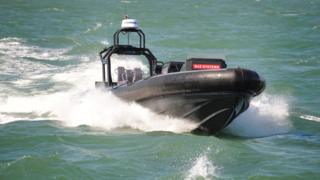
A "drone" boat capable of carrying out 12-hour surveillance missions is being developed for the Royal Navy's new aircraft carriers.

The vessel, being created in Portsmouth by BAE Systems and ASV, will be used on the new Queen Elizabeth Class ships.

The modified rigid inflatable boats are capable of unmanned operations up to 25 miles (40km) away from their parent vessel.

They can also be remote controlled from land or ship, or piloted normally.

'Protecting ships'

The boats, which can travel in excess of 38 knots (44mph), are intended to carry out high-risk missions without putting sailors in danger.

Les Gregory, product and training services director at BAE Systems, said the boats were capable of performing multiple roles.

Dan Hook, managing director for Fareham-based ASV, which develops unmanned marine systems, said the technology would allow the boat to complete "complex missions and navigate through waters avoiding collisions".

He said: "This gives it the flexibility and sophistication to operate in a number of different tactical roles, whether it's patrolling areas of interest, providing surveillance and reconnaissance ahead of manned missions, or protecting larger ships in the fleet."

http://www.bbc.com/news/uk-england-hampshire-34566215
BorneoAlliance
post Oct 20 2015, 10:29 PM

New Member
*
Newbie
0 posts

Joined: Dec 2014

US Lt. General Stunned: Russians Can Move Military Forces 'Very Quickly'

user posted image

"The ability [of Russians] to move a lot of forces very quickly is the thing that worries me the most about what they can do. The lack of indicators and warning that we have and their ability to move a lot of stuff real fast – that's not a good combination," Lt. Gen. Ben Hodges told Defense News.

Hodges also mentioned area and access denial capabilities that Russia has in Kaliningrad and Crimea. According to the US general, Moscow is quite capable of denying access to the Baltic Sea and the Black Sea if it wants to.

Then they have the ability to create sort of a bubble over a quarter of the Mediterranean with the air defense systems that they have put into Syria," the general added.

Hodges maintains that Russia's growing military capabilities and its aerial operation in Syria are "certainly not an action of a nation that wants to be a responsible partner in the global community." One could only wonder what the general would say about the US who has incomparably more bases around the world and has ongoing military engagements in at least two countries.

Hodges also omitted the issue of legitimacy. Moscow's aerial campaign in Syria was authorized by President Bashar al-Assad, while Washington has not received permission to operate in the war-torn country.

http://sputniknews.com/military/20151020/1...pabilities.html
BorneoAlliance
post Oct 20 2015, 10:37 PM

New Member
*
Newbie
0 posts

Joined: Dec 2014

Exclusive: US, Indonesia Eye New Defense Pacts For Jokowi Visit

user posted image

QUOTE
A highlight of the MoU will be efforts to enhance coast guard cooperation with Indonesia’s Maritime Security Agency (Badan Keamanan Laut, BAKAMLA). As I have written elsewhere, BAKAMLA, a newly created organization under Jokowi which some have characterized as the equivalent of a coast guard, is central to resolving Indonesia’s maritime coordination problem (See: “Indonesia’s Maritime Ambition: Can Jokowi Realize It?”). As close observers of Indonesian security affairs know, the past few years has seen no less than 12 national agencies compete for authority and resources in a costly and ineffective way.


http://thediplomat.com/2015/10/exclusive-u...g-jokowi-visit/
BorneoAlliance
post Oct 20 2015, 10:42 PM

New Member
*
Newbie
0 posts

Joined: Dec 2014

Dayton U.S. Air Force unit handles major sales

user posted image

DAYTON, Ohio, Oct. 19 (UPI) -- A U.S. Air Force unit headquartered in Ohio chalked up $19 billion in military sales to foreign countries in fiscal 2015, according to the Dayton Daily News.

The sales, handled by the Air Force Security Assistance and Cooperation Directorate at Wright-Patterson Air Force Base through the U.S. Foreign Military Sales program, included F-35 Lightning II aircraft to South Korea for $6.3 billion; F-35s to Israel for $2.8 billion and to Japan for $1 billion.

Also high in the directorates list of handled FMS deals was the billion-dollar upgrade to Singapore's F-16 fighters, the newspaper said.

"We are selling state-of-the-art technology around the world," Col. Bruce Monroe, senior materiel leader for the directorate's international division was quoted as saying. "The majority of our sales are complex systems that are in the United States Air Force today."

The Dayton Daily News , citing the U.S. Department of Defense figures, said U.S. Foreign Military Sales was almost $47.1 billion in fiscal 2015, compared to $27.8 billion in 2013 and $34.2 billion in 2014.

http://www.upi.com/Business_News/Security-.../3271445276488/
BorneoAlliance
post Oct 20 2015, 10:47 PM

New Member
*
Newbie
0 posts

Joined: Dec 2014

PressTV-‘Kamikaze’ robots debut in Iran Army drill

user posted image

Military hardware known as “kamikaze” robots has debuted in ongoing military exercises by the Iranian Army.

On Tuesday, the Iranian Army and the Khatam al-Anbia Air Defense Base began the second and final day of a large-scale drill codenamed Muharram in the western and northwestern part of the country.

Commenting on the drills, the Commander of the Army’s Ground Forces Brigadier General Ahmad-Reza Pourdastan said, “During the Muharram joint exercise, the forces employed ‘kamikaze’ robots in the area of ground defense for the first time.”

The drill was joined on the second day by the Army Ground Forces and the Air Force as well as the Air Defense Base’s radar and missile units.

The joint forces successfully implemented an operation to track and identify flying targets, using a command-and-control system named Fakour.

The exercises also featured another debut performance by the domestically-built Fat’h 14 radar system, which can cover a range of 600 kilometers (372 miles) and can detect small airborne targets at high altitudes, anti-tank guided missiles, as well as long-haul unmanned aerial vehicles.

“The weaponry is, of course, part of the hardware used in the drill, and security considerations forbid the naming of the rest of the armaments used in the drill,” Pourdastan noted.

The first day of the exercises featured surveillance missions, heliborne operations, and firing of Shalamcheh surface-to-air missiles toward mock-enemy drones.

“We are seeing a new face of threats and, hence, go about producing weaponry in proportion to threats,” Pourdastan had said on Monday.

http://www.presstv.ir/Detail/2015/10/20/43...e-massive-drill
BorneoAlliance
post Oct 20 2015, 10:52 PM

New Member
*
Newbie
0 posts

Joined: Dec 2014

Assessing Azerbaijan’s S300 Systems

user posted image

Confirmed Operational Status

Since the installation of two S300PMU2 in Azerbaijan, photos and imagery have confirmed reports of the operational capability and combat readiness of the S300PMU-2 systems. Sean O’Connor spotted the systems in late 2012. Detailed ongoing coverage by IMINT Analysis of the increasing possibility of the resumption of conflict in Nagorno Karabagh has included updates on these systems, including the above imagery and its location. Bellingcat has continued with the Caucasus updates, drawing on the contribution of experts from IMINT Analysis.

The geopolitical and tactical capabilities of the S300PMU-2 have a negative impact on the current balance in the region. Armenia’s Scud B ballistic missile inventory, which was kept secret with its transfer to Armenia in 1996 through to 2011, was Armenia’s only leverage in the arms race between the two countries. Scud B ballistic missiles were capable of bringing the war to a possible early end, due to their 300km range that gave them the ability to strike Azerbaijan’s oilfields. Experts have argued that such a strike would only impact Azerbaijan psychologically, as 24 missiles would need to their hit target for there to be any substantial military and strategic impact. While this is still enough to warrant intervention by major powers in a war, with oil profits going up in smoke, the new S300PMU2 systems currently stationed in Azerbaijan neutralize any ballistic capabilities Armenia has acquired in its attempt to keep up with Azerbaijan’s larger military budget.

Open Source confirms the existence of Armenian Scud Bs, with reports of up to 24 missiles with 8 launchers. However, eight simultaneously launched missiles are not sufficient to overwhelm Azerbaijan’s two S300PMU-2 batteries, which are able to simultaneously launch 12 missiles to counter any Armenian ballistic threat. Azerbaijan has pushed for another order of batteries to fully secure the safety of its oilfields.

Azerbaijan has effectively secured sophisticated air defence capacity against Armenia and its southern neighbour Iran, and against any other potential threat that may arise – even a major power intervention. Oil interests in the region are a priority and, by acquiring the capacity to strike Azerbaijan’s oilfields, Armenia played a card that gave it momentary advantage against Azerbaijan’s much larger military threat. However, Azerbaijan has now firmly secured itself as a major player in the region, not only militarily but also geopolitically, with its current enhanced operational capability and the ability to shoot down various highly sophisticated air targets.

https://www.bellingcat.com/news/rest-of-wor...s-s300-systems/
SUSalaskanbunny
post Oct 20 2015, 10:55 PM

Foodie
*******
Senior Member
4,283 posts

Joined: Nov 2009
From: Vietnam


BorneoAlliance
post Oct 20 2015, 11:04 PM

New Member
*
Newbie
0 posts

Joined: Dec 2014

Russia’s Arsenal in Syria: What Do We Know?

user posted image

QUOTE
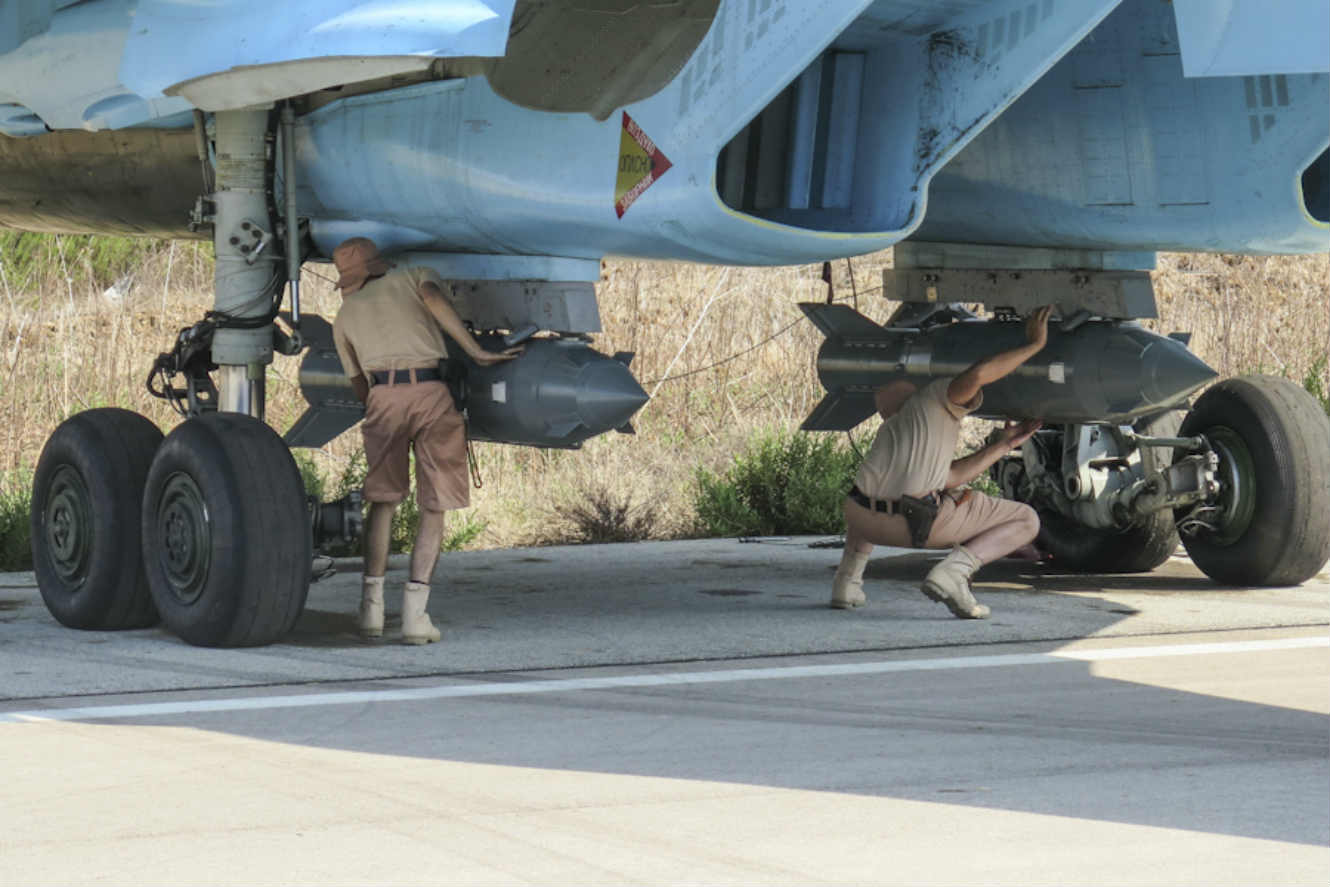
The Russian Air Force appears to be conducting a relatively economical bombing campaign by using modernized targeting equipment with older munitions while selectively combat testing its latest aircraft and precision-guided munitions. Russia has budgetary and supply constraints and may be conserving a limited supply of precision-guided munitions for the campaign, particularly since many of the putative targets do not merit the use of expensive guided munitions. Unlike the U.S. Air Force, Russia cannot afford to drop thousands of precision munitions to take out the ubiquitous Toyota trucks armed with ZU-23-2 anti-aircraft cannons that dominate this battlefield. Moscow would equally be embarrassed to run out of guided munitions shortly into its campaign, as happened with some NATO countries during the 2011 intervention in Libya.

Syria is a debut of sorts for Russia’s tactical aviation. Despite its visible limitations, watching footage from Russian drones of relatively accurate nighttime airstrikes in Syria is almost science fiction compared to what the Russian air force was capable of as recently as 2008.


QUOTE
In addition to its aerial assets in Syria, Russia deployed a Pantsir-S1 air defense system, around a dozen tanks (allegedly the T-90A), and naval infantry. Supposedly as many as 1700 military personnel are now in Tartus to expand the base and rebuild its pier, which remains more a floating dock than a real port.  Such expansions were being discussed as far back as 2010, but never implemented. In time, Russia may be able to dock ships from its surface fleet there. While the tanks and infantry appear detailed to base defense, Russian artillery and helicopters are engaged in supporting the ground offensive. Meanwhile, there is supposed work to further expand Russia’s military presence at military complexes in Al-Sansobar and Istamo, although these expansions seem intended to service displaced Syrian units instead.  There is no significant Russian activity at either base.


QUOTE
Led by the Black Sea Fleet, Russia’s Mediterranean squadron is providing extended air defense off the Syrian coast. This squadron consists of roughly ten ships on rotation, most of which are landing, support, or intelligence vessels, along with four surface combatants. Though antiquated, the lone Slava-class missile cruiser Moskva provides the bulk of the firepower and capability of this fleet, including a naval variant of the S-300 air defense system. Given Moscow’s worries about Western aviation, this naval mission is a convenient way of keeping an S-300 near Latakia and Tartus without deploying it on the ground in the region. This squares the circle of deploying a long-range air defense without running afoul of Israel’s security concerns — an S-300 on the ground in Syria could cover all of Israel’s airspace.  Deploying such a system inside Syria would aggravate Israeli Air Force, leading to problems with Tel Aviv that Russia is keen to avoid.

The rest of the ships — two Krivak-class frigates and a 46-year-old Kashin-class destroyer —are not impressive.  Far from capable, they are in need of replacement.  Just earlier in July a Krivak failed to successfully launch its SS-N-14 Silex missile during the parade in Crimea. Most of the Russian Black Sea Fleet remains in shipyards and planning documents. This intervention has also revealed shortages of sealift and logistics capacity in the Russian Navy, already overstrained in supporting the combat operations in Syria barely a few weeks in. Russia’s aging landing ship fleet is being hastily supplemented with commercial cargo ships bought from Turkey with their original markings not yet removed. Russia has reflagged the cargo ships as naval support vessels while reassigning additional transport vessels from other agencies that were originally intended for logistics missions as far away as the Arctic.


http://warontherocks.com/2015/10/russias-a...hat-do-we-know/
BorneoAlliance
post Oct 21 2015, 12:10 AM

New Member
*
Newbie
0 posts

Joined: Dec 2014

Islamic State’s Southeast Asia Unit: Raising The Security Threat – Analysis

user posted image

The Southeast Asia fighting unit of the Islamic State of Iraq and Syria (ISIS), Katibah Nusantara (KN) continues to expand geographically within a year of its establishment. There are about 450 Indonesians and Malaysians, including children and women under fealty to ISIS in Iraq and Syria today. KN or Majmuah Al Arkhabiliy in Arabic, started out with some 100 Indonesian and Malaysian fighters when it was formed in Shaddadi, Hasakah in Syria in September 2014. It has since the middle of this year, divided into three geographical groupings: KN Central led by Bahrum Syah; Katibah Masyariq led by Salim Mubarok At-Tamimi alias Abu Jandal, based in Homs and Katibah Aleppo led by Abu Abdillah. Bahrum Syah remains amir of KN, dealing strictly with Indonesian ISIS fighters that defy or defect from KN’s instructions, to maintain unity within ISIS.

In Southeast Asia almost two dozen Indonesian extremist groups have pledged allegiance to the self-styled Caliph of Islamic State (IS) Abu Bakar Al Baghdadi. ISIS has accepted their ba’iat (oath of loyalty), as expressed in its publication Dabiq in November 2014, but has yet to acknowledge Indonesia as a wilayat (province). That will require the appointment of the leadership in a particular wilayat by the Caliph, where multiple groups have merged or where direct line of communication exists between ISIS and the purported leadership of a wilayat.

Indonesian pro-ISIS groups

The Indonesian pro-ISIS groups, prompted by the need to be united under one umbrella, have established the Jamaah Ansharut Daulat (JAD), in March 2015. JAD comprises students of Aman Abdurrahman who previously joined various groups. Indeed the key leaders of KN such as Bahrum Syah and Abu Jandal are former students of Aman. JAD considers its main mission to be the facilitation of a more coordinated communication between Indonesian fighters in Syria and ISIS supporters in Indonesia.

Despite losing the lives of more than 50 fighters – mostly Indonesians – in the Syrian civil war, KN’s public profile has been undiminished as seen in the open video of its Eid Adha celebrations in the conflict zones of ISIS-held territory. The video features Indonesians fighters prominently but Malaysian fighters have appeared in other ISIS videos. KN has also translated ISIS materials from Arabic into Bahasa Indonesia, and sub-titled jihadist videos, setting a record of 20 videos in a month under the banner of ISIS’ Al-Hayat Media Centre.

The Threat to Southeast Asia

Although none of the ISIS’ official videos featuring KN has specifically mentioned any intention to attack Indonesian targets, they have, however, focused on calling on Indonesians to hijrah (migrate) to Syria to fight against those that ISIS consider infidels. However one KN figure, Abu Jandal was featured in several unofficial videos that threatened to free pro-ISIS ideologues Abu Bakar Ba’asyir and Aman Abdurrahman, from Indonesian prisons, and to attack Indonesian military, police and youth wing of Nahdlatul Ulama, the largest Indonesian Muslim organisation. Abu Jandal also praised operations conducted by Mujahidin Indonesia Timur (MIT), a pro-ISIS terrorist group led by Santoso. The Abu Jandal video had been aired without the consent of KN amir Bahrum Syah, which led to his brief imprisonment by the latter for insubordination.

Several KN personnel have reportedly aided terrorist groups in Indonesia. Bagus Maskuron, the appointed MIT’s liaison officer with ISIS, allegedly arranged for the deployment of nine Uighurs to train with MIT in Poso, Central Sulawesi, in September 2014. While four of them were later arrested five Uighurs are believed to be fighting with MIT in Poso. Indonesian police believe that MIT received logistical assistance from ISIS. Bahrum Naim (of KN) allegedly funded several foiled bomb plots in Solo, Central Java, targeting a Buddhist temple, a church, and police stations during the Indonesian Independence Day anniversary on 17 August 2015. However, it is not known whether the assistance for Indonesian terrorist groups was officially from KN or was without official sanction from the group.

More terrorist cells in Indonesia might gain financial and logistical assistance from their comrades in Syria. The growing links between Indonesian extremists and ISIS might give rise to more variation of targets for terrorists but the police remain MIT’s primary target.

Additionally, foreign embassies might once again become terrorist targets given that the ISIS’ Dabiq published in August 2015 has specifically encouraged the targeting of embassies of the coalition-member states in Indonesia and Malaysia. The possibility of Shi’ites being attacked by KN returnees should also not be underestimated. A list of Indonesian Shi’ite organisations were circulated online recently among Indonesian pro-ISIS supporters.

Shi’ite institutions being targeted in Indonesia is not new. In 2011, they constituted the targets of Abu Umar’s group, a faction of Darul Islam (DI), which was involved in weapon procurements from Mindanao. The group also planned to attack the Singapore embassy in Jakarta in 2011. Indeed, members of KN would not find difficulty to connect with the many terrorist cells that are mostly pro-ISIS, to plot attacks in the country.

*V. Arianti is an Associate Research Fellow and Jasminder Singh is a Senior Analyst with the S. Rajaratnam School of International Studies (RSIS), Nanyang Technological University, Singapore.

http://www.eurasiareview.com/20102015-isla...hreat-analysis/
BorneoAlliance
post Oct 21 2015, 12:17 AM

New Member
*
Newbie
0 posts

Joined: Dec 2014

Turkish Airlines fined over shipment of 144,000 blanks to Vietnam

user posted image

QUOTE
In late July this year, customs officers at Tan Son Nhat International Airport also discovered a huge volume of arms hidden on a flight from Turkey.

The weapons included 94 military handguns and 472 magazines, and were said to have been wrongly delivered to Ho Chi Minh City instead of Singapore.


http://tuoitrenews.vn/society/31090/turkis...anks-to-vietnam
BorneoAlliance
post Oct 21 2015, 12:31 AM

New Member
*
Newbie
0 posts

Joined: Dec 2014

Russian 26 dead servicemen from Syria received in Sevastopol - Ukraine military intelligence


A total of 26 dead Russian servicemen who died in Syria have been delivered to the seaport of Sevastopol.

Military intelligence department of Ukraine Defense Ministry has reported in its daily situation report about the Syrian conflict.

"A total of 26 bodies of dead soldiers from the 810th separate brigade of marines (Sevastopol) from the Black Sea Fleet have been transported from Syria to Sevastopol," a statement said.

In addition, Ukraine military intelligence notes that due to the inability of the Russian command to ensure normal sanitary conditions of deployment, "widespread infectious diseases cases plague personnel of the Russian Armed Forces in Syria."

Meanwhile, the command of the Russian Armed Forces has continued to accumulate and supply its forces in Syria: "In the past 24 hours, the military-transport aircraft IL-76 flew twice to the Hmeymim, Syria, airbase ; hulk ship" Kil-158" from the Black Sea fleet carrying a military cargo passed through the Bosphorus Strait and moves toward the Syrian coast."

http://www.ukrinform.net/rubric-politics/1...telligence.html
BorneoAlliance
post Oct 21 2015, 07:38 AM

New Member
*
Newbie
0 posts

Joined: Dec 2014

‘Too many aircraft in Syrian airspace’: MoD posts video with Russian jet approaching drone

Syria’s airspace has been a bit overcrowded as of late, the Russian military hinted in a comment on a video of their jet in a close encounter with an unidentified drone. Over 30 planes or drones can sometimes be in one area at the same time, the MoD said.

The presence of various aircraft – including military cargo planes, warplanes, UAVs, and strike drones – has recently been on the rise in Syrian airspace, Defense Ministry spokesman Igor Konashenkov said in statement on Tuesday.

The Ministry of Defense posted a video of an unidentified drone said to be flying over Syria. The UAV was apparently caught on camera from the cockpit of a Russian jet.


While Moscow coordinates its flights with Damascus, “the rest of the manned and unmanned military aircraft are [flying] in Syrian airspace without coordination and with turned off transponders,” Konashenkov said, adding that “unfortunately, our American colleagues do not seem to grasp the seriousness of this issue.”

From time to time there are over 30 aircraft in one area which, “of course, creates risks to the aviation in the Syrian airspace,” he explained.

Earlier in October, US military spokesperson Naval Captain Jeff Davis was cited by AP as saying that at least one American military aircraft had been forced to divert its route while flying over Syria in order to avoid making contact with a Russian warplane.

Unconfirmed American media reports have also claimed that Russian fighter jets have “intercepted” US MQ-1 Predator drones in Syrian airspace. Details, however, suggested that the drones’ flight paths had not been hampered, despite close fly-bys.

On Tuesday, Russia and the US reached an agreement aimed at regulating the operations of both countries’ Air Forces in Syria.

https://www.rt.com/news/319226-syrian-skies-planes-drones/
BorneoAlliance
post Oct 21 2015, 07:44 AM

New Member
*
Newbie
0 posts

Joined: Dec 2014

Is This China’s Newest Tool To Thwart US Military Power?

user posted image

China has reportedly conducted a 48 hour test flight of its largest high-altitude airship, the Yuanmeng (Dream) in near space–the atmosphere between 20 kilometers to 100 kilometers altitude–IHS Jane’s Defense Weekly reports.

The Yuanmeng, according to a Chinese media outlet, ascended to an altitude of 20 kilometers at a test area near Xilinhot in Inner Mongolia using solar power to power its three propeller engines.

Beijing’s new high-altitude aircraft is one of the largest solar-powered airships in existence to date. According to Popular Science, the Yuanmeng has a volume of 18,000 cubic meters, a length of 75 meters and a height of 22 meters. It can carry a payload of 5 to 7 tons including “broadband communications, data relay, high-definition observation, space situational awareness, and airborne imaging systems” all powered by the sun.

A Chinese scientist involved with the project told Want China Times that the airship has been made of an extremely lightweight material capable of enduring tremendous pressure and that it is equipped with a highly efficient solar battery and lightweight avionics. “The biggest challenge for the near-space airship is the big temperature difference in the day and night,” another scientist told The People’s Daily Online.

The airship has purportedly been designed and built by Beijing Aerospace Technology Company and the Beijing University of Astronautics and Aeronautics (BUAA) first and foremost for civilian purposes such as weather monitoring, estimating crop yields, and disaster relief assistance.

However, according to a Chinese report cited by IHS Jane’s Defense Weekly, “from a national security perspective near-space steerable airships can rely on their height advantage for early warning, wartime communications support, or aiding attack platforms.”

During a future conflict where China’s satellite communications are blocked or satellites, in fact, destroyed through anti-satellite weapons, the Yuanmeng could as a communications relay station for Chinese aircraft and ships.

According to Popular Science:

Operating higher in near space means that the Yuanmeng would have constant line of sight over a hundred thousand square miles–an important requirement for radar and imaging. Increased sensor coverage means increased warning time against stealthy threats such as cruise missiles, giving Chinese forces a greater opportunity to detect and shoot down such threats. It would also be harder for fighters and surface-to-air missiles to attack near space objects.

While the airship will be vulnerable to missile attacks and other types of anti-satellite weapons, the Yuanmeng, equipped with sensors, could nevertheless serve as an early warning system in a future high-tech conflict. In particular, it could supplement China’s burgeoning anti-access/area denial capabilities by detecting incoming missiles, stealth planes, and warships from several hundred kilometers away.

http://thediplomat.com/2015/10/is-this-chi...military-power/
BorneoAlliance
post Oct 21 2015, 07:52 AM

New Member
*
Newbie
0 posts

Joined: Dec 2014

New Laser-Guided Missile Fires From a Grenade Launcher

user posted image

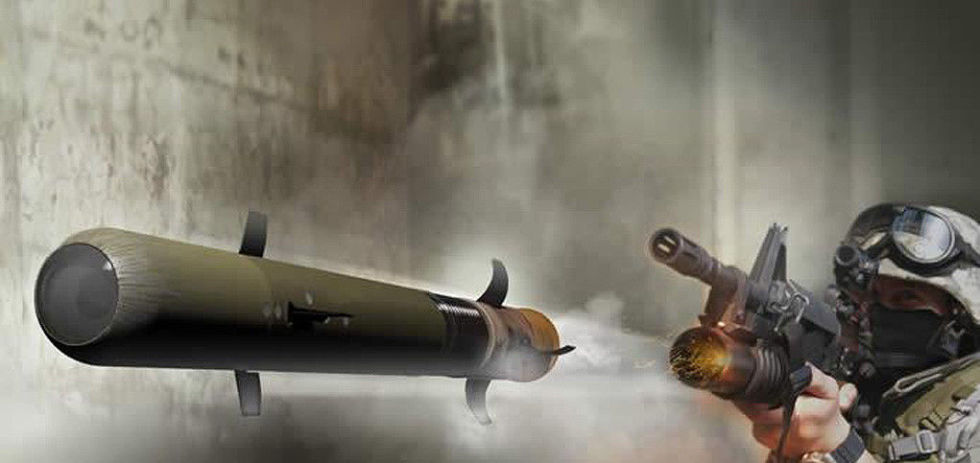
​A brand-new battlefield guided missile developed for the U.S. Army is being launched from an unlikely place—a grenade launcher. Developed by Raytheon, the Pike missile promises to give individual grunts the ability to hit targets more than a mile away.

For decades, U.S. Army infantrymen have been been stymied in their quest for greater firepower. Weight limitations, set by the average load a soldier can carry, put a limit on the number of bullets and grenades that can be carried into battle. The Pentagon's solution has been to make individual munitions smarter, so each hits the target the first time.

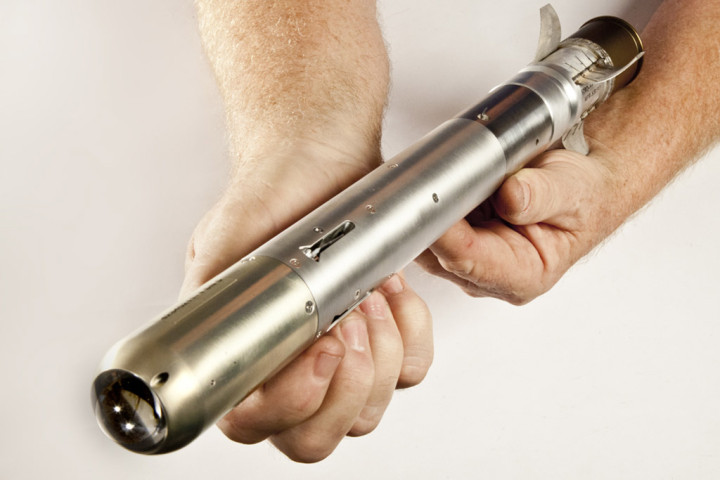
That's where the Pike comes in. This is a 40-millimeter laser-guided missile that weighs less than two pounds and measures just 16.8 inches in length, but manages to pack into that frame a rocket motor, guidance system, and laser seeker. Raytheon says the new weapon can be used against stationary and slow-moving targets out to 2,300 yards. Pike can be used not only against enemy soldiers in trenches and bunkers, but also against vehicles and even hovering helicopters.

In battle, Pike would be assigned to two-man teams. Missiles would be issued to the squad grenadier, the soldier carrying a M320 grenade launcher (in another space-saving move, Pike reuses an existing launcher). The second team member is equipped with a pistol-sized laser designator to mark the target.

The grenadier fires the grenade launcher, which launches Pike out of the barrel. Eight to ten feet away the missiles rocket motor—designed to produce a minimum of smoke—kicks in and sends Pike downrange. Pike detects the laser beam and homes in on it, and is reportedly accurate to within five meters.

user posted image

If the Army decides to field the weapon, then Pike will occupy the middle ground between light mortars and heavier anti-tank missiles such as the Javelin. On the low end of that range, the M224 60-millimeter mortar is designed to drop a grenade-sized round on the enemy, but may require multiple rounds to get "on target." In the meantime, the enemy will take cover and the mortar's effectiveness will be reduced. Lacking a long-range weapon, American infantry in Iraq and Afghanistan have used Javelin anti-tank missiles against particularly stubborn targets. While a great missile capable of killing tanks up to two kilometers away, Javelin is heavy and—at more than $200,000 each—very expensive.

Pike appears to bring best of both worlds. Pike has the lethality of the mortar and the range and precision capability of the Javelin. At five pounds, including grenade launcher and one missile, Pike is nine times lighter than either.

First though, some issues need to be ironed out. The M320 grenade launcher needs to be modified accommodate the Pike. Five-meter accuracy is not that great for a precision weapon with a small warhead, but it's not awful, either. The real potential deal-killer is the pricetag: Raytheon hasn't disclosed the per-missile cost, which is likely to be much, much higher than the $70 cost of your average 40-millimeter grenade. Still, if it works out, Pike will be the first new, really useful weapon for grunts fielded in decades.

http://www.popularmechanics.com/military/w...renades-anyone/
SUSalaskanbunny
post Oct 21 2015, 09:25 AM

Foodie
*******
Senior Member
4,283 posts

Joined: Nov 2009
From: Vietnam

QUOTE(BorneoAlliance @ Oct 21 2015, 07:52 AM)
New Laser-Guided Missile Fires From a Grenade Launcher

user posted image

accurate to within five meters. doh.gif

user posted image

If the Army decides to field the weapon, then Pike will occupy the middle ground between light mortars and heavier anti-tank missiles such as the Javelin. On the low end of that range, the M224 60-millimeter mortar is designed to drop a grenade-sized round on the enemy, but may require multiple rounds to get "on target." In the meantime, the enemy will take cover and the mortar's effectiveness will be reduced. Lacking a long-range weapon, American infantry in Iraq and Afghanistan have used Javelin anti-tank missiles against particularly stubborn targets. While a great missile capable of killing tanks up to two kilometers away, Javelin is heavy and—at more than  $200,000 each—very expensive. doh.gif  1 tank how much

Pike appears to bring best of both worlds. Pike has the lethality of the mortar and the range and precision capability of the Javelin. At five pounds, including grenade launcher and one missile, Pike is nine times lighter than either.

First though, some issues need to be ironed out. The M320 grenade launcher needs to be modified accommodate the Pike. Five-meter accuracy is not that great for a precision weapon with a small warhead, but it's not awful, either. The real potential deal-killer is the pricetag: Raytheon hasn't disclosed the per-missile cost, which is likely to be much, much higher than the $70 cost of your average 40-millimeter grenade. Still, if it works out, Pike will be the first new, really useful weapon for grunts fielded in decades.

http://www.popularmechanics.com/military/w...renades-anyone/
*
doubt its gonna be cheap.. or cost effective
SUSalaskanbunny
post Oct 21 2015, 09:50 AM

Foodie
*******
Senior Member
4,283 posts

Joined: Nov 2009
From: Vietnam

QUOTE(BorneoAlliance @ Oct 19 2015, 02:11 AM)
Japan displays naval power as US extends home fleet’s operation to entire Pacific

user posted image
https://www.rt.com/news/318992-japan-fleet-review-navy
*


120 Pages « < 47 48 49 50 51 > » 
Bump Topic Topic ClosedOptions New Topic
 

Change to:
| Lo-Fi Version
0.0276sec    0.36    6 queries    GZIP Disabled
Time is now: 7th December 2025 - 05:20 PM