QUOTE(blacktubi @ Aug 8 2015, 12:55 PM)
POE is not the same thing with Powerline.

Wireless is awesome until the throughput halved even in the opposite room.
Powerline for performance critical device. Wireless for everything else.
yes distance and walls will affect the speed. but i think ac and ax are pretty decent for home use.
QUOTE
The first is range. The actual distance a 5GHz signal can travel is less than a 2.4GHz one, but the amount of data that can be transferred is much larger. This means you will naturally get better performance near the edge of a 5GHz signal than you would at the equivalent distance from a 2.4GHz one. 5GHz also tends not to travel through walls very well, which sounds like a problem, but actually means diminished interference from nearby wireless networks.
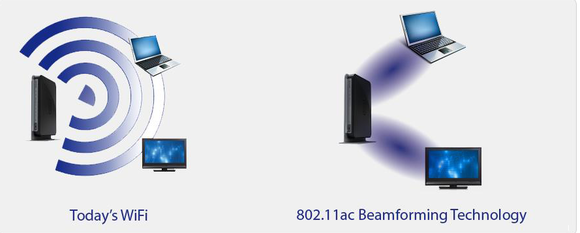
To get around potential problems with wall penetration, 802.11ac will include standards based support for a technology called Beamforming. While not new, this will be the first time it gets implemented in a consistent manner. Beamforming basically involves a router being smart with its signal, identifying where devices are physically located and focusing the signal in that direction. This is one feature that will likely be added once ratification occurs, but the groundwork has been lain for it in current products.
QUOTE
Devices that support beamforming focus their signals toward each client, concentrating the data transmission so that more data reaches the targeted device instead of radiating out into the atmosphere. Think of putting a shade on the lamp (the wireless router) to reduce the amount of light (data) radiating in all directions. Now poke holes in the shade, so that concentrated beams of light travel to defined locations (your Wi-Fi clients) in the room.
QUOTE
Netgear’s Beamforming+ is a superset of the beamforming technique defined in the 802.11ac standard, so it’s interoperable with any other 802.11ac device that also supports beamforming. But Beamforming+ does not require the client device to support beamforming, so you could see range and throughput improvements by pairing one of Netgear’s routers (specifically, Netgear’s model R6300, R6200, and R6250) with any 5GHz Wi-Fi device (Netgear’s R7000 Nighthawk router also supports beamforming on its 2.4GHz network).
Netgear is not the only router manufacturer to support beamforming, of course. It’s becoming a common feature on all of the higher-end Wi-Fi routers and access points. If you’re in the market and want a router that supports beamforming, check the router’s specs on the box or at the vendor’s website. Here are three other routers you might consider: the Linksys EA6900, the D-Link DIR-868L, and the Trendnet TEW-812DRU.

QUOTE
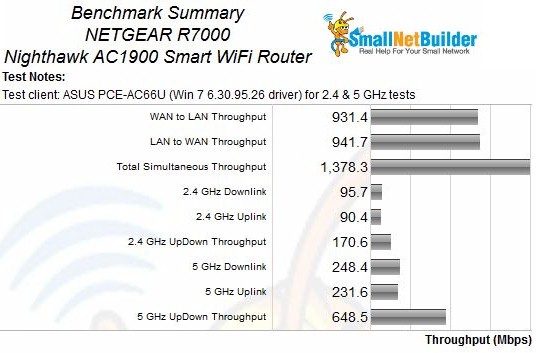
I ran three sets of one minute up and down tests using IxChariot's throughput script with TCP/IP using my good ol' test locations A, C and D, i.e.
Location A: AP and wireless client in same room, approximately 6 feet apart.
Location C: Client in upper level, approximately 25 feet away (direct path) from AP. One wood floor, sheetrock ceiling, no walls between AP and Client.
Location D: Client in upper level, approximately 35 feet away (direct path) from AP. One wood floor, one lower level sheetrock wall, sheetrock ceiling between AP and Client.
 http://www.smallnetbuilder.com/wireless/wi...rk?limitstart=0
so to some for home use anyway, wifi is sufficient :} assuming is wireless ac with beam forming preferably.
poe vs wireless
http://www.digitaltrends.com/computing/wi-...s-killed-wired/yes apparently poe still has better reliable speeds, but you still need to be wired close to a power socket with the poe. and from my old experience the poe tends to overheat... so i don't like using it 24/7 :/
but seeing as wireless ac and ax is getting better, i feel the wireless option for home use will be the better deal due to wireless :} *hate wires
my pc uses ethernet though cause it's right next to the router, so why not
 This post has been edited by Moogle Stiltzkin: Aug 8 2015, 01:21 PM

 Jul 26 2015, 09:27 AM


 so you want to download as fast as you can.
 Quote
Quote





 poor customer service.


 0.0544sec
 0.40
0.40
 7 queries
 GZIP Disabled