

 Military Thread V17
  Jun 23 2015, 08:19 PM


BAD GUYS KNOW WHAT WORKS: ASYMMETRIC WARFARE AND THE THIRD OFFSET
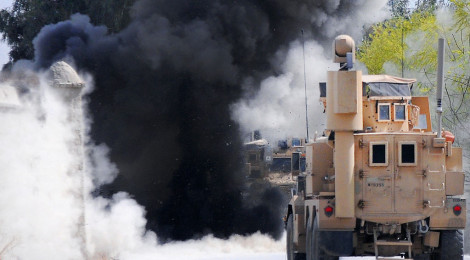
QUOTE
Despite the technological advantage of the U.S. military, insurgents in Iraq and Afghanistan have proven their resilience in the face of large-scale campaigns. Groups like these are constantly innovating on the tactical and strategic levels because they are constantly at war, and defeat, for them, has existential consequences. Their military innovation curve is much faster by necessity. Insurgents tend to use new combinations of available commercial technologies to great military effect. Insurgents in Iraq combined cheap, commercially available cell phones and service with rudimentary explosives to create improvised explosive devices, and with the aid of Iranian designs, also produced explosively formed penetrators, which proved costly for U.S. forces. In the future, insurgents armed with commercially available drones or state-provided technology, could deny the U.S. military the staples of low-intensity conflict such as MQ-9 Reapers or Blackhawks in a strategically meaningful manner. Hezbollah has already demonstrated its ability to use anti-ship missiles against Israeli ships, and Hamas is trying to develop “suicide” drones.
Nor are non-state actors the only ones who will be likely to use commercially available technology and asymmetric tactics to achieve their military ends. China has used swarming fishing boats to bolster its territorial claims in the East and South China Seas and could use them for intelligence, surveillance and reconnaissance, or offensive operations in a time of war. Russia has shown its willingness to use unconventional tactics to occupy Crimea and eastern Ukraine. With new unmanned, communication, and remote sensing commercial and military technology, asymmetric warfare will cut across all military domains by actors small and large. If the third offset does not account for the diversity of enemies, asymmetric tactics and strategies, and their potential for military innovations, the military will run needless risks in the most common types of future conflicts.
Nor are non-state actors the only ones who will be likely to use commercially available technology and asymmetric tactics to achieve their military ends. China has used swarming fishing boats to bolster its territorial claims in the East and South China Seas and could use them for intelligence, surveillance and reconnaissance, or offensive operations in a time of war. Russia has shown its willingness to use unconventional tactics to occupy Crimea and eastern Ukraine. With new unmanned, communication, and remote sensing commercial and military technology, asymmetric warfare will cut across all military domains by actors small and large. If the third offset does not account for the diversity of enemies, asymmetric tactics and strategies, and their potential for military innovations, the military will run needless risks in the most common types of future conflicts.
http://warontherocks.com/2015/06/bad-guys-...e-third-offset/
 Quote
Quote







 but safety would have been better appreciated.




 0.0280sec
 0.89
0.89
 6 queries
 GZIP Disabled