

 Military Thread V16
  Mar 16 2015, 06:13 PM


What Can Mussolini’s Navy Teach Us About Chinese Naval Power?

QUOTE
Like the PLAN today, the Italians were engaged in many military innovations throughout the 1930s. For example, one article notes: “The Italian navy was impressive for its pioneering naval research into radar and its prowess in torpedo technology — the latter resulting in powerful aerial and magnetic torpedoes and contributing to the maiali, or small human-guided torpedoes — the ultimate weapons in asymmetric naval warfare.”
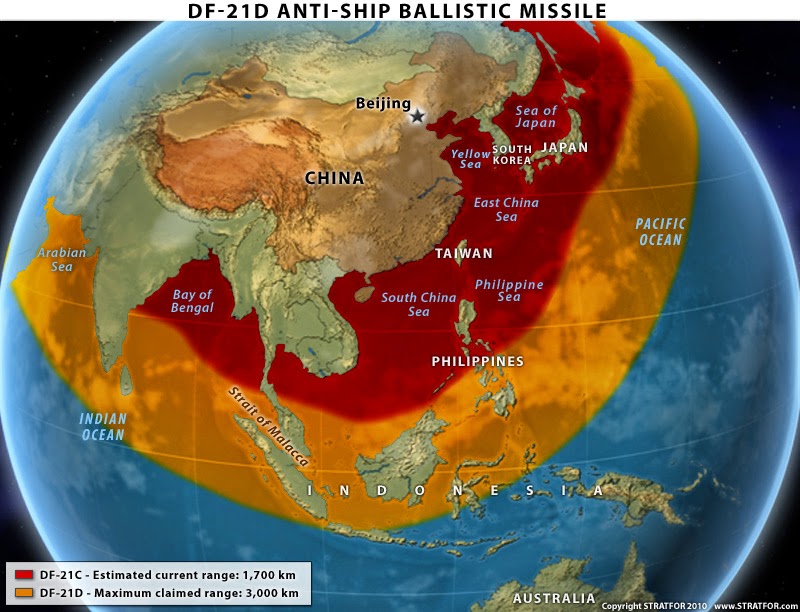
Also, the post-World War I Italian Navy, similar to today’s People’s Liberation Army Navy, harbored regional aspirations. With the conclusion of the war in 1918, the Italian admirals agreed that the navy must first dominate the Adriatic Sea and then expand into the Mediterranean and the Red Sea. China has a similar sequential strategy with attempting to dominate the Taiwan Strait as well as the South China Sea, followed by a push beyond the First Island Chain, and finally projecting power all the way to the Second Island Chain and beyond.
Also, the post-World War I Italian Navy, similar to today’s People’s Liberation Army Navy, harbored regional aspirations. With the conclusion of the war in 1918, the Italian admirals agreed that the navy must first dominate the Adriatic Sea and then expand into the Mediterranean and the Red Sea. China has a similar sequential strategy with attempting to dominate the Taiwan Strait as well as the South China Sea, followed by a push beyond the First Island Chain, and finally projecting power all the way to the Second Island Chain and beyond.
QUOTE
The Italians also experimented with swarming tactics and underwater assault techniques, built light surface-assault craft, and substantially increased the production of motor torpedo boats. In addition, in the interwar years, the Regia Marina started cooperating with the Italian air force and created torpedo bombers squadrons.
Today, China likewise appears to be implementing a counter-intervention strategy, although it is far from clear how important this concept is in current Chinese military thought. (see: “This is Still the One Article to Read on Chinese Naval Strategy in 2015”). However, as I stated before, “Anyone studying the Chinese military knows that the PLA is seeing a conflict with the United States through an anti-access and area denial lens.”
Today, China likewise appears to be implementing a counter-intervention strategy, although it is far from clear how important this concept is in current Chinese military thought. (see: “This is Still the One Article to Read on Chinese Naval Strategy in 2015”). However, as I stated before, “Anyone studying the Chinese military knows that the PLA is seeing a conflict with the United States through an anti-access and area denial lens.”
QUOTE
The British concern in the 1930s is very similar to the United States’ fear of losing a single aircraft carrier to Chinese missiles; the psychological impact would be just too shocking to contemplate, yet it appears that the United States opted for the French approach and is engaging in a naval buildup to confront the ostensible growing might of the PLAN
http://thediplomat.com/2015/03/what-can-mu...se-naval-power/
 Quote
Quote









 0.0345sec
 0.29
0.29
 6 queries
 GZIP Disabled