What are you spouting about? Annulment is not the same as divorce. You can divorce for all sorts of stupid reasons, but annulment only if it was found never to be valid in the first place.
point no 2. factor affecting consent: physical abuse.
probably i wrong, but the way i read, marriage can be annulled if there is physical abuse. cmiiw
That's a different story. I was concerned about the reason given "factors affecting consent". Unbelievable at this age. Yet to hear of anyone being forced into marriage. Even if the person claims that, there better be solid proof to back up that claim.
That's what I meant bro, it DOES happen still. Forced marriages can and do happen, even in this day and age. Hard to believe ya?
This post has been edited by khool: Sep 11 2015, 12:09 PM
103. Man always has before him the spiritual horizon of hope, thanks to the help of divine grace and with the cooperation of human freedom. It is in the saving Cross of Jesus, in the gift of the Holy Spirit, in the Sacraments which flow forth from the pierced side of the Redeemer (cf. Jn19:34), that believers find the grace and the strength always to keep God’s holy law, even amid the gravest of hardships. As Saint Andrew of Crete observes, the law itself “was enlivened by grace and made to serve it in a harmonious and fruitful combination. Each element preserved its characteristics without change or confusion. In a divine manner, he turned what could be burdensome and tyrannical into what is easy to bear and a source of freedom”.(163) Only in the mystery of Christ’s Redemption do we discover the “concrete” possibilities of man. “It would be a very serious error to conclude . . . that the Church’s teaching is essentially only an ‘ideal’ which must then be adapted, proportioned, graduated to the so-called concrete possibilities of man, according to a ‘balancing of the goods in question.’ But what are the ‘concrete possibilities of man’? And of which man are we speaking? Of man dominated by lust or of man redeemed by Christ?This is what is at stake: the reality of Christ’s redemption. Christ has redeemed us! This means that he has given us the possibility of realizing the entire truth of our being; he has set our freedom free from the domination of concupiscence. And if redeemed man still sins, this is not due to an imperfection of Christ’s redemptive act, but to man’s will not to avail himself of the grace which flows from that act. God’s command is of course proportioned to man’s capabilities; but to the capabilities of the man to whom the Holy Spirit has been given; of the man who, though he has fallen into sin, can always obtain pardon and enjoy the presence of the Holy Spirit.”
104. In this context, appropriate allowance is made both for God’s mercy towards the sinner who converts and for theunderstanding of human weakness. Such understanding never means compromising and falsifying the standard of good and evil in order to adapt it to particular circumstances. It is quite human for the sinner to acknowledge his weakness and to ask mercy for his failings; what is unacceptable is the attitude of one who makes his own weakness the criterion of the truth about the good, so that he can feel self-justified, without even the need to have recourse to God and his mercy. An attitude of this sort corrupts the morality of society as a whole, since it encourages doubt about the objectivity of the moral law in general and a rejection of the absoluteness of moral prohibitions regarding specific human acts, and it ends up by confusing all judgments about values.
--Encyclical Veritatis Splendor
This post has been edited by yeeck: Sep 11 2015, 12:32 PM
There are very well defined canonical grounds for Marriage Annulment . Once these have been established marriage Annulment can proceed. It is important to understand the grounds for Marriage Annulment before making application, and if in doubt you should consult your local priest.
Insufficient use of reason (Canon 1095, 10) You or your spouse did not know what was happening during the marriage ceremony because of insanity, mental illness, or a lack of consciousness.
Grave lack of discretionary judgment concerning essential matrimonial rights and duties (Canon 1095, 20) You or your spouse was affected by some serious circumstances or factors that made you unable to judge or evaluate either the decision to marry or the ability to create a true marital relationship.
Psychic-natured incapacity to assume marital obligations (Canon 1095, 30) You or your spouse, at the time of consent, was unable to fulfill the obligations of marriage because of a serious psychological disorder or other condition.
Ignorance about the nature of marriage (Canon 1096, sec. 1) You or your spouse did not know that marriage is a permanent relationship between a man and a woman ordered toward the procreation of offspring by means of some sexual cooperation.
Error of person (Canon 1097, sec. 1) Reasons for Marriage Annulment You or your spouse intended to marry a specific individual who was not the individual with whom marriage was celebrated. (For example, mail order brides; otherwise, this rarely occurs in the United States.)
Error about a quality of a person (Canon 1097, sec. 2) You or your spouse intended to marry someone who either possessed or did not possess a certain quality, e.g., social status, marital status, education, religious conviction, freedom from disease, or arrest record. That quality must have been directly and principally intended.
Fraud (Canon 1098) Reasons for Marriage Annulment You or your spouse was intentionally deceived about the presence or absence of a quality in the other. The reason for this deception was to obtain consent to marriage.
Total willful exclusion of marriage (Canon 1101, sec. 2) You or your spouse did not intend to contract marriage as the law of the Catholic Church understands marriage. Rather, the ceremony was observed solely as a means of obtaining something other than marriage itself, e.g., to obtain legal status in the country or to legitimize a child.
Willful exclusion of children (Canon 1101, sec. 2) You or your spouse married intending, either explicitly or implicitly, to deny the other's right to sexual acts open to procreation.
Willful exclusion of marital fidelity (Canon 1101, 12) You or your spouse married intending, either explicitly or implicitly, not to remain faithful.
Willful exclusion of marital permanence (Canon 1101, sec. 2) You or your spouse married intending, either explicitly or implicitly, not to create a permanent relationship, retaining an option to divorce.
Future condition (Canon 1102, sec. 2) You or your spouse attached a future condition to your decision to marry, e.g., you will complete your education, your income will be at a certain level, you will remain in this area.
Past condition (Canon 1102, sec. 2)R You or your spouse attached a past condition so your decision to marry and that condition did not exist; e.g., I will marry you provided that you have never been married before, I will marry you provided that you have graduated from college.
Present condition (Canon 1102, sec. 2) You or your spouse attached a present condition to your decision to marry and that condition did not exist, e.g., I will marry you provided you don't have any debt.
Force (Canon 1103) You or your spouse married because of an external physical or moral force that you could not resist.
Fear (1103) You or your spouse chose to marry because of fear that was grave and inescapable and was caused by an outside source.
Error regarding marital unity that determined the will (1099) You or your spouse married believing that marriage was not necessarily an exclusive relationship.
Error regarding marital indissolubility that determined the will (Canon 1099) You or your spouse married believing that civil law had the power to dissolve marriage and that remarriage was acceptable after civil divorce.
Error regarding marital sacramental dignity that determined the will (Canon 1099) You and your spouse married believing that marriage is not a religious or sacred relationship but merely a civil contract or arrangement.
Lack of new consent during convalidation (Canons 1157,1160) After your civil marriage, you and your spouse participated in a Catholic ceremony and you or your spouse believed that (1) you were already married, (2) the Catholic ceremony was merely a blessing, and (3) the consent given during. the Catholic ceremony had no real effect.
-------------------------------------------------------------------------------- Marriage Annulment in the Catholic Church Marriage Annulment:
WHO CAN APPLY FOR AN ANNULMENT? Every person, whether a Catholic or not, has the right to ask the Catholic Church to investigate the status of his or her marriage. Should the Church decide that such a marriage were null, this would be quite distinct from a civil divorce; it would be a declaration by the Catholic Church that a particular union was not a valid marriage.
Marriage Annulment: HOW CAN THE CHURCH DECLARE MARRIAGES NULL? There are many marital situations in which the tribunal can offer help. It may be that a couple entered a marriage with an impediment, such as a previous bond of marriage; or that their consent was invalid, because they lacked the necessary capacity, knowledge or will to consent to marriage; or that there was something wrong with the form of marriage used.
Marriage Annulment: IS THERE ANY HOPE FOR ME ONCE I AM DIVORCED? It may be that a Catholic person is divorced or that a Catholic wishes to marry someone who is divorced. The tribunal is always available to investigate a claim of nullity in an instance such as this. In doing so, the judges of the tribunal do not apportion blame to one party or the other; they are only concerned with making a just judgement about whether or not the marriage was null, this does not have any effect on the legitimacy of any children born of the union.
Marriage Annulment: HOW COULD I ENTER A NEW MARRIAGE? Once the tribunal has reached a decision of nullity, and if this is agreed by our appeal tribunal, the marriage is declared null and both parties to it are then free to marry. This is not Catholic divorce; it is marriage annulment, and it is one of the Catholic Church’s pastoral responses to those who find themselves in difficult marital situations.
Marriage Annulment: WHAT IF I WAS MARRIED OUTSIDE THE CATHOLIC CHURCH? Catholics are bound to marry according to the Catholic form of marriage, unless they are dispensed. So if a Catholic has married in a non-Catholic Church, or in a register office, without this dispensation being given, the marriage is invalid. Both parties to such a union can be declared free to marry, enabling each of them to enter a new marriage.
Marriage Annulment: WHAT SHOULD I DO TO START AN ANNULMENT PROCESS? First of all, speak to one of the priests or deacon in your parish, or perhaps to another priest or deacon known to you. He should be able to give you a preliminary enquiry form, in which you are asked to set out the principal facts concerning your marriage. It is the usual practice of the tribunal to require a couple to have obtained a divorce absolute decree before the annulment process begins.
This post has been edited by khool: Sep 11 2015, 02:16 PM
The Universal Church is in need of priests to carry the Gospel of Christ to those who most need it and to minister to the flock of Christ for the salvation of souls. Our own archdiocese is no exception, and we appeal to all the faithful to pray for those discerning vocations that they may be guided by the Holy Spirit and moved by the love of Christ for His people.
The Archdiocesan Web Development Team has put together a new website for the Officer for Vocations, with the hope that it will be a source of inspiration, advice, and guidance for all who feel the call to work in God's vineyard.
Please feel free to share the vocations page with anyone that you know who is currently discerning a vocation and continue to pray that the Church will continue to be blessed by young men and women who choose to set aside all things to follow Christ and serve His people in the pattern of the Good Shepherd.
O Virgin pure, immaculate/ O Lady Theotokos O Virgin Mother, Queen of all/ and fleece which is all dewy More radiant than the rays of sun/ and higher than the heavens Delight of virgin choruses/ superior to Angels. Much brighter than the firmament/ and purer than the sun's light More holy than the multitude/ of all the heav'nly armies. Rejoice, O Unwedded Bride! O Ever Virgin Mary/ of all the world, the Lady O bride all pure, immaculate/ O Lady Panagia O Mary bride and Queen of all/ our cause of jubilation Majestic maiden, Queen of all/ O our most holy Mother More hon'rable than Cherubim/ beyond compare more glorious than immaterial Seraphim/ and greater than angelic thrones. Rejoice, O Unwedded Bride! Rejoice, O song of Cherubim/ Rejoice, O hymn of angels Rejoice, O ode of Seraphim/ the joy of the archangels Rejoice, O peace and happiness/ the harbor of salvation O sacred chamber of the Word/ flow'r of incorruption Rejoice, delightful paradise/ of blessed life eternal Rejoice, O wood and tree of life/ the fount of immortality. Rejoice, O Unwedded Bride! I supplicate you, Lady/ now do I call upon you And I beseech you, Queen of all/ I beg of you your favor Majestic maiden, spotless one/ O Lady Panagia I call upon you fervently/ O sacred, hallowed temple Assist me and deliver me/ protect me from the enemy And make me an inheritor/ of blessed life eternal. Rejoice, O Unwedded Bride!
This post has been edited by yeeck: Sep 11 2015, 07:46 PM
A local politician goes to the bishop and tells him his daughter needs an annulment so she can have a great big wedding, a time of civic rejoicing. The bishop, a timid man, not exactly faith filled, however having looked into the matter is doubtful and says that it should follow the ordinary course. The politician, a bit of a bully, says he will go to the secularised press and insure they put up yet another story of the 'un-pastoral' style of the bishop, and he will certainly complain about him to his powerful friends in Rome. The bishop thinks about it and within 45 days the politician's daughter is organising a second wedding in the Cathedral with the bishop assisting a presiding Cardinal. The great thing about the 'unreformed' annulment procedure is that having collected the evidence for an annulment a judgement was made by the diocesan tribunal and then the papers were passed to second tribunal for an independent verdict, if it was different in the second instance from the first it was sent to the Rota. The great advantage was that the diocesan tribunal's work was scrutinised by the second tribunal, and occasionally by Rome. This meant that Bishops had to act according to the law, in fact they were protected by the law, they could hide behind the law and one of the purposes of the law is for the weak to hide behind it.
There are certainly problems with the annulment procedure, it is slow and invariably under funded, in some parts of the world it simply does not exist, some diocese do not have any canonists who can run a marriage tribunal, which means people are denied justice. However we saw the madness in the 1970s where US canonists seemed to merely rubber stamp any requests for a declaration of nullity.
I cannot help thinking the Holy Father, out of pastoral zeal, has acted unwisely and is placing the whole Church in the American 1970's situation. Already in my parish a couple of people with less than perfect marriages have been asking if possibly they might not be married after all; doubts have been sown. According to Cardinal Kasper the Holy Father has said he believes 50% marriages could be or are invalid, which seems a rather pessimistic attitude to the sacraments. Of course if one suggests 50% of marriages are invalid, could one not apply the same criteria to ordinations, if bad catechises could be criteria for invalidity, as some are suggesting, could not bad theological formation (or moral formation) be a good reason to suggest one's priest or bishop's ordination was null and void and the same for the sacraments he has celebrated?
That way of course lays theological madness and sees a return to a new Donatist Crisis, which actually one does see amongst certain uber-Catholics of an ultra-'traditional' stripe. The Church has always understood that Christ is greater than the Church, than the sacraments, and certainly greater than the weak and limited people who receive the sacraments, by his Grace he makes up for our sins and deficiencies.
The problem here is the same as lies behind the Synod: do we rely on God's grace or are we merely bound by human weakness?
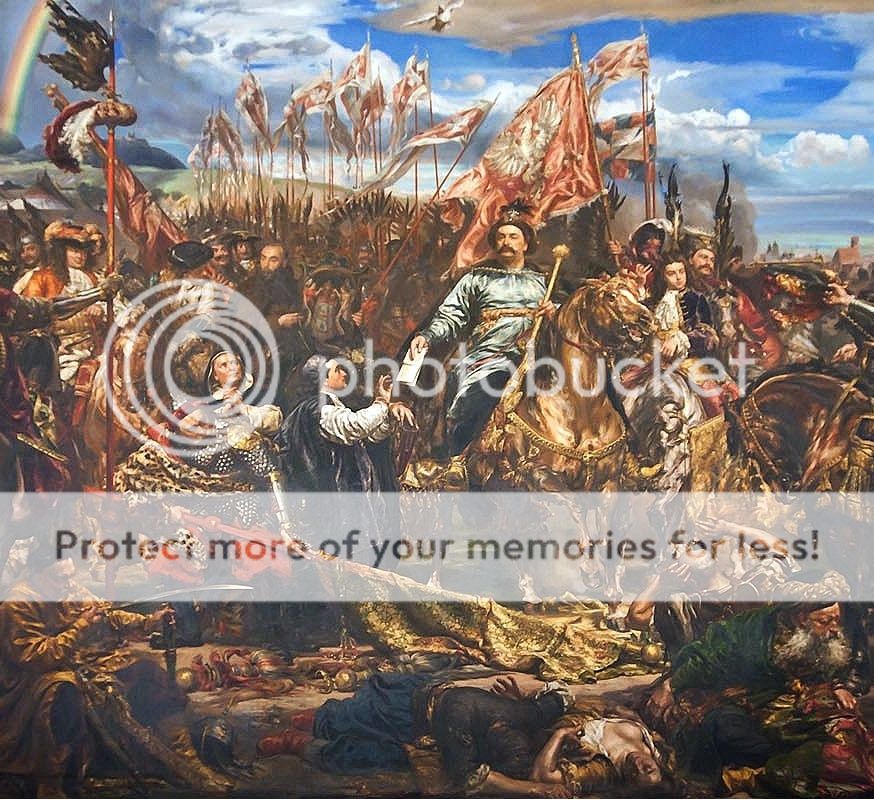
Under Mary's Holy Name: Victory in Vienna, September 12, 1683 Christopher Check (September 11, 2014)
As Christian Europe tore at her own throat during the Thirty Years War (1618-1648) the Ottoman Turks missed a golden opportunity to strike their centuries-old enemy. Why? They were themselves absorbed with war in Persia. Moreover, they were beset by a turbulent period of harem intrigue and governed—or not—by a string of ineffectual and self-indulgent sultans, one of whom was deposed and two of whom were murdered. The last of these was Ibrahim I. He was deposed and murdered.
Known as “the Debauched,” Ibrahim was famous for his vigorous and unusual harem enthusiams, although at one point he had the whole lot of them drowned in the Bosporus—280 ladies in all—when he discovered that he was not the only man enjoying their affections. A liaison one night, however, with a Russian concubine produced the son that would reverse Ottoman fortunes.
Mehmed IV was what we would call today, an “outdoorsman.” He preferred hunting to war, but unlike his recent predecessors, he made decisions and stuck by them. Indeed, history remembers Mehmed for two decisions in particular. The first was to give control of the empire to the Koprulu family, which produced a series of Grand Viziers who restored internal order to the empire, recaptured many of the Aegean Islands from Venice, and extended the boundaries of the empire northward through battlefield victories in Transylvania and Poland.
Best known and last of these Grand Viziers was Kara Mustafa Pasha. Kara Mustafa Pasha was the source of Mehmed’s other famous decision: in the summer of 1682 the Grand Vizier persuaded his Sultan to violate the Peace of Vasvár and lay siege to Vienna.
A century-and-a-half had passed since Suleiman the Magnificent had tried and failed to take the fortress city on the Danube. Mehmed was determined not to fail, and more than that, he was convinced, like all Sultans before him, that the Ottomans were, as conquerors of Constantinople, the true heirs of the patrimony of the Roman Empire. The Hapsburgs in Vienna were impostors who needed to submit to the rule of Islam.
By the autumn of 1682 the Ottoman Army had crossed the Bosporus and proceeded to Adrianople. There the sultan wintered his army, and as they trained for war, he read and reread the abundant accounts of earlier Turkish campaigns into Eastern Europe. Along the road-of-march to Belgrade (in Ottoman hands since 1521) bridges and roads were repaired. A draft or “ban” was proclaimed for auxiliaries throughout the empire and Arabs, Bosnians, Bulgars, Greeks, Macedonians, and Serbs poured into the White City to await the arrival of Mehmed’s force, led by his 12,000 janissaries. Among the sultan’s army were Protestant soldiers loyal to the Magyar Lutheran Imre Thököly who looked to the Islamic east to back his dubious claim to the throne of Hungary.
Less detestable than Protestants allying themselves with Islam against Catholic Hapsburg rule, but considerably more savage and fearsome, were the Sultan’s mobile shock-action cavalry: the Tatars. Descendants of the bloody convergence of Sarmatians, Scythians, and Mongols, these natural horsemen were the stuff of nightmare. Like the African corsairs who raided the coastal fishing villages of Italy in the 16th century, the Tatars were the frontline of the Ottoman slave trade. Rape, pillage, plunder, and arson composed their modus operandi, tales of which made their way as far as France and England. To the villagers on the Christian Ottoman border in Hungary and Poland, however, the Tatars were no mere story to frighten ill-behaved children. They were a terrifying reality. To the Polish, Lithuanian, and Austrian soldiers who had faced them in battle, they were extraordinary archers capable of a rapid rate of fire and deadly accuracy from their short bows and all from the saddle of a galloping pony.
In March of 1683, as the army left Adrianople amidst great fanfare, a sudden squall blew the Sultan’s turban from his head. All his men, from the highest-ranking officer to the lowliest conscript, recognized the bad omen. Superstitions aside, spring storms swelled rivers and the usual fords required pontoon bridges to cross. At Belgrade, Sultan Mehmed handed the Flag of the Prophet (a facsimile because the original had been captured by the Venetians at Lepanto a century before) to his Grand Vizier Kara Mustafa and with it command of the Ottoman host.
Mehmed remained in Belgrade to hunt and play. The real ruler of the Ottoman Empire pressed north for Buda, sending his siege cannons on barges up the Danube. Buda had endured Turkish occupation since 1541—another conquest of Suleiman the Magnificent. The Church of Our Lady there to this day bears in one alcove the decorations of the building’s days as a mosque. Was it a misguided ecumenical gesture, or is it a reminder of what may come again to a West grown soft and inattentive?
By the second half of June the Turkish army, now greater than 150,000 strong, had arrived in Buda. There the Grand Vizier announced to his war council his plan to take Vienna. “It is for thee to command and for us to serve,” answered the Governor of Damascus. Following the Danube west the Turks pressed on for Vienna, raiding and burning along the way.
Leopold I, Holy Roman Emperor could no longer deny that Vienna was the Ottoman objective. The man who had guided his country through the Thirty Years War ruled an empire pinched between a France under the Sun King determined to expand eastward and the Ottoman Empire resurgent. The condition called for a less vacillating character than the emperor, who permitted himself to be talked into abandoning Vienna.
Two men of sterner stuff he left behind: Count Ernst Rüdiger von Starhemberg to command the garrison in Vienna and Charles Sixte, Duke of Lorraine to command the Imperial Army in the field. It bears noting that the heroic figure for whom the Siege of Vienna is most remembered, John Sobieski, arrived in the eleventh hour. Both Starhemberg and Lorraine, severely outnumbered, acquitted themselves well throughout the two-month siege, masterfully resisting the Turk and prudently delaying a decisive engagement until the Polish and Saxon reinforcements could muster.
The Turks arrived at the walls of Vienna on the 12th of July. On the 13th an emissary from the Grand Vizier rode to the city’s walls with an invitation to surrender the city and submit to Islamic rule.
Starhemberg declined.
On the 14th the Turks began to bombard the city’s walls. The walls of Vienna had been much improved since the medieval days when they were first constructed, paid for by Richard Lionheart’s ransom. By the 17th century, the city’s defenses included all the designs developed in Italy during the Renaissance: mutually supporting bastions and ravelins, scarp and counterscarp, glacis and curtain wall. Tightly packed earth faced with brick and gently sloped both absorbed and deflected the rounds from the Turkish bombards. But the walls were not everywhere strong, and the Turks located on the south side Vienna’s weak spot between two bastions that fronted the Imperial palace. Toward this point in the wall they began a process at which they were very good: the steady digging of parallel trenches to close on the city’s defenses followed by mining, the digging of underground galleries to be packed with explosives to tumble the walls from beneath.
By August, the combination of mining and artillery fire had taken its toll of the city’s outer wall and seriously damaged the palace bastion. Musketball-to-arrow, pike-to-cutlass, and hand-to-hand encounters in the ditch and on the ramparts grew more frequent and more fierce. Viennese counterminers clashed with Turkish sappers in torchlit underground tunnels. Flamboyant and fearless, Starhemberg, a pistol in each hand, was ever in the thick of these contests, yet he knew that without relief the fighting would soon be street-to-street and house-to-house.
In the plains and woods surrounding Vienna, Charles Sixte, with his small force of 10,000 horse and no infantry (critical for seizing and holding terrain) did his best to limit the depredations of the merciless Tatar raiders. Dozens of villages south of the Danube were put to the torch, their women raped and their men slaughtered.
As grim as events appeared, hope was within sight. Four days after the start of the Turkish bombardment, John III Sobieski, King of Poland marshaled his army of nearly 40,000 in Warsaw and began the 435-mile march southwest toward Vienna. A similar force under John George III Elector of Saxony came southeast from Dresden. A third force came straight east from Munich under Maximilian II Emanuel, Elector of Bavaria. They united near Krems, some forty miles upriver from Vienna.
The Holy League, under command of Sobieski now began its difficult passage through the Wienerwald, known to us as the Vienna Woods, the 30-miles-long and 20-miles-wide expanse of thickly wooded foothills that dominate the terrain southwest of Vienna. Moving the artillery over steep slopes and rugged ground cut with ravines was particularly difficult, but by the 11th of September the Christian force had reached the Kahlenberg ridge. Looking down on the plain below they saw the countless brightly colored tents of the Ottoman host stretching north toward the city walls.
Sobieski also saw that the south slope of the ridge was of the same difficult terrain as the rest of the Wienerwald and was crisscrossed with the high, stone walls of vineyards and farms. The descent to the plain below would be as painstaking as the climb, but also under attack from Janissary skirmishers.
Before dawn, Sobieski assisted at Mass in the ruined Church of the Camaldolites, offered by Blessed Marco D’Viano. Gathering his force he commended their mission and their souls to the care of the Blessed Virgin.
The descent began.
As the sun rose on the morning of 12 September, the Ottomans saw, according their own account, “a flood of black pitch flowing down the hill, smothering and incinerating everything that lay in its way.”
Taking one ridge at a time, the Christians fought their way down the hill. Little could the commanders do but exhort their forces to press ahead in the confusion. The Saxons on the left of the Holy League line were the first to engage the forward deployed Ottomans, but by ten a.m. the whole Turkish army was arrayed for counterattack. For several hours the battle traded advantage, the Holy League ever closing on the city.
By late afternoon, Sobieski’s army had reached the plain, and he was now positioned to exploit his greatest asset, the famed Winged Hussars. Drawing up these courageous cavalrymen, their feathered plumes streaming off their backs, he led them himself, lances couched in a full-tilt charge at the center of the Ottoman line. Shouting “Jezus Maria ratuj!” they charged and reformed, charged and reformed, charged and reformed. The Polish horsemen followed their intrepid king deeper and deeper into the army of Islam, smashing what remained of their resistance, setting the followers of Muhammad to flight, relieving the siege, and carrying the day.
“We came, we saw, God conquered.” Sobieski wrote to Innocent XI.
The Polish king—taking a privilege that ought to have gone to Emperor Leopold—entered the city feted with parade and feast. Writing to his wife, Sobieski described Vienna’s gratitude, “All the common people kissed my hands, my feet, my clothes, saying: ‘Ah, let us kiss so valiant a hand!’”
The event was the last great Ottoman effort. Their borders receded. Within three years Buda was back in Christian hands.
One year after Sobieski’s victory, Pope Innocent XI—also dearly remembered for his explicit condemnations of usury and of “mental reservation” (a sophistry regrettably invoked by some of today's pro-life activists)—extended the Feast of the Holy Name of Mary to the Universal Calendar of the Roman Rite to honor the great victory that Our Lady granted the Christian West. When it fell out of fashion three centuries later in 1969 to recall the heroics of Christian soldiers against the enemies of Jesus Christ, the feast was removed from the Liturgical Calendar. In 2002, however, Pope Saint John Paul II restored the Feast to the Universal Calendar. It is hard not to imagine that the Trade Tower attacks of the preceding year were to the fore of his thoughts when he did, but that we do not know.
07/18/2015 “I am a parish priest in Aleppo, a place where God never ceases to amaze us” Interview with 43-year-old Fr. Ibrahim Alsabagh who has been parish priest in the war-ravaged Syrian city since October. “My fears are overcome by the grace of the Lord” Andrea Avveduto
“The parish is not yet directly under threat, but some of our neighbours risk their lives every day. Most of the jihadists who attack us do not even speak Arabic. They all come from faraway countries and have little to do with the Syrian revolution.” 43-year-old Fr. Ibrahim Alsabagh, has been serving as a parish priest in Aleppo since October. He was born in Damascus, completed his studies in Rome and then returned to Syria “to be with his people”. Internet and telephone lines are working one minute and are down then next in the city that has suffered the most devastation in the ongoing conflict. Water and electricity are a luxury. And yet this determined Franciscan friar continues to live there, helping anyone and everyone, Christians and Muslims alike, caught in a mire that spares no one.
Fr. Ibrahim, how can you live in a place like Aleppo, a city worn out by the violence of this absurd war? “The number one thing that keeps me going is God’s will, as I have perceived it in my life. Once I made a pact with the Lord, when I received a clear calling to follow Him. I said to Him: “Lord, life with you is quite difficult, but without you it is impossible. I cannot live apart from you.” Then, when I realised that my vocation was to heal others, families, as a priest I asked for me to stay where I am, with my family, so I could dedicate myself entirely to others. I was 19 when it happened to me, but it is something I always hold close to my heart. Looking after His family, His people: this is His will and I am perfectly prepared to do this, to go to any part of the world where I am certain it is He who is sending me, through His representatives, the superiors who ask me whether I am willing to go. So, when I was asked to go to Aleppo, I did not feel fear, even though I knew I would have a heavy cross to carry being here.”
Are you afraid now? “Every day. But my fears are overcome by the grace of the Lord, who acts and so often leads us to do things we never imagined we could do. Even now I am here, I feel like a father, a gentleness inside and I say to myself: “I am not usually this kind, this loving! I don’t have the strength to love this much!” This realisation makes me aware of the grace that is behind it and comes from Him. When we give ourselves up to Him, we are no longer ourselves, it is He who dwells in us, as St. Paul says.”
In an abandoned place like Aleppo, how do you manage to live in communion with the universal Church? “After my last visit to Italy, I saw that we are present in your prayers and in the prayers of priests and many consecrated people who hold prayer vigils for us. We have a communication problem: we often have electricity cuts and feel isolated because it seems we are cut off from the rest of the world, but I try to listen to what the Pope has to say everyday, to live in communion with the Church of Rome.”
What do you ask from us, Christians of the West? “First of all, to continue praying for the Middle East and for the Christians of Syria and Aleppo in particular, because praying is a sign of faith in the intelligence of the Lord and also tangible proof of the profound communion that exists between us. We are in need of everything here, sometimes we cannot even say what it is we are in need of. When humanitarian aid comes we are able to do a great deal to support the people who live here. Do not forget about that generosity St. Paul spoke of. He was constantly organising special collections for Christians in Jerusalem who were in great difficulty. He urged people to release the charity in their hearts by offering concrete help to other Churches in difficulty. We shall continue to await Providence and we are certain that He will never cease to amaze us.”


 Sep 11 2015, 12:08 PM


 Quote
Quote






 0.0362sec
 0.27
0.27
 6 queries
 GZIP Disabled