Welcome Guest ( Log In | Register )

Bump Topic Topic Closed RSS Feed
134 Pages « < 20 21 22 23 24 > » Bottom

Outline · [ Standard ] · Linear+

 LYN Catholic Fellowship V01 (Group), For Catholics (Roman or Eastern)

views
     
khool
post Jun 22 2015, 03:05 PM

Getting Started
**
Junior Member
225 posts

Joined: Mar 2008


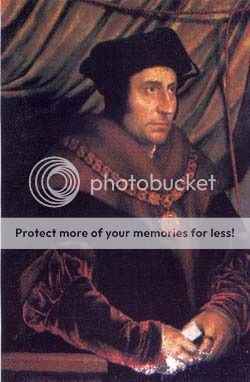
St. Thomas More, Martyr (Patron of Lawyers)

user posted image

St. Thomas More was born at London in 1478. After a thorough grounding in religion and the classics, he entered Oxford to study law. Upon leaving the university he embarked on a legal career which took him to Parliament. In 1505, he married his beloved Jane Colt who bore him four children, and when she died at a young age, he married a widow, Alice Middleton, to be a mother for his young children. A wit and a reformer, this learned man numbered Bishops and scholars among his friends, and by 1516 wrote his world-famous book "Utopia". He attracted the attention of Henry VIII who appointed him to a succession of high posts and missions, and finally made him Lord Chancellor in 1529. However, he resigned in 1532, at the height of his career and reputation, when Henry persisted in holding his own opinions regarding marriage and the supremacy of the Pope. The rest of his life was spent in writing mostly in defense of the Church. In 1534, with his close friend, St. John Fisher, he refused to render allegiance to the King as the Head of the Church of England and was confined to the Tower. Fifteen months later, and nine days after St. John Fisher's execution, he was tried and convicted of treason. He told the court that he could not go against his conscience and wished his judges that "we may yet hereafter in heaven merrily all meet together to everlasting salvation." And on the scaffold, he told the crowd of spectators that he was dying as "the King's good servant-but God's first." He was beheaded on July 6, 1535. His feast day is June 22nd.


Source: http://www.catholic.org/saints/saint.php?saint_id=324

Wiki: https://en.wikipedia.org/?title=Thomas_More
de1929
post Jun 22 2015, 04:18 PM

Regular
******
Senior Member
1,920 posts

Joined: Jan 2009


Hi Khool, just curious... what's the background catholic uses word saints for some figures, e.g. saint peter, saint paul... while protestant use apostle peter, apostel paul ?
david101
post Jun 22 2015, 04:56 PM

Getting Started
**
Junior Member
61 posts

Joined: Jan 2003
QUOTE(de1929 @ Jun 22 2015, 04:18 PM)
Hi Khool, just curious... what's the background catholic uses word saints for some figures, e.g. saint peter, saint paul... while protestant use apostle peter, apostel paul ?
*
Catholics believe that the Catholic Church has the 'keys to the kingdom' of heaven, and whoever is confirmed to be in heaven is considered a saint. It is a title. And the Church has a process to determine if someone is confirmed to be in heaven. Protestants do not typically hold this view, as they typically do not 'confirm' who is in heaven or not. And as such Protestants have a different understanding when it comes to the term saint, and prefer to refer to the apostles, simply as apostles. Which is why any church which has the word 'Saint' in its name is highly likely Catholic (or Anglican) in this country.
TSyeeck
post Jun 22 2015, 04:58 PM

Look at all my stars!!
*******
Senior Member
3,573 posts

Joined: Apr 2006


QUOTE(de1929 @ Jun 22 2015, 04:18 PM)
Hi Khool, just curious... what's the background catholic uses word saints for some figures, e.g. saint peter, saint paul... while protestant use apostle peter, apostel paul ?
*
FYI, Protestants also use the word saint, e.g. St Mary's Anglican Cathedral in KL, St. Andrew's Presbyterian Church, St John's United Methodist Church, etc. I believe only the more rabid, anti-Catholic extremists are against these terms, perhaps thinking that these are Romish terms. LOL.
de1929
post Jun 22 2015, 07:39 PM

Regular
******
Senior Member
1,920 posts

Joined: Jan 2009


ok thanks biggrin.gif

next question about sunday service.

Is is authorized to have a service not in sunday (e.g. midweek service / saturday) to replace sunday. I am not talking about individual, but a corporate decision (church level) replace sunday to other day.

case study: because church rent building at certain place, and sunday is not available, only thursday.


khool
post Jun 22 2015, 08:57 PM

Getting Started
**
Junior Member
225 posts

Joined: Mar 2008


QUOTE(david101 @ Jun 22 2015, 04:56 PM)
Catholics believe that the Catholic Church has the 'keys to the kingdom' of heaven, and whoever is confirmed to be in heaven is considered a saint. It is a title. And the Church has a process to determine if someone is confirmed to be in heaven. Protestants do not typically hold this view, as they typically do not 'confirm' who is in heaven or not. And as such Protestants have a different understanding when it comes to the term saint, and prefer to refer to the apostles, simply as apostles. Which is why any church which has the word 'Saint' in its name is highly likely Catholic (or Anglican) in this country.
*
Bro David's above explanation is good, just one more detail which requires slightly more explanation.

He mentions that anyone who who has gone through holy sacramental rites of Baptism and Confirmation in the Catholic Church are considered saints, with a lower case 's'. All Catholics are called to live saintly lives that reflect to the rest of the world the love and sacrifices that God has made for us. Christ Himself has mentioned it, "By their fruits you shall know them.", (Matthew 7:16)

The saints whom you use as examples like, Saints Peter, Paul, the rest of the apostles, Mary of Magdalene and some of our more contemporary saints like Jose Maria Escriva, Padre Pio and of course John Paul II, are considered 'Saints' with an upper case 'S'. They have been (officially) canonized by the Catholic Church in recognition of their extraordinary service to the Church in living, promoting and preaching the Word of the Living God to the world.

This process of canonization can sometimes take a very long time, depending on the circumstances of each individual's lives.

This post has been edited by khool: Jun 22 2015, 08:57 PM
khool
post Jun 22 2015, 09:12 PM

Getting Started
**
Junior Member
225 posts

Joined: Mar 2008


QUOTE(de1929 @ Jun 22 2015, 07:39 PM)
ok thanks biggrin.gif

next question about sunday service.

Is is authorized to have a service not in sunday (e.g. midweek service / saturday) to replace sunday. I am  not talking about individual, but a corporate decision (church level) replace sunday to other day.

case study: because church rent building at certain place, and sunday is not available, only thursday.
*
The long and the short answer to this question is, no. A weekday Mass, what you Protestants will call as a service, cannot be used to replace Sunday Mass. No matter what, Sunday Mass MUST be celebrated, and it is the duty and obligation for all Catholics to participate in it (not just mere attendance) as Jesus Christ is present in His true form during the celebration.

This is because Christ rose from the dead on Easter Sunday. As such, we celebrate His resurrection on this day of the week, replacing Saturday as the most holy of days in the week. Christ is now and always the Lord of the Sabbath. During Mass, we celebrate His life, death and resurrection in the form of the sacrament of the Holy Eucharist, where Catholics, eat the flesh and drink the blood of our saviour in the transubstantiated form of unleavened bread and Eucharistic wine which has been consecrated by the priest.

Should there be an issue with the premises being unavailable on Sunday, then I can say with great certainty that premises will not be considered for used of worship and celebration. No compromises there.

One small addendum ... attending evening sunset Mass on a Saturday fulfills this obligation. This is in keeping with Jewish belief that the next day begins at sunset, and not at the stroke of midnight.

This post has been edited by khool: Jun 22 2015, 09:17 PM
de1929
post Jun 22 2015, 09:48 PM

Regular
******
Senior Member
1,920 posts

Joined: Jan 2009


oh the Holy Eucharist you did it every single sunday ? sunday mass service ?
TSyeeck
post Jun 22 2015, 11:37 PM

Look at all my stars!!
*******
Senior Member
3,573 posts

Joined: Apr 2006


QUOTE(de1929 @ Jun 22 2015, 09:48 PM)
oh the Holy Eucharist you did it every single sunday ? sunday mass service ?
*
In most parishes where there are resident priests, usually there will be Mass every single day, not just on Sunday. Participating in Holy Mass on Sundays and other designated Holy Days of Obligation (special feast days which may or may not fall on a Sunday - in Malaysia they are Christmas, Ascension, Assumption, All Saints) is a grave obligation for Catholics, unless one is unable to attend due to sickness, or long distance (general rule of thumb more than 45 miles and physically impossible to attend). If not, one needs to get dispensation from one's pastor.
TSyeeck
post Jun 22 2015, 11:46 PM

Look at all my stars!!
*******
Senior Member
3,573 posts

Joined: Apr 2006


Speaking about St Thomas More, I'm reminded of one of my favourite movies, A Man for All Seaons, winner of Best Picture in 1966.


khool
post Jun 22 2015, 11:54 PM

Getting Started
**
Junior Member
225 posts

Joined: Mar 2008


QUOTE(yeeck @ Jun 22 2015, 11:46 PM)
Speaking about St Thomas More, I'm reminded of one of my favourite movies, A Man for All Seaons, winner of Best Picture in 1966.


*
I have that movie, Paul Schofield plays an excellent St. Thomas More ... biggrin.gif
TSyeeck
post Jun 23 2015, 12:02 AM

Look at all my stars!!
*******
Senior Member
3,573 posts

Joined: Apr 2006


QUOTE(khool @ Jun 22 2015, 11:54 PM)
I have that movie, Paul Schofield plays an excellent St. Thomas More ... biggrin.gif
*

khool
post Jun 23 2015, 12:32 PM

Getting Started
**
Junior Member
225 posts

Joined: Mar 2008


QUOTE(yeeck @ Jun 23 2015, 12:02 AM)

*
Thing is, was Henry VIII really that tyrannical? Hard to believe that, as he once almost joined the clergy.

This post has been edited by khool: Jun 23 2015, 12:58 PM
TSyeeck
post Jun 23 2015, 01:36 PM

Look at all my stars!!
*******
Senior Member
3,573 posts

Joined: Apr 2006


QUOTE(khool @ Jun 23 2015, 12:32 PM)
Thing is, was Henry VIII really that tyrannical? Hard to believe that, as he once almost joined the clergy.
*
He was given the title "Defensor Fidei" by the Pope for writing against Luther. But all it took were his despair for a son and other women to bewitch him.

From Wikipedia:

"Defender of the Faith" has been one of the subsidiary titles of the English and later British monarchs since it was granted on 11 October, 1521[1] by Pope Leo X to King Henry VIII of England. His wife Catherine of Aragon was also a Defender of the Faith in her own right.[2] The title was conferred in recognition of Henry's book Assertio Septem Sacramentorum (Defence of the Seven Sacraments), which defended the sacramental nature of marriage and the supremacy of the Pope. This was also known as the "Henrician Affirmation" and was seen as an important opposition to the early stages of the Protestant Reformation, especially the ideas of Martin Luther.

Following Henry's decision to break with Rome in 1530 and establish himself as head of the Church of England, the title was revoked by Pope Paul III (since Henry's act was regarded as an attack on "the Faith") and Henry was excommunicated. However, in 1544,[citation needed] the Parliament of England conferred the title "Defender of the Faith" on King Henry VIII and his successors, now the defenders of the Anglican faith, of which they (except the Catholic Mary I) remain the Supreme Governors (formally above the Archbishop of Canterbury as Primate).

This post has been edited by yeeck: Jun 23 2015, 01:41 PM
khool
post Jun 23 2015, 03:04 PM

Getting Started
**
Junior Member
225 posts

Joined: Mar 2008


QUOTE(yeeck @ Jun 23 2015, 01:36 PM)
He was given the title "Defensor Fidei" by the Pope for writing against Luther. But all it took were his despair for a son and other women to bewitch him.

From Wikipedia:

"Defender of the Faith" has been one of the subsidiary titles of the English and later British monarchs since it was granted on 11 October, 1521[1] by Pope Leo X to King Henry VIII of England. His wife Catherine of Aragon was also a Defender of the Faith in her own right.[2] The title was conferred in recognition of Henry's book Assertio Septem Sacramentorum (Defence of the Seven Sacraments), which defended the sacramental nature of marriage and the supremacy of the Pope. This was also known as the "Henrician Affirmation" and was seen as an important opposition to the early stages of the Protestant Reformation, especially the ideas of Martin Luther.

Following Henry's decision to break with Rome in 1530 and establish himself as head of the Church of England, the title was revoked by Pope Paul III (since Henry's act was regarded as an attack on "the Faith") and Henry was excommunicated. However, in 1544,[citation needed] the Parliament of England conferred the title "Defender of the Faith" on King Henry VIII and his successors, now the defenders of the Anglican faith, of which they (except the Catholic Mary I) remain the Supreme Governors (formally above the Archbishop of Canterbury as Primate).
*
That part I know, but it is amazing how quick he turned on his adviser and friend.
khool
post Jun 24 2015, 04:29 PM

Getting Started
**
Junior Member
225 posts

Joined: Mar 2008


QUOTE(yeeck @ Jun 15 2015, 06:20 PM)
Yeah, it is indeed a special grace to be able to die fortified with this sacrament.
*
Source: http://catholicism.about.com/od/beliefstea...c_Anointing.htm

The Sacrament of the Anointing of the Sick

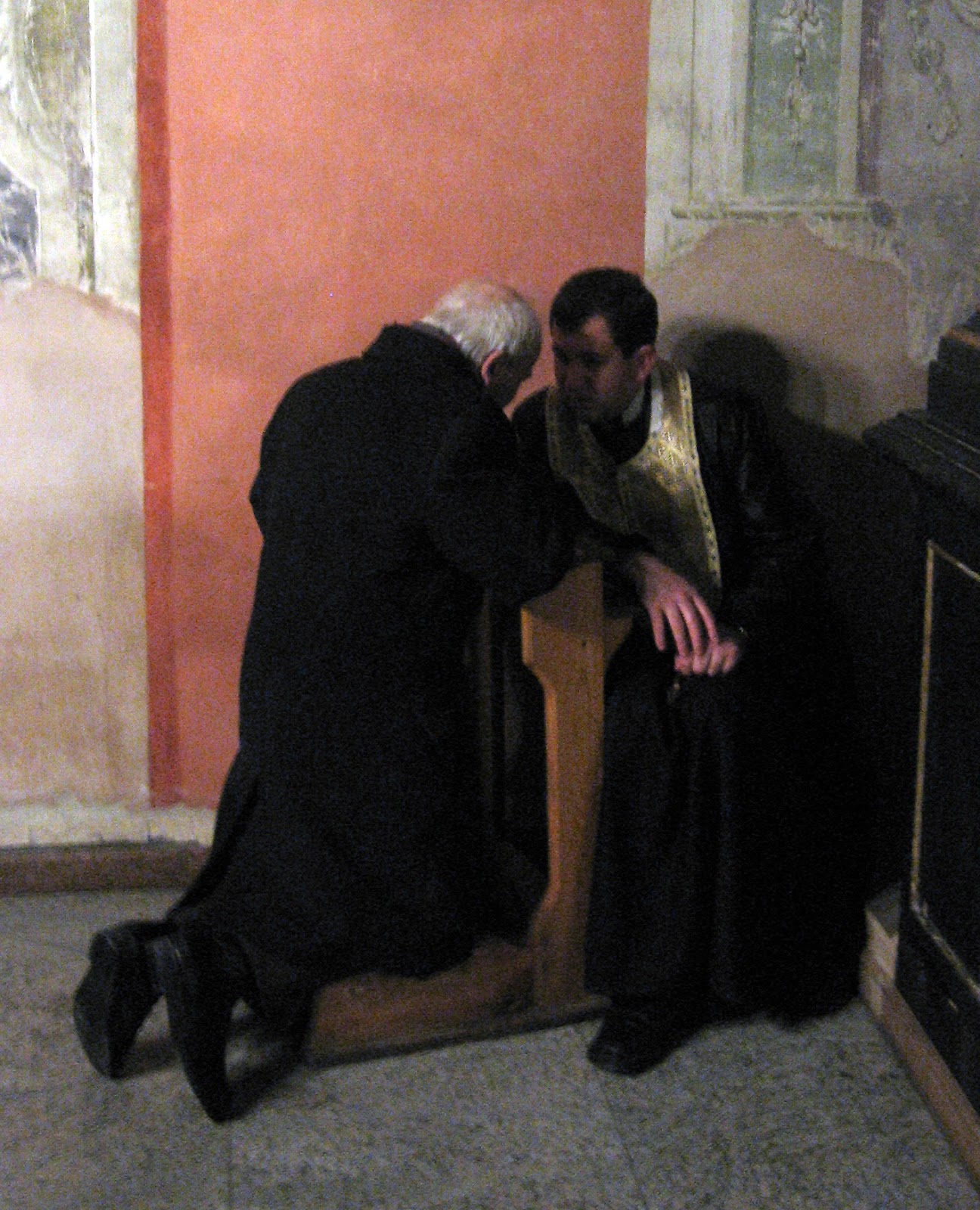
Service of the Sacrament of Holy Unction (Anointing of the Sick), during the Feast of the Dormition of Theotokos. The Holy Oil (Chrism) is blessed by the Holy Spirit, and is used for anointing the faithful for the healing of infirmities of the soul and body.

Introduction:
Traditionally referred to as Extreme Unction or Last Rites, the Sacrament of the Anointing of the Sick was previously most commonly administered to the dying, for the remission of sins and the provision of spiritual strength and health. In modern times, however, its use has been expanded to all who are gravely ill or are about to undergo a serious operation, and the Church stresses a secondary effect of the sacrament: to help a person recover his health.

Like Confession and Holy Communion, to which it is closely linked, the Sacrament of the Anointing of the Sick can be repeated as often as is necessary.

Biblical Roots:
The modern celebration of the Sacrament of the Anointing of the Sick recalls the early Christian use, going back to biblical times. When Christ sent His disciples out to preach, "they cast out many devils, and anointed with oil many that were sick, and healed them" (Mark 6:13). James 5:14-15 ties physical healing to the forgiveness of sins:

Is any man sick among you? Let him bring in the priests of the church, and let them pray over him, anointing him with oil in the name of the Lord. And the prayer of faith shall save the sick man: and the Lord shall raise him up: and if he be in sins, they shall be forgiven him.

Who May Receive the Sacrament?:
Following this biblical understanding, the Catechism of the Catholic Church (para. 1514) notes that:

The Anointing of the Sick "is not a sacrament for those only who are at the point of death. Hence, as soon as anyone of the faithful begins to be in danger of death from sickness or old age, the fitting time for him to receive this sacrament has certainly already arrived."

When in doubt, priests should err on the side of caution and provide the sacrament to the faithful who request it.

The Form of the Sacrament:
The essential rite of the sacrament consists in the priest (or priests, in the case of the Eastern Churches) laying hands on the sick, anointing him with blessed oil (usually olive oil blessed by a bishop, but in an emergency, any vegetable oil will suffice), and praying "Through this holy anointing may the Lord in his love and mercy help you with the grace of the Holy Spirit. May the Lord who frees you from sin save you and raise you up."

When circumstances permit, the Church recommends that the sacrament take place during Mass, or at least that it be preceded by Confession and followed by Holy Communion.

The Minister of the Sacrament:
Only priests (including bishops) can administer the Sacrament of the Anointing of the Sick, since, when the sacrament was instituted during Christ's sending out of His disciples, it was confined to the men who would become the original bishops of the Church.

The Effects of the Sacrament:
Received in faith and in a state of grace, the Sacrament of the Anointing of the Sick provides the recipient with a number of graces, including the fortitude to resist temptation in the face of death, when he is weakest; a union with the Passion of Christ, which makes his suffering holy; and the grace to prepare for death, so that he may meet God in hope rather than in fear. If the recipient was not able to receive the Sacrament of Confession, Anointing also provides forgiveness of sins. And, if it will aid in the salvation of his soul, Anointing may restore the recipient's health.


khool
post Jun 24 2015, 04:33 PM

Getting Started
**
Junior Member
225 posts

Joined: Mar 2008


Source: http://catholicism.about.com/od/thesacrame...-Confession.htm

Seven Steps to Making a Better Confession
Or, How I Stopped Worrying and Learned to Love the Sacrament (of Reconciliation)

Just as daily Communion should be the ideal for Catholics, frequent reception of the Sacrament of Confession is essential in our struggle against sin and our growth in holiness.

For too many Catholics, however, Confession is something we do as infrequently as possible, and after the sacrament is finished, we may not feel as we do when we have received the Sacrament of Holy Communion worthily. That's not because of a flaw in the sacrament, but because of a flaw in our approach to Confession.

Approached properly, with some basic preparation, we can find ourselves as eager to partake of the Sacrament of Confession as we are to receive the Eucharist.

Here are seven steps that will help you make a better Confession, and fully embrace the graces offered by this sacrament.
1. Go to Confession More Often

If your experience of Confession has been frustrating or unfulfilling, this may seem like odd advice. It's like the opposite of that old joke:

"Doctor, it hurts when I poke myself here. What should I do?"
"Quit poking yourself there."

On the other hand, as we've all heard, "practice makes perfect," and you're never going to make a better Confession unless you're actually going to Confession. The reasons we often avoid Confession are precisely the reasons why we should be going more often:

I can't remember all of my sins;
I get nervous when I get in the confessional;
I'm afraid I'm going to forget something;
I'm not sure what I should or shouldn't confess.

The Church requires us to go to Confession once per year, in preparation for doing our Easter Duty; and we must, of course, go to Confession before receiving Communion whenever we're conscious of having committed a grave or mortal sin.

But if we want to treat Confession as an instrument of spiritual growth, we need to quit viewing it simply in a negative light—something we do only to cleanse ourselves. Monthly Confession, even if we're only aware of minor or venial sins, can be a great source of graces and can help us to focus our efforts on neglected areas of our spiritual life.

And if we're trying to get over a fear of Confession, or struggling with a particular sin (mortal or venial), going to Confession weekly for a while can help greatly. In fact, during the Church's penitential seasons of Lent and Advent, when parishes often offer additional times for Confession, weekly Confession can be a great aid in our spiritual preparation for Easter and Christmas.


2. Take Your Time

Too often I've approached the Sacrament of Confession with all of the preparation I might make if I were ordering fast food from a drive-through. In fact, since I get confused and frustrated by the menus at most fast-food joints, I usually make sure that I know well in advance what I want to order.

But Confession? I shudder to think of the number of times that I've rushed to make it to the church mere minutes before the time for Confession has ended, uttered a quick prayer to the Holy Spirit to help me recall all of my sins, and then dived into the confessional before even figuring out how long it had been since my last Confession.

That's a recipe for leaving the confessional and then remembering a forgotten sin, or even forgetting what penance the priest prescribed, because you were too focused on getting the Confession done, and not focused on what you were actually doing.

If you want to make a better Confession, take the time to do it right. Begin your preparation at home (we'll talk about that below), and then arrive early enough so that you won't be rushed. Spend a little time in prayer before the Blessed Sacrament before turning your thoughts to what you will say in Confession.

Take your time once you get in the confessional as well. There's no need to rush; when you're waiting in line for Confession, it may seem like the people in front of you are taking a long time, but usually they aren't, and neither will you. If you try to rush, you're more likely to forget things you intended to say, and then you're more likely to be unhappy later when you remember them.

When your Confession is over, don't be in a hurry to leave the church. If the priest gave you prayers for your penance, say them there, in the presence of the Blessed Sacrament. If he asked you to think about your actions or to meditate on a particular passage of Scripture, do that then and there. Not only are you much more likely to complete your penance—an important step in the reception of the sacrament—but you'll also be more likely to see the connection between the contrition you expressed in the confessional, the absolution provided by the priest, and the penance you performed.


3. Make a Thorough Examination of Conscience

As I mentioned above, your preparation for Confession should be begin at home. You'll need to recall (at least roughly) when your last Confession was, as well as the sins you've committed since then.

For most of us most of the time, that recollection of sins probably looks a lot like this: "All right—what did I confess last time, and how many times have I done those things since my last Confession?"

There's nothing wrong with that, as far as it goes. In fact, it's a pretty good starting point. But if we want to embrace the Sacrament of Confession fully, then we need to break out of old habits and look at our lives in a critical light. And that's where a thorough examination of conscience comes in.

The venerable Baltimore Catechism, in its lesson on the Sacrament of Penance, provides a good, short guide to making an examination of conscience. Reflecting on each of the following, think of the ways in which you have either done what you shouldn't have done, or have failed to do what you should do:

The Ten Commandments
The Precepts of the Church
The Seven Deadly Sins
The Duties of Your State in Life

The first three are self-explanatory; the last one requires thinking about those aspects of your life that set you apart from everyone else. For instance, in my case, I have certain duties that arise from the fact that I am a son, a husband, a father, a magazine editor, and a writer on matters Catholic. How well have I performed those duties? Are there things I should have done for my parents, wife, or children that I haven't done? Are there things that I shouldn't have done to them that I did do? Have I been diligent in my work and honest in my dealings with my superiors and subordinates? Have I treated with dignity and charity those with whom I've come into contact because of my state in life?

A thorough examination of conscience may uncover habits of sin that have become so ingrained that we hardly ever notice or think about them. Perhaps we put undue burdens on our spouse or children, or spend our coffee breaks or lunch hours gossiping with our fellow employees about our boss. Maybe we don't call our parents as often as we should, or encourage our children to pray. These things arise from our particular state in life, and while they are common to many people, the only way we can become aware of them in our own life is to spend some time in reflection on our own particular circumstances.


4. Don't Hold Back

All of the reasons that I mentioned why we avoid going to Confession stem from some sort of fear. While going more frequently may help us overcome some of those fears, other fears may rear their ugly head while we're in the confessional.

The worst, because it may lead us to make an incomplete Confession, is a fear of what the priest may think when we confess our sins. This, however, is probably the most irrational fear we could have, because unless the priest hearing our Confession is brand-spanking new, there's a very good chance that any sin we could mention is one he's heard many, many times before. And even if he hasn't heard it in a confessional, he's been prepared through his seminary training to handle pretty much anything you could throw at him.

Go ahead; try to shock him. It's not going to happen. And that's a good thing, because in order for your Confession to be complete and your absolution to be valid, you need to confess all mortal sins by kind (what you did) and number (how often you did it). You should do that with venial sins as well, but if you forget a venial sin or three, you'll still be absolved of them at the end of Confession.

But if you hold back on confessing a grave sin, you're only hurting yourself. God knows what you did, and the priest wants nothing more than to heal the breach between you and God.


5. Go to Your Own Priest

I know; I know: You always go to the next parish over, and you choose the visiting priest, if there's one available. For many of us, there's nothing more terrifying than the thought of going to Confession with our own priest. Sure, we always make a private Confession, rather than face-to-face; but if we can recognize Father's voice, he has to be able to recognize ours, too, right?

I'm not going to kid you; unless you belong to a very large parish and rarely have any interaction with your pastor, he probably does. But remember what I wrote above: Nothing you can say is going to shock him. And even though this shouldn't be your concern, he's not going to think worse of you because of anything you say in Confession.

Think about it: Rather than staying away from the sacrament, you've come to him and confessed your sins. You've asked for God's forgiveness, and your pastor, acting in the person of Christ, has absolved you from those sins. But now you're worried that he is going to deny you what God has granted to you? If that were actually the case, your priest would have bigger problems than you.

Instead of avoiding your own priest, use Confession with him to your spiritual advantage. If you're embarrassed to confess certain sins to him, you'll have added incentive to avoid those sins. While ultimately we want to get to the point where we avoid sin because we love God, embarrassment over sin can be the beginning of true contrition and a firm resolve to amend your life, whereas the anonymous Confession at the next parish over, while valid and effective, may make it easier to fall back into the same sin.

6. Ask for Advice

If part of the reason you find Confession frustrating or unsatisfying is that you find yourself confessing the same sins over and over again, don't hesitate to ask your confessor for advice. Sometimes, he'll offer it without you asking, especially if the sins you've confessed are ones that are often habitual.

But if he doesn't, there's nothing wrong with saying, "Father, I've been struggling with [your particular sin]. What can I do to avoid it?"

And when he responds, listen carefully, and don't dismiss his advice out of hand. You may think, for instance, that your prayer life is just fine, so if your confessor suggests that you spend more time in prayer, you might be inclined to regard his advice as well meaning but useless.

Don't think that way. Whatever he suggests, do it. The very act of trying to follow your confessor's advice can be a cooperation with grace. You may be surprised at the results.

7. Amend Your Life

The two most popular forms of the Act of Contrition end with these lines:

I firmly resolve, with the help of Thy grace, to confess my sins, to do penance, and to amend my life.

And:

I firmly resolve, with the help of Thy grace, to sin no more, and to avoid the near occasion of sin.

Reciting the Act of Contrition is the last thing we do in the confessional before receiving absolution from the priest. And yet those final words too often vanish from our minds as soon as we step back through the confessional door.

But an essential part of confession is sincere contrition, and that includes not only being sorry for the sins that we have committed in the past, but resolving to do whatever we can to avoid committing those and other sins in the future. When we treat the Sacrament of Confession as merely medicinal—healing the damage we've done—and not as a source of grace and strength to keep us on the right path going forward, we're more likely to find ourselves back in the confessional, reciting those same sins once again.

A better Confession doesn't end when we leave the confessional; in a sense, a new phase of Confession begins then. Being aware of the grace we have received in the sacrament, and trying our best to cooperate with that grace by avoiding not only the sins that we confessed but all sins, and indeed even occasions of sin, is the best way to ensure that we've made a good Confession.
Final Thoughts

While all of these steps can help you make a better Confession, you should not let any of them become excuses for not taking advantage of the sacrament. If you know that you need to go to Confession but you don't have the time to prepare as well as you should or to make a thorough examination of conscience, or if your priest isn't available and you have to go to the next parish over, don't wait. Get to Confession, and resolve to make a better Confession next time.

While the Sacrament of Confession, properly understood, is about more than healing the damage of the past, sometimes we have to staunch the wound before we can move on. Never let your desire for making a better Confession keep you from making the one you need to make today.

This post has been edited by khool: Jun 24 2015, 04:35 PM

TSyeeck
post Jun 24 2015, 11:20 PM

Look at all my stars!!
*******
Senior Member
3,573 posts

Joined: Apr 2006


user posted image

Often we question God, we doubt, we are discouraged. Saint Therese beautifully tells us that we should not have any other worry but to bloom in the garden of God at the spot where He planted us and leave the care of everything to the Gardener. “I often asked myself why God had preferences”, Saint Therese writes, “why all souls did not receive an equal measure of grace. I was filled with wonder when I saw extraordinary favours showered on great sinners like St. Paul, St. Augustine, St. Mary Magdalen, and many others, whom He forced, so to speak, to receive His grace. In reading the lives of the Saints I was surprised to see that there were certain privileged souls, whom Our Lord favoured from the cradle to the grave, allowing no obstacle in their path which might keep them from mounting towards Him, permitting no sin to soil the spotless brightness of their baptismal robe. And again it puzzled me why so many poor savages should die without having even heard the name of God. Our Lord has deigned to explain this mystery to me. He showed me the book of nature, and I understood that every flower created by Him is beautiful, that the brilliance of the rose and the whiteness of the lily do not lessen the perfume of the violet or the sweet simplicity of the daisy. I understood that if all the lowly flowers wished to be roses, nature would lose its springtide beauty, and the fields would no longer be enamelled with lovely hues. And so it is in the world of souls, Our Lord’s living garden. He has been pleased to create great Saints who may be compared to the lily and the rose, but He has also created lesser ones, who must be content to be daisies or simple violets flowering at His Feet, and whose mission it is to gladden His Divine Eyes when He deigns to look down on them. And the more gladly they do His Will the greater is their perfection.
TSyeeck
post Jun 26 2015, 02:03 AM

Look at all my stars!!
*******
Senior Member
3,573 posts

Joined: Apr 2006


10 Ways to Fight Sins Against Purity

user posted image

1. Constant prayer. Hence the admonition of the wise King; As I knew that I could not otherwise be continent, except God gave it, I went to the Lord and besought him. (Wisd. 8:21)
2. Mortification of the flesh by fasting and abstinence. Jesus says these impure spirits can in no other way be cast out but by prayer and fasting. (Matt. 17:20)
3. The frequent meditation on the four last things, and on the bitter sufferings of our Lord; for there is, says St. Augustine, no means more powerful and effective against the heat of lust than reflection on the ignominious death of the Redeemer.
4. The quiet consideration of the temporal and eternal evils which follow from this vice, as already described.
5. The love and veneration of the Blessed Virgin who is the mother of beautiful love, the refuge of all sinners, of whom St. Bernard says: "No one has ever invoked her in his necessity without being heard."
6. The careful mortification of the eyes. The pious Job made a covenant with his eyes, that. he would not so much as look upon a virgin. (Job 31:1)
7. The avoidance of evil occasions, especially intercourse with persons of the other sex. "Remember," says St. Jerome, "that a woman drove out the inhabitants of paradise, and that you are not holier than David, stronger than Samson, wiser than Solomon, who all fell by evil intercourse."
8. The avoidance of idleness: for idleness, says the proverb, is the beginning of all evil.
9. The immediate banishing of all bad thoughts by often pronouncing the names of Jesus and Mary, which, as St. Alphonsus Ligouri says, have the special power of driving away impure thoughts.
10. The frequent use of the holy Sacraments of Penance and of the Altar. This last remedy in particular is a certain cure if we make known to our confessor our weaknesses, and use the remedies he prescribes. The Scripture says that frequent Communion is the seed from which virgins spring, and the table which God has prepared against all temptations that annoy us.

Source: Fr. Goffine's The Church's Year
khool
post Jun 27 2015, 02:42 PM

Getting Started
**
Junior Member
225 posts

Joined: Mar 2008


What Does the Legalization of Gay Marriage Mean for the Catholic Church

On June 27, 2015 five out nine Supreme Court Justices redefined the definition of marriage for the entire country. This video discusses the areas in which this decision affects the Catholic Church.


This post has been edited by khool: Jun 27 2015, 02:43 PM

134 Pages « < 20 21 22 23 24 > » Top
Topic ClosedOptions
 

Change to:
| Lo-Fi Version
0.0280sec    0.64    6 queries    GZIP Disabled
Time is now: 3rd December 2025 - 12:23 AM