Welcome Guest ( Log In | Register )

Bump Topic Topic Closed RSS Feed
134 Pages « < 51 52 53 54 55 > » Bottom

Outline · [ Standard ] · Linear+

 LYN Catholic Fellowship V01 (Group), For Catholics (Roman or Eastern)

views
     
TSyeeck
post Mar 30 2016, 06:35 PM

Look at all my stars!!
*******
Senior Member
3,573 posts

Joined: Apr 2006


St. Mary of Egypt

user posted image

The story of St. Mary of Egypt first circulated among the monastic communities of the Eastern Church in the early sixth century. Her story spread very quickly to the West, and by the end of the century she was well known throughout all Christendom. Western churches celebrate her feast on April 2nd, the Coptic church on April 14 (Pharmuthi 6th), and the Greek churches on April 1st. and on the fifth Sunday of Great Lent. The story of this fifth century Egyptian Saint has become a model of repentance for all Christians.

On Saint Mary of Egypt

"O Lord, open Thou my lips. and my mouth shall show forth Thy praise"

Three Stories

1. Mary's Life

The story of Mary of Egypt as it is written for the church is really three separate stories: The story of Mary's life, the story of the priest Zosimas, and the story of their experience together. Without doubt, the action and thrills come in Mary's story, which she tells to Zosimas when he finds her wandering in the desert. She had been a wanton harlot from her youth, not for money, she told Zosimas solemnly, but "out of insatiable desire". One day she saw the crowds of pilgrims preparing to go to Jerusalem, to celebrate the Feast of the Exaltation of the Cross. It sounded like fun. She went along, announcing to her fellow-travellers, "I have a body and that will serve as both fare and food for me". The trip was an eventful one, as Mary explored the outer limits of lust and passion with her companions (both those who were willing and those who were not, she added.)

In Jerusalem, when the day of the Feast came round, Mary too set off for the church, drawn by the energy of the crowds thronging to venerate the True Cross. But something happened. At the doors of the church, at its very threshold, Mary was driven back "by some kind of force". Trying as she might, she could not enter, although those around her went in with no difficulty at all. Then she understood: it was her own self that prevented her entrance, the sinfulness of her life that held her captive outside the church. Praying fervently to the Virgin Mary, with her heart open and clear, Mary begged forgiveness and again sought entry at the church. She remembered it like this, "A great terror and stupor came over me, and I trembled all over, but when I came to the door which until then had been closed to me, it was as if all the force that had previously prevented me from entering now allowed me to go in. So I was admitted without hindrance, and went into the holy of holies and I was found worthy to worship the mystery of the precious and life-giving Wood of the Cross. Thus, I understood the promises of God and realized how God receives those who repent.

Guided then by a vision of the Theotokos, Mary left at once for the desert beyond the Jordan river, for there, her vision told her, she would find rest. On the way, she stopped at a church built on the river banks; there she washed herself in the jordan, receiving thus her baptism, and partook of the Eucharist in that church, all the while utterly alone. From there, she came to the desert, led still by the vision of the Blessed Virgin Mary. Her new life was begun.

A powerful story, indeed! here was a woman ot true courage, a woman who had the courage to know herself. She lived life with a perfect freedom and a perfect love that few of us could match. Prior to her conversion, she embraced life with her whole heart, with her whole body, with her whole self - with the sheer power of her love for life (not for money, she had said, but for the love of it). Once an early bishop of the church had seen such a harlot in Antioch, and had lamented to his priests, "if only we would adorn our souls for the Lord with half the care this woman has shown in adorning herself for Satan!" (Bp. Nonnos, from the Life of Pelagia). hlary knew herself and understood herself in all of this, again in a way that few of us could match. Hers was a life of total honesty, in the sense of that old adage, "to thine own self be true." It was in fact her very honesty that brought her to her conversion.

At the doors of the church, Mary had hesitated - the first time in her life she had ever hesitated before doing exactly what she desired. At that moment, her honesty enabled her to see beyond herself. And there, beyond herself, she found God. Her conversion was immediate; but so, too, was the grace that answers genuine repentance. For in that single moment on the steps of the church, Mary was both changed in herself, and found worthy in the eyes of the Lord. Her response was entirely in character: with perfect freedom and perfect love, Mary turned the whole of herself to God - her heart, her body, her very life. With the huge courage that had once enabled her to lead her life of sin with clear self-understanding, she now lived her life in the presence of God. The desert became her home, the place where she found her rest. Her conversion and turn to the life of solitude were unknown to any other living being, until after forty-eight years the priest Zosimas came and found her.

2. Zosimas' Story

Now Zosimas' story is, alas, far more akin to our own lives. For we are all too glad to dissociate ourselves from Mary and her sinfulness. Hers is a story so different from our lives, after all. Here we are, in church on Sunday, in our ordinariness. We have our homes and families our spouses and children, our work, our life in the church and in the community. We try to be good Christians, to lead good lives. Even though we know our weaknesses, we know (faithfully) that at least we have nothing so spectacular as Mary's life for which to repent. Who among us could truly identify with her story, either the degree of her wickedness, or the degree of her repentance - for who among us would drop everything (everything) and turn to a life of ceaseless and solitary prayer? But this is exactly why we are so much like Zosimas.

Zosimas was a priest and a monk, sincere, devoted, and earnest. He sought to live a good Christian life, and he did. From his childhood he had pursued the monastic vocation, with piety and discipline: a man who early on had achieved an enviable sanctity. It would be hard to imagine a life more different than Mary's has been: the life of the monastery as opposed to the life of the city streets. But at the age of fifty- three, Zosimas came to a crisis in his life. "It was then that he began to be tormented by the thought that it seemed as if he had attained perfection in everything and needed no teaching from anyone. And so, as he himself said, he began to say to himself, "is there a monk on earth capable of affording me benefit or passing on to me anything new, some kind of spiritual achievement of which i either do not know or in which I have not succeeded as a monk?" Foolish man! For Zosimas had become a prisoner to his own idea of himself, a man who deceived himself about who he was, the life he lived and why he lived it in that way. He did not know himself honestly, and so he became captive to his own life. How far from the freedom with which Mary had lived, and loved, and lived again! But the Lord was compassionate with Zosimas, and spoke to him in a vision telling him to go to the desert beyond the Jordan, 'so that you may know how many and varied are the ways to salvation.'

Zosimas went, expecting to find a great and holy monk who would become his teacher. When he entered the desert, he walked for twenty days into its deepest and most desolate part, rwhere no sign of life could be found. Then he found Mary. The encounter was terrifying and wonderful. When first he saw her, the good priest could not tell whether she was an apparition, a Demon or an animal, and he crossed himself repeatedly to protect himself from the works of the devil. With a jolt, he realized this was a woman. She was naked, blackened by years of harsh desert sun, emaciated from her fasting, her hair short and pure white; and she fled from him, running away as fast as she could. Zosimas knew that here, in this utter wilderness, in this strange and frightening creature, he had at last met something he had never before known: the naked power and presence of God.

And so Zosimas, good man of God, found salvation and truth where he least expected it: in the life of a woman who had been as unashamedly sinful as he had been earnest in his life of devotion. And she, not he, was the Person in whom grace was found. Like the gospel story of the Pharisee and Publican, Zosimas' story is above all a plea for humility in our lives - for fighting against the complacency (both spiritual and social) which is the constant danger for us as we seek to live the life of faith. It reminds us vividly that appearances and actions deceive, that only God knows the intentions of the heart, and that the moment we think we have accomplished true Christian living we have lost our way. At such moments, the penitent sinner becomes our guide and our hope.

And so we come to the third story: The Story of Mary and Zosimas together. It is nbove all a story of giving gifts to one another. From the moment they met, their lives were found to be reversed. Mary, the sinful woman, became teacher and giver of grace; Zosimas, the venerable priest and monk, became disciple and suppliant.

3. Their Experience Together

When Zosimas first found Mary, she fled from him while he ran after her, begging for an audience. Finally, she stopped. He did not know who she was, and she had never seen him. But she knew him before he had even spoken to her, and addressed him by name, "Father Zosimas, forgive me." The priest was struck with dread: was she an angel? Mary, for her part, was alarmed because of her nakedness, and begged him to lend her his cloak so that she could stand in modesty before him. But it was not simply that she knew his name; with no word from him to explain who he was or why he had come, Mary new. She asked for his blessing, reminding him that this was his proper role and recalling his years of priestly service. Then, the story goes, "these words threw Zosimas into greater dread, and he trembled and was covered with a sweat of death. But at last, breathing with difficulty, he said to her, "O Mother in the spirit, it is plain from this insight that all your life you have dwelt with God and have nearly died to the world... But since grace is recognized not by office but by gifts of the Spirit, bless me, for God's sake, and pray for me out of the kindness of your heart." And so Mary gave the blessing.

Eventually, with great difficulty, Zosimas extracted her story from her. He was alternately terrified and wonderstruck as he watched and listened to her. She knew about him - about his life as a priest and the monastery in which he lived, and she clearly understood it all better than himself. When she prayed she levitated. Although illiterate and unschooled in Christianity (she had, after all, fled to the desert as soon as she converted) she quoted scriptural proofs for her teachings. But most of all, there was the enormity of her story. Zosimas drew out from her (much against her will) the details of her former life and her conversion; and he questioned her closely on the hardships of her desert life through those many years. She was as honest with him in the telling as she had been in her living. Not only was she blunt about her harlotry, she was also poignantly forthright about her life in the desert - how hard it had been, the suffering from cold and heat, hunger and thirst; temptation, longing for company and comfort; and yet her determination to live out her repentance in a manner suitable to her sin. She did not see, though Zosimas could, that she had attained a degree of sanctity that could only be measured by the degree of sinfulness she had known. For unlike him, she had no illusions about her accomplishments. She knew only the truth of God, and her love for him.

Then she asked a favor, for she understood that the Lord had sent Zosimas for a purpose. She asked him to return to his monastery and tell no one about her, but in a year's time return to her on Holy Thursday, the night of the Last Supper, and bring her the Eucharist, of which she had not Partaken since her conversion so many years before. Reluctantly, Zosimas left. He had become her disciple. Her presence and story renewed him, giving him life he had lost in the complacency of the monastery. At last he returned at the appointed time, yearning for her presence. She came to him, walking on water to cross the Jordan while he again gave way to awe. As he knelt to reverence her she reproved him, 'What are you doing, Father Zosimas, you who are a priest of God and carrying the holy mysteries?' And at once he obeyed her, resuming his priestly duties with fumbling fervor. Then, the story says, "Mary received the life-giving gifts of the sacrament, groaning and weeping with her hands held up to heaven, and she cried out, 'Lord now let your servant depart in peace, according to your word: for my eyes have seen your salvation."'

Again she sent him away, to return again the following year at the same time. But when the time came and Zosimas hastened on his journey, he found his beloved guide dead, with a letter to him written in the sand beside her body. From this he learned that she had died within an hour of receiving the sacrament the previous year - the fulfillment of her hope. He learned, also, for the first time her name: she signed herself "Mary the sinner." Grieving and marvelling, Zosimas buried the holy woman, helped by a lion who came to venerate the body of the saint. Then, he went back to the world to give the gift of her story to others, even as she had given it to him. And so we, too, know it.

Here we have a story in which the sinner knows the heart of the saintly monk: in which a humble woman gives blessing to the worthy priest because he has seen that her own gifts of the Spirit exceed the ranks of ecclesiastical office; in which sanctity is found outside the monastery more than within; in which the desert, the place of death, becomes the place of life; in which the peace of God's kingdom is restored as the lion and the man become partners in piety. It is a breathtaking story, and it moves us accordingly.

St. Mary of Egypt, pray for us!

This post has been edited by yeeck: Mar 30 2016, 06:36 PM
TSyeeck
post Mar 30 2016, 10:50 PM

Look at all my stars!!
*******
Senior Member
3,573 posts

Joined: Apr 2006


The Catholic Doctrine of Justification by Grace

Repent and be baptized every one of you, in the name of Jesus Christ for forgiveness of your sins; and you will receive the gift of the Holy Spirit.

--Acts of the Apostles 2:38

What does Justification mean?

In Catholic theology justification is a term that means the cleansing of sin in a person, and the communication by grace of "the righteousness of God through faith in Jesus Christ (Romans 3:22) " through Baptism. Catholics believe that mankind has inherited original sin through Adam. The original sin destroyed the righteousness originally attributed to our first parents and created the chasm of sin between God and man. Sin separates us from God and thus by justice causes death of the soul in hell. "For the wages of sin is death (Romans 6:23)". The Council of Trent affirms that original sin creates a weakness in human nature and calls this weakness of will concupiscence. Concupiscence weakens the will of man toward evil and warps his nature towards selfish passions rather than the love of God. Human nature and the Jewish law of the Old Covenant are incapable of allowing man in his natural faculties to rise above the fall of mankind and the temptations of Satan.

Because of the infinite love and mercy of God, Jesus Christ willingly paid for our sins by his suffering, crucifixion, and resurrection and thus merited the redemption of humanity. This means that provided humans cooperate by act of free will with God’s grace, a person can be justified by the grace of God and become a new creature in Christ. Justification of the soul is a work of grace by the Holy Spirit. With this in mind, we can define justification as the transformation of the soul from the state of original sin to that of grace and divine sonship through Jesus Christ.

What is Grace?

God’s gift of salvation was one of pure love. He desired humanity to join him in heaven, but he could not force us to accept
his gift of love. Upon creating humans, he endowed us with free will so that we could freely return his infinite love with love.
Thus God could only attribute the salvation of Christ’s passion (his crucifixion and resurrection) to those who freely returned his
love in faith and hope.

Human experience shows that people often have a tendency to draw toward evil and selfish passions. This misplaced love
for the things of our natural world is a result of the original sin of mankind and the continuing temptation of Satan. In order to
help humanity choose God over selfishness and temporal happiness, the crucifixion of Jesus brought forth a new gift: the gift of
grace.

Grace is the free and undeserved help that God gives us to respond to his call. The Church teaches us that grace moves us to participate in the life of God and moves us to begin and sustain a relationship with our Creator. Grace not only assists us in
living the Christian life through purification of our hearts, it literally changes our souls by infusing divine life to heal the wounds of
sin. Grace is wrought through the work of the Holy Spirit, and grace is what initially moves our hearts to conversion and
repentance.

Justification by Grace

The theology of the Church holds that Christ’s passion not only merited the forgiveness of sin, but also the gift of grace. Grace, wrought by the Holy Spirit, is a gift that heals the soul and sanctifies it. Sanctifying grace, the grace that communicates supernatural life into the soul, is received through the sacrament of Baptism. Baptism marks the beginning of justification by forgiving all personal and original sin as well as communicating sanctifying grace. Through the grace of the Holy Spirit, a person receives supernatural disposition to live and act with God’s call.

Justification and Sanctification are one

The Council of Trent helped to clarify and reinforce the Church’s doctrine of justification, by focusing on sanctification as part of justification. The Council’s decrees laid to rest the heretical doctrines of the Protestant Reformers by insisting that justification of the believer is not a forensic declaration of a person’s righteousness, but an actual interior purification of the soul. Justification truly makes the soul just through grace. Thus the sanctification of the soul is a necessary part of justification. Sin is not covered or concealed, but is literally cleansed away by purification of sanctifying grace. Justification consists of one act of God that includes forgiveness of sin and sanctification of the soul. Thus a justified person is truly made pleasing to God.

The Sacraments

The Council further explains that the instrumental cause of grace is by the holy Sacraments of the Church. The Sacramental system, instituted by Christ, is one of the means by which grace is transmitted. Baptism, which we have already explained, is the necessary means by which a person receives sanctifying grace. Because grace can be lost by mortal sin, the Sacrament of Reconciliation is the normative way by which a person can receive sanctifying grace after it has been destroyed through mortal sin. The sacraments also serve to increase justification of the soul, through the increase of grace. The holy Eucharist, especially, is the nourishing food of the soul. The doctrine of increasing grace means that the theological virtues of faith, hope and charity can be strengthened and increased. St. John notes that "…he that is just, let him be justified still: and he that is holy, let him be sanctified still (Rev 22:11)." Thus the Church rightly teaches through Scripture and Apostolic Tradition that supernatural faith, hope and charity are gifts of grace that can be increased through the Sacraments.

The Doctrine of Increasing Justification

The Ecumenical Council of Trent, definitively proclaimed that "Having, therefore, been thus justified, and made the friends and domestics of God, advancing from virtue to virtue, they are renewed, as the Apostle says, day by day; that is, by mortifying the members of their own flesh, and by presenting them as instruments of justice unto sanctification, they, through the observance of the commandments of God and of the Church, faith co-operating with good works, increase in that justice which they have received through the grace of Christ, and are still further justified (Council of Trent, Sixth Session, Chapter 10)". Thus the council the redemptive role of suffering in the Mystical Body of Christ, as well as the increase of grace through good works.

St. Paul explains to the Christians in Rome, "For we account a man to be justified by faith, without the works of the law (Romans 3:28)." In this epistle to the first Jewish Christians, Paul warns the people not to consider themselves justified by the Mosaic Law expounded in the book of Leviticus. Because Christ is the fulfillment of the Old Covenant, St. Paul tells us that Christ’s Passion has merited the gift of grace, "But now without the law the justice of God is made manifest, being witnessed by the law and the prophets. Even the justice of God, by faith of Jesus Christ, unto all and upon all them that believe in him: for there is no distinction: For all have sinned, and do need the glory of God. Being justified freely by his grace, through the redemption, that is in Christ Jesus (Romans 3:21-24)." St. Paul explains that works of the law such as circumcision and ritual cleansing are not required for justification, because grace is the perfect gift of Christian justice and faith. St. Paul’s reference to "the Law" does not include the works of righteousness done through grace and the theological virtue of charity. St. James’ epistle attempts to clear up the difficulties of those we mistakenly feel that justification is imputed by faith alone without consideration of works of righteousness in grace. He tells us, "What shall it profit, my brethren, if a man say he hath faith, but hath not works? Shall faith be able to save him? And if a brother or sister be naked, and want daily food: And one of you say to them: Go in peace, be ye warmed and filled; yet give them not those things that are necessary for the body, what shall it profit? So faith also, if it have not works, is dead in itself. But some man will say: Thou hast faith, and I have works: shew me thy faith without works; and I will shew thee, by works, my faith. Thou believest that there is one God. Thou dost well: the devils also believe and tremble. But wilt thou know, O vain man, that faith without works is dead? (James 2:14-17)."

Thus the holy Catholic Church proclaims that charity and good works enliven and work with faith and hope for the justification of man. Good works are not meant for the glorification and boasting of man, but for the glorification and love for God, the members of the Body of Christ, and indeed all men. We must take to heart Christ’s two commandments: "Jesus said to [the Pharisee]: Thou shalt love the Lord thy God with thy whole heart, and with thy whole soul, and with thy whole mind. This is the greatest and the first commandment. And the second is like to this: Thou shalt love thy neighbor as thyself. On these two commandments dependeth the whole law and the prophets. (Matthew 22:37-40)."

Is obeying the commandments and precepts of God necessary for Justification?

In the Gospel of Matthew, a young rich man asks Christ, "Good master, what good shall I do that I may have life everlasting? [Jesus] said to him: Why asketh thou me concerning good? One is good, God. But if thou wilt enter into life, keep the commandments. [The young man] said to him: Which? And Jesus said: Thou shalt do no murder, Thou shalt not commit adultery, Thou shalt not steal, Thou shalt not bear false witness. Honour thy father and thy mother: and, Thou shalt love thy neighbor as thyself. The young man saith to him: All these I have kept from my youth, what is yet wanting to me? Jesus saith to him: If thou wilt be perfect, go sell what thou hast, and give to the poor, and thou shalt have treasure in heaven: and come follow me (Matt 19:16-21)". Contrary to the doctrine of the Reformers, we must note that Christ never said that faith alone would supplant good works and obedience to God’s laws. Jesus message in the Gospels tells us that if we truly believe in Christ we will obey his commandments, be baptized into a life of grace and thus receive divine sonship in Christ. The gift of grace imputes forgiveness of sin, sanctification of the soul and the theological virtues of faith, hope and charity. God’s grace works within us to move us to new, divine heights of faith, hope and charity. By cooperating with the grace of Baptism, we can do good works out of faith and love for Christ.

The Theological Virtues

Justification of the soul imputes the three theological virtues of faith, hope and charity. These virtues make Christians capable of acting as the children of God and meriting eternal life. The Catechism of the Church tell us that "faith is the theological virtue by which we believe in God and believe all that he has said and revealed to us, and that Holy Church proposes for our belief, because he is truth itself (CCC 1814)." Hope is a virtue "by which we desire the kingdom of heaven and eternal life as our happiness, placing our trust in Christ’s promises and relying not on our own strength, but on the help of the grace of the Holy Spirit (CCC 1817). Finally, charity is the virtue "by which we love God above all things for his own sake, and our neighbor as ourselves for the love of God. (CCC 1822)." The virtues of faith, hope and charity allow us to aspire to the divine love of God. Rather than become a slave to God, the grace of God allows us to partake in the virtues of the Spirit to truly become adoptive sons and daughters of the Father.

Faith, hope and charity prior to Baptism

One might ask that if faith, hope and charity are theological virtues imputed by grace, how could a person be moved to conversion to Christianity or experience faith, hope and charity prior to Baptism. It should be emphasized that the Holy Spirit leads a person to Christianity through an act of actual grace. In addition, faith, hope and charity can exist in the natural state of man prior to baptism. However, the motive for natural charity is often misplaced. Works of natural goodness found among the unbelieving person is often for love of mankind rather than God. Natural faith can aspire and lead one to God through the work of the Spirit, but baptism is needed to bring sanctifying grace to the soul to purify it and impute supernatural faith, hope and charity. The Catechism notes that "the faith required for Baptism is not a perfect and mature faith, but a beginning that is called to develop…For all the baptized, children or adults, faith must grow after Baptism. (CCC 1253)."

Baptism of Infants and small children

The Catholic understanding of justification by grace calls all men, women and children to justification by the cleansing water of rebirth. Since Baptism is normatively necessary for justification by grace, baptism is not reserved exclusively for adults or children who have reached the age of reasoning. Christ said, "Suffer the little children, and forbid them not to come to me: for the kingdom of heaven is for such (Matthew 19:13)." Although faith in Christ leads to Baptism in adults, infants cannot be expected to harbor intellectual faith in Christ. Instead, the faith of a child’s family is asked so that the child can grow in faith with the loving support of the family. Baptism is the sacrament of faith, and through supernatural grace leads a growing child (or adult) to deeper faith, hope and love for his Creator. It is a precious gift that should not be with held from any person, be they young or old. Indeed, it is a sad thing that some Protestant denominations such as Baptists and evangelical Protestants withhold Baptism from their infants. For those and other children, who are denied Baptism by no fault of their own, the Church offers its prayers and commends those infants who have died without Baptism to the mercy and love of God.

Merit

Merit is defined by the Catechism as "recompense owed by a community or a society for the action of one of its members, experienced either as beneficial or harmful, deserving reward or punishment (CCC 2006)." In Catholic doctrine, merit is a result of God’s fatherly decision to associate man with the work of his gift of grace. It must be emphasized that the original work of justification and sanctification must be attributed to God himself. Man cannot merit the initial grace of the Holy Spirit. It is a free, undeserving gift of God. However, by the grace of Baptism, as adoptive sons and daughters of God, we can merit for ourselves additional graces of sanctification through Christian charity and good works. It is always the gift of God’s love that brings forth merit through charity. St. Augustine proclaims the Church’s position in his cry to God, "You are glorified in the assembly of your Holy Ones, for in crowning their merits you are crowning your own gifts." Prayer is a central part of Christian life, for it is through prayer that we can merit the increase of grace and theological charity for others in the Mystical Body of Christ as well as ourselves.

We must not believe that, "God owes us something." For the gift of grace is exactly that, a free and undeserved gift. It is only by our acceptance of grace through Baptism, that we can associate our works with that of grace from God. St. Paul tells us, "And if sons, heirs also; heirs indeed of God, and joint heirs with Christ: yet so, if we suffer with him, that we may be also glorified with him (Romans 8:17)". St. Paul emphasizes that by the grace merited from Jesus Christ’s suffering, death and resurrection we can be co-heirs with Christ and participate in merit by grace. Thus good works done in faith, hope and love for God, after justification of Baptism, can merit further increases in grace, justification, and sanctification. We participate with God in good works because of our love for him as our heavenly Father.

The Redemptive Role of Suffering

Christ desires for us to participate in his Passion, and thus suffering within the Body of Christ has a redemptive role. Because baptized Christians are part of the mystical Body of Christ, Jesus Christ the head of the body asks its members to participate not only in his resurrection and grace, but also in the suffering of his Passion. St. Paul firmly evinces this doctrine, "Who now rejoice in my sufferings for you, and fill up those things that are wanting of the sufferings of Christ, in my flesh, for his body, which is the church (Colossians 1:24)." He also says, "And if sons, heirs also; heirs indeed of God, and joint heirs with Christ: yet so, if we suffer with him, that we may be also glorified with him (Romans 8:17)."

This does not mean that Christ’s redemption is lacking, or that his suffering was not enough for the redemption of the world. It only means that we are chosen to offer up our sufferings for the expiation of the temporal punishment deserved by our sin and the free participation in the life of Christ. Christ merits our redemption and forgives our sins but the punishment and penance for our selfish actions must still be. Paul’s letter to the Colossians notes that by offering our own sufferings for the body of Christ, we can make up for those members of the body of Christ whose sufferings are lacking. Thus the body of Christ, the Catholic Church, offers the collective suffering of its members for the expiation of temporal punishment and follows in the Passion and sufferings of the Head of the body of Christ, Jesus Christ.

This does not mean that Catholics go out of their way to look for suffering and hardship. Suffering, in itself, is a result of sin and evil manifested by the fall of mankind. Such acts as fasting, prayer and the offering of hardships to the Lord are beneficial. However, purposeful undue suffering and pain can in fact be a sin. In fact, the Church does attempt to correct and alleviate the temporal suffering of mankind (such as natural disaster victims, the hungry, the persecuted etc.) What Paul is really talking about is the unavoidable sufferaing that is a part of temporal life. A good Christian will accept the hardships of life that can not be alleviated. With good Christian humility and charity a suffering person will offer their suffering for the Body of Christ and its head, Jesus Christ.

Can Justification be Lost?

St. Paul warns us that justification and sanctification are a life-long process, and we should be vigilant not to turn against God and lose our justification. Paul’s letter to the Hebrews is particularly powerful, "For if we sin willfully after having the knowledge of the truth, there is now left no sacrifice for sins, But a certain dreadful expectation of judgment, and the rage of a fire which shall consume the adversaries (Hebrews 10:26-27)." Paul assures us that those who take justification of grace for granted and continue to rail against God and defy cooperation with grace can lose their justification. Paul also warns Christians to be vigilant, "But I chastise my body, and bring it into subjection: lest perhaps, when I have preached to others, I myself should become a castaway". Paul tells us that he himself must resist the temptations of the flesh lest he be cut away from the Body of Christ.

Like St. Paul, we must constantly guard against mortal sin, the sin of will against God. Mortal sin is that which cuts us off from Christ. Those who have been justified through the grace of baptism can still sin against the Lord. Grace does not take away the gift of free will and because of this a Christian can still choose to sin.

Sin takes two forms; that of mortal (deadly sin) and venial sin(sin that offends charity). The Catechism of the Church tells us "sins are rightly evaluated according to their gravity (CCC 1854)" and that there is a distinction between sins, that of mortal and venial sin. "Mortal sin destroys charity in the heart of man by a grave violation of God’s law; it turns man away from God, who is his ultimate end and his beatitude, by preferring an inferior good to him (CCC 1855)." Venial sin is a sin of less serious matter that weakens charity and impedes the exercise of virtue. The bible testifies to the differentiation between mortal and venial sin. St. John’s epistle tell us "there is such thing as deadly sin, about which I do not say that you should pray (1 John 5:16)". The Tradition of the Church affirms that mortal sin destroys sanctifying grace of the soul and cuts the sinner off from the body of Christ. Scripture again affirms Tradition when Jesus compares the Body of Christ, the Church, to a vine. The members of the Church are warned by Christ, "Anyone who does not remain in me will be thrown out like a branch and wither; people will gather them and throw them into a fire and they will be burned (John 15:6)." Indeed St. Paul writes, "Know you not that the unjust shall not possess the kingdom of God? Do not err: neither fornicators, nor idolaters, nor adulterers, Nor the effeminate, nor liers with mankind, nor thieves, nor covetous, nor drunkards, nor railers, nor extortioners, shall possess the kingdom of God (1 Corinthians 6:9-10). Thus a mortal cuts us off from the Body of Christ until the sinner is moved to repentance in the Sacrament of Reconciliation.

Can we have a definitive assurance of our Salvation?

No, St. Paul and St. John’s epistles warn us that justification can be lost. Thus without an extraordinary revelation from God, we cannot be assured of our salvation or justification. The Council of Trent tells us, "If any one saith, that he will for certain, of an absolute and infallible certainty, have that great gift of perseverance unto the end, -unless he have learned this by special revelation; let him be anathema (Council of Trent, Sixth Session, Cannon 16)". Assurance of salvation is a presumption upon God that we can infallibly judge the state of our souls. The Bible is very clear that only God and God alone can judge a person’s soul. Paul writes, "For we must all be manifested before the judgement seat of Christ, that every one may receive the proper things of the body, according as he hath done, whether it be good or evil (1 Corinthians 5:10)." Paul also emphasizes that salvation and justification are not a one-time event, but a lifetime process that we must work out with participation in grace. He tells us, "Wherefore, my dearly beloved, (as you have always obeyed, not as in my presence only, but much more now in my absence,) with fear and trembling work out your salvation (Philippians 2:12)". Because justification can be lost and Christian truth demands that it is a process and not a one-time event, there can be no infallible assurance of salvation.

Instead, the Holy Spirit offers the theological virtue of hope that leads us to desire the kingdom of heaven, the love of Christ and the fellowship of the Spirit. By hope a Christian can ask God for perseverance in his friendship and love. Even if a person mortally offends God and rejects his grace, Christ offers us the Sacrament of Reconciliation for the forgiveness of sin and the recovery of sanctifying grace. God is always willing to embrace his prodigal sons and daughters provided they repent and ask of forgiveness in his holy Sacrament.

The Virgin Mary is the supreme model of grace in all of God’s creatures

The holy Mother of God, the Blessed Virgin Mary, is the epitome of Christian grace. Her willing participation in the birth of Jesus Christ, her life of Christian virtue and the sorrow endured by her in Christ’s Passion provides the ultimate example of faith, hope and charity for the Body of Christ. The angel Gabriel proclaims to the Virgin Mary, "Hail, full of grace, the Lord is with thee: blessed art thou among women (Matthew 1:28). Mary, the virgin mother of Jesus, is thus granted the fullness of grace from God and attains the highest perfection of any created creature. In her humble love for God, she willingly participates in the redemption of Christ (the second Adam) as the second Eve. Thus Catholics venerate Mary as the role model by which we give undying love to our Lord, Jesus Christ. We echo the words of Mary filled by the Holy Spirit," Because he hath regarded the humility of his handmaid; for behold from henceforth all generations shall call me blessed. Because he that is mighty, hath done great things to me; and holy is his name. And his mercy is from generation unto generations, to them that fear him (Matthew 1:48-50).

Conclusion

Since this article was quite long and thorough let us recap:

- Justification is a term that means the cleansing of sin in a person, and the communication by grace of "the righteousness of God through faith in Jesus Christ (Romans 3:22) " through Baptism.
- Christ has redeemed the whole world, but we must freely choose to cooperate in the redemption.
- Justification includes the forgiveness of original and personal sin, restoration of the interior man and sanctification of the soul through grace. Thus justification and sanctification occur together and are not exclusive of each other.
- Grace is a free gift of God that imputes divine life into the soul as well as the theological virtues of faith, hope and charity.
- Sanctifying grace of the soul must normatively be received through the sacrament of Baptism. Through baptism, God adopts us as his sons and daughters. This is why Catholics baptize infants.
- Jesus Christ alone can merit our initial justification and sanctification through his Passion and Resurrection.
- Once grace is imputed in the soul, faith, hope and charity can merit the increase of justification and sanctification.
- Faith without good works is dead faith (James 2:17).
- The seven Sacraments of the Church increase grace and thus justification in the believer.
- Prayer for those of the Body of Christ and ourselves can merit increasing grace for others and ourselves.
- Christian suffering has a redemptive role by allowing us to cooperate with Christ’s Passion and suffering.
- Rejecting God’s love and grace through mortal sin results in lost justification.
- Venial sin weakens charity, but does not cut us off from Christ because venial sin (although offensive to God) is not a rejection of the heavenly Father.
- No person can have an assurance of their salvation unless they receive an extraordinary revelation from God.
- The Blessed Virgin Mary, full of grace, is the perfect model of Christian faith, hope and charity in God’s created creatures.
- By the grace of God, we commend ours to participate in the divine life of Christ. Let us pray for the conversion of souls and give thanks to Jesus Christ for his loving and willing redemption of the world.

--SMM

Bibliography

United States Catholic Conference (English translation). Catechism of the Catholic Church. 1994.

J. Waterworth. The Council of Trent Cannons and Decrees. Hanover College, 1995.
(online) http://history.hanover.edu/early/trent.html

Knight, Kevin. The Catholic Encyclopedia. 1999.
(online) http://www.knight.org/advent/cathen/

Connaly, Dan. Holy Bible, Douay-Reims Version. Public Domain.
(online) http://www.cybercomm.net/~dcon/drbible.html

Keating, Karl. Catholicism and Fundamentalism. Ignatius Press, 1988.
TSyeeck
post Mar 30 2016, 10:55 PM

Look at all my stars!!
*******
Senior Member
3,573 posts

Joined: Apr 2006


TSyeeck
post Mar 30 2016, 11:06 PM

Look at all my stars!!
*******
Senior Member
3,573 posts

Joined: Apr 2006


This hymn is a composite of two 18th-century English translations & interpretations of the 14th-century Latin hymn "Surrexit Christus hodie". The hymn tune is called "Easter Hymn", first appearing in 1708 by an unknown composer.

Lyrics:

Jesus Christ is risen today, Alleluia!
Our triumphant holy day, Alleluia!
Who did once, upon the cross, Alleluia!
Suffer to redeem our loss, Alleluia!

Hymns of praise then let us sing, Alleluia!
Unto Christ, our heavenly King, Alleluia!
Who endured the cross and grave, Alleluia!
Sinners to redeem and save, Alleluia!

(But the pain which He endured, Alleluia!
Our salvation have se-cured, Alleluia!
Now above the sky He's king, Alleluia!
Where the angels ever sing, Alleluia!

Sing we to our God above, Alleluia!
Praise eternal as His love, Alleluia!
Praise Him, all ye heav’nly host, Alleluia!
Father, Son, and Holy Ghost, Alleluia!)

This post has been edited by yeeck: Mar 30 2016, 11:07 PM
TSyeeck
post Mar 31 2016, 12:23 PM

Look at all my stars!!
*******
Senior Member
3,573 posts

Joined: Apr 2006


A rarely quoted part of Scripture in these modern times:

I charge thee, before God and Jesus Christ, who shall judge the living and the dead, by his coming, and his kingdom: [2] Preach the word: be instant in season, out of season: reprove, entreat, rebuke in all patience and doctrine. [3] For there shall be a time, when they will not endure sound doctrine; but, according to their own desires, they will heap to themselves teachers, having itching ears: [4] And will indeed turn away their hearing from the truth, but will be turned unto fables. [5] But be thou vigilant, labour in all things, do the work of an evangelist, fulfill thy ministry. Be sober.

--Second Epistle Of Saint Paul To Timothy Chapter 4.
khool
post Mar 31 2016, 03:31 PM

Getting Started
**
Junior Member
225 posts

Joined: Mar 2008


QUOTE(yeeck @ Mar 31 2016, 12:23 PM)
A rarely quoted part of Scripture in these modern times:

I charge thee, before God and Jesus Christ, who shall judge the living and the dead, by his coming, and his kingdom: [2] Preach the word: be instant in season, out of season: reprove, entreat, rebuke in all patience and doctrine. [3] For there shall be a time, when they will not endure sound doctrine; but, according to their own desires, they will heap to themselves teachers, having itching ears: [4] And will indeed turn away their hearing from the truth, but will be turned unto fables. [5] But be thou vigilant, labour in all things, do the work of an evangelist, fulfill thy ministry. Be sober.

--Second Epistle Of Saint Paul To Timothy Chapter 4.
*
something like ...

a. no need to take communion
b. no need to go for confession
c. no need to celebrate Easter (for that matter, dispense with Christmas also then!)
d. no need to have priests
e. no need for last rites
f. no need to pray rosary / structured prayer
g. no need to pray for the dead
h. no need to ask Saints to pray with us
g. no need to even go to Church (?!?!?!!!)

awww heck, why even bother with baptism then? just a couple amens, alleluias and God-Bless-you's is more than enough eh? Carry on with completely no worries at all ... sounds good? ... tongue.gif

This post has been edited by khool: Mar 31 2016, 03:31 PM
TSyeeck
post Mar 31 2016, 04:23 PM

Look at all my stars!!
*******
Senior Member
3,573 posts

Joined: Apr 2006


QUOTE(khool @ Mar 31 2016, 03:31 PM)
something like ...

a. no need to take communion
b. no need to go for confession
c. no need to celebrate Easter (for that matter, dispense with Christmas also then!)
d. no need to have priests
e. no need for last rites
f. no need to pray rosary / structured prayer
g. no need to pray for the dead
h. no need to ask Saints to pray with us
g. no need to even go to Church (?!?!?!!!)

awww heck, why even bother with baptism then?  just a couple amens, alleluias and God-Bless-you's is more than enough eh? Carry on with completely no worries at all ... sounds good? ... tongue.gif
*
That's like telling Jesus...."Dear Lord, I don't want to deny myself, do penance, and carry the cross." And what did Jesus said about the broad and narrow ways?
khool
post Mar 31 2016, 04:39 PM

Getting Started
**
Junior Member
225 posts

Joined: Mar 2008


QUOTE(yeeck @ Mar 31 2016, 04:23 PM)
That's like telling Jesus...."Dear Lord, I don't want to deny myself, do penance, and carry the cross." And what did Jesus said about the broad and narrow ways?
*
Matthew 7:13-14 (NRSVCE)

The Narrow Gate

13 “Enter through the narrow gate; for the gate is wide and the road is easy[a] that leads to destruction, and there are many who take it.
14 For the gate is narrow and the road is hard that leads to life, and there are few who find it.

khool
post Mar 31 2016, 04:46 PM

Getting Started
**
Junior Member
225 posts

Joined: Mar 2008


The full chapter, so no cherry picking (which I abhor / detest)

Matthew 7 (NRSVCE)

Judging Others
1 “Do not judge, so that you may not be judged.
2 For with the judgment you make you will be judged, and the measure you give will be the measure you get.
3 Why do you see the speck in your neighbor’s[a] eye, but do not notice the log in your own eye?
4 Or how can you say to your neighbor,[b] ‘Let me take the speck out of your eye,’ while the log is in your own eye?
5 You hypocrite, first take the log out of your own eye, and then you will see clearly to take the speck out of your neighbor’s[c] eye.

Profaning the Holy
6 “Do not give what is holy to dogs; and do not throw your pearls before swine, or they will trample them under foot and turn and maul you.

Ask, Search, Knock
7 “Ask, and it will be given you; search, and you will find; knock, and the door will be opened for you.
8 For everyone who asks receives, and everyone who searches finds, and for everyone who knocks, the door will be opened.
9 Is there anyone among you who, if your child asks for bread, will give a stone?
10 Or if the child asks for a fish, will give a snake?
11 If you then, who are evil, know how to give good gifts to your children, how much more will your Father in heaven give good things to those who ask him!

The Golden Rule
12 “In everything do to others as you would have them do to you; for this is the law and the prophets.

The Narrow Gate
13 “Enter through the narrow gate; for the gate is wide and the road is easy[d] that leads to destruction, and there are many who take it.
14 For the gate is narrow and the road is hard that leads to life, and there are few who find it.

A Tree and Its Fruit
15 “Beware of false prophets, who come to you in sheep’s clothing but inwardly are ravenous wolves.
16 You will know them by their fruits. Are grapes gathered from thorns, or figs from thistles?
17 In the same way, every good tree bears good fruit, but the bad tree bears bad fruit.
18 A good tree cannot bear bad fruit, nor can a bad tree bear good fruit.
19 Every tree that does not bear good fruit is cut down and thrown into the fire.
20 Thus you will know them by their fruits.

Concerning Self-Deception
21 “Not everyone who says to me, ‘Lord, Lord,’ will enter the kingdom of heaven, but only the one who does the will of my Father in heaven.
22 On that day many will say to me, ‘Lord, Lord, did we not prophesy in your name, and cast out demons in your name, and do many deeds of power in your name?’
23 Then I will declare to them, ‘I never knew you; go away from me, you evildoers.’

Hearers and Doers
24 “Everyone then who hears these words of mine and acts on them will be like a wise man who built his house on rock.
25 The rain fell, the floods came, and the winds blew and beat on that house, but it did not fall, because it had been founded on rock.
26 And everyone who hears these words of mine and does not act on them will be like a foolish man who built his house on sand.
27 The rain fell, and the floods came, and the winds blew and beat against that house, and it fell—and great was its fall!”

28 Now when Jesus had finished saying these things, the crowds were astounded at his teaching,
29 for he taught them as one having authority, and not as their scribes.

God bless! biggrin.gif biggrin.gif biggrin.gif

khool
post Mar 31 2016, 07:07 PM

Getting Started
**
Junior Member
225 posts

Joined: Mar 2008


user posted image

khool
post Mar 31 2016, 11:05 PM

Getting Started
**
Junior Member
225 posts

Joined: Mar 2008


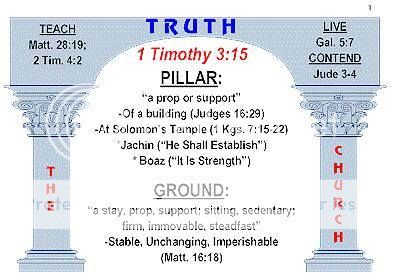
The pillar and foundation of truth has to be committed to one doctrine for all time. The disciples of the apostles taught, defended, and died in the Catholic Faith. Justin in 150 AD writing to the emperor of Rome, explained how Satan created paganism to keep humanity from Catholic truth.

The foundation built on rock starts by believing these four words of God.

"THIS IS MY BODY"

Those who didn't, the disciples of the apostles called heretics.
What brings you closer to the Eucharist is of God, what pushes you away cannot be.

Ignatius of Antioch
"I have no taste for corruptible food nor for the pleasures of this life. I desire the bread of God, which is the flesh of Jesus Christ, who was of the seed of David; and for drink I desire his blood, which is love incorruptible" (Letter to the Romans 7:3 [A.D. 110]).

"Take note of those who hold heterodox opinions on the grace of Jesus Christ which has come to us, and see how contrary their opinions are to the mind of God. . . . They abstain from the Eucharist and from prayer because they do not confess that the Eucharist is the flesh of our Savior Jesus Christ, flesh which suffered for our sins and which that Father, in his goodness, raised up again. They who deny the gift of God are perishing in their disputes" (Letter to the Smyrnaeans 6:2–7:1 [A.D. 110]).

Justin Martyr
"We call this food Eucharist, and no one else is permitted to partake of it, except one who believes our teaching to be true and who has been washed in the washing which is for the remission of sins and for regeneration [i.e., has received baptism] and is thereby living as Christ enjoined. For not as common bread nor common drink do we receive these; but since Jesus Christ our Savior was made incarnate by the word of God and had both flesh and blood for our salvation, so too, as we have been taught, the food which has been made into the Eucharist by the Eucharistic prayer set down by him, and by the change of which our blood and flesh is nurtured, is both the flesh and the blood of that incarnated Jesus" (First Apology 66 [A.D. 151]).

user posted image


This post has been edited by khool: Mar 31 2016, 11:09 PM
TSyeeck
post Apr 2 2016, 12:39 AM

Look at all my stars!!
*******
Senior Member
3,573 posts

Joined: Apr 2006


De_Luffy
post Apr 2 2016, 12:50 AM

Enthusiast
*****
Senior Member
737 posts

Joined: Jul 2010
From: Klang
A quick Question, Jesus ascension to heaven should be around 40 days right? But I see many churches shorten it to just 1 month?
khool
post Apr 2 2016, 09:49 AM

Getting Started
**
Junior Member
225 posts

Joined: Mar 2008


QUOTE(De_Luffy @ Apr 2 2016, 12:50 AM)
A quick Question, Jesus ascension to heaven should be around 40 days right? But I see many churches shorten it to just 1 month?
*
It is 40 days, for the Catholic Church. It is also a holy day of obligation (for Catholics in Malaysia), meaning all Catholics are required to attend Mass and Holy Communion for that day.

Ascension Day for 2016 falls on May 5, btw.

Cannot speak for other churches.

khool
post Apr 2 2016, 09:57 AM

Getting Started
**
Junior Member
225 posts

Joined: Mar 2008


This post has been edited by khool: Apr 2 2016, 09:57 AM
khool
post Apr 2 2016, 02:41 PM

Getting Started
**
Junior Member
225 posts

Joined: Mar 2008


A quick guide ...


TSyeeck
post Apr 2 2016, 11:11 PM

Look at all my stars!!
*******
Senior Member
3,573 posts

Joined: Apr 2006


QUOTE(khool @ Apr 2 2016, 09:49 AM)
It is 40 days, for the Catholic Church. It is also a holy day of obligation (for Catholics in Malaysia), meaning all Catholics are required to attend Mass and Holy Communion for that day.

Ascension Day for 2016 falls on May 5, btw.

Cannot speak for other churches.
*
Slight correction. It is a Holy Day of Obligation for Catholics to attend Mass, but not obligated to receive Holy Communion on that day.

It is both a precept of the Church and Church law that Catholics must worship God on Sunday and Holy Days of Obligation by participating in the Holy Mass. This follows from the fact that in the Mass it is Christ Himself who worships the Father, joining our worship to His. In no other way is it possible to adequately give thanks (eucharistia) to God for the blessings of creation, redemption and our sanctification than by uniting our offerings to that of Jesus Christ Himself. Following the example of the Old Covenant the Church does this weekly, on the day of the Lord's Resurrection.

Canon 1247
On Sundays and other holy days of obligation the faithful are bound to participate in the Mass; they are also to abstain from those labors and business concerns which impede the worship to be rendered to God, the joy which is proper to the Lord's Day, or the proper relaxation of mind and body.

Canon 1248
1. The precept of participating in the Mass is satisfied by assistance at a Mass which is celebrated anywhere in a Catholic rite either on the holy day or on the evening of the preceding day.
2. If because of lack of a sacred minister or for other grave cause participation in the celebration of the Eucharist is impossible, it is specially recommended that the faithful take part in the liturgy of the word if it is celebrated in the parish church or in another sacred place according to the prescriptions of the diocesan bishop, or engage in prayer for an appropriate amount of time personally or in a family or, as occasion offers, in groups of families.

Since a "grave cause" is needed to excuse one from this obligation it would be a serious or mortal sin to willfully skip Mass on Sunday or a Holy Day of Obligation, as the Church has always taught. Reasons such as the necessity to work to support one's family, child care, personal sickness or the care of the sick, necessary travel etc. would excuse a person on a particular occasions. Those who have continuing reason to be excused should consult their pastor.

If a priest is not available in an area and only a Liturgy of the Word or a Communion Service is offered the Mass obligation does not "transfer" to such services. As canon 1248 notes, participation is recommended for the spiritual value, especially if Communion is distributed.


The proper way to celebrate Sunday is spoken of at length in the Catechism of the Catholic Church.
2182 Participation in the communal celebration of the Sunday Eucharist is a testimony of belonging and of being faithful to Christ and to his Church. The faithful give witness by this to their communion in faith and charity. Together they testify to God's holiness and their hope of salvation. They strengthen one another under the guidance of the Holy Spirit.

2183 "If because of lack of a sacred minister or for other grave cause participation in the celebration of the Eucharist is impossible, it is specially recommended that the faithful take part in the Liturgy of the Word if it is celebrated in the parish church or in another sacred place according to the prescriptions of the diocesan bishop, or engage in prayer for an appropriate amount of time personally or in a family or, as occasion offers, in groups of families."

A day of grace and rest from work

2184 Just as God "rested on the seventh day from all his work which he had done," human life has a rhythm of work and rest. The institution of the Lord's Day helps everyone enjoy adequate rest and leisure to cultivate their familial, cultural, social, and religious lives.

2185 On Sundays and other holy days of obligation, the faithful are to refrain from engaging in work or activities that hinder the worship owed to God, the joy proper to the Lord's Day, the performance of the works of mercy, and the appropriate relaxation of mind and body. Family needs or important social service can legitimately excuse from the obligation of Sunday rest. The faithful should see to it that legitimate excuses do not lead to habits prejudicial to religion, family life, and health.

The charity of truth seeks holy leisure- the necessity of charity accepts just work.

2186 Those Christians who have leisure should be mindful of their brethren who have the same needs and the same rights, yet cannot rest from work because of poverty and misery. Sunday is traditionally consecrated by Christian piety to good works and humble service of the sick, the infirm, and the elderly. Christians will also sanctify Sunday by devoting time and care to their families and relatives, often difficult to do on other days of the week. Sunday is a time for reflection, silence, cultivation of the mind, and meditation which furthers the growth of the Christian interior life.

2187 Sanctifying Sundays and holy days requires a common effort. Every Christian should avoid making unnecessary demands on others that would hinder them from observing the Lord's Day. Traditional activities (sport, restaurants, etc.), and social necessities (public services, etc.), require some people to work on Sundays, but everyone should still take care to set aside sufficient time for leisure. With temperance and charity the faithful will see to it that they avoid the excesses and violence sometimes associated with popular leisure activities. In spite of economic constraints, public authorities should ensure citizens a time intended for rest and divine worship. Employers have a similar obligation toward their employees.

2188 In respecting religious liberty and the common good of all, Christians should seek recognition of Sundays and the Church's holy days.

This post has been edited by yeeck: Apr 2 2016, 11:12 PM
khool
post Apr 3 2016, 07:43 AM

Getting Started
**
Junior Member
225 posts

Joined: Mar 2008


user posted image

khool
post Apr 3 2016, 04:26 PM

Getting Started
**
Junior Member
225 posts

Joined: Mar 2008


“Let us take things as we find them: let us not attempt to distort them into what they are not... We cannot make facts. All our wishing cannot change them. We must use them.”

CARDINAL JOHN HENRY NEWMAN

In the old covenant God gave the law to hearts of stone to lead to grace.
( I no longer call you servants but friends, the benignity of God leadeth thee to penance, out of faith, hope, and charity the greatest of these is charity, the gentiles do what the law requires without ever knowing the law, their conscience bares witness, I have not come to abolish the law but to fulfill the law) charity fulfilled the law.

In the New Covenant God gave us grace to fulfill the law of love.

OSAS ?

Ephesians 2:10 ESV

For we are his workmanship, created in Christ Jesus for good works, which God prepared beforehand, that we should walk in them.

James 2:14-17 ESV

What good is it, my brothers, if someone says he has faith but does not have works? Can that faith save him? If a brother or sister is poorly clothed and lacking in daily food, and one of you says to them, “Go in peace, be warmed and filled,” without giving them the things needed for the body, what good is that? So also faith by itself, if it does not have works, is dead.

Matthew 5:16 ESV

In the same way, let your light shine before others, so that they may see your good works and give glory to your Father who is in heaven.

Ephesians 2:8-9 ESV

For by grace you have been saved through faith. And this is not your own doing; it is the gift of God, not a result of works, ( Mosaic law, circumcision sacrificing bulls and goats. ..) so that no one may boast.

James 2:26 ESV

For as the body apart from the spirit is dead, so also faith apart from works is dead.

Hebrews 13:16 ESV

Do not neglect to do good and to share what you have, for such sacrifices are pleasing to God.

James 2:18 ESV

But someone will say, “You have faith and I have works.” Show me your faith apart from your works, and I will show you my faith by my works.

2 Timothy 3:17 ESV

That the man of God may be competent, equipped for every good work.

Romans 2:6-10 ESV

He will render to each one according to his works: to those who by patience in well-doing seek for glory and honor and immortality, he will give eternal life; but for those who are self-seeking and do not obey the truth, but obey unrighteousness, there will be wrath and fury. There will be tribulation and distress for every human being who does evil, the Jew first and also the Greek, but glory and honor and peace for everyone who does good, the Jew first and also the Greek.

Colossians 3:23-24 ESV

Whatever you do, work heartily, as for the Lord and not for men, knowing that from the Lord you will receive the inheritance as your reward. You are serving the Lord Christ.

Matthew 7:21-23 ESV

“Not everyone who says to me, ‘Lord, Lord,’ will enter the kingdom of heaven, but the one who does the will of my Father who is in heaven. On that day many will say to me, ‘Lord, Lord, did we not prophesy in your name, and cast out demons in your name, and do many mighty works in your name?’ And then will I declare to them, ‘I never knew you; depart from me, you workers of lawlessness.’

James 4:17 ESV

So whoever knows the right thing to do and fails to do it, for him it is sin.

Titus 1:16 ESV

They profess to know God, but they deny him by their works. They are detestable, disobedient, unfit for any good work.

1 Corinthians 16:14 ESV

Let all that you do be done in love.

Titus 2:14 ESV

Who gave himself for us to redeem us from all lawlessness and to purify for himself a people for his own possession who are zealous for good works.

Proverbs 3:27-28 ESV

Do not withhold good from those to whom it is due, when it is in your power to do it. Do not say to your neighbor, “Go, and come again, tomorrow I will give it”—when you have it with you.

James 1:27 ESV

Religion that is pure and undefiled before God, the Father, is this: to visit orphans and widows in their affliction, and to keep oneself unstained from the world.

Hebrews 10:24 ESV

And let us consider how to stir up one another to love and good works,

Galatians 6:9 ESV

And let us not grow weary of doing good, for in due season we will reap, if we do not give up.

2 Corinthians 5:10 ESV

For we must all appear before the judgment seat of Christ, so that each one may receive what is due for what he has done in the body, whether good or evil.

Hebrews 6:10 ESV

For God is not unjust so as to overlook your work and the love that you have shown for his name in serving the saints, as you still do.

John 14:15 ESV

“If you love me, you will keep my commandments.

John 3:19-21 ESV

And this is the judgment: the light has come into the world, and people loved the darkness rather than the light because their works were evil. For everyone who does wicked things hates the light and does not come to the light, lest his works should be exposed. But whoever does what is true comes to the light, so that it may be clearly seen that his works have been carried out in God.”

James 2:8 ESV

If you really fulfill the royal law according to the Scripture, “You shall love your neighbor as yourself,” you are doing well.

Galatians 5:14 ESV

For the whole law is fulfilled in one word: “You shall love your neighbor as yourself.”

Psalm 37:3-4 ESV

Trust in the Lord, and do good; dwell in the land and befriend faithfulness. Delight yourself in the Lord, and he will give you the desires of your heart.

Galatians 5:16 ESV

But I say, walk by the Spirit, and you will not gratify the desires of the flesh.

Hebrews 10:26-31 ESV

For if we go on sinning deliberately after receiving the knowledge of the truth, there no longer remains a sacrifice for sins, but a fearful expectation of judgment, and a fury of fire that will consume the adversaries. Anyone who has set aside the law of Moses dies without mercy on the evidence of two or three witnesses. How much worse punishment, do you think, will be deserved by the one who has spurned the Son of God, and has profaned the blood of the covenant by which he was sanctified, and has outraged the Spirit of grace? For we know him who said, “Vengeance is mine; I will repay.” And again, “The Lord will judge his people.”

Matthew 5:48 ESV

You therefore must be perfect, as your heavenly Father is perfect.

Proverbs 3:27 ESV

Do not withhold good from those to whom it is due, when it is in your power to do it.

Psalm 37:3 ESV

Trust in the Lord, and do good; dwell in the land and befriend faithfulness.

Titus 3:1 ESV

Remind them to be submissive to rulers and authorities, to be obedient, to be ready for every good work,

2 Thessalonians 3:13 ESV

As for you, brothers, do not grow weary in doing good.

Romans 14:12 ESV

So then each of us will give an account of himself to God.

1 Corinthians 15:58 ESV

Therefore, my beloved brothers, be steadfast, immovable, always abounding in the work of the Lord, knowing that in the Lord your labor is not in vain.

Luke 9:23 ESV

And he said to all, “If anyone would come after me, let him deny himself and take up his cross daily and follow me.

Mark 12:31 ESV

The second is this: ‘You shall love your neighbor as yourself.’ There is no other commandment greater than these.”

Ecclesiastes

I perceived that there is nothing better for them than to be joyful and to do good as long as they live;

2 Peter 3:18 ESV

But grow in the grace and knowledge of our Lord and Savior Jesus Christ. To him be the glory both now and to the day of eternity. Amen.

1 Peter 3:13-17 ESV

Now who is there to harm you if you are zealous for what is good? But even if you should suffer for righteousness' sake, you will be blessed. Have no fear of them, nor be troubled, but in your hearts honor Christ the Lord as holy, always being prepared to make a defense to anyone who asks you for a reason for the hope that is in you; yet do it with gentleness and respect, having a good conscience, so that, when you are slandered, those who revile your good behavior in Christ may be put to shame. For it is better to suffer for doing good, if that should be God's will, than for doing evil.

Titus 3:8 ESV

The saying is trustworthy, and I want you to insist on these things, so that those who have believed in God may be careful to devote themselves to good works. These things are excellent and profitable for people.

Romans 12:1 ESV

I appeal to you therefore, brothers, by the mercies of God, to present your bodies as a living sacrifice, holy and acceptable to God, which is your spiritual worship.

Acts 10:2 ESV

A devout man who feared God with all his household, gave alms generously to the people, and prayed continually to God.

Isaiah 1:17 ESV

Learn to do good; seek justice, correct oppression; bring justice to the fatherless, plead the widow's cause.

1 Timothy 2:1-15 ESV

First of all, then, I urge that supplications, prayers, intercessions, and thanksgivings be made for all people, for kings and all who are in high positions, that we may lead a peaceful and quiet life, godly and dignified in every way. This is good, and it is pleasing in the sight of God our Savior, who desires all people to be saved and to come to the knowledge of the truth. For there is one God, and there is one mediator between God and men, the man Christ Jesus,

Psalm 37:27 ESV

Turn away from evil and do good; so shall you dwell forever.

Psalm 37:27-29 ESV

Turn away from evil and do good; so shall you dwell forever. For the Lord loves justice; he will not forsake his saints. They are preserved forever, but the children of the wicked shall be cut off. The righteous shall inherit the land and dwell upon it forever.

Thank you, Luke Haskell !!! biggrin.gif

khool
post Apr 3 2016, 04:39 PM

Getting Started
**
Junior Member
225 posts

Joined: Mar 2008


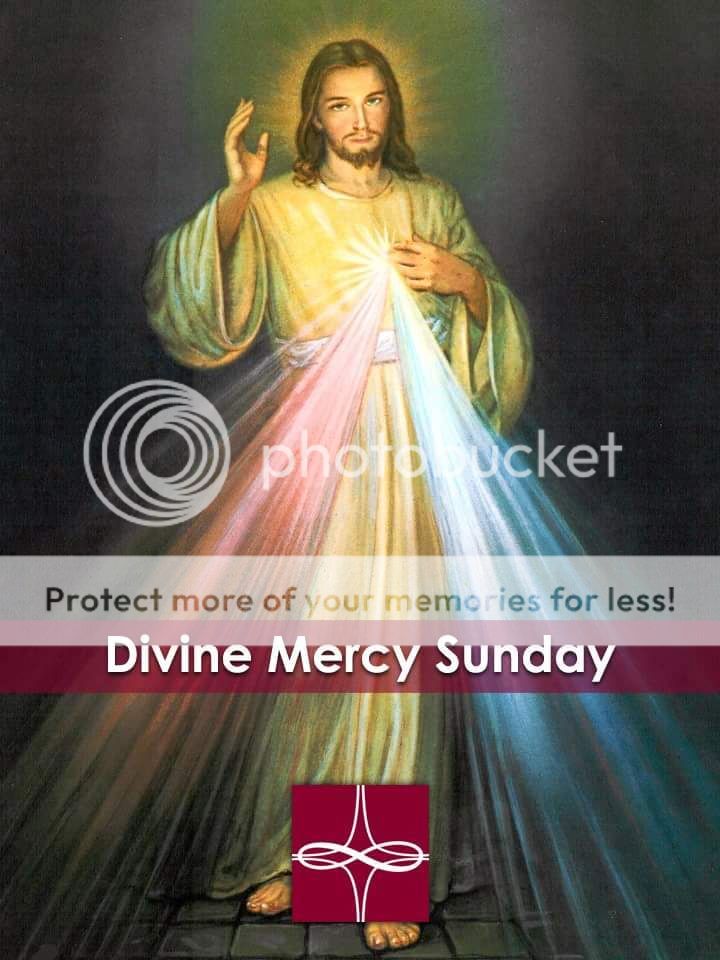
Today we celebrate Divine Mercy Sunday. Jesus, I trust in you!

user posted image


134 Pages « < 51 52 53 54 55 > » Top
Topic ClosedOptions
 

Change to:
| Lo-Fi Version
0.0383sec    0.34    6 queries    GZIP Disabled
Time is now: 3rd December 2025 - 02:09 AM