Welcome Guest ( Log In | Register )

Bump Topic Topic Closed RSS Feed
13 Pages < 1 2 3 4 5 > » Bottom

Outline · [ Standard ] · Linear+

> Military Thread V15, Gong Xi Fa Cai; Huat ah

views
     
BorneoAlliance
post Feb 17 2015, 12:21 AM

New Member
*
Newbie
0 posts

Joined: Dec 2014
Russia Wins Back China Deal By Annexing Pesky Shipyard

Feb 16, 2015 06:26 UTC by Defense Industry Daily staff

Ukraine’s deal to sell Zubr hovercrafts made by the Feodosiya Shipyard to China was going along, with two of the landing craft delivered.

There were disputes between it and Russia’s Almaz Shipbuilding about who owned the design (the craft does appear similar to the Almaz-designed Project 1232.2, the Bison Mark II), but then Russia went and annexed the territory on which important facilities sat.

Now, it appears, Russia is selling Zubr hovercrafts to China external link, although the last two units in the contract were already to be built in China, so the project is largely a technology transfer to spin up Chinese shipbuilding capacity.

https://www.defenseindustrydaily.com/russia...hipyard-029570/


Attached thumbnail(s)
Attached Image
BorneoAlliance
post Feb 17 2015, 10:24 AM

New Member
*
Newbie
0 posts

Joined: Dec 2014
Beluran GOF camp construction


Attached thumbnail(s)
Attached Image Attached Image
BorneoAlliance
post Feb 17 2015, 10:34 AM

New Member
*
Newbie
0 posts

Joined: Dec 2014
Japan navy 4 day goodwill visit to Brunei


Attached thumbnail(s)
Attached Image
BorneoAlliance
post Feb 17 2015, 06:37 PM

New Member
*
Newbie
0 posts

Joined: Dec 2014
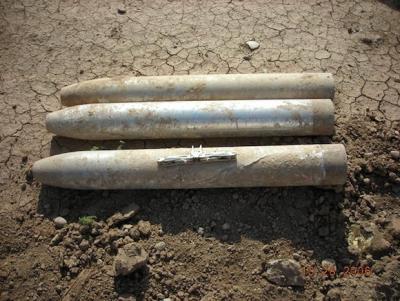
CIA bought Iraq chemical weapons
Led the United States to acquire and destroy at least 400 Borak rockets


A New York Times investigation published in October found that the military had recovered thousands of old chemical warheads and shells in Iraq and that Americans and Iraqis had been wounded by them, but the government kept much of this information secret, from the public and troops alike.

http://gulfnews.com/news/region/iraq/cia-b...apons-1.1457987


Attached thumbnail(s)
Attached Image
BorneoAlliance
post Feb 18 2015, 12:48 AM

New Member
*
Newbie
0 posts

Joined: Dec 2014
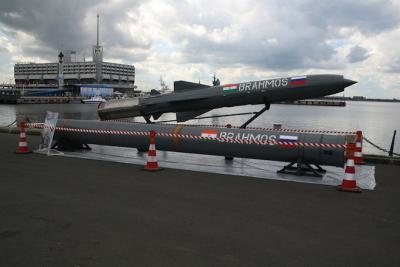
Russia Develops New Fuel for Hypersonic Cruise Missile

Russia has created a powerful recipe for fuel that will allow missiles to fly faster than five times the speed of sound, a development that if utilized effectively would make Russia a major player in a growing hypersonic arms race, a deputy defense minister said.

“The recipe has been created and the energy accumulated in this fuel will enable our vehicles to exceed Mach 5,” General Dmitry Bulgakov, deputy defense minister, was quoted by the TASS news agency as saying on Tuesday.

Mach 5, or 6,126 kilometers per hour, is considered to be the barrier between supersonic speeds and hypersonic speeds.

Militaries around the world are racing to harness the power of hypersonic flight, which by slashing missile flight times will complicate countries' ability to detect and respond to attacks and potentially upset the global military balance of power.

The United States, China, Russia and India are all working to develop hypersonic missile systems, but the engineering challenges are daunting. Hypersonic missiles need to be strong to withstand the stress of flight beyond Mach 5.

While the United States and China have focused their efforts on so-called boost-glide hypersonic missiles, which launch on a rocket and then glide to their target, Russia and India have chosen to focus their efforts on the co-development of a hypersonic cruise missile.

Cruise missiles differ from ballistic missiles in that they fly under their own power to their target and can fly low to evade early warning radar systems.

Russia and India have already developed a cruise missile together, known as BrahMos. Considered the fastest supersonic cruise missile in the world, BrahMos travels at speeds up to Mach 3, or about 3,675 kilometers per hour.


http://www.themoscowtimes.com/business/art...ile/516053.html


Attached thumbnail(s)
Attached Image
BorneoAlliance
post Feb 19 2015, 03:02 PM

New Member
*
Newbie
0 posts

Joined: Dec 2014
Russia conducting major air exercises close to Europe

Russia is staging a series of major aerial exercises near Europe as tensions with the West continue to escalate over the crisis in Ukraine, state media has announced.

More than 50 combat aircraft of various types are taking part in the live-fire exercises in the western military district of Russia, the Sputnik news agency reported.

The exercises, which began on 17 February, will involve Sukhoi Su-34 'Fullback', MiG-29SMT 'Fulcrum', MiG-31BM 'Foxhound', and various Sukhoi Su-27 'Flanker'-series combat aircraft.

According to the reports, the exercises will culminate with the Ladoga-2015 exercise over Lake Ladoga, east of the city of St Petersburg.

http://www.janes.com/article/49064/russia-...close-to-europe


Attached thumbnail(s)
Attached Image
BorneoAlliance
post Feb 19 2015, 03:21 PM

New Member
*
Newbie
0 posts

Joined: Dec 2014
North Korea Flight Tests New Submarine-Launched Ballistic Missile
Pentagon: KN-11 missile test fired from floating platform


North Korea conducted the first flight test of a new submarine-launched ballistic missile last month, defense officials said this week.

The flight test of what the Pentagon is calling the KN-11 missile took place Jan. 23 off the coast of North Korea from a sea-based platform—not a submarine—located off the coast of the communist state, said officials familiar with reports of the flight test.

U.S. intelligence ships and aircraft monitored the test and tracked the successful missile firing.

Additional details of the flight test could not be learned. A Pentagon spokesman declined to comment on the test, citing the sensitivity of information about North Korea’s SLBM program.

The flight test followed a land-based ejection test of the KN-11 in November from a static launcher located at the North’s Sinpo South Shipyard in November. Sinpo is a port city on North Korea’s southeastern coast about 100 miles from the Demilitarized Zone separating North Korea from rival South Korea.

The flight test is being viewed by U.S. intelligence analysts as a significant step forward for Pyongyang’s submarine-launched ballistic missile program. The new program was first disclosed by the Washington Free Beacon Aug. 26.

Marine Corps Lt. Gen. Vincent R. Stewart, director of the Defense Intelligence Agency, told the House Armed Services Committee Feb. 3 that North Korea’s nuclear weapons and missile programs “pose a serious threat to the U.S. and regional allies.”

“Pyongyang maintains that nuclear and ballistic missile capabilities are essential to ensure its sovereignty,” Stewart said in a prepared statement.

“Because of its conventional military deficiencies, the DPRK [North Korea] also has concentrated on improving its deterrence capabilities, especially its nuclear technology and ballistic missile forces.”

Stewart added that DIA is concerned North Korea will conduct a fourth underground nuclear test in the future.

The DIA director’s testimony made no mention of the SLBM program. But he said: “Pyongyang also is making efforts to expand and modernize its deployed missile forces consisting of close-, short-, medium-, and intermediate-range systems.”

“It seeks to develop longer-range ballistic missiles capable of delivering nuclear weapons to the United States and continues efforts to bring its KN-08 road-mobile ICBM to operational capacity.

Other analysts assess the SLBM missile will be developed as a nuclear delivery system for Pyongyang’s nuclear arsenal. A submarine-launched nuclear missile would add a more-difficult target to U.S. regional deterrence and missile defenses.

Since the SLBM program was disclosed last year, South Korea’s government has confirmed the program.

Rick Fisher, a senior fellow at the International Assessment and Strategy Center, said the use of a floating launch platform indicates the KN-11 could be launched from a military or commercial ship as well as from a submarine.

Platform test launches also indicate that the weapon is in an early stage of development and is not ready to be launched from a submerged submarine.

“For Pyongyang, using the KN-11 from ships as well as submarines rapidly increases the number of potential launch platforms, as it also complicates U.S. and allied efforts to monitor a new North Korean missile threat,” Fisher said.

“Firing the KN-11 from a floating platform is still useful, as it would go far to help verify whether the missile’s guidance system is able to compensate very quickly for wave motion in order to achieve the desired trajectory for the greatest accuracy.”

As for why Pyongyang is building the underwater missile, Fisher said: “The advent of the KN-11 offers North Korea the means to launch missile strikes against U.S. forces in Japan or against South Korea and Japanese targets, from multiple directions, from land bases, and from the sea.”

Fisher said in response to the missile that the Pentagon should urgently build up additional missile defenses and revive U.S. sea-based tactical nuclear arms in the region to bolster deterrence.

The Pentagon’s retirement of submarine-launched Tomahawk missile in 2010 was a “major mistake,” he said.

Bruce E. Bechtol, a North Korea specialist, said the major threat from any North Korean ballistic missile is whether the weapon is mobile—thus more difficult to target—and whether it can hit U.S. cities and carry a nuclear warhead.

U.S. intelligence agencies suspect North Korea in 2013 had developed a small nuclear warhead for delivery on long-range missiles after its third nuclear test.

“The North Koreans appear to be moving toward at least two of the three key parts of the threat a missile could pose to the United States,” said Bechtol, a former Defense Intelligence Agency official currently at Angelo State University.

“If and when they are able to launch the SLBM from a submarine, it means a platform that is mobile enough that it would likely be difficult for U.S. missile defenses to track,” he said. “The fact that the submarine could move to within just a few miles of American coastlines such as Alaska, Hawaii, or the west coast of the United States, means they could meet the second part of the missile threat to the U.S.”

North Korea probably obtained small nuclear warhead know-how from the Pakistani nuclear supplier group headed by A.Q. Khan.

“The fact that the North Koreans have test-launched this missile—even though it was not from a submarine—means that the DPRK is advancing their SLBM program,” Bechtol said. “This is a threat—a direct threat—to the United States that should be taken seriously if it comes to fruition.”

A U.S. think tank, 38 North, last year revealed satellite photos of the Sinpo development site that included a land-based missile test stand and a Soviet-era submarine capable of launching missile from its conning tower.

On Jan. 8, 38 North revealed additional satellite photos showing what it calls the Sinpo-class missile submarine with one or two missile launch tubes.

“In addition, imagery over the past six months indicates that North Korea has been upgrading facilities at the Sinpo South Shipyard in preparation for a significant naval construction program, possibly related to submarine development,” 38 North stated in an article written by North Korea expert Joseph S. Bermudez Jr.

“The presence of vertical launch tubes, if confirmed by additional evidence, would signal a significant advance in North Korean naval construction capabilities and could represent an embryonic step towards expanding Pyongyang’s missile threat to South Korea, Japan and U.S. bases in East Asia,” Bermudez wrote.

“It would also complicate regional missile defense planning, deployment, and operations,” he added. “North Korean missile-carrying submarines could be challenging to locate and track, would be mobile assets with the capability to attack from any direction, and would be able to operate at significant distances from the Korean peninsula.”

North Korea obtained from Russia SS-N-6 submarine-launched ballistic missiles several years ago. The missile was adapted to North Korea’s Musudan intermediate-range ballistic missile.

North Korea also has six KN-08 road-mobile intercontinental ballistic missiles that were developed with launchers supplied by China.

The submarine North Korea plans to deploy the KN-11 on is not known.

North Korea obtained several decommissioned Soviet-era Golf II ballistic-missile submarines in the early 1990s.

Pyongyang may seek to copy or adapt the design of the Golf II for an indigenous missile submarine.

In another development, North Korea’s state-run news media reported Feb. 7 that the country’s military conducted a test firing of a precision-guided anti-ship cruise missile.

In addition, North Korean dictator Kim Jong-un recently toured several military units and urged troops to be fully prepared for combat.

“Since November when the North began to stage winter drills, Kim has visited military units 10 times. While leading some aggressive exercises, he has encouraged the military to complete their readiness this year to fight,” South Korean Defense Minister Han Min-koo told legislators in Seoul, according to the semi-official Yonhap news agency Feb. 7.

Earlier this month South Korea announced the creation of an upgraded submarine command structure for its fleet of submarines. The command will operate South Korea’s 13 submarines that previously were subordinated to a surface fleet.

Some 20 U.S. Marines and 200 South Korean Marines conducted joint maritime infiltration exercises near the South’s border islands with North Korea on Feb. 10.

http://freebeacon.com/national-security/no...listic-missile/


Attached thumbnail(s)


Attached Image
BorneoAlliance
post Feb 19 2015, 05:16 PM

New Member
*
Newbie
0 posts

Joined: Dec 2014
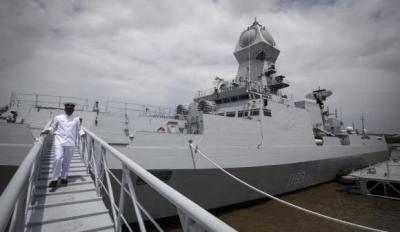
India clears $8 billion warships project to counter Chinese navy

The government has cleared a $8 billion plan to build India's most advanced warships, defence sources said, just months after ordering new submarines to close the gap with the Chinese navy in the Indian Ocean.

Since taking over last year, Prime Minister Narendra Modi has signalled his resolve to build a strong military after years of neglect that military planners say has left India unable to fight a two-front war against China and Pakistan.

India's navy has been rattled in recent months after Chinese submarines docked in Sri Lanka, just off its southern coast, underlining the growing reach of the Chinese navy after years of staying closer to its shores.

Modi summoned a meeting of the cabinet committee on security on Monday to approve construction of seven frigates equipped with stealth features to avoid easy detection, a defence ministry source said.

The Times of India said the government had also approved six nuclear-powered submarines for a further $8 billion. The defence source said he had no knowledge of the nuclear submarine programme, which traditionally has been kept under wraps.

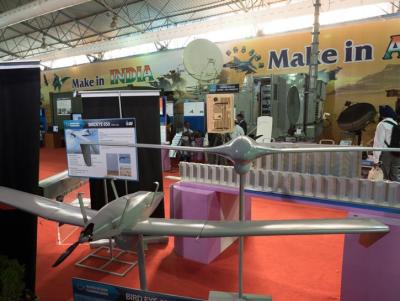
The frigates in a programme called Project-17A will be built at government shipyards in Mumbai and Kolkata, in a boost for Modi's Make in India campaign to build a domestic defence industrial base and reduce dependence on expensive imports that have made India the world's biggest arms market.

"Project 17-A was awaiting cabinet clearance since 2012," the source said, adding the Modi government was moving quickly on a project seen as of critical national importance.

The source said the government expects to sign a contract with the shipyards within the month. Another source in the navy confirmed the cabinet clearance but said it would take a decade or even longer for all the ships to be built, even if the shipyards were to start construction immediately.

China's naval forays in the Indian Ocean have exposed the Indian navy's weak undersea defences, which are down to 13 ageing diesel-electric submarines after a string of accidents including one in 2013 in which 18 sailors were killed.

In October, Modi's administration approved fast-tracking the tender process to build six submarines in collaboration with a foreign builder.

"This government is showing signs of urgency, but there is a lot of ground to be covered," said former vice admiral Arun Kumar Singh. "All our programmes are running way behind schedule and with a huge amount of cost over-runs."

(Editing by Tom Heneghan)

http://in.reuters.com/article/2015/02/18/i...N0LM1A920150218


Attached thumbnail(s)
Attached Image
BorneoAlliance
post Feb 19 2015, 05:23 PM

New Member
*
Newbie
0 posts

Joined: Dec 2014
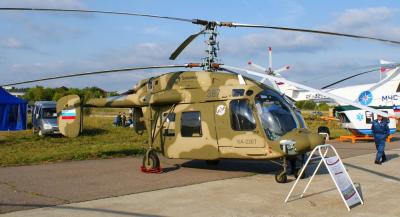
Russia, India Consider Joint Production of Ka-226T Helicopter


BENGALURU (Sputnik) — Moscow and New Delhi are currently discussing the possibility of creating a joint venture to manufacture the Ka-226T light multirole helicopter in India, Russian Helicopters CEO Alexander Mikheev told RIA Novosti.

"We hope that a joint Russian-Indian venture will be created," Mikheev said at the Aero India 2015 international air show.

The Russian helicopter exporter said it will focus on talks on the project during the four-day expo, which started Wednesday in southeastern India's Bengaluru.

"India's Ministry of Defense requested information regarding the offer… We have outlined a technical proposal on Ka-226T and modernized it," Mikheev said.

The head of Russian Helicopters added that the sides will incorporate the experience of producing Russian-designed Sukhoi Su-30 MKI fighter jets under license in India.

According to Russia's Federal Service for Military-Technical Cooperation, over 70 percent of all military equipment used by the Indian Armed Forces was produced in Russia or the Soviet Union. In 2013, Russia delivered weapons and military equipment worth almost $4.8 billion to India.


Read more: http://sputniknews.com/science/20150218/10...l#ixzz3SBIJijH9

Read more: http://sputniknews.com/science/20150218/10...l#ixzz3SBHkHmEj


Attached thumbnail(s)
Attached Image
BorneoAlliance
post Feb 19 2015, 10:59 PM

New Member
*
Newbie
0 posts

Joined: Dec 2014
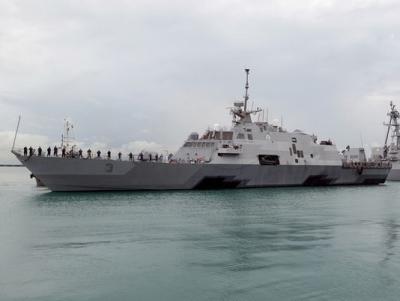
US Navy: 4 LCSs to Operate Out of Singapore by 2018

SINGAPORE — Four US warships designed to fight in coastal areas similar to Southeast Asian waters will be operating out of Singapore by 2018, up from one currently, a senior US Navy official said Tuesday.

The "rotational deployment" of the vessels, called littoral combat ships (LCS), comes as China continues to flex its muscles in the South China Sea and tensions remain on the Korean Peninsula.

"We will soon see up to four LCS here in Singapore as we rotationally deploy Seventh Fleet ships," said Rear Adm. Charles Williams.

"We envision four ships here by May 2017 to sometime in 2018 ... but I think what you have is that by 2018, four LCS ships will be rotationally deployed here to Singapore."

Williams, commander of the Seventh Fleet's Task Force 73, was speaking to reporters aboard the USS Fort Worth, an LCS on a 16-month deployment to Southeast Asia.

It replaced another LCS, the USS Freedom, which recently ended an eight-month tour of duty.

The USS Fort Worth is set to take part in exercise Foal Eagle, a joint military drill with South Korea from Feb. 24-March 6.

It will also join regional navies in the annual Cooperation Afloat Readiness and Training exercises and the International Maritime Defence Exhibition.

Fast and agile, LCS vessels can be adapted for specific missions through a system of interchangeable modules and crew.

The US Navy plans to build 52 LCS vessels at a total cost of $37 billion but the program has become controversial due to cost inflation, design and construction issues.

In 2012 the then-US Defense Secretary Leon Panetta announced that Washington would shift the bulk of its naval fleet to the Pacific by 2020 as part of a new strategic focus on Asia.

China is embroiled in a maritime dispute with four Southeast Asian countries — Brunei, Malaysia, the Philippines and Vietnam — as well as with Taiwan over territorial claims in the South China Sea.

While not a claimant, the United States has said it has an interest to ensure freedom of navigation in the area

http://www.defensenews.com/story/defense/n...apore/23619799/


Attached thumbnail(s)
Attached Image
BorneoAlliance
post Feb 19 2015, 11:05 PM

New Member
*
Newbie
0 posts

Joined: Dec 2014
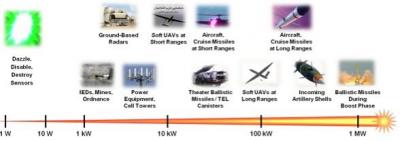
CRYSTAL CITY: In three years the US military could have a prototype laser weapon blasting out 300 kilowatts of energy, a jump that could ignite a revolution in missile defense, a Lockheed Martin engineer told me today,

A 300-kw laser could kill cruise missiles. For comparison, that’s 10 times the power output of the Laser Weapons System (LaWS) currently being field-tested aboard ship in the Persian Gulf. LaWS can shoot down slow-moving drones at relatively short ranges.

Lockheed Martin is currently on contract to upgrade the Army’s High Energy Laser Mobile Demonstrator (HEL MD) from its current 10 kilowatt output to 60 kw, with delivery sometime late next year. But Lockheed senior fellow Rob Afzal wants to go beyond 60 kw.

“We believe that system itself can go to 100,” he told reporters this afternoon at Lockheed Martin’s annual media day. “We think that, with today’s technology, fiber lasers will scale to 300, arguably beyond 300.” With future improvements in the underlying laser technologies, he said, “we think we can get well beyond 500 kw.”

Under current plans, Afzal said, “we’re dollar-limited to a 100 or 150 kw. We’re not technology-limited. And we’re probably about two to three years from being able to go to 300 [kw] if funding is supplied.”

“We can build 100-kw class systems today [that] can go onto LCS [the Navy Littoral Combat Ship],” Afzal said. (100 kw is enough to kill cruise missiles at short ranges or drones at long ranges, according to the Center for Strategic and Budgetary Assessments). “It can go onto Army trucks,” he continued. “We can go into large aircraft. We’re probably not ready for fighter aircraft today.”

At 30 to 35 percent efficiency — the current cutting edge with fiber-optic lasers — 300 kw of output would require just under a megawatt of electrical power. By contrast, older laser technologies managed about 10 percent efficiency, so that same megawatt of electricity would only get you 100 kilowatts of laser power, with the other 900 kw coming out as waste heat. You could build big lasers for experiments, but the power and cooling requirements were untenable for any tactical use.

The big difference today is small fiber lasers. Each fiber individually generates at most 10 kw, but you can combine their beams to get greater power output. Yet you can still cool each fiber individually, which prevents the overheating problems that bedeviled older lasers. (As an object grows hotter, the difficulty of getting rid of that heat increases exponentially).

The Navy’s LaWs simply sticks together six commercial cutting lasers and points them all at the same target. Lockheed’s technology goes further and combines all the lasers into a single, coherent beam, which allows much sharper focus at long ranges.

“We’re very comfortable combining hundreds of fibers,” Afzal said. The process is basically the reverse of how a prism splits a single beam of sunlight into a whole rainbow of colors: Using “spectral beam combining,” you take many lasers and combine them into one beam.

Lockheed’s already proved this beam-combining technology on a 30 kw laser the company built with its own funds, Afzal said. Now they just need to scale it up to the 60 kw the Army requires — and beyond.


http://breakingdefense.com/2015/02/are-mis...rge-of-reality/


Attached thumbnail(s)
Attached Image
BorneoAlliance
post Feb 19 2015, 11:10 PM

New Member
*
Newbie
0 posts

Joined: Dec 2014
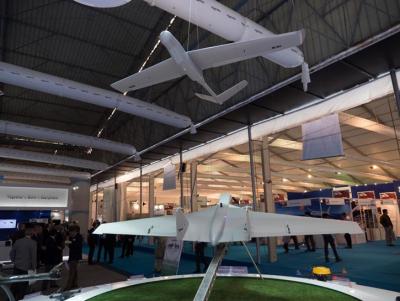
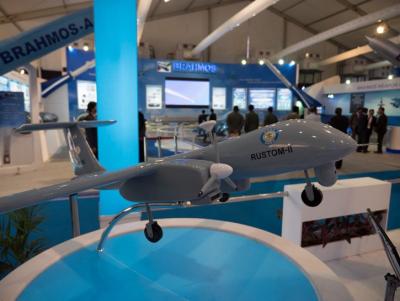
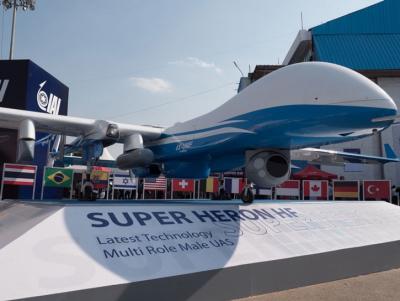
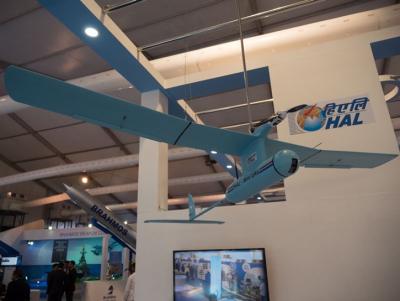
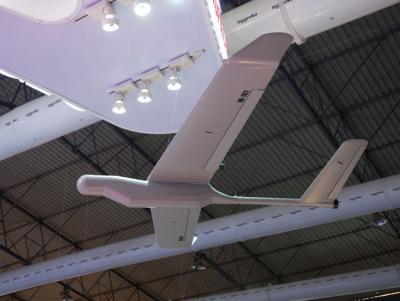
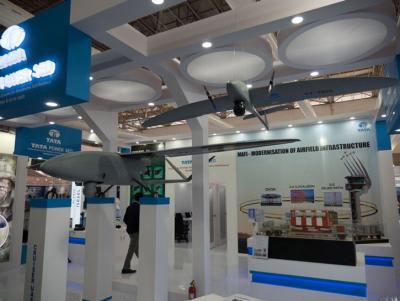
Aero India 2015

http://defense-update.com/20150218_aero-in...ml#.VOX8F4bXerV

This post has been edited by BorneoAlliance: Feb 19 2015, 11:12 PM


Attached thumbnail(s)
Attached Image Attached Image Attached Image Attached Image Attached Image Attached Image Attached Image Attached Image Attached Image
BorneoAlliance
post Feb 19 2015, 11:35 PM

New Member
*
Newbie
0 posts

Joined: Dec 2014
Lockheed reveals small self-defence weapon for fighters

The US Air Force is considering a Lockheed Martin proposal to adapt technology used for a ground-based missile defense system to protect fighters under attack in the air.

The Air Force Research Laboratory (AFRL) has invited proposals for a miniature self-defense munition concept study, seeking to develop a concept for a weapon to be dispensed from a fighter jet, hone in on an incoming missile and destroy it with a direct hit.

By replacing chaff, flares and directional infrared lasers, the so-called miniature self defence munition (MSDM) could revolutionise the concept of defensive countermeasures for tactical aircraft, says Frank St. John, vice-president of tactical missiles and combat manoeuvre systems at Lockheed’s Missile and Fire Control division.

“To kinetically engage as a countermeasure something that’s fired at you is an attractive possibility,” St. John says, “rather than just confuse or jam something that’s been fired at you.”

Lockheed has been studying the concept using internal funding for about three to four years, St. John says.

It seeks to leverage the active millimetre wave radar developed for the PAC-3 missile segment enhancement (MSE) programme. It repackages the sensor in a miniature munition powered by a small rocket motor.

In Lockheed’s concept, the pilot is alerted to an incoming missile and dispenses an MSDM, which hones into the target using the radar sensor, St. John says. It is a hit-to-kill weapon, and so lacks a warhead.

The miniature interceptor could dramatically increase the internal load-outs of fighters such as the F-22 and F-35, he says. It could replace the storage space now claimed for small diameter bombs. Alternatively, three of the miniature interceptors could replace one Raytheon AIM-120 AMRAAM, he says.

In addition to the PAC-3 MSE programme, Lockheed’s concept also comes out of two other internal projects, St. John says. One is a miniature, radar-guided missile called CUDA and the other programme is “KICM”.

Lockheed has worked on component-level hardware development and testing, along with performing operational analysis studies using internal funding. Last year, the AFRL contributed funding for more operational analyses, St. John says.

Although Lockheed has been studying the concept for four years, it may have competition for more AFRL funding. The AFRL on 5 February notified potential vendors that it is seeking proposals for a pair of concept studies on the MSDM itself and the munition’s seeker.

http://www.flightglobal.com/news/articles/...ighters-409219/

BorneoAlliance
post Feb 19 2015, 11:40 PM

New Member
*
Newbie
0 posts

Joined: Dec 2014
UK MoD chief: Russia 'as great a threat to Europe as IS'


LONDON — Britain's defense minister has said Russia poses a "real and present danger" to European security, as Royal Air Force jets were scrambled to escort Russian warplanes off the British coast.

The Ministry of Defense said Thursday that RAF Typhoon jets escorted two Russian bombers away from British airspace after they approached the coast of southwest England on Wednesday.

Prime Minister David Cameron said the Russian planes did not enter U.K. airspace.

"I suspect what's happening here is the Russians are trying to make some sort of a point, and I don't think we should dignify it with too much of a response," Cameron said.

Russia has stepped up its probing of NATO defenses as relations deteriorated over the conflict in Ukraine.

Britain summoned Russia's ambassador last month and asked him to account for an incident in which Russian bombers flew along the coast and through the English Channel.

British Defense Secretary Michael Fallon said Wednesday that tensions between Moscow and NATO were "warming up." He NATO must be prepared for Russian President Vladimir Putin to threaten Latvia, Lithuania and Estonia, former Soviet republics that are now NATO members.

Fallon said that Putin "is as great a threat to Europe as Islamic State."

The comments made to reporters during a trip to Sierra Leone were among the harshest made by senior British officials in recent months.

http://www.militarytimes.com/story/militar...ltics/23663861/


Attached thumbnail(s)
Attached Image
BorneoAlliance
post Feb 19 2015, 11:46 PM

New Member
*
Newbie
0 posts

Joined: Dec 2014
U.K.: Russia’s advanced anti-aircraft artillery system in Ukraine

The United Kingdom released images Wednesday of Russian SA-22 surface-to-air missile systems that have been spotted in Ukraine.

The U.K. Joint Delegation to NATOtweeted the photos Wednesday, adding that the artillery systems were “more proof of direct Russian military involvement in the conflict.”

Adam Thomson, British ambassador to NATO, implored Russia to live up to its truce agreements.


Read more: http://www.washingtontimes.com/news/2015/f.../#ixzz3SCqxH4w9
Follow us: @washtimes on Twitter


Attached thumbnail(s)
Attached Image
BorneoAlliance
post Feb 20 2015, 12:32 AM

New Member
*
Newbie
0 posts

Joined: Dec 2014
Armoured vehicles remain a "critical priority" for governments, more R&D investment needed


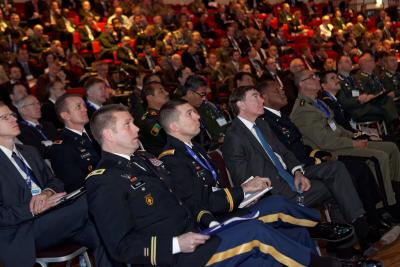
At this year’s International Armoured Vehicles XV conference, held in January at Twickenham Stadium, UK, the leading edge of armoured vehicle integrators and component manufacturers, high ranking military officials and internationally renowned speakers and authorities gathered for the armoured vehicle community’s most engaging and comprehensive event.

Lt. Gen. (ret.) Sir Gary Coward, the UK’s former Chief of Materiel (Land) and Quartermaster General, opened proceedings by noting that investment in defence research and development, particularly in armoured vehicle capabilities within the context of recent developments in Eastern Europe, should remain a critical priority for governments.

Philip Dunne, Minister for Defence Equipment, Support and Technology, built on this theme in his keynote address, remarking that, “in an age when we face a kaleidoscope of threats...our armed forces will continually be called upon. The imperative to maintain a battle fleet of vehicles is as complicated as ever.”

Dunne also stated that the “defence supply chain in this country is broader and deeper than that of our key European partners combined,” underscoring the robust armoured vehicle sector in the UK despite recent budget cuts and waning contract orders. He recalled the £3.5 billion contract signed in Septemeber for the Scout SV, which is the largest single order for an armoured vehicle in 30 years, and called its digital capabilities “without doubt a game-changer.”

“The Scout programme is proof if any were needed we (the UK) are retaining our armoured vehicle making capability,” said Dunne.

During his keynote he also exclusively announced a £30 million contract with General Dynamics Land Systems Europe for the maintenance and support of the Mastiff and Ridgeback armoured vehicles.

Lt. Gen. Michael Williamson, Principal Military Deputy to the Assistant Secretary of the Army for Acquisition, Logistics and Technology, DoD, had a similar message stating that, “we in the United States see armoured vehicles as key to future operations.” He confirmed that the AMPV programme remains the “highest priority” for the Pentagon. While underlining the importance of future armoured capabilities, Williamson was keen to stress the importance of affordability and value for money. He mentioned it many times throughout his presentation. He concluded by saying, “I'm going to say it again because it's really important: Affordability matters.”

One of the other armoured vehicle priorities for the Pentagon is the U.S. Army’s Joint Light Tactical Vehicle (JLTV). Col. John Cavedo, JLTV Joint Programme Office Manager, addressed conference to provide an update on the project’s requirements and timeline, saying that “the genius of JLTV is integration.” Cavedo said he expected to receive the three proposals from OEMs - Lockheed Martin, Oshkosh Defense, and AM General - within the next two weeks and that they will down select a sole contractor in July. The Army will acquire 54,599 while the Marine Corps will get 5,500 JLTVs.

During a high level G5 industry panel debate, C-level participants represented some of the prime OEMs in the sector including Nextel Systems, Textron Systems, BAE Systems Hägglunds, Milspray, and Ruag. The panel discussed a range of topics, such as what the current trends are in design and how these will translate in future programmes, the use of hybrid drives and current guidance from Armies and governments on requirements.

Along with high-level political and military keynotes, the conference also invited academic and technical leaders to present their research to better understand what progress is being made in the field and what we can expect in the future. Professor Bryn James, Head of Armour and Protection Science at DSTL, revealed that despite manufacturers and end-users always wanting “unobtainium,” he’s confident that advanced technologies are now being more and more readily available. “We’re no longer asking for the impossible” and that it is "feasible in the next two or three years will see something on electric armour and active protection."

The technologies have been in R&D for many years but could now be nearing operational use. He also stressed the importance of robustness and armour and the need to repair it in-theatre. Morgan Advanced Materials also presented on its recent ballistic advances and IBD Deisenroth Engineering discussed some of its cutting edge research, which included the early-stage development of graphene armour. DSM Dyneema gave a comprehensive outline of its much-admired polyethylene armour and its future plans.

Joseph Gerschutz, Director of Engineering at Milspray Military Technologies gave a fascinating overview of the company’s work on hybrid drive trains and other renewable energy technologies. “In the next five years I expect to see a lot of Army dollars going towards improving environmental issues with drivetrains and overall vehicle performance,” Gerschutz said.

The first day of the conference was drawn to a close by the effortlessly engaging Lt. Gen. Ben Hodges, Commanding General of U.S. Army Europe. His presentation was centred around Russia’s “illegal annexation of Crimea” and how it may impact U.S. Army Europe’s contingency plans and equipment requirements in the future. A key priority for Hodges related to the interoperability of communications systems. “The US are never going to do anything by ourselves – we are always going to be part of a coalition, so interoperability of equipment is essential,” said Hodges.

Major General Robert Talbot-Rice, Head of Armoured Vehicle Programmes in the UK, opened day two of the conference, saying that with Scout SV, “the British army is going to be equipped with the most capable medium weight tracked armoured vehicle in the world.” He shared the podium with Kevin Griffin, Scout Programme Manager, General Dynamics UK, who said that the vehicle’s electronic architecture is akin to “magic” and would be “full of ISTAR goodies.”

The French Army’s Brig. Gen. Charles Beaudouin, Director Technical Section, gave a fascinating update on the country’s armoured vehicle projects and recapped on previous acquisitions. He said the “choice of the wheel [with the purchase of Nexter Systems’ VBCI vehicle] has immediately paid off … each drove 2700 km in just 7 days during deployment in Mali. Each VBCI travelled about 8000 km during the conflict.”

The conference heard from esteemed guests from around the world including: Lt. Col. Piotr Kosinski, Senior Specialist Land Forces Inspectorate, Polish Armed Forces General Command; the Peruvian Army’s Brig. Gen. Harold Lucho Avendano, Evaluator Technical Committee (CETO); Col. German Schell O'Kuinghttons of the Chilean Army; Maj. Gen. Payenda Mohammad Nazim, Inspector General, Afghan MoD and Bri.g Gen. Enam Nazar, Commander of the Armoured Mobile Strike Force, Afghan National Army.

Lt. Gen. Coward summarised the themes of the conference as “balance, partnership and affordability, affordability, and affordability. This was particularly noted against the backdrop of “a cooler Eastern Europe” and the critical need for partner nations to maintain robust and effective armoured vehicle capabilities.

The next conference in the armoured vehicle event portfolio is the Armoured Vehicles Asia conference, taking place in Jakarta, Indonesia (28-29 April 2015). To find out more download the agenda below.

http://www.defenceiq.com/amoured-vehicles/...056997318&disc=


Attached thumbnail(s)
Attached Image
BorneoAlliance
post Feb 20 2015, 10:32 AM

New Member
*
Newbie
0 posts

Joined: Dec 2014
CENTCOM: US-Iraq mission to take back Mosul to launch in April or May

WASHINGTON — American military officials and their Iraqi counterparts have developed a detailed battle plan to recapture Iraq’s second largest city, and a brutal urban fight could kick off as early as April, according to U.S. Central Command.

Mosul fell to Islamic State militants last year as they swept across the country and routed much of the Iraqi army that the U.S. helped train during the Iraq War.

The “main attack force” that will try to retake the city will consist of five Iraqi army brigades, according to a CENTCOM official, who agreed to outline the battle plan for reporters on condition of anonymity. The rest of the force involved in the operation will include:

Three Kurdish peshmerga brigades that will help contain the Islamic State forces from the north of the city and isolate them from the west.

A “Mosul fighting force” which will be comprised largely of police and tribal forces as well as a brigade of counterterrorism forces.

A reserve force of three smaller brigades.

In total, approximately 20,000 to 25,000 Iraqi troops and associated forces will be involved in the fight, according to the official.

U.S. military officials want the Iraqis to launch the operation in April or May.

“We want them to go in that time frame, because as you get into Ramadan and the summer and the heat, it becomes problematic if it goes much later than that,” the official said. “The shaping for Mosul and the isolation of Mosul is going on now. The preparation for the forces that will participate in Mosul is ongoing right now.”

The Iraqis have identified the specific units that will take part in the attack, but the official declined to name them.

Although things are moving forward, the official acknowledged that much remains to be done before the attack can happen.

The U.S. and its coalition partners still have to train and equip the five Iraqi brigades that will constitute the main attack force. That process normally takes four to six weeks once they are in the training pipeline, according to the official. Then, the forces will have to be postured and positioned correctly before they move in.

The attack on Mosul will be postponed if it looks as though the Iraqis aren’t up to the task.

“If they’re not ready, if the conditions are not set, if all the equipment that they need is not physically there and they are [not] trained to a degree in which they will be successful, we have not closed the door on continuing to slide that [timeline] to the right,” the official said, but “they are moving forward as if they will execute in the [April-May] timeframe.”

Although there is no intention of committing large numbers of U.S. ground forces to the fight, CENTCOM will assist with equipment, logistics, air support, and intelligence, surveillance and reconnaissance, according to the official.

A more risky option under consideration is sending in American special operators to call in airstrikes to aid the Iraqi army.

“It’s a matter of whether we take it one level higher and we actually accompany with [special operations forces] and [joint tactical air controller] teams to provide just a little bit more precise fires,” the official said. “We are looking at all the things that are out there, [such as] what is the final enemy disposition in Mosul, how precise will the fires need to be in relationship to the forward line of troops… and those types of things.”

The official said that military leaders will weigh those issues, but the ultimate decision about sending in forward air controllers will be made by President Barack Obama, the commander-in-chief.

When asked why CENTCOM had agreed to reveal so many details of the campaign plan to reporters, the official said that the command wanted to demonstrate “the level of commitment that [the Iraqis] have to this and the significance of this upcoming operation.”

Officials estimate that the Islamic State has 1,000 to 2,000 fighters in Mosul, and they have had plenty of time to build up their defenses.

“Mosul will not be easy,” another CENTCOM official told reporters. “It’s going to be a difficult fight.”

http://www.stripes.com/news/middle-east/ce...or-may-1.330664


Attached image(s)
Attached Image
BorneoAlliance
post Feb 20 2015, 10:42 AM

New Member
*
Newbie
0 posts

Joined: Dec 2014
China to project power from artificial islands in South China Sea

HONG KONG – China’s creation of artificial islands in the South China Sea is happening so fast that Beijing will be able to extend the range of its navy, air force, coast guard and fishing fleets before long, much to the alarm of rival claimants to the contested waters.

Reclamation work is well advanced on six reefs in the Spratly archipelago, according to recently published satellite photographs and Philippine officials. In addition, Manila said this month that Chinese dredgers had started reclaiming a seventh.

While the new islands won’t overturn U.S. military superiority in the region, Chinese workers are building ports and fuel storage depots as well as possibly two airstrips that experts said would allow Beijing to project power deep into the maritime heart of Southeast Asia.

“These reclamations are bigger and more ambitious than we all thought,” said one Western diplomat. “On many different levels it’s going to be exceptionally difficult to counter China in the South China Sea as this develops.”

China claims most of the potentially energy rich South China Sea, through which $5 trillion in ship-borne trade passes every year. The Philippines, Vietnam, Malaysia, Brunei and Taiwan also have overlapping claims.

All but Brunei have fortified bases in the Spratlys, which lie roughly 1,300 km (810 miles) from the Chinese mainland but much closer to the Southeast Asian claimants.

Beijing has rejected diplomatic protests by Manila and Hanoi and criticism from Washington over the reclamation, saying the work falls “within the scope of China’s sovereignty”.

The Philippines began expressing growing concern in mid-2014, in particular, accusing Beijing of building an airstrip on Johnson South Reef.

Satellite analysis published by IHS Jane’s Defence Weekly this week showed a new installation being built on Hughes Reef. It described a “large facility” having been constructed on 75,000 sq. meters of sand reclaimed since August.

It also published images of Fiery Cross Reef, which now includes a reclaimed island more than 3 km (1.8 miles) long that experts said would likely become a runway.

Work is also well established on Gaven, Cuarteron and Eldad Reefs, with the new dredging taking place on Mischief Reef.

While the prospect of China using the artificial islands to refuel warplanes in any conflict was a possibility, some experts highlighted significant nonmilitary benefits.

China could keep its fishing fleets and coast guard working in Southeast Asia more effectively, with crews able to resupply and rest, said Carl Thayer, a South China Sea expert at Canberra’s Australian Defence Force Academy. Oil explorers would similarly benefit.

Reuters reported in July that Chinese authorities were encouraging fishermen to sail to the Spratlys, often providing fuel subsidies to help.

Before the reclamation, China’s facilities were limited to squat buildings and radar domes built on rocky outcrops, with limited berthing and storage facilities, a contrast to natural islands occupied by Taiwan and the Philippines.

“Even before you factor in military questions, the expansion of Chinese fishing and coast guard fleets is going to be a strategic shift that is going to be very hard for anyone to counter,” said Thayer.

“And then you will have the navy just over the horizon.”

Thayer noted that while no legal claim could be extended from an artificial island, China would effectively move to force rival countries from the surrounding seas.

Chinese strategic analysts said the build-up was being driven by what Beijing sees as security threats, especially the need to check Vietnam, which has had up until now the most holdings in the Spratlys, with 25 bases on shoals and reefs. Vietnam is also quietly building up its submarine fleet to counter China.

The two Communist Party-ruled neighbors clashed at sea in 1988 when China took its first Spratly holdings, including Fiery Cross Reef, from Vietnam.

Some regional military attaches believe China may eventually use helicopter facilities on the new islands to run anti-submarine operations.

“This is less about politics and legal issues and more about security, from China’s perspective,” said Zhang Baohui, a mainland defense specialist at Hong Kong’s Lingnan University.

Gary Li, an independent security analyst in Beijing, said he believed any military payoff would be relatively small from the new islands, given their distance from the Chinese mainland.

“I suspect these reclamations would only ever have localized tactical uses in military terms,” Li said.

China’s lack of offshore military bases and friendly ports of call was apparent last year when Chinese naval supply vessels sailed to Australia to replenish warships helping look for a missing Malaysian airliner in the Indian Ocean.

Naval planners know they will have to fill this strategic gap to meet Beijing’s desire for a fully operational blue-water navy by 2050.

More immediately, some analysts said they believed the islands would give China the reach to create and police an air defense identification zone (ADIZ) above the South China Sea.

China sparked condemnation from Japan and the United States when it imposed an ADIZ, where aircraft are supposed to identify themselves to Chinese authorities, above the East China Sea in late 2013. China has denied speculation it would follow suit in the South China Sea.

Roilo Golez, a former Philippine national security adviser, predicted China would complete its reclamation work by early next year and announce an ADIZ within three years.

“They are connecting the dots. They’re putting real muscle into this,” Golez said.

http://www.japantimes.co.jp/news/2015/02/2...a/#.VOaegIbXerU


Attached thumbnail(s)
Attached Image
BorneoAlliance
post Feb 20 2015, 06:03 PM

New Member
*
Newbie
0 posts

Joined: Dec 2014
Push for Aussie war dead to be brought back from Malaysia

MELBOURNE: Australia’s Opposition Labor Party supports a move by veterans to have Australia’s war dead from Vietnam, interred at Terendak in Melaka, Malaysia to be brought home.

“We have a lasting obligation to those men who made the ultimate sacrifice for our country. It is time this wrong is made right,” Labor defence spokesman David Feeney said in a statement.

He said the Labor Party was supporting a campaign by Vietnam veterans organisations for the Australian Government to take action to repatriate the 24 Australians interred in Terendak.

The soldiers were buried in Malaysia under the policy of burying war dead in the nearest Commonwealth cemetery, unless their families were prepared to pay for their repatriation.

Following an outcry in 1966, the government agreed to pay for repatriation if the families requested.
Feeney said Terendak was not a Commonwealth War Grave and veterans were concerned that it was not well maintained and also difficult for families to visit. -Bernama


Read more: http://www.theborneopost.com/2015/02/20/pu.../#ixzz3SHJ4MNFD

This post has been edited by BorneoAlliance: Feb 20 2015, 06:09 PM
BorneoAlliance
post Feb 20 2015, 06:36 PM

New Member
*
Newbie
0 posts

Joined: Dec 2014
Britain cannot defend itself against Putin's military might, top brass warn

Former RAF chief says that Britain's defences have been 'decimated' and would not survive a Russian air attack


As two RAF Typhoon fighters were scrambled on Wednesday evening to escort Russian long range bombers flying off Cornwall, military chiefs said that the UK “could not cope” with an all-out attack as our defences have been “decimated”.

David Cameron said Moscow appeared to be "trying to make some sort of a point".

"I don't think we should dignify it with too much of a response," he said.

However, Sir Michael Graydon, former head of the RAF, appeared to take the threat far more seriously.

“I very much doubt whether the UK could sustain a shooting war against Russia. We are at half the capabilities we had previously,” he told the Daily Mail.

“They fly in these regions to check our air defences and have probably worked out we are not as sharp as we were.

“They know it is provocative and they are doing it at a time when defence in the west is pretty wet compared to where they are.”

As tensions between Nato and Russia have worsened over the Ukraine crisis, Moscow has significantly increased the number of military flights probing Nato airspace.

The number of interceptions over the Baltic States trebled last year and Nato members including Britain have stepped up air policing support in the area.

Air Commodore Andrew Lambert, who commanded Allied forces in northern Iraq in 1999, said: “If the Russians turned up the heat, we would struggle badly.

“If Putin wanted to attack, he would not send a pair of bombers, he would send the lot and saturate our defences; we couldn’t cope”.

He told The Daily Mail: “The Typhoon is a really good aircraft but with their relatively small numbers they would be overwhelmed: the Russians would outflank us, go around us or just go through us.

“The modern generation of politicians has grown up in absolute security – they’ve never felt a threat to their existence, safety or security.

“They’ve taken peace for granted and decimated the Armed Forces. Let’s hope we don’t pay the price.”

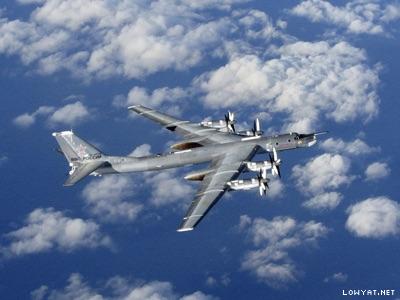
The Russian Tupolev TU-95 bombers, known as Bears, were picked up in international airspace to the north west of Britain at round 6.30pm on Wednesday and escorted as they flew south, then turned around and flew off north.

The interception of the Bears comes a fortnight after similar aircraft flew into the English Channel, prompting the Government to demand an explanation from the Russian ambassador.

Michael Fallon, the Defence Secretary, said there is a “real and present danger” that Vladimir Putin, the Russian president, will launch a campaign of undercover attacks to destabilise the Baltic states on Nato’s eastern flank.
He added tgat Putin might try to test Nato’s resolve with the same Kremlin-backed subversion used in Crimea and eastern Ukraine.

http://www.telegraph.co.uk/news/uknews/def...brass-warn.html

This post has been edited by BorneoAlliance: Feb 20 2015, 06:43 PM


Attached thumbnail(s)
Attached Image

Attached image(s)
Attached Image

13 Pages < 1 2 3 4 5 > » 
Bump Topic Topic ClosedOptions New Topic
 

Change to:
| Lo-Fi Version
0.0583sec    0.25    7 queries    GZIP Disabled
Time is now: 8th December 2025 - 05:48 AM