

QUOTE(limfreelance @ Jan 10 2014, 04:42 PM)
Kebetulan lalu saja.


Fuh..... 
 Military Thread V11, #Condolences9MMRO :(
|
|
 Jan 10 2014, 08:52 PM Jan 10 2014, 08:52 PM
Return to original view | Post
#1
|
 
Junior Member
408 posts Joined: Nov 2006 From: LANGKASUKA مليسيا   
|
QUOTE(limfreelance @ Jan 10 2014, 04:42 PM) Kebetulan lalu saja. Fuh..... |
|
|
Jan 13 2014, 01:03 PM
Return to original view | Post
#2
|
|
Junior Member
408 posts Joined: Nov 2006 From: LANGKASUKA مليسيا
|
RAFALE at AIROD
 Credit : Malaysian Defence and Security Community This post has been edited by HangPC2: Jan 13 2014, 01:10 PM |
|
|
Jan 13 2014, 01:13 PM
Return to original view | Post
#3
|
|
Junior Member
408 posts Joined: Nov 2006 From: LANGKASUKA مليسيا
|
Typo error ... terlampau syok sangat....... hehehehe
|
|
|
Jan 13 2014, 05:41 PM
Return to original view | Post
#4
|
|
Junior Member
408 posts Joined: Nov 2006 From: LANGKASUKA مليسيا
|
QUOTE(zimhibikie @ Jan 13 2014, 02:58 PM) tuler, jgn la kasi aku ejakulasi pramatang wey...  |
|
|
Jan 27 2014, 02:34 PM
Return to original view | Post
#5
|
|
Junior Member
408 posts Joined: Nov 2006 From: LANGKASUKA مليسيا
|
lambatnya siap..............
 |
|
|
Jan 27 2014, 02:37 PM
Return to original view | Post
#6
|
|
Junior Member
408 posts Joined: Nov 2006 From: LANGKASUKA مليسيا
|
QUOTE(zimhibikie @ Jan 27 2014, 02:36 PM) order la dulu land-based mobile supersonic anti-ship missiles from Russia..  |
|
|
Jan 28 2014, 04:55 PM
Return to original view | Post
#7
|
|
Junior Member
408 posts Joined: Nov 2006 From: LANGKASUKA مليسيا
|
India unveils new local-made Arjun Mk-II main battle tank at the Republic Day Military Parade 2014.
Sunday, January 26, 2014 03:36 PM  The Arjun Mk.II MBT (Main Battle Tank) was unveiled for the first time to the public at India's 65th Republic Day Military Parade, January 26, 2014. Thle latest version of Arjun MBT is aimed at exemplifying DRDO’s strength in the area of defence technology – design and development, leading to the production of state of the art weapon systems for India’s armed forces. Mark two version of Arjun the Indian Main Battle Tank, incorporating over seventy improvements over Arjun Mark I, has been developed by DRDO in a record time of just under three years. The upgraded version has 89 improvements over its predecessor. These include long-range missile firing capabilities, panoramic sights with night vision, enhanced weapon penetration, digital control, better hunter-killer capability, improved auxiliary power unit (APU), better communication equipment and navigation aid. The tank will have frontal explosive reactive armour (ERA) to protect against incoming missiles In August 2013, the upgraded version of main battle tank Arjun was undergoing final testing in Pokhran field firing range. The automotive trials has test the new suspension of the tank designed to handle up to 70 tonnes of weight. The tank, Arjun Mark-II, is being tested for different parameters. The first test will examine its missile firing ability while the second one will look into its automotive aspects ie, its movement ability especially with added load. A major modification on the new version of the tank is its missile firing capability. The new LAHAT missile is primarily meant for targeting armoured vehicles and fortifications over extended ranges. Sources : http://www.armyrecognition.com/ |
|
|
Jan 28 2014, 06:28 PM
Return to original view | Post
#8
|
|
Junior Member
408 posts Joined: Nov 2006 From: LANGKASUKA مليسيا
|
Pilatus PC-7 COIN
 |
|
|
Jan 30 2014, 01:14 PM
Return to original view | Post
#9
|
|
Junior Member
408 posts Joined: Nov 2006 From: LANGKASUKA مليسيا
|
‘Jieyang’ ship commissioned to South China Sea Fleet
2014-01-27       SHANTOU, January 27 (ChinaMil) -- A commissioning, naming and flag-presenting ceremony of the new-type guided missile frigate “ Jieyang ” of the Navy of the Chinese People’s Liberation Army (PLAN) was held on the morning of January 26, 2014 at a naval port in Shantou of south China’s Guangdong province, marking that the ship is officially commissioned to the South China Sea Fleet of the PLAN. The “ Jieyang ” ship (hull number 587) is a new-generation light guided missile frigate independently developed by China. It has a length of 88.9 meters, a beam of 11.14 meters and a full-load displacement of over 1,300 tons. The “ Jieyang ” ship adopts advanced designs, uses cutting-edge technologies, integrates many types of weaponry and equipment, and features high integration and informatization, good stealth performance and strong electromagnetic compatibility. After its commissioning to a maritime garrison command under the South China Sea Fleet of the PLAN, the warship is mainly responsible for such missions as patrol, alert, escort, anti-submarine and anti-ship operations and so forth Sources : China Military Online |
|
|
Jan 31 2014, 08:29 PM
Return to original view | Post
#10
|
|
Junior Member
408 posts Joined: Nov 2006 From: LANGKASUKA مليسيا
|
Japan Mulls Aircraft Carrier Future ?
Japan will reportedly fly surveillance drones from its destroyers as a possible prelude to building aircraft carriers. Japan’s Maritime Self-Defense Force may begin flying unmanned surveillance drones from destroyers at sea as a possible prelude to procuring aircraft carriers, local media is reporting. According to The Japan Times, “ The Maritime Self-Defense Force is considering deploying fixed-wing unmanned reconnaissance aircraft that can take off from and land on destroyers. ” If the plan is approved, the MSDFs intend to research these operations extensively. “ Depending on its research, Japan might someday build an aircraft carrier equipped with fighter jets, ” The Japan Times report said, citing numerous unnamed sources. No details were provided about the affiliations of the sources that might help evaluate the credibility of their claims. However, the paper did report that a source in the Defense Ministry had said that the studies will not lead the MSDF to operate fighter jets from surface ships in the future. The Defense Ministry source did say that unmanned drones would be deployed on the ships, however, because these can operate in “ dangerous areas in emergencies. ” The move to operate aircraft from surface ships is likely to spark concern and criticism from some states in the region, particularly China, which insists that Japanese Prime Minister Shinzo Abe is seeking to break loose from the country’s post-WWII Pacifist constitution. As the report noted, although the MSDF currently flies helicopters from some of its ships, it has no experience flying fixed wing aircraft from its vessels because such a move could be construed as an offensive military capability, which Japan’s constitution prohibits. Japan’s decision to only consider using (presumably unarmed) reconnaissance drones at this time was likely made, at least in part, with an eye toward deflecting the almost certain criticism that the move will provoke. By starting with unarmed aircraft, Japan could seek to gradually seek to make the region comfortable with it operating fixed wing aircraft from surface ships. Moreover, even if the Defense Ministry source is being truthful in saying that only drones and not fighter jets will be flown from Japanese ships, unmanned aircraft will become increasingly capable of being used in some of the same ways as bombers and jets in the years ahead. Still, the decision to use surveillance drones is also consistent with Japan’s strategic interests. In particular, as Tokyo’s dispute with Beijing over the Diaoyu/Senkaku Islands has dragged on, Japan has taken a number of steps to increase its surveillance capabilities over some of its outer lying islands. This has most certainly included fielding a capable drone force. As The Diplomat has previously reported, Japan intends to procure RQ-4 Global Hawk drones in the coming years to augment the ones the U.S. already maintains in Japan. The Japan Times report also quoted its sources as saying that Japan hopes to procure 19 of the new RQ-21 Blackjack small tactical unmanned drones currently being tested by the U.S. Navy and Marine Corps. One issue Japan will encounter if it moves forward with the plan is that its current destroyers are not equipped with takeoff and landing equipment for aircraft. It’s possible that one of the Izumo-class helicopter destroyers Japan is currently building and testing will be upgraded to have this capability. Japan unveiled the first of these new, large helicopter destroyers last year, which some in China called an “ aircraft carrier in disguise. ” Some have speculated that the larger size of the Izumo-class vessels was due to Japan’s desire to launch V22 Ospreys off the ships. However, the larger size may also allow Japan to use them to launch drones. Sources : http://thediplomat.com |
|
|
Feb 1 2014, 04:52 PM
Return to original view | Post
#11
|
|
Junior Member
408 posts Joined: Nov 2006 From: LANGKASUKA مليسيا
|
QUOTE(KYPMbangi @ Feb 1 2014, 12:07 AM) Damn, thank god nobody seriously hurt or dead.. Boleh repair lagi nih.. The Malaysian Armed Forces (ATM) Agusta 109 helicopter made an emergency landing at Bekok Dam. |
|
|
Feb 3 2014, 08:41 PM
Return to original view | Post
#12
|
|
Junior Member
408 posts Joined: Nov 2006 From: LANGKASUKA مليسيا
|
PAK FA stealth features patent published
Piotr Butowski, Poland - IHS Jane's International Defence Review 09 January 2014 Sukhoi T-50 PAK-FA 5th Prototype (055)      The PAK FA's designers have paid close attention to stealthy features, which include the use of radar-absorbent coatings on the reverse of the nose-mounted IRST, the widespread use of baffles and the use of absorbent coatings in the air intakes and at the junctions between moving surfaces. Details of the Sukhoi Design Bureau's work on the stealthy aspects of the T-50 PAK FA fighter aircraft emerged in late December 2013, when the company's patents were published. According to the patent paperwork, taken together, all of the stealthy measures offer significant improvements over legacy fighter designs. The papers claim that the radar cross-section (RCS) of an Su-27 was in the order of 10-15 m 2 , with the intention being to reduce the size of the RCS in the T-50 to an " average figure of 0.1-1 m 2 " . In common with other low observable aircraft designs, this reduction is achieved throught the use of radar-absorbing and radar-shielding materials and coatings, panel shaping (especially around the air intakes) and in the design of the junctions between moving elements, such as flaps and hatches. In particular, the patent spells out the benefits of internal weapons carriage, s-shaped engine air ducts, (which were considered but are actually not implemented in the production PAK FA), and the use of radar blockers. It adds that the inlet guide vanes of the engines' compressors generate "a significant portion [up to 60%] of the radar cross-section of the airframe-powerplant system in the forward hemisphere" and that this is reduced by using radar-blocking devices and radar-absorbing coatings in the walls of the air ducts. The shape of the airframe reduces the number of directions that radar signals are reflected in with the angles of sweep of the wings and the tail plane's leading and trailing edges, the edges of the air intakes and hatch covers being reduced and deflected from the aircraft's axis. Viewing the aircraft from the flank, the fuselage sides, lateral edges of the air intakes and vertical empennage are all deflected at the same angle. Some openings and slots on the airframe's surface - such as the boundary-layer bleeds on the sides of the air intakes and the openings on the upper fuselage immediately aft of the cockpit - are covered with a thick grid, featuring a mesh of less than one quarter of the wavelength of a search radar, which reduces the reflections from these uneven surfaces. Gaps between the airframe elements are filled with conducting sealants, while the glazing of the cockpit canopy is metallised. The surfaces of the PAK FA's own five radar arrays are also angled off from the vertical plane, helping to ' deflect ' enemy radar signals. The covers of the radar arrays are selective, letting through their own signals, but blocking other frequencies. Additionally, the array compartments are edged with radar-absorbing ' curtains ' to reduce possible leaks of these amplified signals. Antennas are recessed from the surface of the skin to reduce protuberances (the vertical empennage serves as a communications antenna), while the turret of the aircraft's nose-mounted infrared search-and-track (IRST) sight is rotated backwards into a cruise position, exposing its rear hemisphere, which is covered with a radar-absorbing coating. The release of this list of patents follows the July 2013 release of documentation covering the configuration of the fighter's integrated avionics suite. There are currently five T-50 prototypes - the latest, T-50-5, first flew on 27 October 2013 - supporting the development programme and they are believed to have undertaken over 300 sorties to date. In the ' Schedule of Activity for the Russian Ministry of Defence for 2013 to 2020 ' published in mid-2013, the PAK FA's Initial Operational Capability and the launch of full-scale series production is scheduled for 31 December 2016. The Russian National Armament Programme stipulates that 60 production PAK FA fighters will be delivered between 2016 and 2020. The assembly of aircraft T-50-6-1 is nearing completion and three further aircraft (T-50-6-2, T-50-7 and T-50-8) are in build. One of the T-50-6 aircraft is intended for static trials and the other one is intended for flight testing. |
|
|
Feb 3 2014, 10:38 PM
Return to original view | Post
#13
|
|
Junior Member
408 posts Joined: Nov 2006 From: LANGKASUKA مليسيا
|
TAI T-FX
 Milli Muharip Ucak Kavramsal Tasarim Projesi Jet Trainer and Fighter Aircraft Conceptual Design Project At the Defense Industry Executive Committee on December 15th 2010; it has been decided to start contract negotiations with TAI in order to implement the conceptual design activities for Jet Trainer and Fighter Aircraft to the requirements of Turkish Air Force’s (TurAF) for 2020’s. On August 23rd 2011 the contract has been signed between The Undersecretariat for the Defense Industry (SSM) and TAI and the project has been initiated on September 29th 2011. For a period of 2 years, based on the Turkish Air Force’s Jet Trainer and Fighter Aircaft requirements the following activities will be studied: - Determining TurAF future Operational Requirements - Requirement analysis studies - Conceptual design of the aircraft and systems - Researching the National Capacity and Capabilities. - International Corporation models At the end of the contract, the schedule and the budget of the development program will be estimated and submitted to SSM and TurAF for the further decisions. |
|
|
Feb 6 2014, 03:59 PM
Return to original view | Post
#14
|
|
Junior Member
408 posts Joined: Nov 2006 From: LANGKASUKA مليسيا
|
godek-godek jumpa gambar lama
 |
|
|
Feb 11 2014, 08:57 PM
Return to original view | Post
#15
|
|
Junior Member
408 posts Joined: Nov 2006 From: LANGKASUKA مليسيا
|
|
|
|
Feb 12 2014, 04:33 PM
Return to original view | Post
#16
|
|
Junior Member
408 posts Joined: Nov 2006 From: LANGKASUKA مليسيا
|
QUOTE(zimhibikie @ Feb 12 2014, 04:31 PM) I remember ada menteri kata they are not militants... Menteri Pondan cakap |
|
|
Feb 14 2014, 03:16 PM
Return to original view | Post
#17
|
|
Junior Member
408 posts Joined: Nov 2006 From: LANGKASUKA مليسيا
|
king of fighter
  |
|
|
Feb 14 2014, 03:24 PM
Return to original view | Post
#18
|
|
Junior Member
408 posts Joined: Nov 2006 From: LANGKASUKA مليسيا
|
QUOTE(ayanami_tard @ Feb 14 2014, 03:20 PM) area 88? The Fleet Of Rising Sun....... |
|
|
Feb 14 2014, 06:25 PM
Return to original view | Post
#19
|
|
Junior Member
408 posts Joined: Nov 2006 From: LANGKASUKA مليسيا
|
QUOTE(Frozen_Sun @ Feb 14 2014, 05:45 PM) This is quite classic 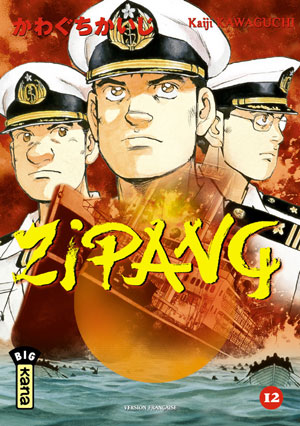 |
|
|
Feb 14 2014, 06:34 PM
Return to original view | Post
#20
|
|
Junior Member
408 posts Joined: Nov 2006 From: LANGKASUKA مليسيا
|
QUOTE(kerolzarmyfanboy @ Feb 14 2014, 05:01 PM) u guys should read Red Eyes..probably the most 'militaristic' manga i've ever read..sadly, the author never continue the manga after volume 10..so sadding..  |
| Bump Topic Topic ClosedOptions New Topic |
| Change to: |  0.0511sec 0.0511sec
 0.17 0.17
 6 queries 6 queries
 GZIP Disabled GZIP Disabled
Time is now: 2nd December 2025 - 05:06 AM |
 Quote
Quote