Welcome Guest ( Log In | Register )

Bump Topic Topic Closed RSS Feed

Outline · [ Standard ] · Linear+

> Military Thread V11, #Condolences9MMRO :(

views
     
xtemujin
post Feb 21 2014, 07:13 PM

Casual
***
Junior Member
318 posts

Joined: Nov 2009
From: Singapura, Singapore


Navy Official: China Training for ‘Short Sharp War’ with Japan
By: USNI News Editor | 20 February 2014 Thursday | 9:55 AM


QUOTE
“Tensions in the South and East China Seas have deteriorated with the Chinese Coast Guard playing the role of antagonist, harassing China’s neighbors while PLA Navy ships, their protectors, (make) port calls throughout the region promising friendship and cooperation.”
http://news.usni.org/2014/02/18/navy-offic...sharp-war-japan
xtemujin
post Mar 7 2014, 07:38 PM

Casual
***
Junior Member
318 posts

Joined: Nov 2009
From: Singapura, Singapore


Singapore selects Airbus Defence and space A330 MRTT Multi Role Tanker Transport
7 March 2014 Friday

Singapore places firm order for six aircraft.

Airbus Defence and Space has been selected by Singapore to supply six A330 MRTT new generation air-to-air refuelling aircraft for the Republic of Singapore Air Force (RSAF).

The aircraft will be delivered under the terms of a firm contract which has already been signed.

Singapore’s choice of the A330 MRTT makes it the sixth nation to select the type following Australia, Saudi Arabia, the United Arab Emirates, and the United Kingdom which have ordered a total of 28 aircraft, and India which is in the final stages of contractual negotiations for six aircraft. A total of 17 aircraft are currently in service with the first four nations.

The A330 MRTT is derived from the highly successful A330 commercial airliner and proven in-service as a tanker/transport with multi-role capability.

Airbus Defence and Space Head of Military Aircraft, Domingo Ureña Raso said: “We are greatly honoured by the selection of the A330 MRTT by Singapore. The decision confirms the A330 MRTT’s status as unquestionably the world’s most advanced tanker/transport aircraft as well as its pre-eminent suitability for the Asia-Pacific region.”

http://www.airbusmilitary.com/PressCenter/...-Transport.aspx
xtemujin
post Mar 8 2014, 05:14 PM

Casual
***
Junior Member
318 posts

Joined: Nov 2009
From: Singapura, Singapore


An RSAF C130 was launched earlier today for a search and locate mission for the missing Beijing-bound Malaysia Airlines flight MH370.

Do keep the 227 passengers and 12 crew members of MH370 in your thoughts.

user posted image

https://www.facebook.com/cyberpioneer.connect

This post has been edited by xtemujin: Mar 8 2014, 05:15 PM
xtemujin
post Mar 9 2014, 10:57 AM

Casual
***
Junior Member
318 posts

Joined: Nov 2009
From: Singapura, Singapore


Joining the ongoing search since 0200H last night, a frigate, missile corvette and one of our Sikorsky S-70B Naval Helicopters have been deployed to assist in the search and rescue operations for Malaysian Airlines Flight MH370, which went missing yesterday.

Our SSRV MV Swift Rescue will be joining them today, after preparations through the night for the search operation.

Republic of Singapore Navy facebook.
xtemujin
post Mar 10 2014, 02:43 PM

Casual
***
Junior Member
318 posts

Joined: Nov 2009
From: Singapura, Singapore


Personnel from the Republic of Singapore Airforce scanning the seas about 140 nautical miles northeast of Kota Bahru, Kelantan,for any signs of the missing Malaysian Airlines plane. RSAF deloyed a C-130, with 18 crew members on board to help search for the missing Malaysia Airlines MH370 plane over the South China Sea. -- ST PHOTO: DESMOND LIM

user posted image

http://www.straitstimes.com/malaysia-airlines-mh370-missing

This post has been edited by xtemujin: Mar 10 2014, 02:45 PM
xtemujin
post Mar 10 2014, 10:05 PM

Casual
***
Junior Member
318 posts

Joined: Nov 2009
From: Singapura, Singapore


Missing Malaysian Airlines plane: On board a Singapore Air Force search-and-rescue aircraft
10 March 2014 Monday | 8:52 PM


Straits Times photojournalist Desmond Lim travelled with an RSAF C-130 participating in the search for the missing Malaysia Airlines flight MH370. He found out how difficult a search-and-rescue operation over the open seas is.


Straits Times photojournalist Desmond Lim travelled with an RSAF C-130 aircraft helping in the search for Malaysia Airlines flight MH370, which went missing over the South China Sea on March 8. He discovered that a search-and-rescue operation over the open seas is a challenging mission which requires intense concentration but which doesn't alway yield results. Here is a first-person account of his journey.

“How difficult could it be to spot something in the sea?” I asked myself as I sat on the red nylon webbed seat in a Republic of Singapore Air Force’s (RSAF) C-130, buckling up as the plane prepared to take off from Paya Lebar Air Base.

I was there at the break of dawn on March 9 with 18 crew members from the RSAF 122 Squadron, who were setting out for a 10-hour mission to locate the missing Boeing 777 from Malaysia Airlines (MAS), which went missing in the South China Sea on March 8 while flying from Kuala Lumpur to Beijing.

The C-130 was one of two such military transport planes that were dispatched to help in the search for Flight MH370 on March 9, together with a naval helicopter, two warships and a submarine support and rescue vessel .

The mood was solemn, with hardly any words exchanged between the servicemen as they swiftly loaded equipment like smoke markers, inflatable rafts and prepared the 30m-long transportation plane for take-off.

Everyone was handed ear plugs and life jackets to be worn during the flight. “Put this on after take-off!” an aircrew member barked over the loud humming from the plane’s propellers.

I had come on board thinking that with a bird’s eye view of a suspected crash site, one would definitely be able to spot a floating debris that would somehow shed some light on the fate of MH370.

But I would later find out that the task is harder than it seems.

Although the search was concentrated that day in an area about 140 nautical miles north-east of Kota Bahru, Kelantan, in the South China Sea, the crew members in the cockpit went to work right from the start, keeping a lookout in the two hours or so it took for us to reach the South China Sea. The rest of the crew and I were seated with our backs facing the windows.

As we approached the search area, people sprang into action, removing the seat webbings blocking the small windows and taking up positions to get the clearest views. Some stood on seats to peer out of the windows on the higher parts of the plane.

The two emergency doors at the back of the C-130 were lifted up, allowing the crew who were hooked up with safety harnesses to stand perched right at the edge and have a clearer view right under the aircraft.

The majority of those on board strained their necks, their faces pressed against the basketball-sized windows of the aircraft, scanning the seas and horizon for any sign of debris. The two pilots in front were also on the lookout and the crew communicated using headsets, alerting one another to anything that caught their attention.

About 10 inflatable rafts were strapped near the rear exits, unpacked and ready to be thrown down should any survivors be spotted. If that happened, rescue teams on the waters would be alerted to pick up the survivors.

The vastness of the seas was overwhelming. The area of operation was enormous - many times the size of Singapore and the Malaysian Peninsular combined.

I was confident that with so many aircraft and ships from so many countries involved in the search, it would not be long before the ill-fated MH370 was found.

But it was not to be. My 10-hour journey with the RSAF showed me just how difficult an open-sea search-and-rescue operation really is.

We saw some vessels in the seas, but at about 500 feet (150m) up in the air, we were circling too high up to be able to tell whether they were search-and-rescue boats, or just traditional Vietnamese fishing boats. They often appeared no bigger than a speck in the sea of blue. Even the lone tankers cutting through the waters on the horizon were hard to spot.

The loud droning and constant vibrations from the jet engines began to take its toll on the servicemen, hours into the operation, as they took shifts to scan the waters. Some took a quick shut-eye, and other stepped in to fill the gap.

Many were visibly tired after a few hours of intense concentration. A servicemen was asked by his partner to take a break, but he waved him off, signing to him with his hands saying: "Later. Ten more minutes."

Some were seen clutching white vomit bags, apparently nauseous from the constant staring at moving objects and the circling of the plane.

The crew took turns to have lunch - cup noodles and biscuits. No one seemed to mind the simple meal as they wolfed it down and quickly headed back to their posts, seemingly aware of the urgency and importance of the responsibility on their shoulders.

After taking some pictures of the operations and the scene through the windows as I was not allowed near the open doors, I chipped in to help.

I found a window on the right side near the front of the plane and started to scan the seas. It required tremendous concentration and was extremely tiring. I felt exhausted and struggled to keep awake just after 30 minutes.

Smoke markers were thrown into the seas, at some points, to mark out suspected debris. The plane would then swing back to investigate the marked areas, but each time, it yielded no results.

About five hours after leaving the air base, we spotted large patches of oil, brown stains marbling through the pristine blue waters.

The aircrew also spotted and took photos of some unidentified pieces of debris bobbling in the waters, one of which resembled an orange life jacket.

There was momentary excitement on the plane about the discovery, but the Malaysian authorities would later in the evening clarify that the debris was not from MH370.

About eight hours after we took off, the plane turned back for Singapore and landed just in time for us to see the sun setting at the Paya Lebar Air Base at about 6pm.

I was eager to head back to the office, file my photographs and meet my family for our weekly get together meals. But my heart was heavy knowing that the loved ones of the missing 239 passengers and crew on MH370 would not be seeing them for dinner that night.

deslim@sph.com.sg

http://www.straitstimes.com/breaking-news/...rescue-aircraft


user posted image

This post has been edited by xtemujin: Mar 11 2014, 08:52 AM
xtemujin
post Mar 14 2014, 10:34 AM

Casual
***
Junior Member
318 posts

Joined: Nov 2009
From: Singapura, Singapore


Infographic 2014 SAR MH370.

user posted image
xtemujin
post Mar 15 2014, 07:57 AM

Casual
***
Junior Member
318 posts

Joined: Nov 2009
From: Singapura, Singapore


With the international search efforts for the missing Malaysia Airlines flight MH370 continuing into the seventh day, the Singapore Armed Forces is providing additional assistance to the Malaysian authorities.

Together, all our servicemen and women are putting their best effort to contribute to the search operations. Our thoughts are with the families and friends of the passengers on MH370.

user posted image
xtemujin
post Mar 20 2014, 10:08 PM

Casual
***
Junior Member
318 posts

Joined: Nov 2009
From: Singapura, Singapore


Russians go slow, Sukhoi fleet in trouble
By VISHAL THAPAR | 15 March 2014 Saturday

A shocking 50% of the Indian Air Force's (IAF's) Sukhoi-30 MKI fighter fleet is on the ground due to unresolved servicing issues with the aircraft's Russian manufacturers. This has also eroded the combat capability of India's frontline long-range strike aircraft and compromised even that part of the fleet which is capable of being flown.

The IAF and Hindustan Aeronautics Limited (HAL) have rung the alarm bells about the repeated mid-flight failure of the Su-30 mission computer and the blanking out of all cockpit displays. The Russians have not responded to the repeated SOS' from the Indians for over a year.

These disclosures have been made in leaked communications between HAL and Russian agencies. These are in exclusive possession of The Sunday Guardian.

The managing director of HAL's Nasik complex, which is tasked with assembly and repair of the IAF Sukhois, has, in vain, desperately flagged "multiple cases of repeated failure of Mission Computer-1 and blanking out of Head Up Displays (HUD) and all Multi-Function Displays (MFD) in flight" with earmarked representatives of both Rosboronexport — the Russian government's arms export agency — and Irkut, the original manufacturer of the Sukhoi-30.

"As the displays blanking off is a serious and critical issue affecting the exploitation of aircraft (it) needs corrective action/remedial measures on priority," he pleads in a letter dated 28 February this year, reminding the Russians that he's been raising the issue since 7 March 2013 but to no avail.

Failures of the mission computer and cockpit displays are critical. The entire sortie is programmed on the mission computer, which is vital for managing requirements of aerial combat. The "blanking off" of cockpit displays distracts pilots and diverts attention away from the mission. The IAF is worried at the spearhead of its fighter fleet being hit by these nagging snags. The IAF has planned a Sukhoi-30 fleet of 272 aircraft, of which an estimated 200 have been delivered.

Air Marshal Denzil Keelor, one of IAF's most decorated fighter pilots, is dismayed. "In-flight failures such as the ones being reported render a fighter aircraft vulnerable. When a fighter is being flown below optimum capability, it becomes more vulnerable to an adversary. No aircraft should be flown unless it performing to 100% capability," he warns.

What seems even more worrying is the Russian go-slow, which has severely hit the maintenance and availability of the fleet. Even five years after the signing of contract for the setting up of Su-30 repair and overhaul facilities in India at HAL, there's no progress despite "agreements" and assurances even at the level of the Defence Ministers of the two countries.

"Due to non-availability of facilities for overhaul of aggregates (aircraft parts), the serviceability (availability for flying) of Su-30MKI is slowly decreasing and demand for Aircraft on Ground (AOG) items on the rise," HAL's Nasik division again pleads with Russia's Rosboronexport in a telling letter dated 24 December 2013. Even the revised deadlines committed the Russians to set up the repair-overhaul facility at HAL by December 2013, and overhaul the first aircraft by June 2014. This seems nowhere on the horizon.

Worse, Russia has put on hold the posting of its Sukhoi specialists to India for helping set up repair and maintenance capability. Documents available with The Sunday Guardian suggest that the two sides are haggling over price. This goes against an agreement that posting of Russian specialists would not be disrupted even if price negotiations were not concluded. In the absence of these specialists, HAL has been forced to fend on its own, as Aircraft on Ground (AOG) are piling up.

"Huge quantities of unserviceable aggregates (parts) are lying due for overhaul at various bases of IAF," HAL states, disclosing that the number of Su-30s being grounded for want of quick repair is increasing. The Russians have been informed that five Su-30MKI fighters are already parked at HAL for extensive overhaul, and another 15 will be due for overhaul in the current year. This number is equivalent to an entire squadron.

Lamenting the Russian delays, HAL expresses even more helplessness: "It appears that Rosboronexport and Irkut Corporation (the main parties to the contract) have limited control over other Russian companies (which provide vital parts like engines)." Supplies and deputation of specialists by other companies are even more erratic.

While warning that operating the fighters without conclusively sorting out the recurring snags could affect pilot confidence, Air Marshal P.S. Ahluwalia, who recently headed the IAF's Western Command, also questions the Ministry of Defence and HAL for the sorry state of affairs. "It's an issue of mismanagement of maintenance arrangements. The Ministry of Defence's Department of Defence Production is responsible. They have failed to resolve the problems," he says.

As the Air Officer Commanding-in-Chief of the Western Air Command, Air Marshal Ahluwalia did not hesitate to ground the MiG-29 fleet for three months after suspicions of its airworthiness arose following a crash. He flew the fleet again only after the maintenance issue was nailed.

Figures reveal how serious the problem of availability of the IAF's Su-30MKI fleet is. Against the Sukhoi figure of just 50% aircraft fit for operational flying, statistics reveal just how much ground is to be covered. The availability rates of the IAF's French-origin Mirage-2000 and even the Russian-origin MiG-29 is about 75%. As India quibbles with Russia over maintenance arrangements, the larger question is: What good is a weapon if it cannot be used?

http://www.sunday-guardian.com/news/russia...leet-in-trouble
xtemujin
post Mar 22 2014, 04:01 PM

Casual
***
Junior Member
318 posts

Joined: Nov 2009
From: Singapura, Singapore


Chinese Il-76s join Perth-based MH370 search
Published on March 22, 2014
Written by: australianaviation.com.au

http://australianaviation.com.au/2014/03/c...d-mh370-search/
xtemujin
post Mar 25 2014, 02:08 PM

Casual
***
Junior Member
318 posts

Joined: Nov 2009
From: Singapura, Singapore


http://malaysiaflyingherald.wordpress.com/...n-mrap-for-rmp/

QUOTE(simpleguy @ Mar 25 2014, 12:55 PM)
What vehicle is that?The one UTK using?
*
xtemujin
post Mar 25 2014, 07:48 PM

Casual
***
Junior Member
318 posts

Joined: Nov 2009
From: Singapura, Singapore


South Korea Officially Selects F-35
By AARON MEHTA and WENDELL MINNICK | 24 March 2014 Monday | 07:05PM

WASHINGTON AND TAIPEI The Republic of Korea has officially selected the F-35 as its next-generation fighter, the government announced this morning.

The country has agreed to purchase 40 of the F-35A conventional-takeoff-and-landing (CTOL) design, with first delivery planned for 2018. South Korea becomes the third foreign military sales customer for the F-35, joining Israel and Japan. There are eight other international partners on the program.

The conventional variant appears to be popular among nations with a deeper strategic depth and a sophisticated air defense network.

¡°We are honored by and appreciate the trust and confidence the Republic of Korea has placed in the 5th generation F-35 to meet its demanding security requirements,¡± Orlando Carvalho, Lockheed Martin Aeronautics executive vice president, said in a company press release. ¡°This decision strengthens and extends our long-standing security partnership while enhancing regional stability across the greater Asia Pacific theater.¡±

Both Singapore and Taiwan have expressed interest in procuring the F-35B short takeoff and vertical landing aircraft (STOVL) aircraft. Neither country has strategic depth nor will any of the runways survive the first hours of a hostile campaign. The F-35B STOVL allows both countries to continue operating longer under a high-intensity ballistic missile campaign.

The selection of the F-35 over Boeing¡¯s F-15SE and Eurofighter¡¯s Typhoon had been widely expected, with sources indicating in November that the F-35 had been selected to replace South Korea¡¯s older F-4 and F-5 fighter fleet.

Eric Schnaible, Lockheed Martin¡¯s F-35 international communication manager for Israel, Japan, South Korea, Singapore and flight testing, said that with the selection, South Korean and US government officials will soon start negotiations on price and offset.

¡°Their program ... is for 40 CTOLs with delivery beginning in 2018,¡± said Schnaible. ¡°Since the DAPEC [Defence Acquisition Program¡¯s Executive Committee] announcement in Seoul earlier today did not specifically state that, we did not include figures in our release. All of the jets would be built here in Fort Worth.¡±

The company expects to have a signed letter of acceptance by the summer, at which point cost and delivery timelines would be established, Schnaible said.

The fighter selection is the first part of a massive recapitalization effort underway by the Republic of Korea Air Force. The service is also aiming to award a contract on a new tanker before the end of the year, and also expects to begin development on its own indigenous fighter design.¡ö

http://www.defensenews.com/article/2014032...ly-Selects-F-35
xtemujin
post Mar 26 2014, 09:34 AM

Casual
***
Junior Member
318 posts

Joined: Nov 2009
From: Singapura, Singapore


Exclusive - U.S. set to approve international debut of F-35 fighter: sources
By Andrea Shalal | 25 March 2014 Tuesday | 7:27pm EDT

WASHINGTON (Reuters) - The U.S. Defense Department is poised to approve the first trans-Atlantic flight of Lockheed Martin Corp's F-35 fighter jet in July, when the new warplane is expected to take part in two international air shows near London, according to multiple sources familiar with the issue.

U.S. Defense Secretary Chuck Hagel is "very close" to a decision that would allow two or three F-35s to fly at the Royal International Air Tattoo, or RIAT, an annual military air show outside London, and the larger Farnborough air show, held every two years, said the sources, who were not authorized to speak publicly.

Britain, which contributed $2 billion to the development of the new radar-evading fighter jet and plans to buy 138 F-35s in coming years, asked for the jet's participation to help showcase the increasing maturity of the new radar-evading plane. Britain was also the first international partner on the program.

Details of the F-35's international debut are being worked out, including how much it will cost to fly the planes to London and who will pay for it, but no issues have emerged to prevent the appearances, the sources said.

The costs will likely be shared by Britain, the Pentagon's F-35 program office, the U.S. Marine Corps and industry.

Lockheed and Britain's Ministry of Defense declined comment. Officials at the F-35 program office had no immediate comment.

"Having the aircraft front and center on the UK stage will focus attention on the fact that it's a fairly mature program at this point, with over 100 jets built," said one of the sources.

British Defense Secretary Philip Hammond is due to meet with Hagel during a visit to the United States this week, but they are not planning an announcement about the F-35's UK debut, said one of the sources.

Current plans call for at least one of the participating F-35s to be one of the three F-35 B-model jets already built for Britain, with a UK pilot at the controls.

Participating in the international air shows will allow the Pentagon's F-35 program to carry out additional training and learn how the plane's logistics, maintenance, aerial refueling, and security systems work overseas, the sources said.

"This will be an opportunity to learn real-world lessons and allow additional time to resolve any problems before the first airplanes are delivered overseas," said one of the sources.

Lockheed and Britain's Ministry of Defense declined comment. Officials at the F-35 program office had no immediate comment.

Lockheed is the main contractor on the $392 billion F-35 Joint Strike Fighter, the Pentagon's costliest weapons program. Northrop Grumman Corp and Britain's BAE Systems are the biggest suppliers.

Pratt & Whitney, a unit of United Technologies Corp, builds the single engine that powers the plane. Britain's Rolls Royce Group builds the lift fan that enables the B-model of the F-35 to land like a helicopter.

Boeing Co's F/A-18 Super Hornet fighter jet is also due to fly at the RIAT air show.

(Reporting by Andrea Shalal; Editing by Ros Krasny, Sandra Maler and Peter Cooney)

http://www.reuters.com/article/2014/03/25/...EA2O20C20140325

This post has been edited by xtemujin: Mar 26 2014, 09:46 AM
xtemujin
post Mar 27 2014, 02:01 PM

Casual
***
Junior Member
318 posts

Joined: Nov 2009
From: Singapura, Singapore


If that's the case, it will miss the 2015 LIMA, maybe Airbus will bring in another country airforce A400M.

QUOTE(waja2000 @ Mar 27 2014, 01:56 PM)
check A400M news, so far still not see our A400M
fuselage send to A400M factory in Seville for Final Assemble, base on schedule, TUDM should receive first A400M (MSN 22) on 15 Jan 2015.
from current status Germany first A400M (MSN18) in FAL (Final Assemble Line) in Feb 2014,and delivery on Nov 2014, if can't see our A400M (msn22) in FAL on April/May maybe our A400M can't meet schedule delivery.
*
xtemujin
post Mar 29 2014, 08:13 AM

Casual
***
Junior Member
318 posts

Joined: Nov 2009
From: Singapura, Singapore


Malaysia’s SU-30MKMs – Will a New Competition Bring More?
By Defense Industry Daily staff | 18 March 2014 Tuesday | 16:47 UTC

If Malaysia leases, looks like Dassault and Sukhoi are out of the picture; In the wake of the MH370 fiasco, Saab’s combined fighter / AEW leasing offer may be a plus; Background improved; Additional Readings sections upgraded.

March 18/14: Lease. Reports suggest that just 3 manufacturers will submit leasing options, but Dassault’s Rafale won’t be one of them, and more SU-30MKM or SU-35 fighters also seems unlikely. Dassault has reportedly declined to participate, while Sukhoi’s status is unclear due to a lack of response so far.

Saab will submit a bid of up to 24 fighters and 2 S340 AEW aircraft through Saab International Malaysia Sdn Bhd, addressing 2 Malaysian needs at once.

Boeing (F/A-18F) and BAE (Eurofighter Typhoon) have reportedly submitted bids as well, but neither has Saab’s military leasing experience. Malaysia will have to look at the bids, and decide if they’re willing to even lease new fighters. In the wake of the mysterious Malaysian Airlines FLT 370 fiasco, however, Saab’s offer of AEW aircraft may give both the company and the competition added importance in Malaysia. Sources: The Malaysian Reserve, “Three fighter jet makers to submit leasing bids” | TIME Magazine, “Another Lesson from MH370: Nobody is Watching Malaysian Airspace”.

In August 2003, Malaysia signed a $900 million contract with Irkut Corp. for 18 SU-30MKMs. Malaysia flies the F/A-18D Hornet, and was offered Boeing’s F/A-18 E/F Super Hornet, but chose the SU-30MKM instead. The SU-30MKM is an advanced variant, whose performance involves considerable improvements over SU-30MK/MKK fighters. Their fighter fleet will now consist of R/F-5E/F Tiger IIs (to be phased out), F/A-18D Hornets, MiG-29 Fulcrums (until 2015), and SU-30MKMs. The results from their internal training and air combat exercises would be interesting, to say the least.

On May 24/07, a rollout and demonstration ceremony was held for the first 2 Su-30MKM fighters for the Royal Malaysan Airforce (RMAF) at Russia’s Irkutsk Aviation plant. Irkut was to deliver all aircraft by the end of 2008, but the 18th plane didn’t arrive until the summer of 2011. Even that may not be the last SU-30MKM delivery, depending on how Malaysia’s competition to replace its MiG-29Ns shakes out.

The SU-30MKM

The SU-30MKM (Modernizirovannyi Kommercheskiy Malaysia – Modernised Export Malaysia) is strongly similar to India’s SU-30MKI. Like its Indian counterpart, the SU-30MKM is a substantial advance upon the original SU-30K export version, maintaining much of basic airframe but incorporating a number of advances from the SU-35/SU-37 project.

The SU-30MKI/M can legitimately claim super-maneuverability via digital fly-by-wire, canards, and 2 thrust vectoring Lyulka AL-31FP engines producing 27,500 lb thrust each with afterburners. This gives them an edge in close-in fights, allowing the pilot to rapidly point the plane at potential targets to draw them within the AA-11/R-73 Archer’s wide infrared seeker cone, then launch and quickly change energy state and direction. SU-27/30s have become somewhat famous at international airshows for their unique maneuvers, and the MKI/MKM’s additions take that capability to new levels. Sukhoi’s former general designer Mikhail Simonov has reportedly said that:

“We even made a corkscrew spin a controllable manoeuvre – the pilot can leave it at any moment by a single motion of the stick that engages thrust-vectoring and aerodynamic surfaces.”

For longer range aerial combat, the SU-30 MKM also bears the NIIP N011M phased array radar system that can officially track up to 15 targets and simultaneously engage 4. Their standard aerial weapon for beyond visual range engagements is the AA-12/R-77, but they can also carry infrared-guided AA-10s that provide no advance lock-on warning, and could even be equipped with long-range “AWACS-killer” missiles the Russians have developed.

SU-30s are fully multi-role, with strong ground attack capabilities if required. The SU-30MKM is no exception, and its Damocles targeting pod adds to that capability. For strike missions, it can carry large (up to 8,000 kg/ 17,650 lb) and diverse weapon loads over a very good unrefueled radius (more than 700 nm).

Many observers consider the SU-30MKI/M to be aerodynamically superior to all US aircraft except the F-22A Raptor; this would include the Boeing Super Hornet it beat for its Malaysian order, as well as the new F-15SGs bought by neighboring Singapore.

For the Malaysian deal, Irkut was the main contractor, but canards, stabilizers and fins were manufactured by India’s HAL Nasik under a $25-30 million value subcontract, and India plays a role in helping the RMAF to maintain their fleet. The main difference between the MKI and MKM versions is the replacement of Indian and Israeli avionics, ECM (electronic counter-measures), and LITENING pods with Russian, French and South African equipment. This includes original Russian equipment, Thales of France’s HUD, NAVFLIR, and Damocles surveillance and targeting pod; Avitronics South Africa missile approach warning sensors and laser warning sensors. India’s SU-30MKI Mk3 is also be equipped with an on-board mechanical health-and-usage monitoring system (HUMS) from South Africa’s Aerospace Monitoring And Systems (Pty) Ltd (AMS), but there is no announced word on whether the Malaysian SU-30MKMs are equipped with a similar system.

These sourcing changes have had an impact beyond Malaysia, as the MKM model has become the basis for other customers. Indeed, the SU-30MKM/SM appears to be gaining ground on previous SU-30 versions as a preferred baseline for exports and for local production. The SU-30MKAs sold to Algeria are based on the MKM, and so is the SU-30SM fighter that Russia began buying for its own air force in March 2012.

The SU-30MKM Deal: Old Offsets & New Opportunities

As is often the case in these deals, there were offsets involved. Some are industrial, including a service center for the aircraft in Malaysia, but one offset was especially interesting. According to Victor Komardin, Deputy Director General of FSUE Rosoboronexport:

“…the offset clause of the Contract with Malaysia envisages the on-site setup of the Service center for the Russian-made aircraft as well as the assistance in promoting the Malaysian national space program. In autumn 2007 the first Malaysian cosmonaut is due to visit the International Space Station as a member of the 16th space crew.”

And it was so. The ISS got a Malaysian visitor, orders progressed, and all 18 SU-30MKMs were delivered.

A Second Bite? Malaysia’s MiG-29N Morass

A competition to replace Malaysia’s MiG-29N fleet has opened up another opportunity for Sukhoi, as Malaysia concluded that the cost and effort of maintaining a barely-serviceable fleet is no longer justifiable. To win, Sukhoi will have to fend off several competitors. Everyone was still waiting for a formal MiG-29N replacement RFP, but leasing proposals will be submitted as part of a 2014 RFI.

BAE Systems. Offering entered Eurofighter Typhoon, and drawing on the company’s long-standing relationship with Malaysia’s military. They can depend on fellow Eurofighter consortium member EADS/Airbus for some help with industrial offsets.

Boeing. Offers a step up from the RMAF’s F/A-18Ds with its F/A-18E/F Super Hornet International, which would also create commonality with regional partner Australia’s F/A-18F Block IIs at joint airbase RMAF Butterworth. Boeing is in an excellent position to offer industrial offsets.

Saab. Offering its JAS-39C/D Gripen, complete with weapon commonality, an appealing purchase cost, a great record in the important area of operating and maintenance costs, and a lease-to-buy option that has piqued enough interest to trigger a general Malaysian RFI. Saab has a good record for industrial offsets, and already has a happy Gripen customer next door in Thailand.

Thailand’s buy also included mid-tier AWACS aircraft, which Malaysia wants. Saab is the only competitor in this group who could make that joint offer – and they are reportedly doing exactly that.

Lease-t Interested?

Dassault. Offering its Rafale, which is India’s preferred M-MRCA fighter, and may receive a contract in 2013. India already assists the Malaysians with SU-30 support & maintenance, which is a potential plus. On the other hand, the aircraft’s weapon fit doesn’t correspond with any of Malaysia’s current fleets, and the requirement of full industrial offsets could be challenging. Dassault has reportedly declined to participate in the leasing RFI.

Sukhoi. A choice of more SU-30MKMs to replace the MiG-29Ns would improve overall logistics costs in a fragmented air force, while still leaving an opportunity for multiple vendor sourcing when Malaysia’s F-5s and F/A-18Ds need replacement. Sukhoi’s Su-35 has also been mentioned. Sukhoi doesn’t have that much experience with industrial offsets, and will need to go beyond the measures undertaken in its 1st deal if it’s selling planes. Perhaps a few more space flights could be arranged?

Leasing is completely out of Sukhoi’s comfort zone, and the firm reportedly hasn’t responded to Malaysia’s leasing RFI.

http://www.defenseindustrydaily.com/malays...su30mkms-03336/

This post has been edited by xtemujin: Mar 29 2014, 08:20 AM

xtemujin
post Apr 12 2014, 10:09 AM

Casual
***
Junior Member
318 posts

Joined: Nov 2009
From: Singapura, Singapore


Future35 - Our Strategy to 2035

NZDF have developed the framework of a five year plan (short and near term), 10 year plan (mid term), and 25 year plan (long term) to implement the strategic change needed within the Defence Force to overcome future challenges.

F35 means

■2015

The Joint Amphibious Taskforce (JATF) will have been developed with individual force elements proficient in working with other nations' amphibious elements.


■2020

The Defence Force will have enhanced its land combat capability through the Network Enabled Army Programme, mobility projects and weapons upgrades. Maritime capability will be enhanced through frigate systems upgrades and enhanced littoral warfare support capabilities.


■2035

By 2035 we will be operating new amphibious, air transport and surveillance, and improved C4ISR capabilities. We will have a generational change in our Total Defence Workforce approach and its focus on integration.

Future35 - Our Strategy to 2035 [4.5 mb, 14 pages]

http://www.nzdf.mil.nz/downloads/pdf/publi...egy-to-2035.pdf
xtemujin
post Apr 26 2014, 01:42 AM

Casual
***
Junior Member
318 posts

Joined: Nov 2009
From: Singapura, Singapore


Hope that there will be a MAF day parade in KL again this year.
xtemujin
post Apr 29 2014, 11:41 PM

Casual
***
Junior Member
318 posts

Joined: Nov 2009
From: Singapura, Singapore


U.S. Submarine in Asia Trip as Obama Seeks to Assure Allies
By Sharon Chen | 29 April 2014 Tuesday |12:25 PM GMT+0800

user posted image

A U.S. nuclear submarine is making a port call in Singapore as the Navy showcases its ability to operate in shallow coastal waters after questions about the fitness of its Littoral Combat Ship for use in Asia.

The Virginia-class USS North Carolina was designed with littoral combat in mind, particularly for special operations and anti-mine warfare, its commanding officer Richard Rhinehart told reporters yesterday. It is the submarine’s second visit to the region since its commissioning ceremony in 2008.

U.S. Navy officers in the Pacific fleet have raised concerns that the Littoral Combat Ship may lack the speed, range and electronic-warfare capabilities to operate in the vast Asian waters. President Barack Obama, who made a week-long trip to the region to shore up ties with key allies, has said the U.S. would protect East China Sea islands administered by Japan that are claimed by China and reaffirmed defense treaty obligations with the Philippines, embroiled in a dispute with China in the South China Sea.

“This is not the first Virginia-class to deploy to the region,” said Commander Rhinehart. “This does, however, represent a continued effort by the U.S. to send the best technology and capabilities into the Pacific theater.”

The North Carolina, which has been on its current deployment for four months, is the first class of submarine equipped with a periscope system consisting of two photonics masts with infrared and laser range-finding capability that makes it suitable for littoral waters, Rhinehart said. It can launch torpedoes and Tomahawk land attack missiles, has counter-mine capabilities and a nine-man lockout chamber to allow swimmers to exit, he said.

GAO Report

The Littoral Combat Ship, designed to operate in coastal waters, “might be better suited to operations” in the smaller Persian Gulf, the U.S. Government Accountability Office said in a report obtained by Bloomberg News this month. The Navy should consider buying fewer of the ships if its limitations prevent effective use in the Pacific, the report said, following others that have questioned the cost, mission and survivability in combat of the ship.

U.S. Defense Secretary Chuck Hagel said in a Feb. 24 memo that “considerable reservations” led him to bar negotiations for any more than 32 of the vessels, 20 fewer than called for in the Navy’s $34 billion program. The Littoral Combat Ship is made in two versions by Lockheed Martin (LMT) Corp. and Austal Ltd.

Operating in shallow waters is a bigger challenge because there are more objects for sound to bounce off, the mix of salt water and fresh water can cause changes in buoyancy, and there is a greater likelihood of encountering other ships such as fishing vessels, Rhinehart said.

Projecting Power

The U.S. Navy will probably keep buying Littoral Combat Ships because it doesn’t really have an alternative, according to Richard Bitzinger, a senior fellow at the S. Rajaratnam School of International Studies in Singapore who focuses on regional military issues.

“One of the reason why they’re building Littoral Combat Ships is to give them the ability to project power from the water close to land,” he said. “Asia’s important, Southeast Asia in particular is important, and the United States is going to be demonstrating its intention to stay here.”

Obama Visits

Tensions in Asia have been on the rise as China asserts its military muscle and presses claims to territory and resources. In November, China prompted criticism from the U.S., South Korea and Japan after it announced an air defense identification zone over a large part of the East China Sea. In January, it introduced fishing rules in the South China Sea requiring foreign vessels to seek permission before entering waters off its southern coast.

China will make “no compromise, no concessions” in such disputes and is ready to fight and win any battle, General Chang Wanquan said on April 8 in Beijing.

China has said central government defense spending will rise 12.2 percent this year to 808.2 billion yuan ($129.3 billion), at a time the Pentagon is cutting back, proposing a budget for the coming fiscal year of $495.6 billion and to reduce the Army’s personnel by 6 percent by 2015. China’s increased budget threatens to end U.S. military superiority, Frank Kendall, under secretary of defense for acquisition, technology and logistics, said Feb. 11.

Counter, Contain

Obama, speaking on April 24 after a meeting in Tokyo with Japanese Prime Minister Shinzo Abe, said a security treaty between the U.S. and Japan covers “all territory that is administered by Japan.” The commitment to defend the area is longstanding and he was not drawing a new “red line” with China over the issue, Obama said.

Yesterday, the Philippines and the U.S. signed an agreement that will boost the rotational American troop presence in the Southeast Asian nation.

The U.S. is seeking to work cooperatively with China in the region, Obama said at a briefing in Manila with Philippine President Benigno Aquino. “Our goal is not to counter China, our goal is not to contain China,” he said. “Our goal is to make sure that international rules and norms are respected and that includes in the area of maritime disputes.”

“We have a lot of regional allies,” said the North Carolina’s Commander Rhinehart. “The entire Asia area is very important and we’re here with our partner nations trying to promote security and the rights of all nations large and small.”

http://www.bloomberg.com/news/2014-04-28/u...ure-allies.html
xtemujin
post Apr 30 2014, 07:55 AM

Casual
***
Junior Member
318 posts

Joined: Nov 2009
From: Singapura, Singapore


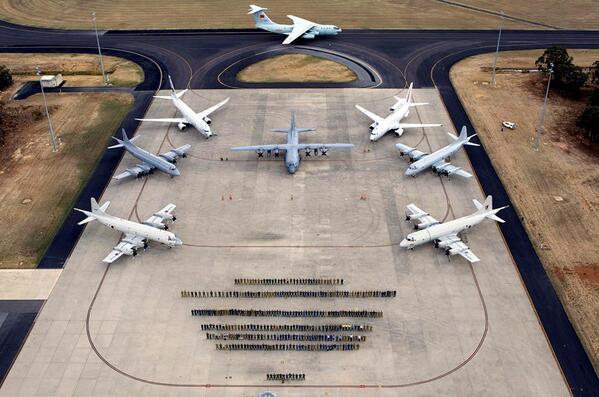
PHOTO via Reuters: Troops from several countries hold farewell ceremony in Australia as Flight MH370 air search ends pic.twitter.com/GXYORaioH0

user posted image
xtemujin
post May 4 2014, 08:10 AM

Casual
***
Junior Member
318 posts

Joined: Nov 2009
From: Singapura, Singapore


Call of Duty® + VICE - Superpower For Hire
Published on 1 May 2014

In the last 20 years, global combat has seen a steady shift towards the use of private military corporations, or PMCs. What happens when the highest bidder becomes the world's next superpower?


A new era arrives for Call of Duty. See the world reveal on 5.4.14.
http://www.callofduty.com

Stay tuned for the full VICE investigation of PMCs. http://www.vice.com

This post has been edited by xtemujin: May 4 2014, 08:10 AM

3 Pages < 1 2 3 >
Bump Topic Topic ClosedOptions New Topic
 

Change to:
| Lo-Fi Version
0.0619sec    0.27    6 queries    GZIP Disabled
Time is now: 3rd December 2025 - 03:17 AM