
|
Introduction:
The past 30 years have seen the rise of the popularity of the Asian Arowana in
the fishkeeping hobby. This paper aims to describe the development of its trade
and how it came to be listed by CITES (Convention on International Trade on
Endangered Species of wild fauna and flora) as a highest class protected fish. To
this end, we shall also see the present state and developments in the trade of this
fish.
I will mainly focus on the implications that the pet industry has on these fish, and
how they have contributed to the development of its trade. I will also focus on
the import, export, and the sale of these fishes as governed by the rules and
regulations of the CITES convention.
Since this is a fairly uncovered area that I am venturing into, I had to work with
resources outside of the Library. Mostly my research materials come from
correspondents I have met via the internet. They include knowledgeable breeders
who have been in the business for years. I have also received tons of documents
from CITES thanks to the generosity of Mr. Obdulio Menghi.
It is the hope of this paper to make people more aware of what's going on behind
the scenes in the aquarium industry. Hopefully, this paper will also show people
what we can do as consumers and hobbyists to make things better in the trade of
Asian Arowana and to all animals in general.
I. Background of the Arowana Trade
A. Dragonfishes become popular in the aquarium
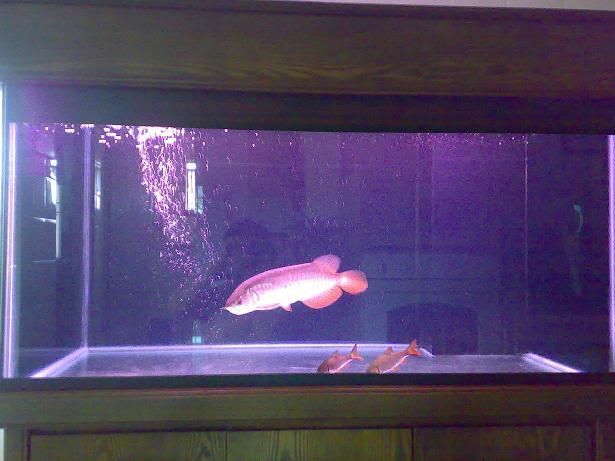
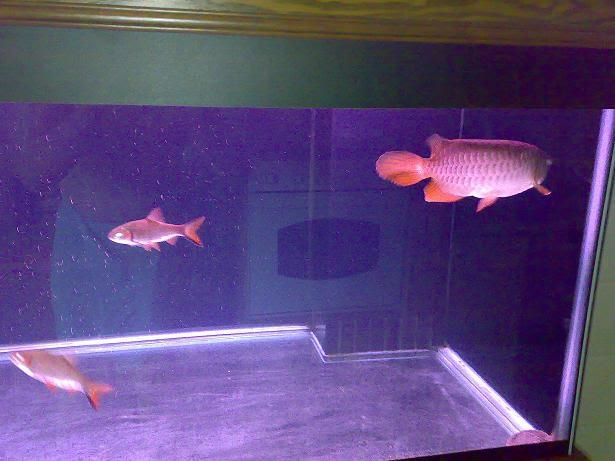
The Asian Arowana (Sclepropages Formosus) is popularly known as the
Dragonfish. Its charm lies in the fact that this fish is a creature surrounded by
mystery. First of all, it cannot be bred in an aquarium. Coupled with that, an
Arowana grows into a massive specimen that could reach up to lengths of three
feet or more. This is the reason why it presents such a challenge to hobbyists,
and this is also the reason why it adds to the distinction of the Arowana. The fact
that not just anybody can take care of it is just too exciting to resist.
It is not merely enough to talk about the beauty of the Arowana in terms of its
size alone. One has to mention the brilliant colors by which these fishes are
known for. Depending on the variety, an Arowana can have colors ranging from
red, red golden, gold, and green. Each color has its own subdivision too. For
example the red has chili red, pineapple red and so on but for purposes of
convenience we will just restrict ourselves to these basic categories.
Dragonfish are also the object of Chinese superstition. It is believed that they are
the reincarnation of the dragon, the mythical figure of Chinese folklore from
which it is believed all Chinese are descended from. Geomancers say that they
bring good luck, and that they protect the owners from harm and misfortune. It is
said that an Arowana in the office (especially a gold one, as it resembles gold,
meaning therefore that it is a sign of money) will bring a lot of good fortune and
prosperity. A red Arowana on the other hand, will ward off evil spirits when
placed at home. These reasons along with the Arowana great beauty, have made
them a favorite in the aquarium.
B. The demand on the Asian Arowana increases
The demand for the Arowana increased dramatically. This can ve seen from the
number of breeding farms that increased steadily from 1978 all the way to 1992.
Both pet shops and suppliers alike couldn't keep up with the rapid demand. An
Asian Arowana was bought the moment it arrived.
That period saw an unprecedented soar in the price of the Arowana. The price of
the Arowana was just as big as its fame. People were willing to pay tens of
thousands of pesos for an Arowana. The price hasn't changed much until today. A
red costs up to 20,000 pesos here in the Philippines, and 4000 U.S. dollars in the
United States. A gold costs up to 8500 pesos, and a green costs up to 3500
pesos. The fish collectors, who knew that they had the power to dictate the price
of their catch raised the prices significantly to make a greater profit. The suppliers
did the same, causing pet shop owners to raise their prices too.
This chain reaction was the fault of both the hobbyists and the suppliers. Both
sides were to blame. People didn't care if they had to pay much as long as they
can get a fish. What this did for the Arowana was disastrous. Fishes began to
deplete in the wild as they were caught faster than they could reproduce. Soon
they were well on their way to becoming an endangered specie. And this is
exactly what happened.
II. CITES steps in
A. Background on CITES
One cannot talk about the Arowana without talking about CITES. In the words of
Hiroshi Maeda "The Asian Arowana cannot be discussed without mentioning the
CITES convention."
CITES, the Convention on International Trade in Endangered Species of wild
fauna and flora, is a convention comprised by different nations that seeks to
regulate the trade of endangered species of plants and animals.
Cites had its beginnings at the 8th International Union for the Conservation of
Nature. It was proposed that a treaty be drawn up to regulate the trade in
endangered species of animals. Several proposals were drafted but they never
made it to the meeting board. However, it resurfaced again in 1972. It was
suggested at the UN Human Environment Council meeting that "a meeting of
appropriate governments or government agencies with full powers be called at
the earliest opportunity in order to draw up and adopt a treaty regulating the
import, export, and transportation of wild flora and fauna."
The said convention was held in Washington the following year. The result was a
pact that 72 countries signed which went into effect on July 1, 1975.
B. CITES lists Scleropages Formosus under its Appendix I status.
The aim of CITES is to "prevent excessive international trade in specific
endangered species; it recognizes the positiveness of moderate consumption and
seeks to promote balanced use."
CITES has three levels of classification when it comes to wild flora and fauna.
Appendix I is for plants and animals that are in danger of becoming extinct.
Appendix II is for plants and animals that are considered to be endangered.
Appendix III plants and animals are abundant and are not endangered. Asian
Arowana are listed by CITES under its Appendix I status as a highest class
protected fish due to its rapid decline in the wild. Under this scheme, the fish is to
be able to enjoy all the privileges that comes with being a protected specie.
Violators in the United States could for example, face up to 20,000 dollars in fine
and up to five years imprisonment for violating this law.
Because of CITES, the Asian Arowana has now been given a new lease on life.
Because of it's special status as an Appendix I animal, the trade in Asian Arowana
became illegal.
C. CITES agrees to importation of farm bred specimens at a restricted
level.
In 1989, at the Rosanne Seventh Review Congress, it was agreed to import farm
bred fishes at a restricted level from Indonesia. Although Asian Arowana were
originally listed under Appendix I, it was later recognized that breeding the
Arowana can be an economic alternative to domestic livestock production. At the
same time, it will provide an incentive for rural populations in those places to
develop an interest in its conservation. In line with this, CITES also believes that
it should encourage the establishment of captive breeding operations for animals
included in Appendix I. Therefore, Arowana were once again allowed to be
exported from its country of origin as long as the exported fishes are of
specimens bred in captivity. The number of fishes exported from Indonesia are as
follows: 1250 in 1990, 1500 in 1991, and 2500 in 1992. This allowance continues
to increase and today there are over 16 CITES registered farms breeding
Scleropages Formosus for commercial purposes
III. The Arowana Today
A. A look into a fish farm
These days, the trading of Arowana are once again legal, provided they are from
CITES registered fish farms. These fish farms are scattered across Indonesia,
Malaysia and Singapore where these fishes find their native habitat. To be able to
apply as a CITES certified fish farm is a long and tedious process. Captive-
Breeding operations have to be first approved by the Management Authority of
each Party, in consultation with the Scientific Authority of that Party. Prior to the
establishment of captive-breeding operations for exotic species, a study of
ecological risks should be completed, in order to prevent any negative effects on
the ecosystem and the native species. When all this is done the breeder has to
acquire a breeding stock, and he has to build the facilities to house specimens
and successfully breeding the species.
Specimens for the aquarium are no longer acquired in the wild. These fish farms
specializes in the production of F2 offsprings, meaning second generation
offsprings that can be sold to the market. These fishes are tagged with coded
microchips called Passive Integrated Transponders (PIT) for identification
purposes. These microchips help identify these fishes as a farm bred animal, and
if the need ever arises to check its identification, the microchip can be scanned to
identify the fish. Aside from the microchip, when one buys a farm bred fish from
any of these fish farms, the buyer will receive a certificate of authenticity plus a
birth certificate.
Some of the more well known fish farms are located in Singapore such as Panda
Aquatics and Dragonfish Industry. They specialize in breeding high quality
Arowana.
B. Illegal activities
Although we have come a long way to make short term destruction into long term
growth for both man and beast, there are still a lot of illegal activities going on
behind the scenes. Although CITES has taken so much pain to ensure that its
captive breeding program will be for the best, people have found ways around it
to maximize profit at the expense of nature. There are some breeders who dig up
a big earth pond and throws in whatever fishes they have in their breeding stock.
The result is that a lot of hybrids are produced since these strains interbreed
easily.
Hybrids are usually more prone to sickness and birth defects. These birth defects
can cause disastrous consequences down the line as future generations of
Arowana will suffer due to bad genes and mutations. These irresponsible breeders
don't care about quality, they care for quantity. Breeders also just look for a few
features and market these as either red gold or green Arowana when in fact they
are hybrids. What happens is that consumers are being cheated of their money.
The biggest problem now is that some breeders would catch fishes from the wild,
and then tag them as CITES registered fishes. There is also the problem with
hormone treatment. When breeders catch their fish from the pond, and realize
that they are not that red, they would treat them with hormones so that they
could sell it at a higher price. Recently, there have been complaints that the
quality of fishes has gone down. The truth is, both sides are to blame. The
dealers want cheaper fishes, and so they get what they paid for. However it is the
consumer who suffers because he doesn't know if the fish he's buying is hormone
treated or not.
Alex Chang of Panda Aquatics, one of the leading fish farms based on Singapore
says that "we here are trying very hard to uphold the image of the industry in
Singapore to have a sustainable market overseas but dealers are killing
themselves day by day..."
C. The Arowana in the home of the hobbyist
The final destination of the Arowana is of course at the home of the hobbyist.
Here the fishes spend the rest of their lives under the care of their new owners.
Depending on the quality of care given, an Arowana may live up to a ripe old age
of 25 years old.
The more adventurous aquarist will try to breed these fishes for himself and this
is not discouraged. There are several benefits of breeding the Arowana by the
aquarist.
Firstly, it adds to the knowledge of existing breeding methods. Secondly, it helps
ensure the survival of the Arowana. Thirdly, when more people can breed these
fishes by themselves, it would help counter the high prices in the market. 4)
Arowana would become more available.
If there are advantages though, there definitely are disadvantages too. There is
always the worry that fishes bred by the hobbyist would be of poor quality and it
would contribute to the decline in the gene pool.
Conclusion:
There is much debate going on whether the trade in exotic animals , and not just
the Asian Arowana, has done more harm or good. It is not the intention of this
paper to prove or show favor for any particular side. This paper does not aim to
prove either point, but what this paper does intend to do is to bring out in the
open something that is not generally known.
As with all research papers, there are limitations to my study. The first , and
which I feel is the most significant, is that a lot has yet to be uncovered on the
illegal trading going on. This is one area that if possible, should be given more
research into because it is a very significant part of the whole trade. Also, few
have yet to witness the actual steps taken in the exportation of these fishes-from
catching, bagging, shipping, quarantine, until it finally reaches its destination in
the different pet shops where it is sold. All these are areas still worth exploring
and should be given proper research into.
Quote From:
THE FATE OF THE ASIAN Arowana IN THE HANDS OF THE AQUARIUM INDUSTRY
A Research Paper Submitted to the Faculty of Ateneo de Manila University by
Cheng Lee
This post has been edited by c0c0nut: Nov 29 2006, 03:03 PM
|


 Nov 29 2006, 02:55 PM


 Quote
Quote



 0.0195sec
 0.43
0.43
 7 queries
 GZIP Disabled