Welcome Guest ( Log In | Register )

16 Pages « < 6 7 8 9 10 > » Bottom

Outline · [ Standard ] · Linear+

 Is water heater safe to use?

views
     
stevie8
post Sep 18 2013, 07:24 PM

Regular
******
Senior Member
1,365 posts

Joined: Jun 2009
QUOTE(petlu28 @ Sep 18 2013, 01:58 PM)
I found out this don't know suitable or not. But price not cheap.

http://my.element14.com/timeguard/tfp10wl/...hite/dp/1642925
*
Of course these things are not cheap that is why instant water heaters dont come with it but the cheaper ELCB. The adapter type around RM100.
stevie8
post Sep 18 2013, 07:35 PM

Regular
******
Senior Member
1,365 posts

Joined: Jun 2009
QUOTE(petlu28 @ Sep 18 2013, 01:35 PM)
Thanks your advise. That means each time when go bathroom press it before take bath right?
*
Exactly! But the correct way is test the RCD and then press reset before going for shower. But that is too troblesome. It is ok to do the otherway around that you test after shower and you know the last time you tested it was yesterday. As you can also see, the instant water heater that comes with ELCB, just ask how yourself often you test it? Once a month, once a year? For other members of the family they dont even know what the purpose of these test button and dont know how to reset where the level/button is usually hidden at the bottom and you use your wet hand to reset???!!!! So go get one lah, RM100 or RM200 for peace of mind than to be on the news one day, no longer japanese couple but malaysian.

You see why 2 died? Cause one tried to save the other but dont know about electricity. The first one could be dead few minutes and motionless then the other one discovered him/her and go touch her/him and died!!! It is 2 lives, not just one and could be 3 could be whole family members all go and touch one after another!!!!
stevie8
post Sep 18 2013, 08:08 PM

Regular
******
Senior Member
1,365 posts

Joined: Jun 2009
QUOTE(duckaton @ Sep 18 2013, 03:15 PM)
seriously?
any known cases or simply say oni...
*
Aiyo where got simply say one? So irresponsible meh, me?

One explosion the whole brick wall came down!!! Many years ago. That is why i choose solar, before that i was selling instant water heater came with ELCB type.
stevie8
post Sep 18 2013, 08:14 PM

Regular
******
Senior Member
1,365 posts

Joined: Jun 2009
QUOTE(Sydneguy @ Sep 18 2013, 04:08 PM)
What a load of BS.

In Australia Every home (about 10 million) has a hot water storage heater (gas or electric powered) they are left on all the time 24/7 365 (because they are insulated and super efficient, 2-3 times lower operating cost then Malaysian system of instant water heater).

Out of those 10 million units, how many Exloped during last 10 yrs ZERO!

Safety valves never fail, they are designed to be failsafe, ie if it stops working it will release the pressure.
If heating function never fails to cut off. Again it is design to be failsafe.
It doesn't mater if you don't turn it off, they are designed to be left on continuously. Steam does not buildup casueing rise in pressure.
How do I know this? I am an Engineer and I once worked for a company that manufacturers water heater tanks.
*
Instant water heaters dont work in cold countries like australia that has winter. Instant water heater can only bring up temp by few degrees, 10 to 20 max. How to bring a near freezing cold water from 0 or 10 to 40 degress C?
stevie8
post Sep 18 2013, 08:35 PM

Regular
******
Senior Member
1,365 posts

Joined: Jun 2009
QUOTE(Sydneguy @ Sep 18 2013, 04:08 PM)
What a load of BS.

In Australia Every home (about 10 million) has a hot water storage heater (gas or electric powered) they are left on all the time 24/7 365 (because they are insulated and super efficient, 2-3 times lower operating cost then Malaysian system of instant water heater).

Out of those 10 million units, how many Exloped during last 10 yrs ZERO!

Safety valves never fail, they are designed to be failsafe, ie if it stops working it will release the pressure.
If heating function never fails to cut off. Again it is design to be failsafe.
It doesn't mater if you don't turn it off, they are designed to be left on continuously. Steam does not buildup casueing rise in pressure.
How do I know this? I am an Engineer and I once worked for a company that manufacturers water heater tanks.
*
Nothing never failed lor. They are mostly spring operated. Spring can get stuck, cant they?

Engineer you are sold/convinced by your water heater tanks boss/company the tank are safe. No offence. I like to believe you that will be a big relieve as my solar tank also has relieve valve and I was told to change as it has aged. Why change when it is designed to failsafe? Kindly explain in greater details of course in English not engineering terms.
stevie8
post Sep 18 2013, 08:44 PM

Regular
******
Senior Member
1,365 posts

Joined: Jun 2009
I just googled pressure relief valve failure and this is a site that study, test and analyse PRV failure rate

http://www.exida.com/articles/Mechanical%2...%20Released.pdf

It is too complicated to read but here is a statement,

"In this report we describe the results of a FMEDA analysis of a particular PRV
to determine the useful-life failure rate of the fail-to-open condition. (The fail-toopen condition occurs when a PRV remains closed when test pressures (TP)
reach or exceed 1.5 times the PRV set pressure.) "


So PRV did fail otherwise why got such study?
Sydneguy
post Sep 18 2013, 09:54 PM

Casual
***
Junior Member
383 posts

Joined: Jul 2013


QUOTE(stevie8 @ Sep 18 2013, 08:35 PM)
Nothing never failed lor.  They are mostly spring operated. Spring can get stuck, cant they?

Engineer you are sold/convinced by your water heater tanks boss/company the tank are safe. No offence. I like to believe you that will be a big relieve as my solar tank also has relieve valve and I was told to change as it has aged. Why change when it is designed to failsafe? Kindly explain in greater details of course in English not engineering terms.
*
You were told to change cause when it is old it will stop holding pressure and start to leak the pressure and water, ie its failing to safe mode.

When something fails it can fail to safe or unsafe state. Pressure Safety Valve are design to be failsafe, ie when they wearout they do by failing to a safe mode. In plain english when the spring fails it will release the pressure not lock the valve closed.

Sydneguy
post Sep 18 2013, 10:00 PM

Casual
***
Junior Member
383 posts

Joined: Jul 2013


QUOTE(stevie8 @ Sep 18 2013, 08:44 PM)
I just googled pressure relief valve failure and this is a site that study, test and analyse PRV failure rate

http://www.exida.com/articles/Mechanical%2...%20Released.pdf

It is too complicated to read but here is a statement,

"In this report we describe the results of a FMEDA analysis of a particular PRV
to determine the useful-life failure rate of the fail-to-open condition. (The fail-toopen condition occurs when a PRV remains closed when test pressures (TP)
reach or exceed 1.5 times the PRV set pressure.) "


So PRV did fail otherwise why got such study?
*
In simple terms; that report was a study to evaluate and determine the effectiveness of test methods used by manufactures to ensure that their QA and QC systems are effective to ensure that there are not defective valves getting to customers. IE to make sure the manufactures are only selling valves that are failsafe.
cherroy
post Sep 18 2013, 10:07 PM

20k VIP Club
Group Icon
Staff
25,802 posts

Joined: Jan 2003
From: Penang


QUOTE(Sydneguy @ Sep 18 2013, 09:54 PM)
You were told to change cause when it is old it will stop holding pressure and start to leak the pressure and water, ie its failing to safe mode.

When something fails it can fail to safe or unsafe state. Pressure Safety Valve are design to be failsafe, ie when they wearout they do by failing to a safe mode. In plain english when the spring fails it will release the pressure not lock the valve closed.
*
I wish to know how specifically the failsafe method adopted in the storage tank in engineering term since you worked inside before. smile.gif
Because I came across before a stucked spring on an old compressor safety valve, even using tool to pull out, also can't move it a bit (aka release)

Those worn-out result in leak, I can understand, aka you design when it worn, it leak, hence no safety issue concern.
But how about non-worn out issue, like stiff spring, jammed/blocked condition due to aging etc?

This post has been edited by cherroy: Sep 18 2013, 10:07 PM
stevie8
post Sep 18 2013, 10:30 PM

Regular
******
Senior Member
1,365 posts

Joined: Jun 2009
There are many possibility in real world environment that the spring get jammed which the test method did not take into consideration where environment are controlled. The spring can get jammed simply with accumulation of sands (user of sand filter), debris from rusted GI pipe, fittings and tap parts worn out may it be rubber or plastic and deform spring or housing were used that passed QC and when at consumers end mechanical it gets dislocated. The accumulation over time became a lump and jammed the springs and many other possibilities. My argument is man made things will still fail over time unlike nature like the sun will never fail to rise every morning from east or rather the earth will never fail to turn. However, am not saying it has to be 100%, if we can have 99.99% one of 10 thousand then it is considered perfect/pure like pure gold 99.9% one of one thousand.

Leaking is a failsafe acceptable but what you engineers do to make sure it will not get stuck cannot open? How? can explain more, please?
Sydneguy
post Sep 18 2013, 11:17 PM

Casual
***
Junior Member
383 posts

Joined: Jul 2013


QUOTE(stevie8 @ Sep 18 2013, 10:30 PM)
There are many possibility in real world environment that the spring get jammed which the test method did not take into consideration where environment are controlled. The spring can get jammed simply with accumulation of sands (user of sand filter), debris from rusted GI pipe, fittings and tap parts worn out may it be rubber or plastic and deform spring or housing were used that passed QC and when at consumers end mechanical it gets dislocated. The accumulation over time became a lump and jammed the springs and many other possibilities. My argument is man made things will still fail over time unlike nature like the sun will never fail to rise every morning from east or rather the earth will never fail to turn. However, am not saying it has to be 100%, if we can have 99.99% one of 10 thousand then it is considered perfect/pure like pure gold 99.9% one of one thousand.

Leaking is a failsafe acceptable but what you engineers do to make sure it will not get stuck cannot open? How? can explain more, please?
*
You wrongly assume the spring is inside the valve and in contact with the water, sand/rust etc, it is actually outside and protected from such contaminants.

they generally look like this http://content.answcdn.com/main/content/im...97800FG0010.gif
stevie8
post Sep 18 2013, 11:31 PM

Regular
******
Senior Member
1,365 posts

Joined: Jun 2009
Still how it gets jammed?
weikee
post Sep 19 2013, 10:09 AM

10k Club
********
All Stars
12,019 posts

Joined: Jan 2003
QUOTE(stevie8 @ Sep 18 2013, 11:31 PM)
Still how it gets jammed?
*
Just like car radiator cap, you don't read anywhere it jammed and cause hose burst. you read more of the cap leak
cherroy
post Sep 19 2013, 10:56 AM

20k VIP Club
Group Icon
Staff
25,802 posts

Joined: Jan 2003
From: Penang


QUOTE(Sydneguy @ Sep 18 2013, 11:17 PM)
You wrongly assume the spring is inside the valve and in contact with the water, sand/rust etc, it is actually outside and protected from such contaminants.

they generally look like this http://content.answcdn.com/main/content/im...97800FG0010.gif
*
This is quite similar to air compressor safety valve built up method.

Air-compressor safety valve also not contact with water, and protected from outside dirt, yet there is a failed to open safety valve in real life usage.

Yes, it has a low chance to fail like 0.000000001%, but totally failsafe?
cherroy
post Sep 19 2013, 10:58 AM

20k VIP Club
Group Icon
Staff
25,802 posts

Joined: Jan 2003
From: Penang


QUOTE(weikee @ Sep 19 2013, 10:09 AM)
Just like car radiator cap, you don't read anywhere it jammed and cause hose burst. you read more of the cap leak
*
Hose do burst... tongue.gif without need cap leak or cap jammed. biggrin.gif

Joking only, I understand what try to say in the statement. smile.gif
stevie8
post Sep 19 2013, 11:40 AM

Regular
******
Senior Member
1,365 posts

Joined: Jun 2009
QUOTE(cherroy @ Sep 19 2013, 10:56 AM)
This is quite similar to air compressor safety valve built up method.

Air-compressor safety valve also not contact with water, and protected from outside dirt, yet there is a failed to open safety valve in real life usage.

Yes, it has a low chance to fail like 0.000000001%, but totally failsafe?
*
exactly failsafe it is, but the problem is our engineer cant explain why some jammed.
weikee
post Sep 19 2013, 12:03 PM

10k Club
********
All Stars
12,019 posts

Joined: Jan 2003
Jammed can be few reason,
some use cheap valved made of cheap spring that rust, no proper protection making small object like insect go in, damaged by other object, like knocked by objects.
I do see some rubber-less valve that are very reliable and leak proof.

Like I mention in previous page, nothing is 100% safe, we can reduce the risk by doing proper things, and invest more in good product and installer. But difference people have difference preference in saving vs safety.

Do you want to pay RM 1,000 to get 85% safety, or pay RM 10,000 to get 90% safety, or pay RM 50,000 to get 95% safety?

QUOTE(weikee @ Sep 18 2013, 05:55 PM)
We know speeding is dangerous people still drive like f1 driver. Everyone know tires need to change when  reach certain level but some drive until tyres botak.

I read many people asking where can I buy cheapest instant heater, who can give cheapest installation price. You think they care about safety? The priority for them is saving money.

Any type of water heater be it solar, gas, insrant we install will sure have some sorts of danger. Get proper installer and don't skim on quality of work.

*
This post has been edited by weikee: Sep 19 2013, 12:04 PM
weikee
post Sep 19 2013, 12:05 PM

10k Club
********
All Stars
12,019 posts

Joined: Jan 2003
QUOTE(cherroy @ Sep 19 2013, 10:58 AM)
Hose do burst...  tongue.gif without need cap leak or cap jammed.  biggrin.gif
Joking only, I understand what try to say in the statement.  smile.gif
*
Because the hose are due for replacement.
stevie8
post Sep 19 2013, 12:09 PM

Regular
******
Senior Member
1,365 posts

Joined: Jun 2009
QUOTE(Sydneguy @ Sep 18 2013, 11:17 PM)
You wrongly assume the spring is inside the valve and in contact with the water, sand/rust etc, it is actually outside and protected from such contaminants.

they generally look like this http://content.answcdn.com/main/content/im...97800FG0010.gif
*
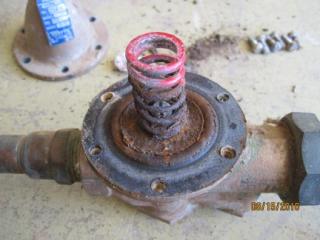
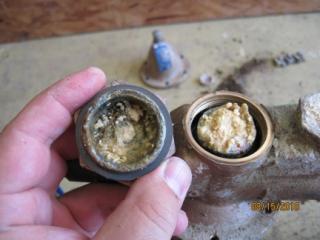
Whether the spring is outside of water, overtime water get in to the bad diaphram and leaking valve to the spring compartment. With so much of minerals it can cause the spring to fail. here is the pictures:
Attached Image Attached Image


Sydneguy
post Sep 19 2013, 12:22 PM

Casual
***
Junior Member
383 posts

Joined: Jul 2013


QUOTE(stevie8 @ Sep 19 2013, 12:09 PM)
Whether the spring is outside of water, overtime water get in to the bad diaphram and leaking valve to the spring compartment. With so much of minerals it can cause the spring to fail. here is the pictures:
Attached Image   Attached Image
*
For that much minerals to build up in the spring area, the valve would have been leaking for several months if not several years. Two conclusions can then be given;

1) If the valve was leaking then it would almost be impossible for the tank to suddenly go over pressure.

2) Someone should have noticed the leaking valve and changed it.


16 Pages « < 6 7 8 9 10 > » Top
 

Change to:
| Lo-Fi Version
0.0261sec    0.23    6 queries    GZIP Disabled
Time is now: 8th December 2025 - 04:02 AM