Welcome Guest ( Log In | Register )

50 Pages « < 37 38 39 40 41 > » Bottom

Outline · [ Standard ] · Linear+

 The makeover of my humble abode, Sharing my renovation journey

views
     
dp82
post Apr 14 2014, 07:03 PM

Enthusiast
*****
Senior Member
862 posts

Joined: Nov 2007
QUOTE(maxxon @ Apr 14 2014, 05:18 PM)
In this case i must agree with mrgoodgood on the degree of projection. As we know light projects and travels in straight line and LED lights especially have a stronger projection intensity and specific projection degree. (Eg. eyeball spot light has very narrow projection degree). Normal downlight is not so specific with such projection degree and that's why i said the light is softer or less intensed.

As such if we use these led downlights, we should either move the light further away from the fan blades or use a shorter fan rod so that to avoid the wide projection 'kena' the blades causing shadow flickering (provided the rod is short enough for that certain degree the lights has)... So, longer the rod, easier to 'kena' the light projection.

I know you will say avoid led downlights... but that's still personal choice, as nothing is perfect and each has got its strength and weakness. Although led downlights with more intensed projection but the flickering can be avoided by method suggested. That's one of the benefit of this forum that we learn from people's experience and we find a way to avoid errors...
*
I had the same issue where the LED downlights are too near to my ceiling fan. Fan is KDK 60" regulator. Had the issue of flickering all the way fr ceiling to floor. Its too damm annoying.

Ended up i change to Deka Baby G 42" after a few days. It drastically changed everything.

I think mainly the issue is due to longer blades.

TSmaxxon
post Apr 14 2014, 07:35 PM

Enthusiast
*****
Senior Member
773 posts

Joined: Dec 2010


QUOTE(dp82 @ Apr 14 2014, 07:03 PM)
I had the same issue where the LED downlights are too near to my ceiling fan. Fan is KDK 60" regulator. Had the issue of flickering all the way fr ceiling to floor. Its too damm annoying.

Ended up i change to Deka Baby G 42" after a few days. It drastically changed everything.

I think mainly the issue is due to longer blades.
*
Yup, the 2 variables which could cause the flickering is either:
1) the distance between ceiling and blades of fan
2) the distance between light and blades of fan

This post has been edited by maxxon: Apr 15 2014, 09:47 AM
TSmaxxon
post Apr 14 2014, 07:45 PM

Enthusiast
*****
Senior Member
773 posts

Joined: Dec 2010


QUOTE(fremont88 @ Apr 14 2014, 06:03 PM)
I found it! anyway, you are right, let me search in more detail first next time.....anyway, really appreciate your efforts in this thread.....

i saw your master bedroom, all led eyeballs only....looks good!
*
Love the eyeballs lighting effect... and the brightness is actually just nice for a bedroom. smile.gif

Thank you for following my journey... and wish you a smooth one too..
Keep sharing yours ya, coz im one of the follower too... wink.gif
SUSsupersound
post Apr 14 2014, 08:38 PM

10k Club
********
Senior Member
11,554 posts

Joined: Aug 2009
QUOTE(maxxon @ Apr 14 2014, 05:18 PM)
In this case i must agree with mrgoodgood on the degree of projection. As we know light projects and travels in straight line and LED lights especially have a stronger projection intensity and specific projection degree. (Eg. eyeball spot light has very narrow projection degree). Normal downlight is not so specific with such projection degree and that's why i said the light is softer or less intensed.

As such if we use these led downlights, we should either move the light further away from the fan blades or use a shorter fan rod so that to avoid the wide projection 'kena' the blades causing shadow flickering (provided the rod is short enough for that certain degree the lights has)... So, longer the rod, easier to 'kena' the light projection.

I know you will say avoid led downlights... but that's still personal choice, as nothing is perfect and each has got its strength and weakness. Although led downlights with more intensed projection but the flickering can be avoided by method suggested. That's one of the benefit of this forum that we learn from people's experience and we find a way to avoid errors...
*
If you want a piece of mind is when doing plaster ceiling, make it such that the lights part level are lower than the fan.
By taking measurement and some logic thinking, shadow can be avoided.
dp82
post Apr 14 2014, 09:26 PM

Enthusiast
*****
Senior Member
862 posts

Joined: Nov 2007
QUOTE(supersound @ Apr 14 2014, 08:38 PM)
If you want a piece of mind is when doing plaster ceiling, make it such that the lights part level are lower than the fan.
By taking measurement and some logic thinking, shadow can be avoided.
*
What if the owner opt for just flatboard plaster ceiling. The fan will definately lower than the lights.

What would be the alternative to achieve lights are lower than the fan?
SUSsupersound
post Apr 14 2014, 09:47 PM

10k Club
********
Senior Member
11,554 posts

Joined: Aug 2009
QUOTE(dp82 @ Apr 14 2014, 09:26 PM)
What if the owner opt for just flatboard plaster ceiling. The fan will definately lower than the lights.

What would be the alternative to achieve lights are lower than the fan?
*
Down light and make sure it is projected.
As said before, don't bring in some technical terms like trigonometry to make things more complicated doh.gif
What you need to do is measure the fan blade's length, measure the ceiling width and length, measure your down lights coverageAttached Image
This is my master bedroom's down light and fan. I got 5 total and 3 of them I already raise white flag on changing them doh.gif
The gap are about 1-1.5ft.

This post has been edited by supersound: Apr 14 2014, 09:51 PM
TSmaxxon
post Apr 14 2014, 10:49 PM

Enthusiast
*****
Senior Member
773 posts

Joined: Dec 2010


QUOTE(supersound @ Apr 14 2014, 09:47 PM)
Down light and make sure it is projected.
As said before, don't bring in some technical terms like trigonometry to make things more complicated doh.gif
What you need to do is measure the fan blade's length, measure the ceiling width and length, measure your down lights coverageAttached Image
This is my master bedroom's down light and fan. I got 5 total and 3 of them I already raise white flag on changing them doh.gif
The gap are about 1-1.5ft.
*
Err... Pls pardon me but i really don't understand how is your fan in the picture is below the fan level?
Also, what's to do with measuring the fan blades length (instead of distance from blade to light?), and also why is it the ceiling width and length?

Actually the trigonometry formula is the right thing to calculate. It's not a technical term either. It's what we learnt in secondary math, you had definitely learnt it but you've perhaps forgotten or didn't notice what it calls already.

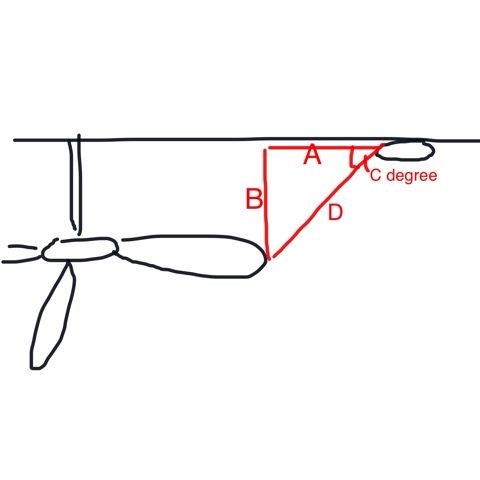
I've drawn a simple diagram below, with my simple tablet app. Just done it very quickly with free-hand. So, again, pls don't laugh at me!! flex.gif

user posted image

We have got the distance of fan from the ceiling = B
We have the light beam degree already (derived from our light degree, which varies from different models of lights, eg my light is 112 deg) = C degree
So, we need to calculate what's the minimum A or D to avoid the light beam hitting the fan blades.

To simplyfy my explanation, let's refer to the lighting expert's post on this similar issue and the method of calculation from the following link, post#237.
https://forum.lowyat.net/topic/2938110/+220

Edit: this calculation is to ease those plan to install LED light in a small medium room. Whether it works or not you can tell us after you've tried it. Thanks.

This post has been edited by maxxon: Apr 15 2014, 08:21 AM
yenhan
post Apr 14 2014, 11:38 PM

New Member
*
Junior Member
41 posts

Joined: Sep 2007
From: KL / Pahang


QUOTE(maxxon @ Dec 25 2013, 02:53 AM)
Merry X'mas!  hands.gif

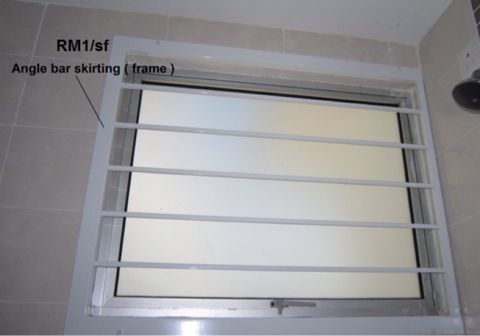
My grill is RM10.50/sqft (powder coated) + RM1/sqft for the option of angle bar.

Following is the pic from the vendor showing example of angle bar.
user posted image
*
Boss, hows the workmanship for grill... mind to pm me the contractor's number? thanks!
SUSsupersound
post Apr 14 2014, 11:46 PM

10k Club
********
Senior Member
11,554 posts

Joined: Aug 2009
QUOTE(maxxon @ Apr 14 2014, 10:49 PM)
Err... Pls pardon me but i really don't understand how is your fan in the picture is below the fan level?
Also, what's to do with measuring the fan blades length (instead of distance from blade to light?), and also why is it the ceiling width and length? 

Actually the trigonometry formula is the right thing to calculate. It's not a technical term either. It's what we learnt in secondary math, you had definitely learnt it but you've perhaps forgotten or didn't notice what it calls already.

I've drawn a simple diagram below, with my simple tablet app. Just done it very quickly with free-hand. So, again, pls don't laugh at me!!  flex.gif

user posted image

We have got the distance of fan from the ceiling = B
We have the light beam degree already (it varies from different models of lights, eg my light is 112 deg) = C degree
So, we need to calculate what's the minimum A or D to avoid the light beam hitting the fan blades.

To simplyfy my explanation, let's refer to the lighting expert's post on this similar issue and the method of calculation from the following link, post#237.
https://forum.lowyat.net/topic/2938110/+220
*
I think I already said it before, either you make it the lights level lower than fan or make sure the down lights are projected and make sure it is far away from the fan blade.
And you your self said projected doh.gif
I go to point B from point A directly(take measurement and make sure it is far away, projected), but if you still choose going to point C(using trigonometry) before reaching point B is up to you.
Those wireman know what to do to counter shadow, even without an ID.
Also, light bulb if not projected, it is travel in wave form. Can trigonometry be used on this case doh.gif
And now I understand why you guys like to use trigonometry(which in the first place no need) because of some SKL that make it "pro" with some stupid calculations, from your link whistling.gif
SUSsupersound
post Apr 15 2014, 12:00 AM

10k Club
********
Senior Member
11,554 posts

Joined: Aug 2009
Just to make things clear and simple, any light bulb when being projected, it will shoot straight to what ever angle being set. It will shine round when it is not projected.
Why I said need to measure the ceiling's width and length? It is because you need to calculate how many lights to be installed. Once calculated already, then can start plotting them in uniform manner. With this way, brightness can be evenly distributed and look nice. Then see where's the best location for the ceiling fan without creating shadows.
Do I need an ID on this? Nope, I don't, as they will do the same also if they are really good.
TSmaxxon
post Apr 15 2014, 08:03 AM

Enthusiast
*****
Senior Member
773 posts

Joined: Dec 2010


QUOTE(supersound @ Apr 14 2014, 11:46 PM)
I think I already said it before, either you make it the lights level lower than fan or make sure the down lights are projected and make sure it is far away from the fan blade.
And you your self said projected doh.gif
I go to point B from point A directly(take measurement and make sure it is far away, projected), but if you still choose going to point C(using trigonometry) before reaching point B is up to you.
Those wireman know what to do to counter shadow, even without an ID.
Also, light bulb if not projected, it is travel in wave form. Can trigonometry be used on this case doh.gif
And now I understand why you guys like to use trigonometry(which in the first place no need) because of some SKL that make it "pro" with some stupid calculations, from your link whistling.gif
*
Come on bro, your layman method who don't know?? It's only applicable to a bigger room! Especially master room. I am more in a position to tell you this because I experienced before with LED downlight in a small medium room. Did you?? If you refer to my previous post, I already did your layman method which all wiremen do, just common sense right? To distribute it as far as possible and in a uniform way. No need a teacher to teach also a school boy will know! Did you see my few attempts which I move the light further and further away until no more space, until the wall already? The calculation method is here to assist those who haven't install but planning to use LED in a small or medium room, at least they can do something before purchasing and minimize the chances of failure. Of course people can choose to 'try and error' like what I did and of course they need not f**cking worry if their room is big enough! Of course, I need to reinforce again, to use LED or not is a personal choice.

Whether the calculation is working or not, neither me or you can comment, let those who use it and comment. Finally, i don't know whether my post will offense you but I can tell you that I'm very much offended this 'seven morning, eight morning' got to read all these negativity!
mrgoodgood
post Apr 15 2014, 08:06 AM

Getting Started
**
Junior Member
201 posts

Joined: Jan 2003
From: Puchong


QUOTE(maxxon @ Apr 15 2014, 08:03 AM)
Come on bro, your layman method who don't know?? It's only applicable to a bigger room! Especially master room. I am more in a position to tell you this because I experienced before with LED downlight in a small medium room. Did you?? If you refer to my previous post, I already did your layman method which all wiremen do, just common sense right? To distribute it as far as possible and in a uniform way. No need a teacher to teach also a school boy will know! Did you see my few attempts which I move the light further and further away until no more space, until the wall already? The calculation method is here to assist those who haven't install but planning to use LED in a small or medium room, at least they can do something before purchasing and minimize the chances of failure. Of course people can choose to 'try and error' like what I did and of course they need not f**cking worry if their room is big enough! Of course, I need to reinforce again, to use LED or not is a personal choice.

Whether the calculation is working or not, neither me or you can comment, let those who use it and comment. Finally, i don't know whether my post will offense you but I can tell you that I'm very much offended this 'seven morning, eight morning' got to read all these negativity!
*
It is futile explaining to someone who doesn't understand mathematics and thinks light travel in wave form.. Chill chill..
TSmaxxon
post Apr 15 2014, 08:14 AM

Enthusiast
*****
Senior Member
773 posts

Joined: Dec 2010


QUOTE(yenhan @ Apr 14 2014, 11:38 PM)
Boss, hows the workmanship for grill... mind to pm me the contractor's number? thanks!
*
Grill is good. Eventhough there is some part of my main gate they did brought back to factory and reworked but overall still good including their after sales services.
https://www.facebook.com/pages/Three-Kim-Me...219963244769158

This post has been edited by maxxon: Apr 15 2014, 08:23 AM
nicknyhk
post Apr 15 2014, 08:16 AM

New Member
*
Junior Member
36 posts

Joined: Aug 2008
QUOTE(mrgoodgood @ Apr 15 2014, 08:06 AM)
It is futile explaining to someone who doesn't understand mathematics and thinks light travel in wave form.. Chill chill..
*
Sorry I don't mean to change the topic but I do believe that light does indeed travel in a wave form. Edit: But it does travel in a straight line for the subject that we are talking about.

Physics aside, good luck with the renovation TS.

This post has been edited by nicknyhk: Apr 15 2014, 08:19 AM
SUSsupersound
post Apr 15 2014, 08:24 AM

10k Club
********
Senior Member
11,554 posts

Joined: Aug 2009
QUOTE(maxxon @ Apr 15 2014, 08:03 AM)
Come on bro, your layman method who don't know?? It's only applicable to a bigger room! Especially master room. I am more in a position to tell you this because I experienced before with LED downlight in a small medium room. Did you?? If you refer to my previous post, I already did your layman method which all wiremen do, just common sense right? To distribute it as far as possible and in a uniform way. No need a teacher to teach also a school boy will know! Did you see my few attempts which I move the light further and further away until no more space, until the wall already? The calculation method is here to assist those who haven't install but planning to use LED in a small or medium room, at least they can do something before purchasing and minimize the chances of failure. Of course people can choose to 'try and error' like what I did and of course they need not f**cking worry if their room is big enough! Of course, I need to reinforce again, to use LED or not is a personal choice.

Whether the calculation is working or not, neither me or you can comment, let those who use it and comment. Finally, i don't know whether my post will offense you but I can tell you that I'm very much offended this 'seven morning, eight morning' got to read all these negativity!
*
Is you that want to see things negatively doh.gif
I do understand your feeling, in the middle of happy mood, suddenly someone tells you there's something wrong and you can accept it, simple as that.
TSmaxxon
post Apr 15 2014, 08:41 AM

Enthusiast
*****
Senior Member
773 posts

Joined: Dec 2010


QUOTE(supersound @ Apr 15 2014, 08:24 AM)
Is you that want to see things negatively doh.gif
I do understand your feeling, in the middle of happy mood, suddenly someone tells you there's something wrong and you can accept it, simple as that.
*
I'm offended that you simply like to deny people's effort and call them stupid. In your world, no need ID, no need expert, no need technical studies.... Ok, let's stop all these nuisance.
I have done and very happy with my lightings, so let other people to tell us their experience and result.
mrgoodgood
post Apr 15 2014, 08:41 AM

Getting Started
**
Junior Member
201 posts

Joined: Jan 2003
From: Puchong


QUOTE(nicknyhk @ Apr 15 2014, 08:16 AM)
Sorry I don't mean to change the topic but I do believe that light does indeed travel in a wave form. Edit: But it does travel in a straight line for the subject that we are talking about.

Physics aside, good luck with the renovation TS.
*
I know. I posted that as a bait smile.gif. That wave form is totally different from what we are talking about here. In human eyes we see lights traveling in a straight line regardless of the wavelength.
mrgoodgood
post Apr 15 2014, 08:43 AM

Getting Started
**
Junior Member
201 posts

Joined: Jan 2003
From: Puchong


QUOTE(maxxon @ Apr 15 2014, 08:41 AM)
I'm offended that you simply like to deny people's effort and call them stupid. In your world, no need ID, no need expert, no need technical studies.... Ok, let's stop all these nuisance.
I have done and very happy with my lightings, so let other people to tell us their experience and result.
*
+10000000!
TSmaxxon
post Apr 15 2014, 08:49 AM

Enthusiast
*****
Senior Member
773 posts

Joined: Dec 2010


QUOTE(nicknyhk @ Apr 15 2014, 08:16 AM)
Sorry I don't mean to change the topic but I do believe that light does indeed travel in a wave form. Edit: But it does travel in a straight line for the subject that we are talking about.

Physics aside, good luck with the renovation TS.
*
Thanks. Reno almost done....pheww...long journey... sweat.gif
monkey9926
post Apr 15 2014, 09:22 AM

Getting Started
**
Junior Member
292 posts

Joined: Sep 2013
say i have a thread, can i block someone from commenting?

50 Pages « < 37 38 39 40 41 > » Top
 

Change to:
| Lo-Fi Version
0.2731sec    0.36    6 queries    GZIP Disabled
Time is now: 3rd December 2025 - 07:43 AM