

 Asia crumbling, Thailand first to enter recession, Thailand, India & Indonesia in crisis
  Aug 20 2013, 12:52 PM, updated 13y ago


Stocks plunge across Asia. Thailand, India and Indonesia in crisis
Thailand's currency baht slumped to a one-year low after the second-largest economy in Southeast Asia entered recession for the first time since 2009. Gross domestic product (GDP) unexpectedly decreased 0.3 percent in the three months through June from the previous quarter, when it contracted a revised 1.7 percent, the National Economic and Social Development Board said yesterday. Asian stocks have been falling for the fourth consecutive trading day amid speculation the U.S. Federal Reserve will cut its stimulus program that has been powering emerging-market asset prices.

Thai stocks tumble nearly 7% in 2 days
"Risk sentiment is hurt due to declines in stocks," said Hideki Hayashi, a researcher at the Japan Center for Economic Research in Tokyo. "Amid weak risk appetite, growth concern is further weighing on the currency." The baht slumped 0.9 percent, reaching 31.76, the weakest level since July 25, 2012. BNP Paribas SA has cut its 2013 growth forecast for Thailand to 3 percent from 4.5 percent, Philip McNicholas, a senior economist in Hong Kong, wrote in a research note dated today. The Thai recession was a surprise, only one of 11 analysts surveyed had predicted such decline.
The Bank of Thailand will keep its benchmark interest rate at 2.5 percent tomorrow, according to all 20 economists surveyed by Bloomberg. Thailand says rising household debt limits the central bank's scope to support the economy. Thai policy makers are struggling to sustain growth as government spending plans are delayed, while a slowdown in China curbs demand for exports from Southeast Asian nations.
"Exports have remained weak, while domestic demand is also weakening, and the infrastructure spending plan is also delayed," said Kozo Hasegawa, a Bangkok-based foreign-exchange trader at Sumitomo Mitsui Banking Corp. "The outlook for the economy is more severe now," he said, adding that he expects the central bank will keep borrowing costs on hold this week.

Thai economy was the first to collapse in 1997-98 crisis, it is now the first Asian economy to enter recession
On the other hand, Thai consumer confidence fell to the lowest in seven months in July on rising political unrest and the weakening economic outlook. Prime Minister Yingluck Shinawatra imposed the Internal Security Act for eight days this month to contain protests as the parliament debated an amnesty bill for political protesters. The administration has tried to speed up its budget disbursements as 2 trillion baht ($64 billion) allocated for infrastructure spending and 350 billion baht for water-management projects have been put on hold.
"We still have a chance to grow at the high end of the range if we can speed up budget disbursements and try to boost exports," Arkhom Termpittayapaisith, secretary-general of the state planning agency, told a news conference today. "Economic growth in the second half will rely more on private investment and tourism, as growth in exports and household spending are still limited. Still, those factors are sensitive to the political situation, making it a key risk for economic growth."
Thai stock index SET continues to decline. It is now again falling 3 percent after yesterday's 3.3 percent plunge. Thailand's recession, Indonesia's widening current account deficit and India's currency crisis have caused emerging-market stocks to drop the most in six weeks, spurring concern that capital outflows from Asia will accelerate. All these signal that Asia's role as the world's growth engine is waning as economies across the region weaken and investors pulling out billions of dollars.
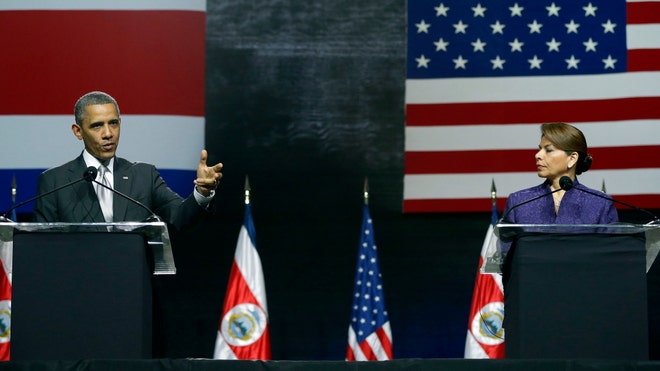
Investors pouring money back into America as the U.S. economy strengthens
"The eye of the storm is directly above emerging markets now, two years after it hovered over Europe and four years after it hit the U.S.," said Stephen Jen, co-founder of hedge fund SLJ Macro Partners LLP in London and former head of foreign-exchange strategy at Morgan Stanley. "This could be serious for Asia."
"The pendulum is swinging back in favor of the advanced countries as U.S. and Europe recover," said Shane Oliver, Sydney-based head of investment strategy at AMP Capital Investors Ltd., which oversees about $130 billion in assets. "It's one of these things that happens once a decade or so when you see a turn in relative performance. We've entered a tougher, more difficult period" for Asia.
The $3.9 trillion of cash that flowed into emerging markets over the past four years has started to reverse since U.S. Fed Chairman Ben Bernanke talked about a tapering in quantitative easing this year. The slowdown in Fed bond buying will probably begin next month, according to 65 percent of economists surveyed by Bloomberg. "The emerging Asia story is crumbling and dollar is once again the king," said Indranil Pan, chief economist at Kotak Mahindra Bank Ltd. in Mumbai.

The US dollar has once again regained its status as the world's most favorite currency
Source:
http://www.bloomberg.com/news/2013-08-20/t...-recession.html
http://www.foxbusiness.com/news/2013/08/19...ormer-star-etf/
http://www.nationmultimedia.com/breakingne...s-30213035.html
http://www.businessweek.com/news/2013-08-1...us-seen-limited
http://online.wsj.com/article/SB1000142412...1743516666.html
 Quote
Quote 0.0167sec
 0.66
0.66
 6 queries
 GZIP Disabled