Welcome Guest ( Log In | Register )

3 Pages  1 2 3 >Bottom

Outline · [ Standard ] · Linear+

 Why are your guitars expensive?, another one of my rants/lessons

views
     
TS+3kk!
post Jun 24 2013, 09:37 AM, updated 13y ago

Look at all my stars!!
*******
Senior Member
8,275 posts

Joined: May 2006
Why are your guitars expensive?

Its been sometime since ive written anything coz ive been rather busy with work and trolling the forums. Before i go on there are a few pointers to the purpose of this write up,

1. this is all about the cost of producing the said guitar it has nothing to do with tone. Higher cost of production doesn’t mean its a better guitar, it just means that the guitar is more expensive to make.

2. The aim is to naturally point out what you are generally buying for in an expensive guitar, it doesn’t try to guide you waht IS a good guitar that is in another article

3. Note the rule of diminishing returns, the higher the cost the less “gains” you tend to have. Therein, how you want to go about understanding what to buy for yourself depends on you.

4. Most if not all the information here is taken from forums, youtube videos and questions to other otais. They are not the rule, if you do see something to correct feel free to highlight and i will change it

Lets proceed:

I would like to divide guitar making into 2 eras for easier understanding: the handmade era and the CNC era. what is a CNC you might ask?

This:

user posted image

its basically a programmed machine...lol

The handmade era pretty much explains itself, traditionally guitar shapes are cut by carpenters tools (a Bandsaw) from a piece of wood. Thereafter its sanded and detailed to look more like a beautiful piece of music instrument. Along the years however this becomes confusing, many guitar companies claim that their guitars are handmade. Then you hear someone somewhere say its CNC and argument ensures. I will explain this marketing ploy later and which its kinda misleading on both sides of the coin.

At one point in time, i suspect the 70-80s CNC went into the mainstream, this meant that many guitar companies started adopting them. CNC is important in our discussion not for its workmanship but for its time factor.

See traditionally bandsawing a guitar is tedious and inaccurate; CNC makes this fast and more consistent. What this means is labour cost goes down! Basically you can shut down the whole ”bandsaw & routing” department and use just a couple of engineers to run the whole process flow. In an hour, a traditional maker might only produce 2 rough cut bodies, now maybe you can make 10.

Where this becomes confusing is in the term “handmake” and the utilization of the CNC, let me take 2 extremes to make a point.

Fender Standard Tele, simple body design which can be cut easily by the CNC very little additional workmanship is required. Basically a shaped plank with pups.

Gibson Les Paul standard, arched top, single cut design which is also cut by CNC HOWEVER the arched top requires more accurate CNC and more post CNC sanding and finishing work. Gibson LP standard also features binding, of which is still by hand.

Notice the difference? They are both CNC, but Gibson has more traditional handmake qualities due to the arched top and binding. Where the guitar companies “claim” their handmake status is in this, they do rough cuts then sand it down and apply the details. Hence are your guitars handmade? Not really. But are they machine made? Not really also.

If you cant picture what im saying here is a factory tour video...


i would suggest going through the whole tour, it gives a lot of information on how a PRS is made

This post has been edited by +3kk!: Jun 24 2013, 12:37 PM
TS+3kk!
post Jun 24 2013, 09:38 AM

Look at all my stars!!
*******
Senior Member
8,275 posts

Joined: May 2006
Woods

There are first a few general things we need to look at, majority of the guitars in the world use woods so that is the most important thing in guitar construction and probably the one that causes the most confusion.

The issue about woods is that they are hard to trace, often unseen and very much let to peoples imagination. Take this example as a reference.

Gibson Les Paul 1959 (as shown in most general places)

Body: Mahogany 1 pc
Cap: Maple 2 pc book matched
Neck: Mahogany 1 pc
Fretboard : Rosewood 1 pc

Looking at the specs against today’s Gibson you might be thinking its the same what, Unfortunately when you look deeper this is what the old Gibson LP looks like

Detailed Gibson 1959 Specs


Body: Honduran Mahogany 1 pc
Cap: Eastern Flame Maple 2 pc book matched
Neck: Honduarn Mahogany 1 pc
Fretboard : Brazilian Rosewood 1 pc


(there are augments to what real mahogany went in, traditionally most people believed they were Honduran however some folks claim that its not right, African Mahogany was used)

Now looking at this, new knowledge of where the wood is from its immediately more expensive to create this guitar. In fact the Brazilian rosewood freeboard itself can easily set you back RM1k with some boutique shops.

The reason to this is due to shortage, at this point in time Brazilian and Honduras cannot be harvested due to CITES ruling. Which means what whoever who has supplies of these woods probably is illegal or very expensive reclaimed wood.

While the tone is up to question, you will see this issue come up time and time again with guitar companies. Gibson in particular suffers the most as in recent years their stock has been raided by government officials once, they even lost their stock to ebony and decided to switch to ritchlite. There are a few companies doing this in the market that i heard of, unfortunately the only one i did my research on was Gibson.

As we speak i have received some knowledge over Madagascar Rosewood being under CITES, hence soon it will be very expensive to get a guitar with that specs.

The second part of the wood story comes with pieces, In general terms the more pieces of wood the guitar has the cheaper it is.

This is often seen in fenders however this is not a certain rule, for example 5 pc neck guitars are normally more expensive than 1 pc in superstrats. Naturally there are those with 1pc and still carry a heavy price tag (ie:EBMM). How good or bad this construct is depends on which camp you belong to there is no proof to say one is better than the other, there are fans for both sides of the divide.

This post has been edited by +3kk!: Jun 24 2013, 01:11 PM
TS+3kk!
post Jun 24 2013, 09:39 AM

Look at all my stars!!
*******
Senior Member
8,275 posts

Joined: May 2006
In This case we observe guitar building costs from a guitar prespective, we go about it by using a base model then slowly adding and pointing our features that create higher cost to your wallet

Base reference Model

Brand : X
Neck Wood: 1 pc Maple, without binding, or fret markers
Bodywood : multi pc Maple, no bindings, tele based body
Bridge: el’cheapo bridge
Pups: In-House generic pups
Eletronics : Cheap wiring
Headstock : Fender Style
Tuners : Generic House Brand
Neck Joint: Bolt On – fender style


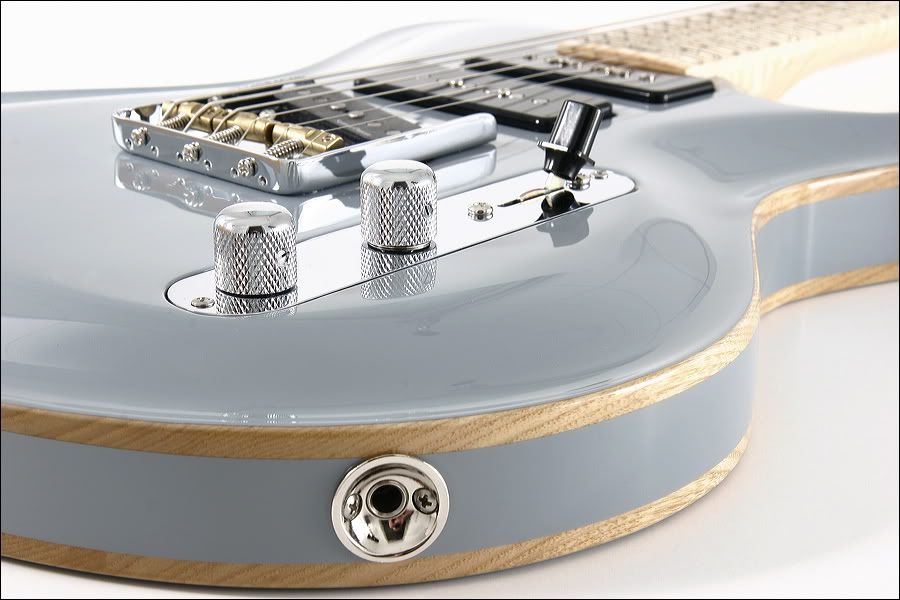
Think this guitar

user posted image

The common ones people know about is the hardware of which i wont dwell upon, where the focus on this article will be on the body/neck which often is normally kept under wraps.

Necks,

Personally i think for all guitars Necks represent the “handmade” part, as even after a CNC cut much sanding is required to give you the rounded and balanced feel from the upper frets to the lower registers. If there was some problems to it, guitarists will notice and promptly call it a shitty guitar and suffer life long depression.

The main difference in necks is the single pc or multiple pc neck:

Most guitars have rather simple 1 pc neck, but this doesn’t apply to superstrats where multi pc necks are a common place. (ie: Ibanez 5 pc wizard prestige necks)The argument FOR multiple pc neck IS that the neck will be more durable and less suspect to cracks if its thin, but like any argument there is no undisputed proof and claim.

What is true however multiple pc necks requires more work, a 3 pc neck would need an individual plank of wood to be roughly cut to resemble a guitar neck. Therein the “neck” is cut in 3 pieces with the centre piece grain flipped to oppose the sides. This is glued together as a single block for a while then the luthier continues on the neck work.

The below vid shows how a 5 pc neck is done....


As opposed to a 1 pc neck.


The amount of wood that goes into the neck also contributes to the price, we observe this by comparing fender and Gibson necks. Fender necks have a straight headstock which is cheaper to produce as it requires a thinner block of wood.

The Gibson neck however due to its angled headstock requires a thicker piece of wood to create this effect, due to the durability issues with this however some companies have moved to scarf joints but that method has yet to achieve much following.

to those who dont understand what is a scarf joint.

» Click to show Spoiler - click again to hide... «


Neck Joints.


There are a few popular neck joint methods, many can mention them off their heads, Bolt on, Set Neck or Neck Though.

Added by Everdying

QUOTE(Everdying @ Jun 24 2013, 06:36 PM)
also in terms of neck construction, you left out set-thru.
essentially, a much deeper version of a set neck, yet not all the way to a neck thru...some go 50%...some go all the way  to 80% or more for some non-logical reason.
*
In terms of cheap, bolt on wins, as the most elaborate you can go is to round the corners at the joint like an Ibanez AANJ. Set neck however requires more work, the neck needs to cut to a certain shape (not a block) and then glued together which requires days. Neck through well its more like wings glued on the neck lol.

user posted image
Ibanez AANJ bolt on Neck

user posted image
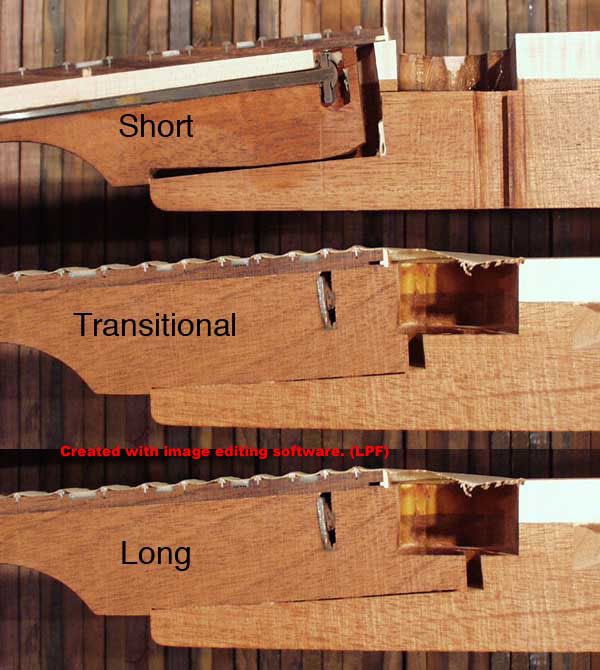
various Gibson Set Neck, Side profile

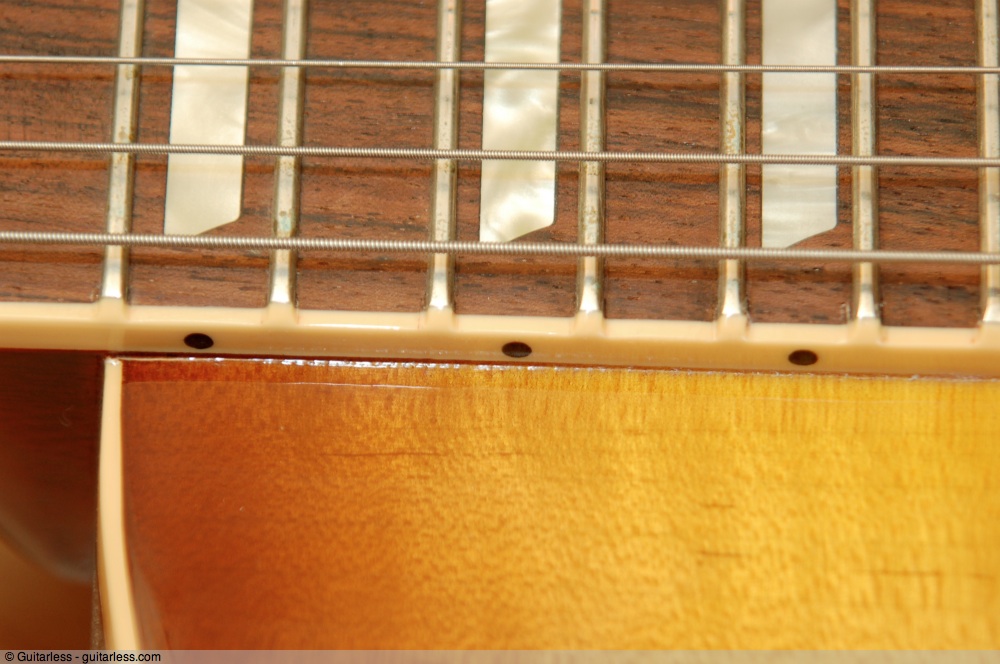
In the topic of necks, we have fretboards, fret boards normally carry little workmanship requirements unless you have bindings (will explain later) or elaborate inlays. The inlays on most guitars can range from simple dots that are created with liquid paper (lol) or elaborate tree of life inlays with abalone shell.
» Click to show Spoiler - click again to hide... «


Most of the production line guitars don’t feature anything special, the main difference is the materials used for the inlays, plastic or natural shell as far as which is better thats another thing altogether.

PRS Inlay work


Guitar Bodies

First to the basics: rounded parts

In simple terms, making something where the shape doesn’t resemble a 4x4 block of wood requires more work and expertise. In a tele based body this is the extreme , the guitar is cut based on a tele shape and wallah = body.

Compared to a Strat shaped guitar however, the differences are shown, the contours will require more sandpapering and work. Likewise the arched top gibsons and PRS would need more sand paper and work, to give an example here is how you hand make an arched top


(theres another uy in youtube that does this with a hammer and a chisel, crazy stuff)

And how you make one with CNC


(theres another method which i think PRS and Gibson uses, its similar to the handmade version by making steps in the arch, then sandpapering it.

Where this goes is that, if a guitar is having sharp ends, no arch, its cheaper to make if all the components are held constant.

Guitar Caps

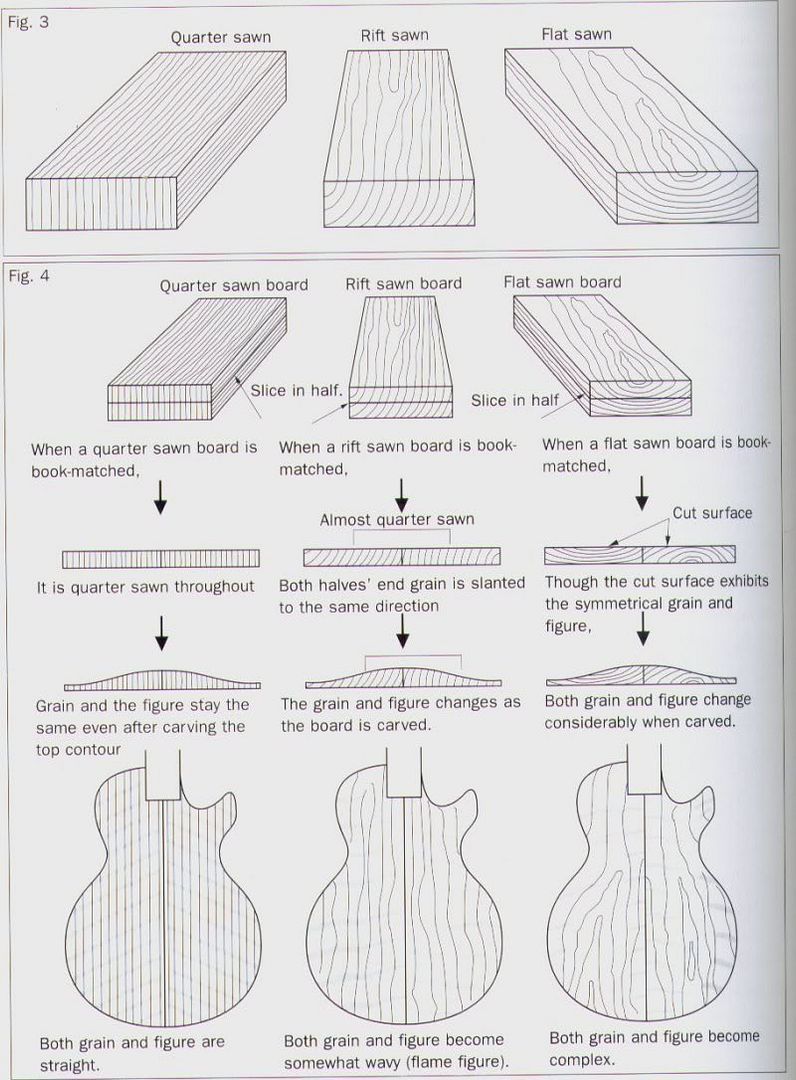
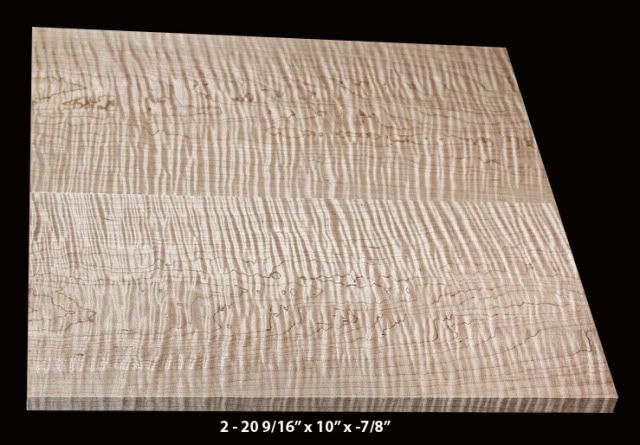
Some bodies have got a cap, like Gibson LP, this is more expensive to make. The maple cap needs to be book matched hence they take a single piece of wood and saw it in half, like a book. this is then matched side by side like this..............

detailed picturs about bookmatched tops by Kelvw (pictures taken our of the quote coz it minimizes inside

user posted image

user posted image

(thanks kelvw)

user posted image
Eastern Flame Maple,

After the bookmatching and cutting the shape of the cap to the guitars shape, both pieces are then glued together, this is a very time consuming process which normally lasts a day. Remember time is money in the production line, so while the cost of production mightstill be low, companies will change on opportunity cost.

Last but not least, the Finish, Finishes on guitars can be a fast or time consuming process depending on what you are trying to achieve. A Gibson nitro finish needs more time to apply and dry as opposed to the more common fender styled poly finish, again as many things about guitars these things are up to your preference, as there is no real benchmark i know of.

This post has been edited by +3kk!: Jul 5 2013, 08:46 AM
TS+3kk!
post Jun 24 2013, 09:39 AM

Look at all my stars!!
*******
Senior Member
8,275 posts

Joined: May 2006
Bindings

Guitar bindings are plastics or wood glued to the sides of a guitar to protect it, traditionally the argument is for acoustics however i personally dont see much reason in eletrics. that being said, binding is a tiresome process, all done by hand and slowly gluing one long plastic to the sides of the guitar. its probably one of the hardest and easily screw up parts of modern guitar construction. however the questions to its use and effect is still up for debate

some binding examples
» Click to show Spoiler - click again to hide... «


there are more videos which are a good look

Conclusion

I might add more, but this is all i can think of at this point in time. As an end note, if you noticed there are no confirms of each part contributing to how good a guitar is or will be. a Telecaster is created with the idea of having the cheapest ever guitar that can be made and its a good guitar adorned by many out there. I think this article creates more questions to the reader of which many are unable to be answered, if all or most guitars are made by machines then wont a china make guitar have the same quality as an american standard ?or issues like, if one day gibson changes from african to china wood, wont that mean its like somewhat china quality?

What is unfortunate for the buyer is that these are real questions, however there are little answers. what is important however is if you really bother about hte above mentioned woods and features a not. if you dont, well guitars are cheaper these days than before, with very cheap options easily fighting against much expensive makes. if you do, then prices of guitars is going up.

This post has been edited by +3kk!: Jun 24 2013, 03:20 PM
pleasuresaurus
post Jun 24 2013, 02:14 PM

spin spin sugar
*******
Senior Member
2,586 posts

Joined: Jan 2008
From: got la sumwhere


Fuh, nanti balik rumah kena study nih! Good stuff mang!
SUSPVCpipe
post Jun 24 2013, 02:21 PM

custom made
******
Senior Member
1,362 posts

Joined: Nov 2005
From: k.terengganu.. alone.. with my bass...play.. alone


so... this is about F vs G?

This post has been edited by PVCpipe: Jun 24 2013, 02:22 PM
TS+3kk!
post Jun 24 2013, 02:55 PM

Look at all my stars!!
*******
Senior Member
8,275 posts

Joined: May 2006
QUOTE(PVCpipe @ Jun 24 2013, 02:21 PM)
so... this is about F vs G?
*
in principal yes, fender was created to make cost effective guitars wherelse gibsons had some heritage to their designs. despite both having eletrics in the same era. in brand specifics tho, its like gibson lp vs the junior or studio

what the article tries to point out is how your guitar is made, i mean it can be a PRS, a ibz or even an SX. from there hopefully you can take something out of it la
ILoveMyGuitarss
post Jun 24 2013, 04:09 PM

Casual
***
Junior Member
363 posts

Joined: May 2013
QUOTE(+3kk! @ Jun 24 2013, 02:55 PM)
in principal yes, fender was created to make cost effective guitars wherelse gibsons had some heritage to their designs. despite both having eletrics in the same era. in brand specifics tho, its like gibson lp vs the junior or studio

what the article tries to point out is how your guitar is made, i mean it can be a PRS, a ibz or even an SX. from there hopefully you can take something out of it la
*
WOrds can be twisted. It is all depends how the reader take it and analyze the data that you shared.

I dun understand much of the article (in the sense I don't know much about electrics), but I feel there are meat and juices.


TS+3kk!
post Jun 24 2013, 04:11 PM

Look at all my stars!!
*******
Senior Member
8,275 posts

Joined: May 2006
QUOTE(ILoveMyGuitarss @ Jun 24 2013, 04:09 PM)
WOrds can be twisted. It is all depends how the reader take it and analyze the data that you shared.

I dun understand much of the article (in the sense I don't know much about electrics), but I feel there are meat and juices.
*
well , ya, but then again its not a political article and if people want to go fanboi, then sweat.gif

what do you not understand tho?
ILoveMyGuitarss
post Jun 24 2013, 04:23 PM

Casual
***
Junior Member
363 posts

Joined: May 2013
QUOTE(+3kk! @ Jun 24 2013, 04:11 PM)
well , ya, but then again its not a political article and if people want to go fanboi, then  sweat.gif

what do you not understand tho?
*
Lp I still know it is lea paul. Thats it I know. Strat, tele, sg... I know there r different types of guitar. Thats all..

But majorly was comparison between new era and older one. And mostly cover difference era production method. So not till a extend that dun understand at all. So, managable..
TS+3kk!
post Jun 24 2013, 04:31 PM

Look at all my stars!!
*******
Senior Member
8,275 posts

Joined: May 2006
QUOTE(ILoveMyGuitarss @ Jun 24 2013, 04:23 PM)
Lp I still know it is lea paul. Thats it I know. Strat, tele, sg... I know there r different types of guitar. Thats all..

But majorly was comparison between new era and older one. And mostly cover difference era production method. So not till a extend that dun understand at all. So, managable..
*
hahah sorry bro, i not well versed in acoustics, i notice in acoustic catalog, they mention where the wood is from, what is laminated etc etc. eletric this one varies, coz u cannot see under the finish. i always wondered why.


brownman90561495
post Jun 24 2013, 04:35 PM

Sangkar Nikolai will touch your National Treasure!
*****
Senior Member
963 posts

Joined: Jul 2009


good stuff. i have learned a thing or two. thanks for this.
ILoveMyGuitarss
post Jun 24 2013, 05:15 PM

Casual
***
Junior Member
363 posts

Joined: May 2013
QUOTE(+3kk! @ Jun 24 2013, 04:31 PM)
hahah sorry bro, i not well versed in acoustics, i notice in acoustic catalog, they mention where the wood is from, what is laminated etc etc. eletric this one varies, coz u cannot see under the finish. i always wondered why.
*
Nothing to sorry about. And im just being kepochi to know more. Because at least both e and a sharing the same setup theory for playability.. so there must be something similar that can be applied both side.

MAybe in electric, u got to take care the electronics more than the wood? As far as I know, u can at least change the whole neck, and by varying the pickup, the tone changed. But for acoustic, it is pretty like.. buy now and bare with it forever. So choosing right tonewood for acoustic is very important. At least for me...
ariffdude
post Jun 24 2013, 05:20 PM

On my way
****
Senior Member
630 posts

Joined: Jun 2008


What about the questions of age, popularity and rarity?
TS+3kk!
post Jun 24 2013, 05:31 PM

Look at all my stars!!
*******
Senior Member
8,275 posts

Joined: May 2006
QUOTE(ILoveMyGuitarss @ Jun 24 2013, 05:15 PM)
Nothing to sorry about. And im just being kepochi to know more. Because at least both e and a sharing the same setup theory for playability.. so there must be something similar that can be applied both side.

MAybe in electric, u got to take care the electronics more than the wood? As far as I know, u can at least change the whole neck, and by varying the pickup, the tone changed. But for acoustic, it is pretty like.. buy now and bare with it  forever. So choosing right tonewood for acoustic is very important. At least for me...
*
not really but that depends on the person

the neck part some guitars can change, but not all have it. the other tonal factors are quite dependant on the guitarist and use. i agree that its easily amendable as opposed to acoustics

but personally i like to keep things as stock, so its kinad like your acoustic also tongue.gif


QUOTE(ariffdude @ Jun 24 2013, 05:20 PM)
What about the questions of age, popularity and rarity?
*
initially i thought to include in, but i cant seem to make sense of some things la. i also didnt include branding and marketing coz afraid fanbois

tongue.gif
regiuseven
post Jun 24 2013, 06:01 PM

/k/ & /mu/
******
Senior Member
1,533 posts

Joined: Aug 2011


Some other things of why some guitars are expensive

>Hype - at first the price seemed normal but after rave reviews, markups (usually custom builders)
>Prestige (no, not Ibanez laugh.gif ) - not talking bout the heritage whatsoever but the maker put themselves above others to be in the league of gods
>Market - this one not sure on what controls what, who controls who but this is looking on the local players trend (one time locals tend to go retro, all go buy Gibson ES sweat.gif ) so models price go up, some remain, some go down
Everdying
post Jun 24 2013, 06:32 PM

Two is One and One is None.
Group Icon
Staff
30,735 posts

Joined: Jan 2003
QUOTE(+3kk! @ Jun 24 2013, 02:55 PM)
in principal yes, fender was created to make cost effective guitars wherelse gibsons had some heritage to their designs. despite both having eletrics in the same era. in brand specifics tho, its like gibson lp vs the junior or studio

what the article tries to point out is how your guitar is made, i mean it can be a PRS, a ibz or even an SX. from there hopefully you can take something out of it la
*
fenders were never cost effective guitars.
they were built that way more likely for production efficiency.
dont forget all the bolts etc needed, extra drilling and routing for the tremolo.

back in the 50s, both a strat and a LP custom would list at the low USD300.
contrast that to a ford mustang which was about USD2.5k, and you're basically paying quite alot for a guitar even then.

Everdying
post Jun 24 2013, 06:33 PM

Two is One and One is None.
Group Icon
Staff
30,735 posts

Joined: Jan 2003
that makes you wonder then, how a LP could stand side by side pricewise with a strat then...
its either the LP was very cheap, or the strat was very expensive tongue.gif
Everdying
post Jun 24 2013, 06:36 PM

Two is One and One is None.
Group Icon
Staff
30,735 posts

Joined: Jan 2003
also in terms of neck construction, you left out set-thru.
essentially, a much deeper version of a set neck, yet not all the way to a neck thru...some go 50%...some go all the way to 80% or more for some non-logical reason.
TS+3kk!
post Jun 24 2013, 06:47 PM

Look at all my stars!!
*******
Senior Member
8,275 posts

Joined: May 2006
QUOTE(Everdying @ Jun 24 2013, 06:32 PM)
fenders were never cost effective guitars.
they were built that way more likely for production efficiency.
dont forget all the bolts etc needed, extra drilling and routing for the tremolo.

back in the 50s, both a strat and a LP custom would list at the low USD300.
contrast that to a ford mustang which was about USD2.5k, and you're basically paying quite alot for a guitar even then.
*
QUOTE(Everdying @ Jun 24 2013, 06:33 PM)
that makes you wonder then, how a LP could stand side by side pricewise with a strat then...
its either the LP was very cheap, or the strat was very expensive tongue.gif
*
you are more accurate in that sense la, fenders were created for mass production kinda like fords were.

i think fenders were overprized when we look it your way, i remember reading how fender got into the game partially for being a very marketing savy enterprise, like apple today

QUOTE(Everdying @ Jun 24 2013, 06:36 PM)
also in terms of neck construction, you left out set-thru.
essentially, a much deeper version of a set neck, yet not all the way to a neck thru...some go 50%...some go all the way  to 80% or more for some non-logical reason.
*
ahh, ok ok will add in

3 Pages  1 2 3 >Top
 

Change to:
| Lo-Fi Version
0.0272sec    0.33    5 queries    GZIP Disabled
Time is now: 15th December 2025 - 03:39 AM