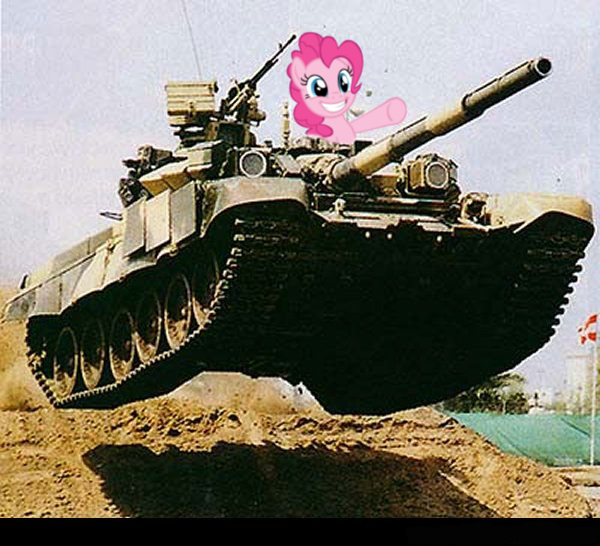
Most of these tanks are unproven in combat save the Merkava, Abrams and Challenger 2. Of these three, the Challenger 2 had the most sterling combat reputation of being able to keep going despite horrendous damage.
The Abrams lived up to predictions that it would be a fuel guzzler.
The Merkava was in the news last year when Palestinian fighters set the Israeli tanks on fire, and still vulnerable to anti-tank missile fire.
Article panjang gile:
http://www.militaryphotos.net/forums/showt...as-a-death-trapOur tank was a death trap -- Jonathan Spyer
Our correspondent, an Israeli reservist, drove a tank into Lebanon on the evening of August 9. It was a routine mission, but as his unit got the order to move out, things began to go wrong» Click to show Spoiler - click again to hide... «
On the evening of August 9, we received word that the operation into El Khiam and Marjayoun was on. We would be commencing movement at 6pm. The unit was positioned on a field next to an avocado grove, on land belonging to a border kibbutz. We had been waiting there for three days. Twice the entry into Lebanon had been postponed.
The routine of tense expectation and cancellation was something you could get used to. You can get used to a lot. You can sit next to a verdant field of avocados, and get used to the endless, sinister booming of our artillery in the morning, and the Katyusha-type rockets from the other side that started around 11am. You can get used to scrabbling in the rich dirt under the tracks as the Katyushas fly overhead, and watching them ploughing up white smoke in the hills. All of that can, within 72 hours, start to feel like a normal routine.
NI_MPU('middle');The operation was into one of the areas south of the Litani River as yet untouched by our forces. They postponed it twice. There were fewer jokes than usual, and no one was playing cards. We knew that shortly we were going into the killing zone, and that it was not certain who would be emerging from it. Lebanon was just a few hundred yards ahead. Familiar and utterly alien.
There was a feeling of something like an elegy with the tanks all in line as the sun began to fall, as we made the final preparations before moving off. There was time for thoughts, cigarettes, maybe surreptitious final mobile phone calls home. Or last-minute adjustments on the tanks.
We had been called up five days earlier. I have served for 14 years in the reserves in Northern Command. In civilian life, I work at a research institute in Herzliya. We deal with Middle East foreign policy, and consult and write and advise. And I live the comfortable life of a bourgeois Jerusalemite in his late thirties. I have lived in Jerusalem for 16 years. But when I was young and ardent in the early 1990s I came to Israel from London and volunteered to join the Armoured Corps. And after finishing in the regular army in 1993, like thousands of other Israelis, I began the yearly round of reserve duty.
I narrowly missed serving in Lebanon in the days of the security zone. And I have spent some unpleasant times in Nablus and Hebron and Gush Etzion over the years. This time, though, as we all knew, it would be of a different order of magnitude.
The call came on Friday evening. I had just finished cleaning my apartment, and was cooking something for dinner. I had met an American journalist just down from Beirut earlier in the day, and we were planning to go out drinking that warm summer evening. The phone rang, and after a second or so of silence on the line a woman’s voice was telling me to report immediately to the agreed point at which buses would be arriving to take us to the north.
I had showered, put the food in the fridge, e-mailed my loved ones and put the uniform on. Three hours later, I was at the depot on the northern border. We’d trained for three days. On the rifle ranges, and in the tanks. The heat was astonishing. A curious silence surrounding everything.
We finished the training exercise with a trip to a shawarma restaurant at the roadside. As we ate, the news came in of 12 reserve soldiers killed by a direct hit from a Katyusha at Kfar Giladi. As we filed out of the restaurant, I caught the eye of Lavav, an old comrade from the first days when they put our company together in 1994. “The last supper,” he remarked with a wry grin.
From there, we had got on a bus to the kibbutz, a few kilometres outside of Metulla, on the northern border, and into the avocado fields. And we had waited.
The time had come. After briefings, and practices, and hours empty but for the constant noise of the rockets and shells. There would be no further cancellations. People walked from tank to tank, shaking hands with friends, wishing each other luck. I remember standing with Ariel R. and exchanging a few brief words before we boarded.
Ariel, like me, was a tank driver from platoon 2. He was watching affairs with a worried furrow to his brow. “We aren’t ready for this,” he said, as we shook hands. I looked at him quizzically, but he declined to elaborate, adding simply: “Not all of us will be coming back.”
“We will,” I reassured him, assuming the father-confessor role that I had awarded myself in the previous days.
Again he didn’t reply, and there was a strange little silence that lasted a few seconds.
I passed by the company commander’s tank. It was about ten to six, the sun still strong in the sky. Alon Smoha was there, another of the old lot from the first days. A day earlier, on the rifle ranges, we had discussed the meaning of the current conflict, and what should and should not be done. Alon, from a traditional Jewish family in Hod Hasharon, favoured a hard-line approach. Unlike with others, his hawkishness had not abruptly vanished when he found himself in the firing line.
Smiling, he had described how the call-up had come as he sat with his parents making the Friday night Kiddush.
We didn’t talk in the moments before setting off for Lebanon. Instead, as I passed by the tank, we just shook hands. I remember his hand, lean and strong, gripping mine for a long moment, and then setting off for our own tank. Time to move.
We had to drive up to Metulla, right on the border. This was to be the entrance point. The sun was shining as we pulled out of the avocado field. We drove on the main street. A sign of war. The sound of the artillery in the distance. When we got to the ascent toward the border in Metulla, we stopped for a while, waiting for darkness.
At Metulla, we witnessed strange scenes. The lights of the houses turned off. Most of the residents had long since headed for the south.
But by the side of the roadside were a group of Hassidim from the sect of Nahman of Breslau, who had rigged up a makeshift sound system at the furthest point accessible to civilians.
They had recorded some songs especially for the campaign. There was one about Hassan Nasrallah which they were blaring out over and over again. The light was fading into twilight as we waited. There were 300 Hezbollah men in El Khiam, they’d told us, who were waiting too.
The media — Israeli and foreign — were there in force. The boys swapped lewd comments about the young female reporters. An Italian cameraman made a great show of delivering a speech detailing his love for Israel, which did not, of course, in any way detract from the equal love he bore for the peoples of the Arabic-speaking world. Overcome by emotion, he produced a small cigar from his top pocket. He gestured up to us. “I will give you this cigar,” he said grandly, “if you will promise me you will think of me when you smoke it, later, in Israel.”
Itzik, our loader, who was of similarly theatrical temperament, answered him that he would certainly do so, and the cigar was duly transferred.
As the darkness came down, we got the order to move. I remember a Bratslav Hassid, standing on the roof of a car by the side of the road as we went in. He was blowing kisses at us as we went by.
It was as though we shrugged aside the lunacy of the scene as we took the dirt road toward the Good Fence. No more foreign journalists beyond this point. No more Bratslav Hassidim. Silence except for the engine and the crackle of the internal communications. Into the purifying fire.
It took a while, down a silent descent, until we were in the first fields of southern Lebanon, heading towards the El Khiam ridge. Itzik said the travellers’ prayer through the intercom as we entered. Darkness and silence all around us.
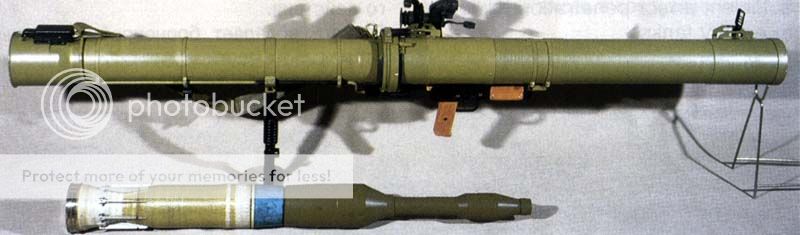
We entered El Khiam in the dead of night, slowly, cautiously and with no resistance. In neighbouring Marjayoun, the objective of another company from our battalion, the situation was a little different. There, the lead tank encountered an RPG 29 team at a distance of around 30 metres. The RPG team had managed to fire a single rocket, causing damage to the turret, but not destroying it, before being killed by a shell launched from the tank.
All round El Khiam, things were quieter than we expected. Our job wasn’t to enter the town. Instead, we circled around it, firing at certain, selected targets. Hours passed. There was a fire spreading in the fields, set off, I suppose, by a stray Israeli shell. As the hours went by, I began to feel sleepy, the fire in my left periscope, the green of the night vision, and the earphones pressing in my ears.
Things began to go wrong shortly before first light. We got the order to move out, back in the direction of Israel, about an hour before the dawn. We were 7km (4½ miles) north of the border, and this would have been ample time. Unfortunately, however, we got word through the radio that the company commander’s tank had developed a problem and couldn’t move.
We had to head back, and fix cables to it, ready to tow it the distance back to the border. Towing a tank is a laborious, slow business. It limits speed to about 5 km/h, and we had at most just under an hour of darkness left.
We got the cables strapped on, and began the slow, painful journey back.
After about half an hour, it began to get light. We were still 6km north of the border.
The dragging process was an excruciating, draining business, with the two tanks bumping and lurching against one another. It was Alon Smoha in the driver’s compartment of the other one. Smoha, whose hand I had shaken before we’d set out.
Rising daylight, the snail’s pace, and our bobbing along like a procession of ducks way down in the valley. Obvious disaster.
I was thinking about the thoughts I imagined one would have between going over a mine and death. Both tanks were sending out as much smoke as we could manage, in the forlorn hope that it would confuse the enemy.
Then an unfamiliar girl’s voice came through the external communication. She said that the brigade had information that within ten minutes we would come under missile attack.
It was broad daylight. We were still about 5km north of the border. The Hezbollah men had seen out the night and now were going to work. Which wouldn’t have mattered if we’d covered the necessary ground in time to beat the dawn. But we hadn’t. There was nothing much we could do except keep going, at an excruciating snail’s pace, and hope.
We were dragging the tank from a reverse position, so I was looking at the company commander’s tank in front of me.
Then there was an almighty crash into the tank we were dragging, and flame was coming out of the engine grille. The crash confused us for a moment, because it sounded similar to the sound that a tank makes when it is firing off a shell.
I heard the company commander shouting “Missiles, missiles!” through the radio, which left no more room for doubt. Calm, I don’t know why but with absolute calm, I thought with a sort of mild surprise that very possibly I wasn’t going to be getting back across the border. Then, suddenly, I had no brakes left. Tried to brake, couldn’t, nothing left. Then there was a godawful jolt on our own tank, and the engine was dead. Everything was quiet. Peaceful, for a moment. But the internal radio was working, and I heard the order to get out of our dead tank, which had just caught a Kornet missile in the engine, and which was about to turn into a death trap. The engine would go up in flames, and the flames would spread to the turret, and begin setting off ammunition. There wasn’t much time.
I grabbed my rifle and ammunition, and pushed back the driver’s chair, crawling into the turret area. The boys were waiting there, and Itzik opened up the back door. He was first out.
There were mortar rounds landing all around. Dangerously close. Maoz, our commander, spotted an anti-tank ditch close by, and shouted for us to take cover there.
We sprinted for the ditch and into it. Up to our knees in muddy water, we splashed and sloshed our way along it, through grass and thorns. Behind us, we saw the company commander’s crew also making for the ditch. But one man was on a stretcher, jolting and motionless, and even though I could see only his boots I knew he was dead. Someone shouted: “The company commander’s dead,” and I thought for a moment of that thin youth, in his mid-twenties, who had only recently taken over and who had now been killed.
But then I saw him entering the ditch, and had to re-adjust. So it wasn’t him. Who was it then? Who was the dead man? With a round chambered in the rifle, I peered up to have a look. It was Alon Smoha on the stretcher, lying on his front, with a very deep wound in his right side. He wasn’t burnt or blackened. His feet were crossed over one another. The missile itself must have torn into him.
My main worry, as I stared out across the ditch, was that the Hezbollah in El Khiam would now send down a squad to have a look at the handiwork of the missile team. I strained my ears to hear the sound of Arabic voices, or the crackle of footsteps. That would be the beginning of the final bloody act. There would be a firefight, and I imagined my own body crashing back into the muddy water. I looked down at the rifle, and imagined a bearded Arab face coming over the edge of the ditch.
Would I give him a bullet between the eyes? We would see.
The minutes passed. It was clear that back across the border they must have known that we’d been hit. I had always imagined that if soldiers were lost in the field, complex, efficient systems, perhaps involving the Air Force, would spring into life. Instead, we crouched in the ditch, with mortar rounds landing from up on the ridge, and waited.
Either the Hezbollah or our own guys were going to find us.
I looked down at the water, and noticed that it was full of tadpoles. Strange to see them flitting easily in the murky swamp.. All quite indifferent. And the body of Alon Smoha lying at the edge of the ditch. Then we heard a loud crack from where the tanks were. This was it. The Hezbollah were here. I strained my ears in the absolute silence for a moment. Another crack. But someone announced after a long moment that it was only the pop of ammunition cooking up and going off, as the two tanks went up in flames. More time passed. The moths and the tadpoles. The filthy water. The rifle, with a round in the chamber, heavy in my hands.
I looked at my watch. Forty minutes had passed since we had entered the ditch. Where the hell were they? Had they forgotten us? We couldn’t hear any artillery, nor anything from the air.
After 50 minutes we heard the rumble of tanks in the distance, and machinegun fire. Once again, the look of everything changed. It meant there was a chance, after all, that we might get out of this. But the tanks were very far off. It would take some minutes before they reached us. I strained everything in my heart willing them to get a move on.
Then suddenly, much closer, and out of nowhere, a different sound. And someone shouted: “It’s an APC, it’s the engineers.” We all scrambled over the ditch and there, like manna from heaven, was an APC of the engineers, with a frantic soldier motioning us to get in, fast. I began to make for the APC, but then someone called me back, and I realised that they needed to bring the stretcher and the body of Smoha over the ditch. I ran back, jumped into the ditch again, and took hold of one side of the stretcher. Cursing, up to my knees in water again, we managed to manouevre it over to the other side. We fixed the stretcher up on the APC, and all dived in. There was gunfire all around, and I didn’t know what was theirs or ours.
In the APC, packed like sardines. I was next to Amit, who had been in the same crew as Alon Smoha, and I knew they’d been close friends. He was half in a daze, and he asked me “Where’s Smoha?” “He’s dead, Amit,” I said, and he began to weep. I was nowhere near weeping. Rather, I felt something close to a sort of grim exhilaration which it is very hard to describe or precisely locate. Finally someone said: “OK, we are over the border. We’re in Israel.”
There were still explosions everywhere. There was still the dead man, on the stretcher, with his cruel, gaping wound. But at that point, I realised that death, which had seemed to be bringing its huge, empty face very close up to me and the rest of us, was receding back again to its own realm.
Once we were over the border, there were medical crews waiting, and they took Alon and laid him out and covered him with a white plastic cover within minutes. The noise of the artillery all around was still deafening. But we were back in Israel.
Thirteen hours. That was the time of the whole thing. From leaving the avocado field to making it back across the border.
Afterwards, there would be the accusations, the recriminations. Why had we been left to drag the tank back in broad daylight? With a clear view of us from the ridge. Crawling along in a valley 6km north of the border. Why had we been left to carry out a suicide mission?
There would be Alon Smoha’s funeral in Hod Hasharon, the terrible keening and wailing of his Iraqi mother and his sisters.
And there would be the moment when Itzik and I took a trip to have a look at our two tanks, after they finally managed to drag their burnt wrecks back across the border. We checked where the missiles had entered. The missiles that took out the engines of the two tanks entered at precisely the same point. At the engine grille. But in Smoha’s tank, the missile had entered, and then continued inwards, flying over the engine, in the area between the engine and the outer armour. Then it had penetrated the wall of the driver’s compartment, and killed him. In my case, on the other hand, owing to a difference in trajectory of no more than a few centimetres at most, the missile had ploughed into the engine — destroying the tank, and leaving me untouched.
We also learnt later that a ten-man Hezbollah squad had been spotted descending from El Khiam in our direction. Presumably because of the presence of our forces in the area, they had turned back, preventing the firefight I had feared and expected.
I took part in two more missions into Lebanon before we were demobilised. The country was full of bitterness and confusion in the days that followed the ceasefire. What is most prevalent now is a feeling that it isn’t over. That the war and its uncertain outcome have failed to resolve any of the underlying factors that led to its outbreak. This is the factor fuelling the urgency of the protests now being organised by reserve soldiers. The anger and disgust felt by many of those who fought in Lebanon and returned does not represent a crisis of Israeli identity or national ideals, but rather a re-affirmation of them. This, however, goes together with a deep sense that the hedonism, cynicism, mediocrity and corruption that prevail among large sections of our leadership are not worthy of the sacrifices made for the country by the frontline soldiers. Whether Israel will find within itself a spirit worthy of this sacrifice, and whether this spirit can find its way to the leadership of the country is the key issue. The forces arrayed against us throughout the region and beyond it are vigorous, youthful and suffused with a fanatical hatred. We will prevail against them, I believe, on condition that we can make of ourselves and our society a thing that does not shame those who died in its defence and preservation.


 10 Kereta Kebal Terbaik Di Dunia, info and share
 Feb 16 2013, 02:28 PM, updated 13y ago


 Quote
Quote




































.png)



 0.0316sec
 0.35
0.35
 5 queries
 GZIP Disabled