Does the NEX-6 come with the ADP-MAA adapter, to mount Sony iISO flashes (F20-F58)?
The SONY NEX Discussion Thread ver. 3N
The SONY NEX Discussion Thread ver. 3N
|
|
 Nov 8 2012, 09:07 AM Nov 8 2012, 09:07 AM
Return to original view | Post
#1
|
 
Elite
4,956 posts Joined: Jan 2003 From: KL  
|
Does the NEX-6 come with the ADP-MAA adapter, to mount Sony iISO flashes (F20-F58)?
|
|
|
|
|
|
Nov 8 2012, 09:10 AM
Return to original view | Post
#2
|
|
Elite
4,956 posts Joined: Jan 2003 From: KL
|
QUOTE(chiahau @ Nov 8 2012, 09:09 AM) Don't think so Do you know this from unboxing your NEX-6? Some people from Sony thought the A99 would not come with the adapter!  |
|
|
Nov 8 2012, 09:19 AM
Return to original view | Post
#3
|
|
Elite
4,956 posts Joined: Jan 2003 From: KL
|
QUOTE(vyruzj @ Nov 8 2012, 09:13 AM) I don't see any adapter for the hotshoe. I just got my nex-6 yesterday... Cheers! Darn. Thanks! |
|
|
Nov 9 2012, 06:38 PM
Return to original view | Post
#4
|
|
Elite
4,956 posts Joined: Jan 2003 From: KL
|
loon1983: Whoa, where is this?
|
|
|
Dec 6 2012, 11:37 AM
Return to original view | Post
#5
|
|
Elite
4,956 posts Joined: Jan 2003 From: KL
|
QUOTE(merchant9 @ Dec 6 2012, 02:18 AM) Curious question. I don't remember the exact quote, and I can't find it, but Zeiss defines the perfect lens as a lens where changing the aperture only affects depth of field and not image quality.Why Sony doesn't make any lens wider than f1.8? Considering the Zeiss is only f1.8 priced at 3.4k.. Canon 50mm f1.4 is only 1.5k. Sony quite expensive eh? This is true for the Zeiss lenses I have, and the lenses I've tried - the Carl Zeiss Distagon T* 24mm F2.0 ZA SSM for example, is sharp at F2.0 and does not have spherical aberration. It does not become sharper at F2.8, not by much anyway. Likewise the Carl Zeiss Sonnar T* 135mm F1.8 ZA is great at F1.8 and it gets only a bit better at F2.0, after which it doesn't get better stopping down. You will find this to be true for all Carl Zeiss lenses - I find it true even for a lens I used to have, the Carl Zeiss Jena Flektogon 35mm F2.4 DDR in M42 mount, which did not have the T* coating yet. If you're familiar with the regular 50mm F1.4 lenses from any brand, you'd know that at F1.4, it's a bit hazy, with spherical aberration, and gets gauzy where it is nearly in focus. It gets a lot better at F2.0. The Voightlander primes are a prime example of this. Of course you can use this to your advantage as a portrait lens. The other benefit of those F1.8 lenses is that it usually focuses a lot closer than the F1.4 counterparts - the 24mm F2.0 I mentioned, and the Carl Zeiss Sonnar T* 24mm F1.8 E-mount, both focus a lot closer than the Canon/Nikon/Samyang 24mm F1.4. Another example is the Sony 50mm F1.8 DT SAM - it focuses to 34cm close, but it is an APS-C lens while your regular full-frame 50mm F1.8 will only do 45cm. Then remember that the Sony E-mount 50mm F1.8 has Optical Steady Shot! That is something the Canon/Nikon does not. You can, of course, get the Sony 50mm F1.4 A-mount for RM1050 and the LA-EA2 (I forgot the price, but this combo will be more than the Canon.) |
|
|
Dec 9 2012, 10:47 PM
Return to original view | Post
#6
|
|
Elite
4,956 posts Joined: Jan 2003 From: KL
|
nlik: Traditionally focus adjustment is because the phase detect AF sensors may be a different distance from the lens, compared to the lens to the sensor distance. Phase detect AF sensors on the sensor itself would solve this problem.
wKkaY: Very nice! whateva2k: Dang, what a bummer! |
|
|
|
|
|
Jan 7 2013, 03:36 PM
Return to original view | Post
#7
|
|
Elite
4,956 posts Joined: Jan 2003 From: KL
|
QUOTE(EvanKeat @ Jan 7 2013, 02:24 PM) So nlik manage to get LR4 & CS6? I was at Zaloon waiting to pass files! I miss the whole event cause no space for me! What kind of TT has no space for people who want to come? |
|
|
Feb 21 2013, 11:58 AM
Return to original view | Post
#8
|
|
Elite
4,956 posts Joined: Jan 2003 From: KL
|
QUOTE(ultrageek @ Feb 21 2013, 11:28 AM) There's a lot of lens because they all have different functions optically. Granted there are All in One's, but you loose in terms of Image Quality (IQ). Actually:Hence the phrase, Jack of All trades, Master of None. Lenses are generally split into various groups: Fish Eye (Anything below 10mm!) Ultra Wide Angle (10 - 20mm) Wide Angle (18 - 24mm) Portrait (28 - 60mm) Zoom (70mm) Tele/Long Zoom (100 - whatever you ca find!) Macro (100mm, etc) Fish Eye = gives a fisheye perspective (all straight lines that cross the center of the image stay straight, but if it does not, it becomes curved) Rectilinear = the standard, non-fisheye perspective Portrait can be any focal length, even traditionally up to 90mm (135mm on full-frame) Zoom = any lens that can change focal length - that means a 11-18mm is a Ultra Wide Angle Zoom while a 300mm is not a zoom Telephoto = any lens with a focal length longer than the 'normal' field of view - on APS-C this would start at 50mm Macro = any lens that can give 1:1 magnification - you can fill the frame with an object that is the same size as the sensor e.g. a 36x24mm stamp fills up the frame on a 36x24mm full-frame camera, if you're using a 1:1 macro lens. A 1:4 magnification means it can only go as small as 144x96mm on full-frame, for example. |
|
|
Jun 9 2013, 05:12 PM
Return to original view | Post
#9
|
|
Elite
4,956 posts Joined: Jan 2003 From: KL
|
QUOTE(yonghong @ Jun 9 2013, 12:29 AM) Wan to ask Sony e mount to alpha adapter can support auto focus with any aplha lens even third party alpha mount lens? The LA-EA1 supports only SSM/SAM and Sigma HSM/Tamron USD lenses because it can tell the in-lens motor to focus.The LA-EA2 has a screw-drive motor as well so it supports every A-mount lens, even third-party ones. |
|
|
Jun 10 2013, 10:21 AM
Return to original view | Post
#10
|
|
Elite
4,956 posts Joined: Jan 2003 From: KL
|
QUOTE(yonghong @ Jun 9 2013, 05:20 PM) so which statement is correct?? Sony LA-EA1 lens adapter = RM5xx how much ya usually for a LA-EA2 adapter? Sony LA-EA2 lens adapter = RM9xx Well there are two things you could do: 1) Google the LA-EA1 and LA-EA2, to see if what I am saying is correct. 2) go to a Sony Store and ask to try both of them. Bring your third-party lens. |
|
|
Jun 15 2013, 11:27 AM
Return to original view | Post
#11
|
|
Elite
4,956 posts Joined: Jan 2003 From: KL
|
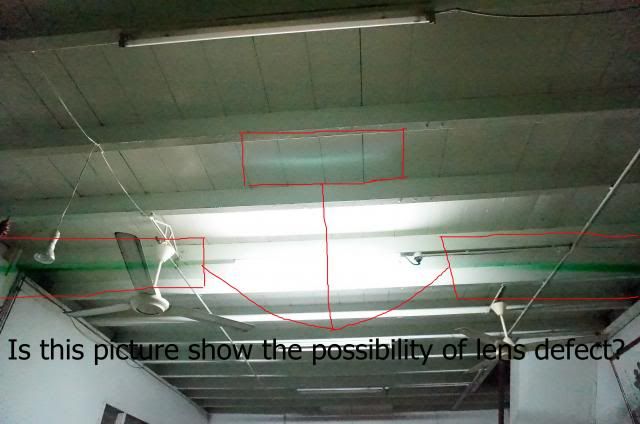
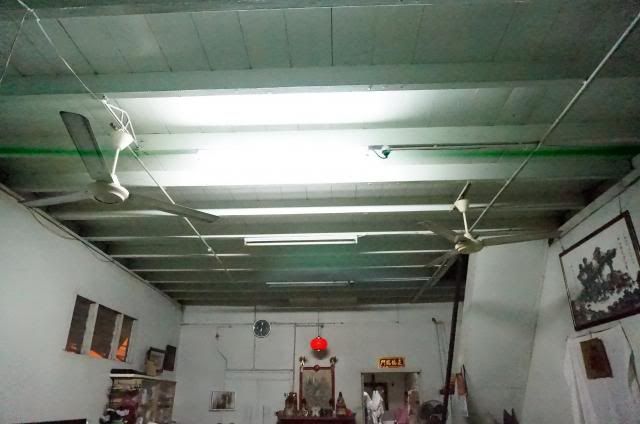
QUOTE(candee @ Jun 15 2013, 10:05 AM) Comparison Picture 1 & Picture 2 with different angle This is called ghosting. It always appears in the position of very bright lights, and you rotate it 180 degrees around the center of the picture. It becomes more pronounced with cheap UV filters. Try removing the UV filter.» Click to show Spoiler - click again to hide... « What is lens flare? This post has been edited by albnok: Jun 15 2013, 11:28 AM |
|
|
Jul 22 2013, 02:26 PM
Return to original view | Post
#12
|
|
Elite
4,956 posts Joined: Jan 2003 From: KL
|
QUOTE(ChinWY @ Jul 21 2013, 11:27 PM) I will not try to kid you that you will be able to make magic out of the box and yes I do not take flash pix... I have until today not use the flash supplied. You may not get a faster shutter speed even if you remove the IR-blocking hot glass - this is especially so when the light has very little infrared, e.g. flourescent lights or LEDs. You will gain some, but not a lot, from tungsten lighting. However it will register as an unsightly purple cast so this is not practical for shooting unless you don't mind shooting in black-and-white.A clear understanding of two pieces of hardware is needed. The Camera + sensor and the Lens. They each have their limits and if deployed in tandem together with the skill of a good photographer.. you can make some form of magic. I will assume you are using the supplied kit lens. SEL1650 or SEL1855. The NEX high ISO capability will allow you to take pictures in low lighting condition but your ISO will also be push up pretty high. That means under low lighting condition, image will be grainy or noisy. It is irrespective of type of camera.. unless you shoot on a modified HOT GLASS (ie IR enable) and that will be another story.. In short, you are not going to get that crisp studio like photo with all the super sharp contrasting colour and detail. You need special lighting for that, again irrespective of type of camera.. I dont know how close up you need to take your food pix. A macro lens with a wider aperture may solve some of your problems including the ones mention above. In fact even with Prime Lens, unless you are using wide angle, most will need at least 8 inches. You should be able to get those data from the lens manual. Portraits. That is a different game again. If bokeh is your concern and what most will argue over, that kit lens will give you satisfactory result. You are not going to get any magic out of it. SHARP photo overall, yes. Classic photo NO. It is a zoom lens, not a prime so dont expect magic to happen. Distance to subject, half body, full face, full body; all the bokeh will be affected by type of lens, and available lighting. I personally prefer 50/1.5 manual prime and if distance allow, longer lens. Again, this is personal.. Shooting portraits often means invading into the privacy of the subject space, a fair amount of space is best for optimum effect if you want a more natural look. Obviously, if you can afford $$, Zeiss Planar or Sonnar will be great choice, Leica if you hav bottomless pocket. RAW, JPG?? you can have either or both during time of shooting in my 5N. I belief it should also apply to the 3N too. Irrespective of any camera make, most of todays kit lens will deliver sharp photo under normal condition. You, the photographer has to deploy your skills to make the winning shot. With Prime lens, you just get a slightly different draw, but will still produce crap if you dont have the skills. There seems to be this idea that portraits must be shot with a long lens with lots of bokeh. Not true! You can shoot a portrait with the background in sharp focus and include the background and what the subject does for a living. There is no need to get a Zeiss or Leica to shoot portraits.  However, if bokeh is what you are looking for, the Sony/Minolta 135mm F2.8/T4.5 Smooth Transition Focus is unparalleled. Every other "buttery" bokeh lens is nonsense because they don't even approach bokeh the same way. |
|
|
Jul 28 2013, 11:43 PM
Return to original view | Post
#13
|
|
Elite
4,956 posts Joined: Jan 2003 From: KL
|
QUOTE(Darkshining @ Jul 28 2013, 09:39 PM) Wanna ask something, E-mount 35mm f1.8 still not officially available in Malaysia? It is already on sale. Well at least Studio Zaloon has it, and there's no reason why other places should not have it. |
|
|
|
|
|
Jul 30 2013, 01:23 AM
Return to original view | Post
#14
|
|
Elite
4,956 posts Joined: Jan 2003 From: KL
|
QUOTE(danielcmugen @ Jul 29 2013, 10:27 PM) What?? So far? 25cm from the sensor plane to the object. So if you minus the distance from the sensor to the E-mount (18mm - which is where E-mount gets its name - E for eighteen mm flange distance) and the length of the lens, you get what appears to be nearer. Yes that's the 1. Generally, the shorter the longest focal length on a zoom, the nearer it can focus - so a 18-55mm can focus closer than an 18-200mm, and a 10-18mm will focus closer than a 16-50mm. I have not checked with E-mount, but this rule of thumb was true for SLR lenses. This post has been edited by albnok: Jul 30 2013, 01:26 AM |
|
|
Aug 10 2013, 10:52 PM
Return to original view | Post
#15
|
|
Elite
4,956 posts Joined: Jan 2003 From: KL
|
QUOTE(eternal25 @ Aug 10 2013, 05:10 PM) hi guys, why my nex 5 sometimes will automatically capture two photos. One is normal photo, another 1 is zoom in...is that setting go wrong? Sounds like you enabled Auto Portrait Framing. |
|
|
Aug 11 2013, 03:11 AM
Return to original view | Post
#16
|
|
Elite
4,956 posts Joined: Jan 2003 From: KL
|
QUOTE(eternal25 @ Aug 11 2013, 03:03 AM) thx bro..no more duplicated photo after i unable it...by the way what is the diff between intelligent auto and superior auto? Intelligent Auto will not automatically choose to shoot HDR or handheld twilight with multiple exposures, while Superior Auto might, depending on the situation. The multiple exposure thing might catch you off guard if you don't notice the icon blinking. |
|
Topic ClosedOptions
|
| Change to: |  0.0238sec 0.0238sec
 0.23 0.23
 7 queries 7 queries
 GZIP Disabled GZIP Disabled
Time is now: 14th December 2025 - 02:32 AM |
 Quote
Quote