Outline ·
[ Standard ] ·
Linear+
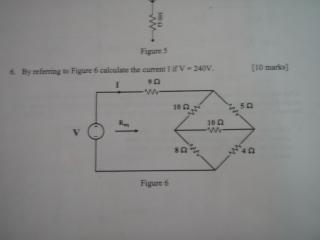
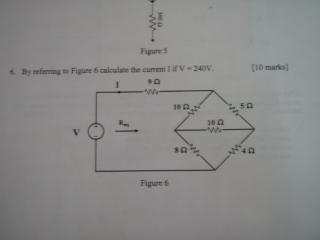
Science a little bit help on this 6 question.............., eletric and eletronic engineering
|
TStimlo94
|
 Sep 21 2012, 02:40 PM Sep 21 2012, 02:40 PM
|
New Member


|
QUOTE(v1n0d @ Sep 21 2012, 02:31 PM) No image.  pardon me as i am new to this forum~ hopefully it will bring me a lot of help  ,photo are successfully added after 1hour.......LOL This post has been edited by timlo94: Sep 21 2012, 02:40 PM |
|
|
|
|
|
TStimlo94
|
Dec 4 2012, 10:46 PM
|
New Member
|
QUOTE(quantum @ Sep 24 2012, 01:45 AM) Been ages since I saw this. You should read up on Wheatstone bridges. I don't remember how to do this but I think you can just input in the values to the circuit equation. Kk |
|
|
|
|
|
TStimlo94
|
Dec 5 2012, 11:02 PM
|
New Member
|
QUOTE(Critical_Fallacy @ Dec 5 2012, 03:08 AM) Ohm's Law, Kirchhoff's Circuit Laws, Thévenin's theorem, and Norton's theorem are some of the foundations of Electrical Engineering, very much like Newton's Laws of Motion that form the basis for classical mechanics. Pick up a good textbook like “ Circuit Analysis: Theory and Practice, 5th edition” by Allan H. Robbins and Wilhelm C. Miller.  wow....thanks bro =), nice tips^_^ |
|
|
|
|



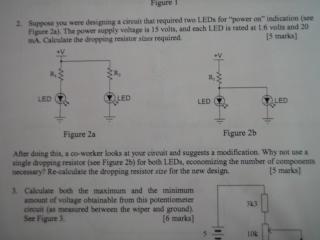
 please help me on the solution for the 6 question which i had uploaded the image of the question.......i just junior to the eletrical engineering,so can't follow up well



 Quote
Quote

 0.0149sec
 0.26
0.26
 7 queries
 GZIP Disabled