Welcome Guest ( Log In | Register )

Outline · [ Standard ] · Linear+

General LEARNING JAPANESE!, LEARNING JAPANESE!!

views
     
shinmei88
post Jun 18 2008, 04:34 AM

New Member
*
Newbie
4 posts

Joined: Feb 2008
hi..i m planing to prepare a japanese lesson in japanese letter which is in
hiragana,katakana and kanji..
the material and format i am using is which i studied
last time in a centre...hopefully i will make a new lesson in
''3 days a week'' which like intensive course since i also want to make this lesson end fast..
the reason i make this thread is to help improve the reading in
japanese letter so student are able to read manga in japanese instead of english..
secondly is to help student that taking jlpt lv 4 and 3 or 2 in future..

the way of the centre method that i studied last time is through reading and writing to improve speaking skill.
as for my experiance i have spent 1 year and 2 months to complete the whole programme
which now i plan to complete it before jlpt this year if possible..
so i will start this lesson with most beginner lv so anybody also can learn together.. smile.gif
there is 15 level of text book from ''lv4A'' to ''LV L'' in this lesson which is similar to
-------------------
LV / JLPT LV4
-------------------
4A---introdution of hiragana, input vocabulary, sentences
3A---writing hiragana,grammer, sentences
2A---grammer,noun,adjective sentences
A ---introdution of katakana,kanji
B ---story,numerals and counters,kanji
C ---sentences structure,topic,negative and past tense
D ---dictionary form(plain form),okurigana
-------------------
LV / JLPT LV 3
-------------------
E ---kanji, essay, story,
F ---story,kanji, grammer
-------------------
LV / JLPT LV 2
-------------------
G to I --intermediate to advance lv grammer
-------------------
LV / JLPT LV 1
-------------------
J to L --story,literature

the end...

because of this is a lesson in japanese letter so its better to prepare a note book do a daily practice by writing and copy the sentence....

if any questions that u like to ask it will be fine to post it here and if i made any mistake pls correct me as well tongue.gif


[COLOR=red][SIZE=7]LESSON 1 OF LV 4A


[/B]Hiragana 1

1) letter of hiragana
___________________
----a---k--s---t---n--h--m---y--r---w----

a- あ か さ た な は ま や ら わ ん

___________________

i- い き し ち に ひ み い り い 

___________________

u- う く す つ ぬ ふ む ゆ る う

___________________

e- え け せ て ね へ め え れ え

___________________

o- お こ そ と の ほ も お ろ を*

___________________

2) changing sound

- all of ''K'' sound eg: [ か き く け こ ] will be converted to ''G'' sound when add with 2 dots like
[ が ぎ ぐ げ ご ].

- all of ''S'' sound eg: [さ し す せ そ ] will be converted to ''Z'' sound when add with 2 dots like
[ ざ じ ず ぜ ぞ ]

- all of ''T'' sound eg: [ た ち つ て と] will be converted to ''D'' sound when add with 2 dots like
[ だ ぢ づ で ど ]

- all of ''H'' sound eg:[ は ひ ふ へ ほ ] will be converted to ''B'' sound when add with 2 dots like
[ ば び ぶ べ ぼ ] and will be converted to ''P'' sound when add with 1 small circle [ ぱ ぴ ぷ ぺ ぽ ]

* the reading of '' じ '' and '' ぢ '' is same while '' ぢ '' is seldom used in japanese word
and also '' ず '' and '' づ ''

* '' を '' is a particle so it wont be used in any of word in japanese letter..

* the ''G '' sound is pronounce as ''game''s G not ''genaration'''s G

* '' つ '' sound is unfamiliar sound for english speaker which is pronounce as ''tskk''

* '' ち '' is pronounce as ''chi'' not ''ti''


lets practice the writing of hiragana then tomorrow will be continue another lesson smile.gif

今日はここまでお疲れ様です。
___________________________________________________________________________________________


link to other lesson

LV4A
part 1
part 2
LV3A
part 1
part 2
part 3
LV2A
part 1
part 2
part 3
part 4
part 5
LVA
part 1
part 2
part 3
part 4
part 5

This post has been edited by shinmei88: Jul 15 2008, 02:24 AM
shinmei88
post Jun 18 2008, 04:43 AM

New Member
*
Newbie
4 posts

Joined: Feb 2008
dont said like that ...everyone just wanna help out to study in japanese language so that
it will be easy to do something related in japanese ...such as anime , game , manga, smile.gif
shinmei88
post Jun 18 2008, 05:01 AM

New Member
*
Newbie
4 posts

Joined: Feb 2008
QUOTE(Suk @ Jun 17 2008, 09:39 PM)
anyone can recommend me a good JP tuition centre ?
*
good? how good u want..and btw where u stay?


Added on June 18, 2008, 5:04 am
QUOTE(irienaoki @ Jun 17 2008, 08:20 PM)
try check it here....JFKL
douzo...
*
hi.. as i know JFKL only recruit student who passed JLPT LV 3 and have score 320 and above...
somemore they will give new enquiries a test...

This post has been edited by shinmei88: Jun 18 2008, 05:04 AM
shinmei88
post Jun 18 2008, 09:03 AM

New Member
*
Newbie
4 posts

Joined: Feb 2008
huh...i already ask permission from mod wor..
shinmei88
post Jun 18 2008, 09:08 AM

New Member
*
Newbie
4 posts

Joined: Feb 2008
if u want...my fren told me that ICLS is not bad although is abit expensive...
they got intensive class which held every week days or part time class u can choose 2 times a week..
but also have to test to determine which lv u r at the first time
shinmei88
post Jun 18 2008, 02:37 PM

New Member
*
Newbie
4 posts

Joined: Feb 2008
QUOTE(wolfx @ Jun 18 2008, 11:58 AM)
be nice to the girl. wink.gif

Man i can't even type in kana....how to learn this. Hahaha.
*
better is copy to notebook...because later lesson got more sentences smile.gif


Added on June 18, 2008, 2:37 pm
QUOTE(sai @ Jun 18 2008, 11:59 AM)
ooo...ok

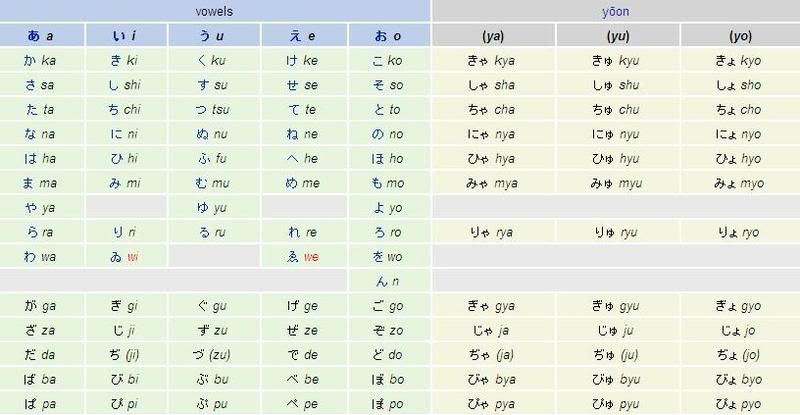
anyway, the hiragana written like tat is quite confusing, i took a screenshot from wiki...this should be easier to read, i find it quite hard to recognize some chara in katakana as certain pair they look quite the same beside their writing stroke is diff...i already memorize all the hiragana..
user posted image
*
hi...doumo arigatou ne~

This post has been edited by shinmei88: Jun 18 2008, 02:37 PM
shinmei88
post Jun 18 2008, 09:34 PM

New Member
*
Newbie
4 posts

Joined: Feb 2008
sorry to dissappointed u all...actually i m guy not gal sweat.gif
shinmei88
post Jun 18 2008, 09:49 PM

New Member
*
Newbie
4 posts

Joined: Feb 2008
actually the test is lv 4n 3 is rm50 and 2 and 1 is 60
form is rm5 each

if u anywanna learn and can travel to sg long i can intro 1 very best sensei for u...
she can teach till lv1 ...

This post has been edited by shinmei88: Jun 18 2008, 09:51 PM
shinmei88
post Jun 18 2008, 10:36 PM

New Member
*
Newbie
4 posts

Joined: Feb 2008
QUOTE(hamster666 @ Jun 18 2008, 09:55 PM)
tell me about it. my uni is around tat area..  hmm.gif
*
pm u details edi.. smile.gif
shinmei88
post Jun 18 2008, 11:37 PM

New Member
*
Newbie
4 posts

Joined: Feb 2008
ok here is the update for today lesson.. smile.gif

its continue of lv 4A

at this lesson i will do it in both hiragana , romaji and also english translation..
so lets start with vocabulary


Hiragana and vocabulary

 し か
[shi ka]-deer
 う し
[u shi]-cow
 つ き
[tsu ki]-moon
 く つ
[ku tsu]-shoe
 あ し
[a shi]-leg
 い し
[i shi]-stone
 す し
[su shi]-sushi
 は し
[ha shi]-chopstick
 つ る
[tsu ru]-crane
 つ め
[tsu me]-nail
 く ち
[ku chi]-mouth
 く も
[ku mo]-cloud
 へ や
[he ya]-room
 へ び
[he bi]-snake
 つ の
[tsu no]-horn
 て ら
[te ra]-temple
 き も の
[ki mo no]-kimono
 の は ら
[no ha ra]-field
 て が み
[te ga mi]-letter
 て
[te]-hand
 ひ も
[hi mo]-cord
 ひ つ じ
[hi tsu ji]-sheep
 ふ ろ
[fu ro]-bath
 さ る
[sa ru]-monkey
 せ ん ろ
[se n ro]-track
 ま る
[ma ru]-circle
 よ る
[yo ru]-night
 い ぬ
[i nu]-dog
 こ ど も
[ko do mo]-child
 そ り
[so ri]-sled
 そ ら
[so ra]-sky
 そ ば
[so ba]-buckwheat noodles
 は こ
[ha ko]-box
 と り
[to ri]-bird
 り ん ご
[ri n go]-apple
 う ま
[u ma]-horse
 と ら
[to ra]-tiger
 う み
[u mi]-sea
 は ち
[ha chi]-bee
 い ち
[i chi]-one
 さ ら
[sa ra]-plate
 は と
[ha to]-pigeon
 い け
[i ke]-pond
 け む り
[ke mu ri]-smoke
 は な
[ha na]-flower
 ほ ん
[ho n]-book
 か ばん
[ka ban]-bag
 い え
[i e]-house
 え び
[e bi]-prawn

sentence 1

 いぬ が はしります
[inu ga hashirimasu]-A dog runs

 こども が はしります
[kodomo ga hashirimasu]-A child runs

 うま が います
[uma ga imasu]-there is a horse*

 いす が あります
[isu ga arimasu]-there is a chair*

 とり が とびます
[tori ga tobimasu]-A bird flies

 ゆき が ふります
[yuki ga furimasu]-It snows

 はな が さきます
[hana ga sakimasu]-Flowers bloom

 すみれ が さきます
[sumire ga sakimasu]-A violet blooms

 ねこ が あるきます
[neko ga arukimasu]-a cat walks

* [います] indicates the existence of a living object such as animal or a person or even ghost
* [あります] indicates the existence of a non living object, thing.

ok lets remember all those vocabulary at the moment first.. and it will be continue tomorrow
お疲れ様です smile.gif

This post has been edited by shinmei88: Jun 18 2008, 11:40 PM
shinmei88
post Jun 19 2008, 12:00 AM

New Member
*
Newbie
4 posts

Joined: Feb 2008
QUOTE(HMMaster @ Jun 18 2008, 11:37 PM)
i merged both threads. added a link to this page at the first post. smile.gif
*
all right thanks smile.gif
shinmei88
post Jun 19 2008, 01:11 AM

New Member
*
Newbie
4 posts

Joined: Feb 2008
QUOTE(irienaoki @ Jun 19 2008, 12:27 AM)
hohoho
copy tat vocab minna....
save it in ur comp....
later u may wan to recall it......
thanx shinmei san.....
iro iro arigatou....
*
haha...u r welcome biggrin.gif that is the way that i learn last time in the centre...
when near to jlpt more fun.. tongue.gif
shinmei88
post Jun 19 2008, 11:04 PM

New Member
*
Newbie
4 posts

Joined: Feb 2008
hi...konbanwa...lets continue the lesson today. smile.gif
today i will complete the lesson of this lv and next lesson will be lv3A... smile.gif

4A: hiragana & sentence


 う た
[u ta]-song

 か お
[ka o]-face

 か さ
[ka sa]-umbrella

 き 
[ki]-tree

 ま ど
[ma do]-window

 く ま
[ku ma]-bear

 ほ し
[ho shi]-star

 ほ ね
[ho ne]-bone

 や ぎ
[ya gi]-goat

 ま ち
[ma chi]-town

 な べ
[na be]-pot

 ゆ び
[yu bi]-finger

 ゆ り
[yu ri]-lily

 さ い ふ
[sa i fu]-purse

 お の
[o no]-axe

 ち ず
[chi zu]-map

 む し
[mu shi]-insect

 ろ く
[ro ku]-six

 れ ん が
[re n ga]-brick

__________________________________________________________

 うま が はしります
[uma ga hashirimasu]-a horse runs

 こども が います
[kodomo ga imasu]-there is a child

 えき が あります
[eki ga arimasu]-there is a station

 みせ が あります
[mise ga arimasu]-there is a shop

 やま が あります
[yama ga arimasu]-there is a mountain

 かわ が あります
[kawa ga arimasu]-there is a river

 おとな が います
[otona ga imasu]-there is an adult

 むら が あります
[mura ga arimasu]-there is a village

 はち が とびます
[hachi ga tobimasu]-a bee flies

 あめ が ふります
[ame ga furimasu]-it rains

 くるま が はしります
[kuruma ga hashirimasu]-a car runs


ok there is the end of this LV so try to do some test

I) read the following hiragana.


  あ  。  う  。  こ  。  れ  。  ふ  。  な
  
  き  。  ろ  。  み  。  さ  。  つ  。  た

  や  。  す  。  く  。  る  。  む  。  お


II) write the following word in japanese letter


1) box
2) child
3) run
4) dog
5) town
6) bird
7) violet
8) tiger
9) horse
10) smoke
11) bag
12) book
13) night
14) ear
15) horn
 

the end biggrin.gif
____________________________________________________________________________________________


answer
» Click to show Spoiler - click again to hide... «
shinmei88
post Jun 21 2008, 03:13 AM

New Member
*
Newbie
4 posts

Joined: Feb 2008
konbanwa minasan...
today let me proceed to new lv of my japanese lesson.
lv 3A...in this LV you can learn a lot of vocab(the most important in languages)
and also short sentence(noun sentence,verb sentence) pattern and also particle of sentence..
in this level i will try not to use too many romaji for all of vocabs and sentences

ok let me start this now smile.gif

LV 3A - lesson 1

read the sentence.

いぬ が はしります
[a dog runs]

かわ が ながれます
[the river flows]

こども が およぎます
[a child swims]

つくえ が あります
[there is a desk]

おとな が います
[there is an adult]

きつね が およぎます
[there is a fox]

うま が はしります
[a horse runs]

ともだち が きます
[a friend comes]

つき が のぼります
[a moon rises]

たいよう が のぼります
[a sun rises]

しんぶん が あります
[there is a newspaper]

めがね が あります
[there is a glasses]

* ''が '' have a lot of usage in japanese language...at this moment
'' が '' is a particle that indicates a subject of a sentence

read the vocabulary.

ながれます
[flow]

およぎます
[swim]

あひる
[duck]

いす
[chair]

つくえ
[desk]

ひげ
[beard]

うさぎ
[rabbit]

きつね
[fox]

かわ
[river]

ともだち
[friend]

さら
[plate]

たいよう
[sun]

しんぶん
[newspaper]

じしょ
[dictionary]

でんわ
[phone]

ちち
[(my) father]

うた
[song]


hiragana 3

read the following hiragana

this is a set of sounds in the sound chart consists of a consonant plus ''ya'', ''yu'' or ''yo''.
and these consonant is considered as 1 word


k-series きゃ[ kya] 。 きゅ[kyu] 。 きょ[kyo]


s-series  しゃ[sha] 。 しゅ[shu] 。 しょ[sho]


t-series  ちゃ[cha] 。 ちゅ[chu] 。 ちょ[cho]


n-series  にゃ[nya] 。 にゅ[nyu] 。 にょ[nyo]


h-series  ひゃ[hya] 。 ひゅ[hyu] 。 ひょ[hyo]


m-series  みゃ[mya] 。 みゅ[myu] 。 みょ[myo]


r-series  りゃ[rya] 。 りゅ[ryu] 。 りょ[ryo]

word of these consonant

おちゃ
[o cha]-green tea

でんしゃ
[den sha]-train


ok lets end the lesson here...pls correct me if there is any spelling mistake sweat.gif arigatou

renshuu

I) translate the following sentence into japanese language

1) a child swims
2) there is a rabbit
3) there is a newspaper
4) a friend comes
5) a moon rises
6) a car runs
7) a horse walks
8) there is a glasses


answer:


» Click to show Spoiler - click again to hide... «
shinmei88
post Jun 23 2008, 11:21 PM

New Member
*
Newbie
4 posts

Joined: Feb 2008
dopod-san -- thank you for notice me...i didnt notice that too haha... smile.gif

ok lets continue my lesson today(FYI i only post every weekdays) ..


LV3A - part 2

I)verb sentence

はは が ふく を きます。
[my mother puts her clothes on]

ねこ が ねずみ を おいかけます。
[a cat runs after the mouse]

ちち が ぼうし を かぶります。
[my father put on a hat]

いぬ が にく を たべます。
[a dog eats meat]

ちち が ほん を よみます。
[my father reads a book]

はは が みかん を かいます。
[my mother buy a mandarin]

むし が やさい を たべます。
[an insect eats vegetable]

ちち が きっぷ を かいます。
[my father buys a ticket]

あに が てがみ を かきます。
[my brother writes a letter]

ちち が かいしゃ に いきます。
[my father goes to office]

ゆき が やま に ふります。
[snows fall on the mountain]

さる が き に います。
[a monkey is on the tree]

ちち が でんしゃ に のります。
[my father rides a train]

はは が いえ に はいります。
[my mother goes in the house]

こども が ふろ に はいります。
[a child takes a bath]

せいと が せんせい に ききます。
[a students ask teacher]


* きます’ has 2 meaning.. 1 meaning is come another meaning is to put on(clothes).

* ’かぶります’ means to put on ( hat).

* ''っ'' is a smaller size of ''tsu'' and it be used when a word have a double consonant such as ''ss'' ''kk'' ''pp'' ''tt''
and etc..A double consonant indicates that you should pause slightly before saying it.


1) particle

I) ’を’is read as ''wo'' and it is a particle which indicates a direct object/verb..
and usually be formed when '' ''NOUN'' WO '' VERB'' '' [ noun + verb sentence]

II) ''に'' is read as ''ni'' and it is a particle which indicates a lot of meaning..at the moment it is used as
- indicates a place on which something fall. (on)
-indicates a place toward which someone moves. (to, in)
-indicates a place where someone exists . (at)

thats all for today... smile.gif
お疲れさまです
shinmei88
post Jun 24 2008, 10:56 PM

New Member
*
Newbie
4 posts

Joined: Feb 2008
hi...today i shall continue my lesson... lets learn about greetings in japanese today. smile.gif


LV3A-part 3

Greeting

こんにちは*
[hello/good afternoon]*

こんばんは*
[good evening]

おはよう ございます
[good morning]

さようなら
[good bye/farewell]*

おやすみなさい
[good night]

ありがとう ございます
[thank you]

どういたしまして
[you are welcome]

ごめんなさい
[sorry]

おめでとう ございます
[congratulation]

はじめまして
[how do you do]*

もし もし
[hello]*


* こんにちは and こんばんは '' は '' is not read as ''ha'' but ''wa''
*konnichiwa is only use when to said ''hi'' or greetings after 10am.
*ohayou gozaimasu is used before 10am.
*sayounara is usually used for a long term good bye.
*hajimemashite is only used for first time meet's greeting.
*moshi moshi is only used when answering telephone.


-informal used word ((usually hard to find in text book)spacial listed by me tongue.gif )

ねえ
[hey]


[hi]

オイ
[oi]

__________________________________________________________________________________________

short essay.


ちち が にく を たべます。
はは が やさい を たべます。
あに が みず を のみます。
わたし も* みず を のみます。

[my father eats meat.
my mother eats vegetable.
my brother drinks water.
I also drinks water.]

* も is a particle which means ''too/also''


いま に かぞく が います。
ちち が しんぶん を よみます。
はは が ざっし を よみます。
あに が てがみ を かきます。

[there is a family in living room.
my father reads newspaper.
my mother reads magazine.
my brother writes a letter.]

てんいん が います。
てんいん が ぼうし を うります。
ちち が ぼうし を かいます。
はは が くつ を かいます。
[there is a clerks.
a clerk sells a hat.
my father buys a hat.
my mother buys a shoe.]

はは が います。
はは が ふく を かいます。
ちち が かお を あらいます。
あに が ふく を きます。
[there is my mother.]
my mother washes clothes.
my father washes face.
my brother puts on a cloth.]


ok thats all for today... smile.gif
shinmei88
post Jun 26 2008, 01:09 AM

New Member
*
Newbie
4 posts

Joined: Feb 2008
@arkxkra-san... thank you for your comment rolleyes.gif

ok today i will proceed to a new lv of text book which is lv 2A..
in this lv you will learn about various of sentence patterns, vocab, adjective , noun and grammers..
ok lets start the lesson now. smile.gif


The patterns N は N です (1)

”は[wa] '' is a particle which indicates the subject.  
です is attached to a noun to express some kind of statement.
N is mean noun.

”わたしは ~ です”


こんにちは。
わたしは しんです。
わたしは にほんじんです。
わたしは せんせいです。

good day.
I am shin.
I am a japanese.
I am a teacher.

わたしは もりたけおです。
わたしは こうこうせいです。

I am mori takeo.
I am high school student.
______________________________________________________________________________________


 ~さん
[Mr /Ms /Miss /Mrs~]

''~さん'' is added to names , professions , etc., to indicates respect and a certain degree of familiarity.
japanese usually call their friend ”~さん”。


もりさん - Mr mori
しんめいさん - Mr shinmei
あゆみさん - Ms ayumi
ゆいさん - Ms yui

___________________________________________________

(わたしは)~ です

Nは is offen ommited when you do not have to say it.

わたしは やまだです。
(わたしは) かいしゃいんです。

I am yamada.
(I am) office worker.


わたしは くみこです。
こうこうせいです。

I am kumiko.
high school student.


はじめまして。
わたしは しんめいです。
どうぞ よろしく。

How do you do?
I am shinmei.
I'm pleased to meet you.

にこさん:はじめまして。
      はやし にこです。
すどう: はじめまして。  
      すどう いちろうです。
      どうぞ よろしく。

niko : how do you do.
I am hayashi niko.
sudou: how do you do.
I am sudou ichirou.
I'm pleased to meet you.


___________________________________________________

ok thats all for today...this is the way of simple introdution in japanese language which
you also can try to make your own introdution... rolleyes.gif
dewa mata...


This post has been edited by shinmei88: Jun 27 2008, 03:34 AM
shinmei88
post Jun 27 2008, 03:33 AM

New Member
*
Newbie
4 posts

Joined: Feb 2008
hi...lets continue the lesson today rolleyes.gif

sentence pattern.

これ それ あれ are used according to the speaker's and the listener's location.
これ indicates something close to the speaker. (this)
それ indicates something close to the listener. (that)
あれindicates something distant from the speaker and listener. (that over there)
どれ indicates a question of which mean '' which one?''
の is a particle that connect 2 nouns. in other word N1 modifies N2. ( N( 's ) N)

______________________________________________________________________________


これは ~ です。 N の N

これは わたしの にもつです。
[this is my baggage.]

これは にもつです。
[this is baggage.]

これは ほんです。
[this is book.]

これは あなたの かばんです。
[this is your bag.]

これは なんですか。
[this is what?]

これは わたしの つくえです。
[this is my desk]

これは にこさんの くるまです。
[this is ms niko's car]

これは わたしの いえです。
[this is my house]

これは ははの うわぎです。
[this is my mother's jacket]

これは しんじゅくゆきの でんしゃです。*
[this is train bound for shinjuku]

*しんじゅくゆきの means bound for shinjuku

___________________________________________________________________________________

それは ~ です。

しんさん-これは かがみさんの かばんですか。
[Mr.shin- this is mr kagami's bag?]

かがみさん-はい。 それは わたしの かばんです。
[mr kagami- yes. that is my bag]

それは わたしの くるまです。
[that is my car]

それは あなたの かさですか。
[that is your umbrella?]

それは ははの てがみです。
[that is my mother's letter]

か is added to the end of a sentence. indicates a question. the question mark is not used.

___________________________________________________________________________________

あれは ~ です。

あれは なんですか。
[what is that over there?]

あれは こうえんです。
[that (over there) is a park]

あれは がっこうですか,びょういんですか。
[that over there is a school or is a hospital?]

あれは がっこうです。たぶん しょうがっこうです。
[that (over there) is a school. maybe a elementary school]

あれは ちゅうがっこうですか,しょうがっこうですか。
[that over there is a junior high school ? or elementary school?]

(あれは) しょうがっこうです。
[(that over there is) elementary school]

in answering first N can be ommited.


______________________________________


 A                   B                  C  
かばん                かさ                がっこう

when A is a speaker....


これは かばんです。 
[this is a bag]

それは かさです。
[that is a umbrella?]

あれは がっこうです。
[that over there is a school]

_________________________________________________________________

わたしの かばんは どれですか。
[which one is my bag?]

しんじゅくゆきの でんしゃ は どれですか。
[which is the train bound for shinjuku?]

_________________________________________________________________


はい。。今日はここまで。お疲れ様です smile.gif

This post has been edited by shinmei88: Jun 28 2008, 01:55 AM
shinmei88
post Jun 27 2008, 01:42 PM

New Member
*
Newbie
4 posts

Joined: Feb 2008
QUOTE(sai @ Jun 27 2008, 09:33 AM)
@shinmei88
これは にこさんの くるまです。 <<>> これは にいさんの くるまです。
[this is my brother's car]

それは あなたの かさですか。
[that is your umbrella] <<>> [that is your umbrella?]
*
aiyak...spelling mistake again sweat.gif ...corrected already ok
thank you very much biggrin.gif
shinmei88
post Jun 27 2008, 11:14 PM

New Member
*
Newbie
4 posts

Joined: Feb 2008
QUOTE(sai @ Jun 27 2008, 09:33 AM)
@shinmei88
これは にこさんの くるまです。 <<>> これは にいさんの くるまです。
[this is my brother's car]

それは あなたの かさですか。
[that is your umbrella] <<>> [that is your umbrella?]
*
for your information that is english translate mistake..


Added on June 28, 2008, 1:50 amhi...sorry i didnt notice the spelling mistake that i did. sweat.gif ..but for that is not japanese word mistaken but it
was english.. btw thanks for the notification..

yesterday learn about kore sore and are (i had update with ''dore'' sentence)... so today will be koko soko and asoko and doko..

_____________________________________________________________________________________________


''ここ'' is used when the place is close to the speaker.(here)
''そこ''is used when the place is close to the listener.(there)
''あそこ'' is used when the place is far to both speaker and listener.(there (over there))
''どこ'' is used as a question of place.. [eg: where]

''と'' is a particle which mean ''and''


ここは なりたくうこうです。
[here is narita airport]

ここは わたしの がっこうです。
[here is my school]

ここは もりさんの うちです。もりさんが かぞく を しょうかいします。
[here is mr mori's house. mr mori introduce his family]

もりさんの おとうさん と おかあさんです は ここに います。
[mr mori's father and mother.]

ここは いまです。
[here is living room]

________________________________________________________

そこは だいどころです。
[there is kichen]

そこは しょさいです。
[there is study room]

そこは おてあらいです。
[there is wash room]

ここは ははの へやです。 わたしの へやは そこです。
[here is my mother's room. my room is there]
________________________________________________________


あそこは こうえんです。
[there (over there) is a park]

あそこは ほんやです。
[there (over there) is a book shop]

かれは あそこに います。
[he is there (over there)]

あそこは ちちの しょさいです。
[there (over there) is my father's study room]
________________________________________________________

ここは どこですか。
[here is where]*

そこは どこですか。
[there is where]*

あそこはどこですか。
[there (over there) is where]*

*i direct translate the word so it might feel a bit weird in english. sweat.gif

しんさんは どこに いますか。
[where is mr shin?]

かれは どこに いきますか。
[where is him?]

わたしの きょうしつは どこですか。
[where is my classroom]

______________________________________________________________________________________________

mou owatta...otsukaresama...mata raishuu

This post has been edited by shinmei88: Jun 28 2008, 01:56 AM

2 Pages  1 2 >Top
 

Change to:
| Lo-Fi Version
0.0414sec    0.95    7 queries    GZIP Disabled
Time is now: 10th December 2025 - 07:31 AM