

 Jan 8 2006, 01:49 AM, updated 16y ago


This issin't my usual precision work, so the workmanship is a little shabby. Coz I was doing it in a rush to finish it before I get back to KL. It only took me less than one and a half days to make it, thanks to some help from my dad.
Materials used: 1mm thick aluminium sheet, 25mm wide aluminium L-bracket, 12.5mm wide aluminium L-bracket, 2X hinges, 2X pull down latch, bostik super steel epoxy, rivets (i only used rivets in conjunction with epoxy, no screws) and some superglue (to hold some parts together temporarily), 1 inch thick black foam, 1X plastic handle, 8X corner edging.
1. First of all, plan what you want to do. The end product is only as good as how well you planned it. Measure the size of the equipment you want to make a case for. Consider how much strength you need for the case. When planning the dimensions, be sure to take in account of the thickness of the padding or foam that you intend to use. Decide on how do you want to divide the casing where it will open up (look at my pictures as an example). Remember to consider the sizes and types of aluminium L-brackets available to you and how you are going to piece them together. Take in account of the material thickness (eg. the thickness of the aluminium sheet or plywood). I can't stress enough on the planning stage. Planning is just as important as actually building it. If you can, design it in AutoCAD (I use AutoCAD whenever I'm designing anything, including modding) or any CAD program or draw it on paper. Then, calculate how much materials you need and proceed to buy them. Buy a little extra in case you make a mistake.
2. Draw out the pieces which you intend to cut on the materials. Draw accurately! Use a proper ruler and set square or the L-ruler. Remember to take in account even the 1 mm wide cut line made by the jigsaw or dremel. Cut the aluminium sheet or plywood according to the dimensions that you specified in planning. For the L-brackets, same thing. Just that you have to also cut a 45 degree angle for the corners where it will meet another piece. Use a file or some sandpaper to smoothen out the rough cuts.
3. So you got all the parts? It's time to piece them together. Some examples which you could use to attach them together: Rivets, screws, epoxy glue. I used both rivets and epoxy glue in my case. Now its time to drill the holes for the rivets/screws. Measure and mark the locations where you want to drill the holes. Always use a block of wood at the back when you are drilling through so that the hole doesnt get warped or become pear shaped. You can either drill through both the L-bracket and the aluminiums sheet or plywood at the same time, or drill through them seperately. If you do drill through them seperately, you need to be very accurate with your drilling to make sure everything lines up perfectly. If you choose to drill through both together, remember to mark both pieces with a pencil so that you know which piece matches which side. Be sure to use the right drill bit size to fit the size of the rivets that you may be using. It should be slightly larger than the size of the rivets.
4. Some people aren't familiar with how rivets work, so anyway here's basically how you do it. First you need a riveter. You can buy a relatively cheap hand riveter from a hardware shop together with some rivets. The head of the riveter has different interchangeable sizes to match the diameter of the rivets. When choosing rivets, choose according to what you need. You dont need humongous rivets for small joints like these. On each rivet, there's two sides; One side with a larger diameter and a ball at the end, and one side with a long smaller diameter shaft. The side with the ball is where you insert into the hole where you intend to rivet, whereas the other shaft is where you insert into the riveter. To rivet a joint, put the appropriate sides into their respective holes as explained previously, and pull the lever of the handle. You most probably need to release the handle and pull the second time. You will come to a point where it stops, pull the handle even harder and the shaft will snap off leaving the ball end of the rivet on the other side of the joint. Do it correctly and you should have a nice rivet joint. If you do make a mistake and need to remove a rivet, just drill through the rivet and it should come off.
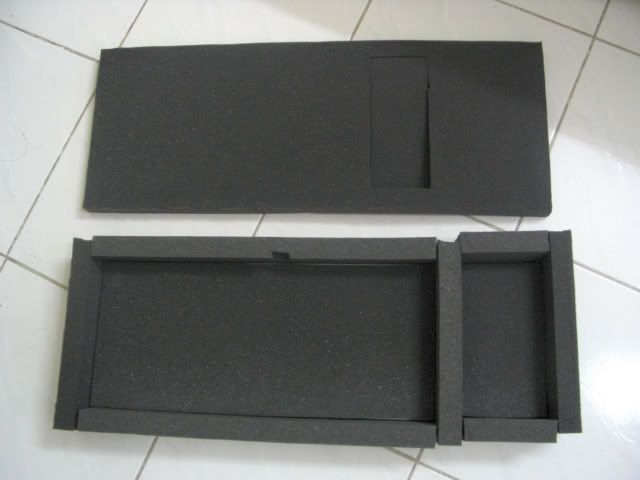
5. The remaining steps with the hinges and latches should be self-explained. For the foam, try to design them so that you can just fit them in like the way I did. Cut it with a sharp and long blade or knife to get a clean cut.
Thats about it for the tutorial I guess. Good luck!
After adding the handle and corner edges/feet.
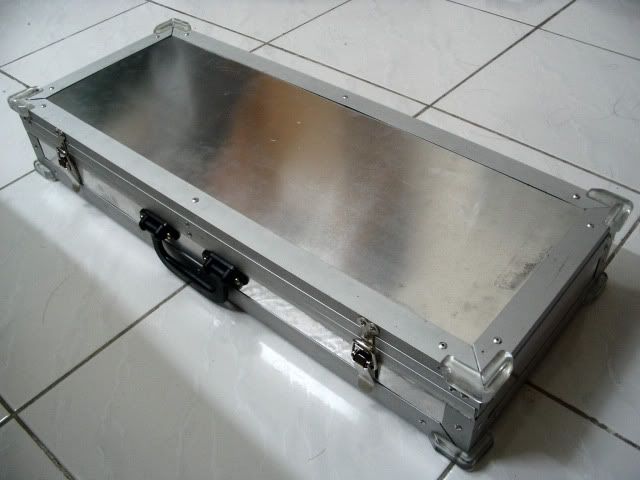
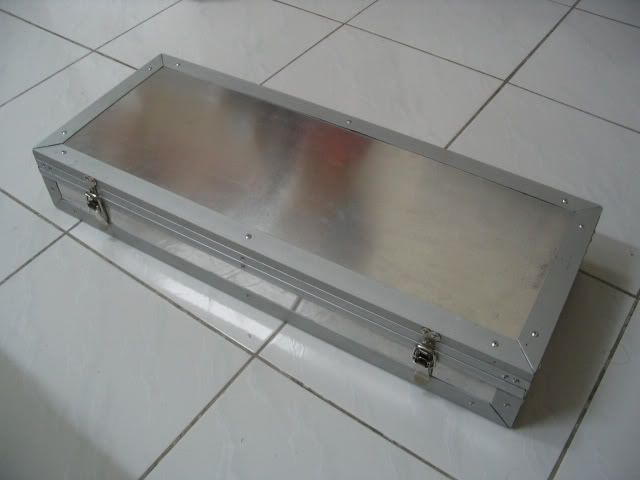
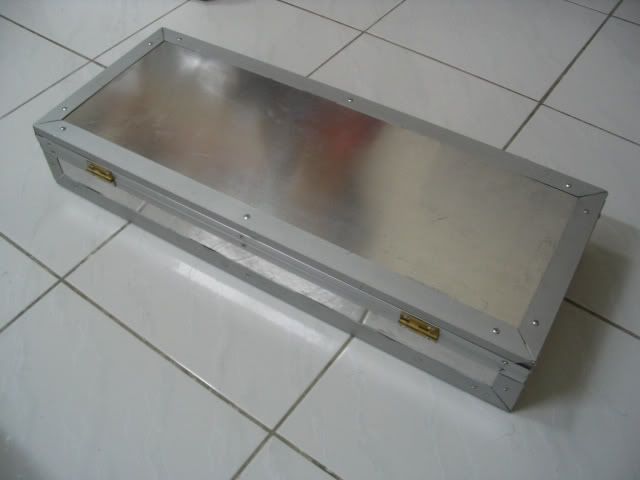
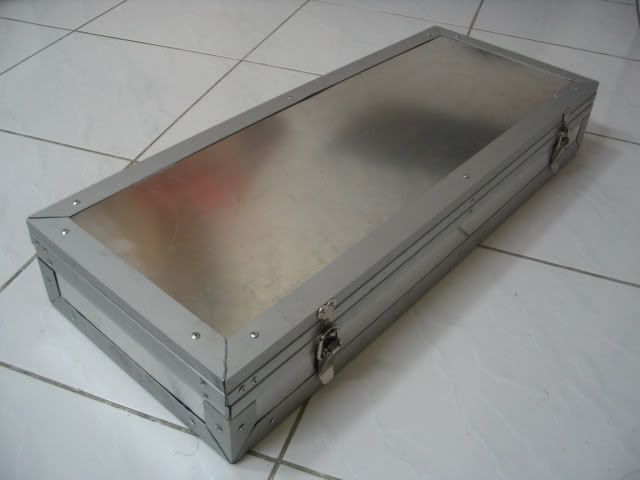
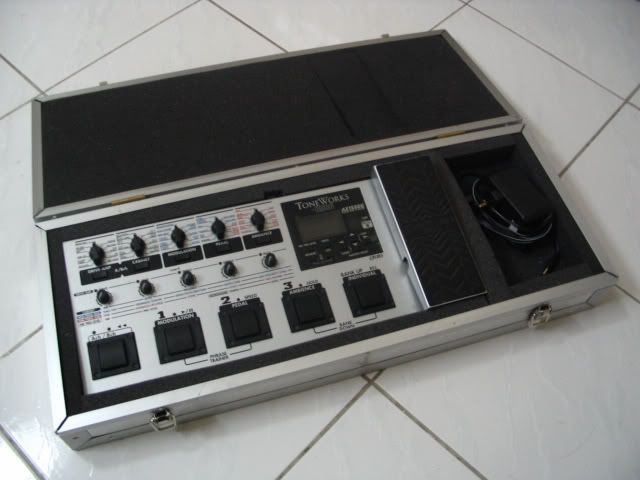
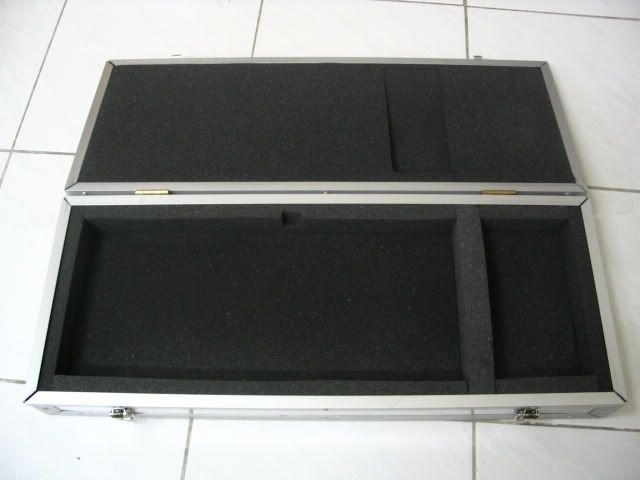
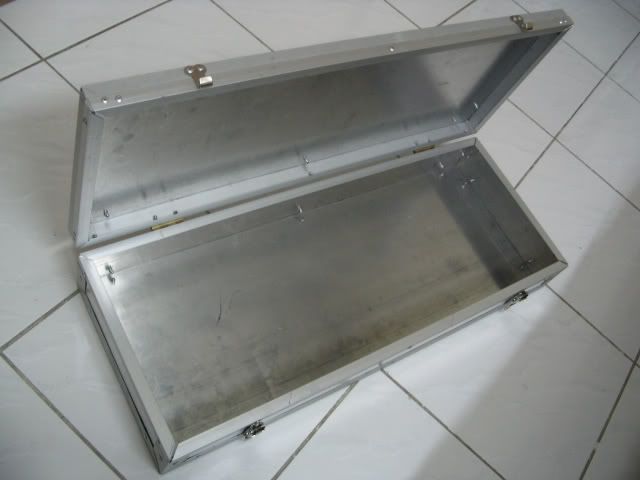
Without the foam put in
The parts of the foam. No glue required. Just fit them in like a jigsaw puzzle.
This post has been edited by MetalZone: Jan 18 2006, 11:26 PM
 Quote
Quote














 0.0230sec
 1.08
1.08
 5 queries
 GZIP Disabled