

 The japanese school uniform, and the story behind it
  May 17 2012, 09:09 PM, updated 14y ago


Japanese School Uniform
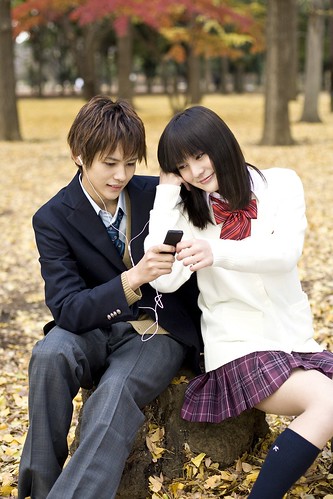
Japan introduced school uniforms in the late 19th century. Today, school uniforms are almost universal in the public and private school systems. They are also used in some women's colleges. The Japanese word for uniform is seifuku (制服)
» Click to show Spoiler - click again to hide... «
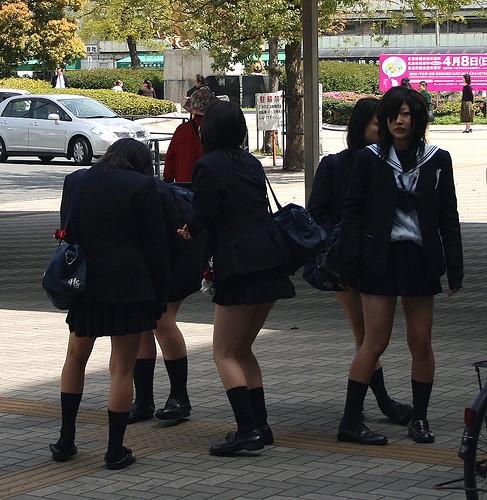
Regardless of what type of uniform any particular school assigns its students, all schools have a summer version of the uniform (usually consisting of just a white dress shirt and the uniform slacks for boys and a reduced-weight traditional uniform or blouse and tartan skirt with tie for girls) and a sports-activity uniform (a polyester track suit for year-round use and a t-shirt and short pants for summer activities). Depending on the discipline level of any particular school, students may often wear different seasonal and activity uniforms within the same classroom during the day. Individual students may attempt to subvert the system of uniforms by wearing their uniforms incorrectly or by adding prohibited elements such as large loose socks or badges. Girls may shorten their skirts; boys may wear trousers about the hips, omit ties, or keep their shirts unbuttoned.
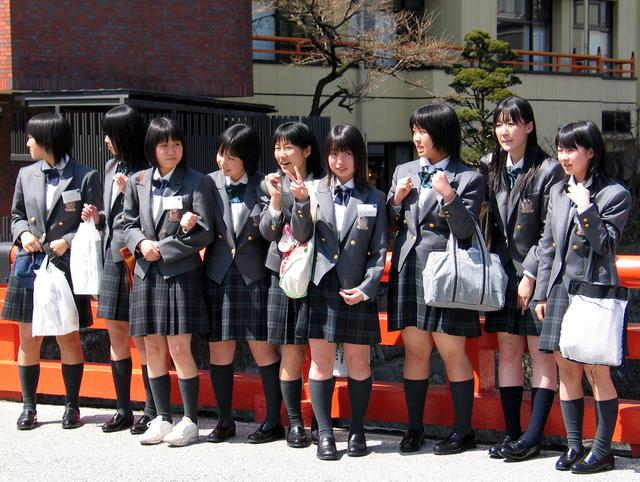
Since some schools do not have sex-segregated changing- or locker-rooms, students may change for sporting activities in their classrooms. As a result, such students may wear their sports uniforms under their classroom uniforms. Certain schools also regulate student hairstyles, footwear, and book bags; but these particular rules are usually adhered to only on special occasions, such as trimester opening and closing ceremonies and school photo days.
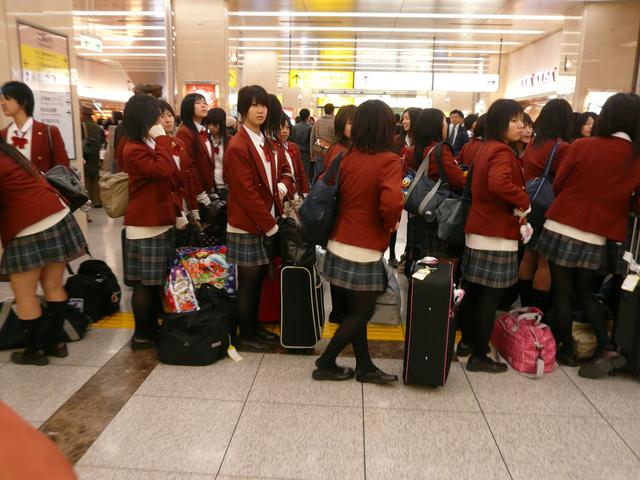
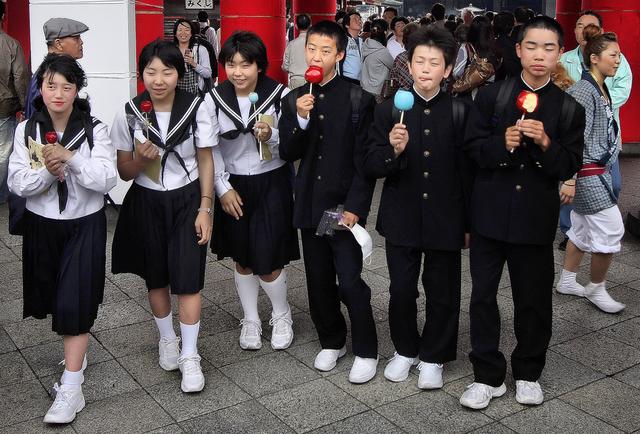
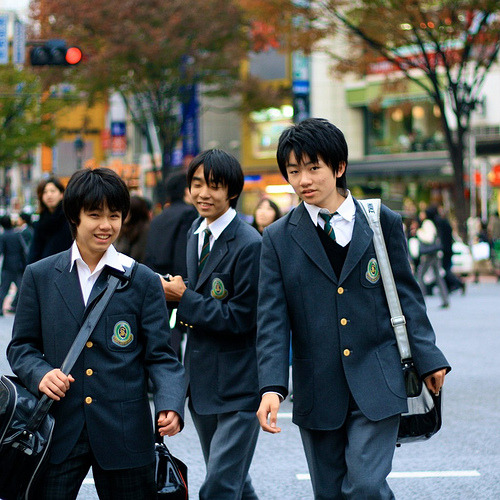
The gakuran (学ラン) or the tsume-eri (詰め襟) are the uniforms for many middle school and high school boys in Japan. The color is normally black, but some schools use navy and dark blue as well.
The top has a standing collar buttoning down from top-to-bottom. Buttons are usually decorated with the school emblem to show respect to the school. Pants are straight leg and a black or dark-colored belt is worn with them. Boys usually wear penny loafers or sneakers with this uniform. Some schools may require the students to wear collar-pins representing the school and/or class rank.
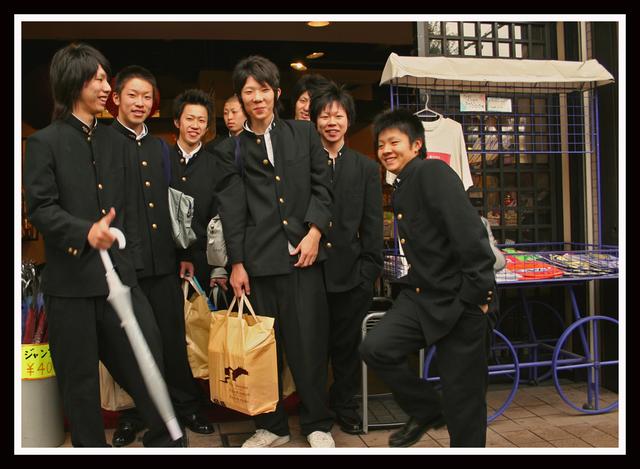
The second button of the top of a male's uniform is often given away to a female he is in love with, and is considered a way of confession. The second button is the one closest to the heart and is said to contain the emotions from all three years attendance at the school.
Traditionally, the gakuran is also worn along with a matching (usually black) student cap, although this custom is less common in modern times.
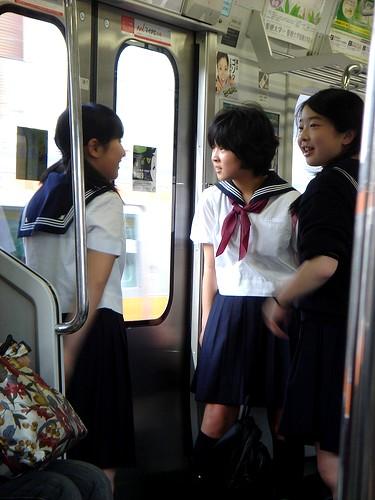
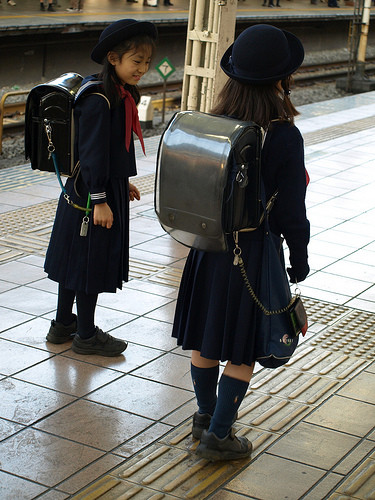
The sailor outfit (セーラー服, sērā-fuku) is a common style of uniform worn by female middle school and high school students, and occasionally, elementary school students.
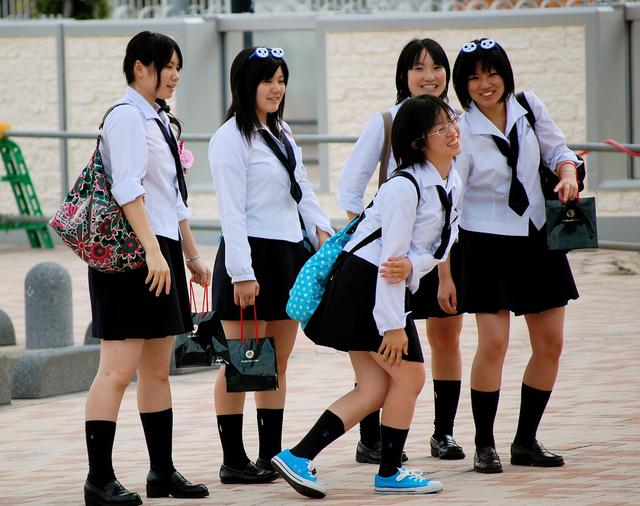
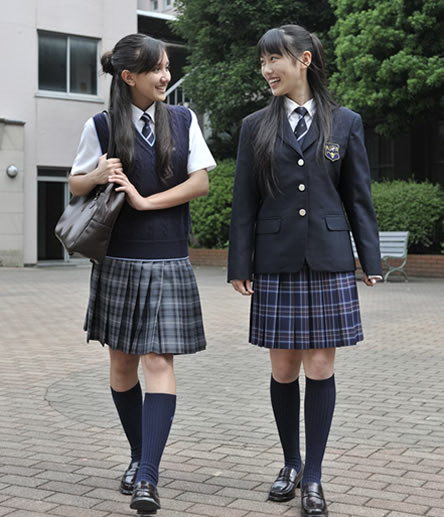
Much like the male uniform, the gakuran, the sailor outfit bears a similarity to various military styled naval uniforms. The uniform generally consists of a blouse attached with a sailor-style collar and a pleated skirt. There are seasonal variations for summer and winter: sleeve length and fabric are adjusted accordingly. A ribbon is tied in the front and laced through a loop attached to the blouse. Several variations on the ribbon include neckties, bolo ties, neckerchiefs, and bows. Common colors are navy blue, white, grey, light green and black.
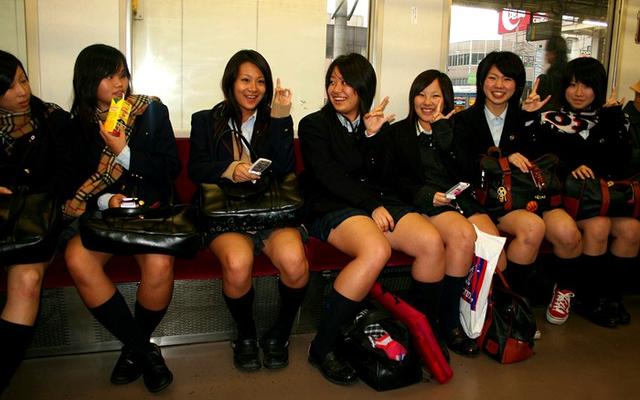
Shoes, socks, and other accessories are sometimes included as part of the uniform. These socks are typically navy or white. The shoes are typically brown or black penny loafers. Although not part of the prescribed uniform, alternate forms of legwear (such as loose socks, knee-length stockings, or similar) are also commonly matched by more fashionable girls with their sailor outfits.

 Quote
Quote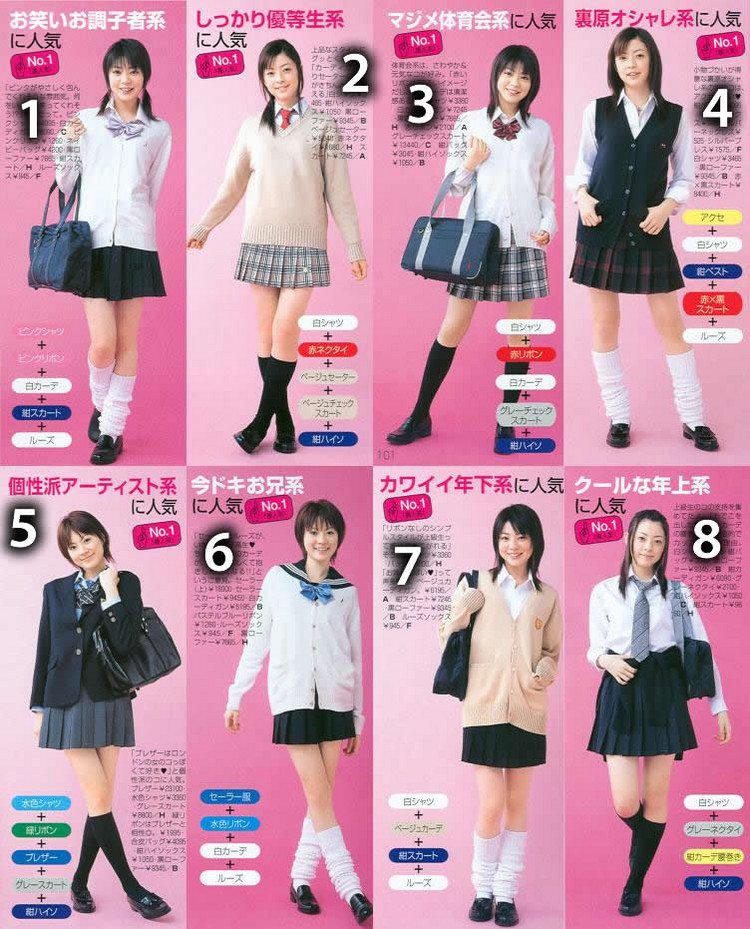



























 0.0277sec
 0.98
0.98
 5 queries
 GZIP Disabled