

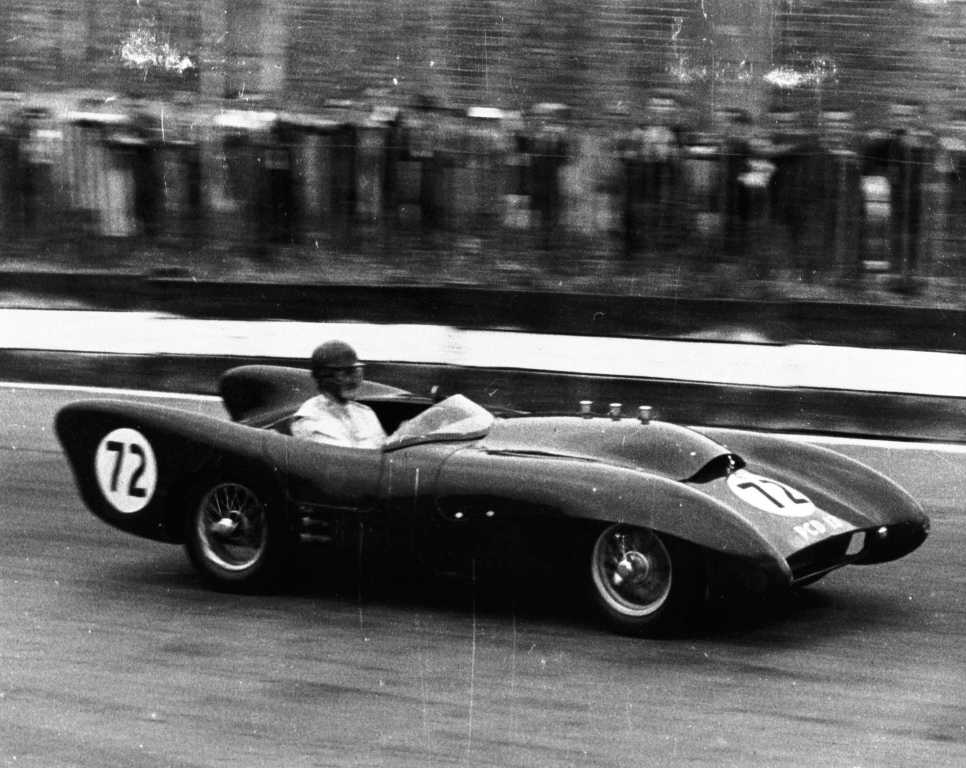
If Lotus were able to deliver the Mark X in time, he would probably be alive.
This post has been edited by alpha0201: Oct 18 2011, 02:03 PM
 Mystery Cases Unsolved
|
|
 Oct 18 2011, 02:02 PM Oct 18 2011, 02:02 PM
Return to original view | Post
#1
|
 
Senior Member
911 posts Joined: Sep 2006 From: Eboladrome  
|
James Dean got the porsche because the Lotus that he ordered delayed.
If Lotus were able to deliver the Mark X in time, he would probably be alive. This post has been edited by alpha0201: Oct 18 2011, 02:03 PM |
|
|
Oct 21 2011, 01:32 PM
Return to original view | Post
#2
|
|
Senior Member
911 posts Joined: Sep 2006 From: Eboladrome
|
Ok, I got one.
Tunguska Incident  QUOTE On 30 June 1908, 2,100 square kilometres (800 square miles) of forest were devastated by a mysterious fireball, which originated over a desolate region in Siberia. The night sky was lit by an eerie glow for days over a vast area. In western Europe, people were able to read newspapers at night without lights. Indications of the cause had been recorded on seismographs in Irkutsk, Siberia, which pointed to an earthquake 1,600 kilometres (1,000 miles) north of the city in a remote area called Tunguska. It was not until 19 years after the explosion that Leonid Kulik, the founder of Russian meteorite science, organised the first scientific expedition to the site, spurred on by reports from Tungus nomads of fallen and burned trees. Suspecting the culprit to be a large meteorite, Kulik's expedition began a search in Tunguska for a large crater containing a huge meteorite, but all they found were millions of dead trees, lying flat and pointing in the same direction away from the original blast. Kulik followed the dead trees until he came to a low depression around a mile across. This was the epicentre of the blast. Kulik made three more expeditions to the site, but could find no actual crater and no sign of a meteorite. Whatever had caused this disaster seemed to have vanished. Today, most scientists believe that there was indeed an impact from space at Tunguska but, rather than leaving a crater, the celestial body exploded in the atmosphere. The blast from this explosion, of an object that weighed perhaps 100,000 tonnes, felled the trees in a pattern not dissimilar to that of the wings of a butterfly, which is consistent with laboratory simulations of these 'airbursts'. Opinion is still divided on the exact nature of the object itself, and it now seems most likely that it was a stony asteroid, but there is a chance it was a fragment of an icy comet nucleus. Whatever exploded in the air above this remote area, it seems we were quite lucky. Had it exploded above a major city, the casualties would have numbered at least half a million people. Astronomers now estimate that there are around 2,000 Earth-crossing asteroids at least a kilometre across, which could theoretically hit us. An impact of a one-kilometre (half-mile) asteroid could wipe out one quarter of the world's population. |
|
|
Oct 25 2011, 02:34 PM
Return to original view | Post
#3
|
|
Senior Member
911 posts Joined: Sep 2006 From: Eboladrome
|
QUOTE(99killer @ Oct 25 2011, 02:13 PM) i saw devil once, a real one pedobear rape you?but i want to keep it secret  |
|
|
Oct 25 2011, 03:31 PM
Return to original view | Post
#4
|
|
Senior Member
911 posts Joined: Sep 2006 From: Eboladrome
|
QUOTE(Luminous2 @ Oct 25 2011, 03:09 PM) share with sos bro Zodiac killer story better left as amystery. Too many attention prostitute come out with claims that their fathers were zodiac killer. |
| Bump Topic Add ReplyOptions New Topic |
| Change to: |  0.0217sec 0.0217sec
 0.94 0.94
 6 queries 6 queries
 GZIP Disabled GZIP Disabled
Time is now: 15th December 2025 - 11:25 AM |
 Quote
Quote