QUOTE(weikee @ Jan 11 2012, 03:42 PM)
How much is the 100AH battery? Why not get a normal Car battery? Say 2x NS60? Will it be cheaper? Or N100
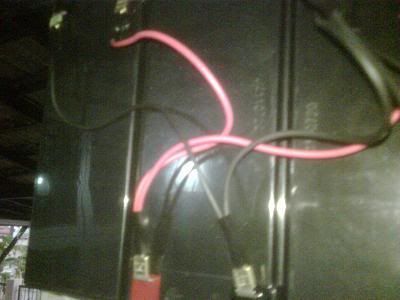
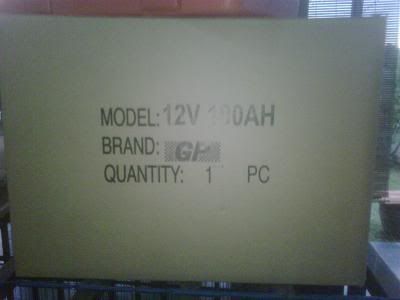
Paid RM650 for the GP 100AH battery.
It's a good question, originally I wanted to use a car battery too.
Later I found out flooded lead acid batteries are not suitable for solar applications, same reasons per ozak's reply.
Also if stored in a sealed box, car batteries release flammable gas that can explode.
More info on AGM batteries
http://en.wikipedia.org/wiki/VRLA_batteryIn terms of lifespans AGM batteries, have longer lifespans.
Checkout the BMW club forums, AGM batteries last up to 5 years

By comparison Kembara batteries need replacing every 1 to 1.5 years

Source:-
http://www.bmwclubmalaysia.com/forums/show...511-E60-BatteryQUOTE
BTW - original battery lasted 5 years.
5 years seems to be the kind of timeframe I've experienced with my batteries, but with the Mercs I used to get about 10 years...
AGM usually last more than 5 yrs.
=====================================
Found more info
http://en.wikipedia.org/wiki/Lead%E2%80%93acid_batteryStarting batteries
Main article: Car batteryLead acid batteries designed for starting automotive engines are not designed for deep discharge. They have a large number of thin plates designed for maximum surface area, and therefore maximum current output, but which can easily be damaged by deep discharge. Repeated deep discharges will result in capacity loss and ultimately in premature failure, as the electrodes disintegrate due to mechanical stresses that arise from cycling. Starting batteries kept on continuous float charge will have corrosion in the electrodes and result in premature failure. Starting batteries should be kept open circuit but charged regularly (at least once every two weeks) to prevent sulfation.
Starting batteries are lighter weight than deep cycle batteries of the same battery dimensions, because the cell plates do not extend all the way to the bottom of the battery case. This allows loose disintegrated lead to fall off the plates and collect under the cells, to prolong the service life of the battery. If this loose debris rises high enough it can touch the plates and lead to failure of a cell, resulting in loss of battery voltage and capacity.
[edit] Deep cycle batteries
Main article: Deep cycle batterySpecially designed deep-cycle cells are much less susceptible to degradation due to cycling, and are required for applications where the batteries are regularly discharged, such as photovoltaic systems, electric vehicles (forklift, golf cart, electric cars and other) and uninterruptible power supplies. These batteries have thicker plates that can deliver less peak current, but can withstand frequent discharging.[9]
Some batteries are designed as a compromise between starter (high-current) and deep cycle batteries. They are able to be discharged to a greater degree than automotive batteries, but less so than deep cycle batteries. They may be referred to as "Marine/Motorhome" batteries, or "leisure batteries".
This post has been edited by aaronpang: Jan 11 2012, 06:10 PM 

 Jan 6 2012, 02:48 PM


 Quote
Quote


 I m interest of her than the panel.
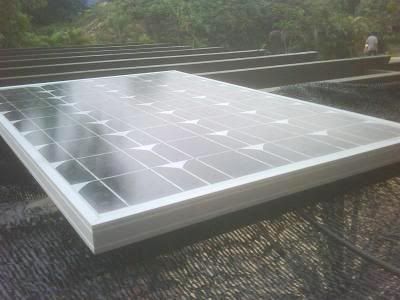
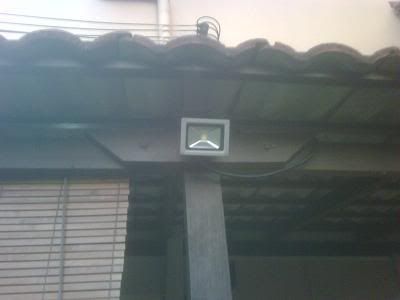
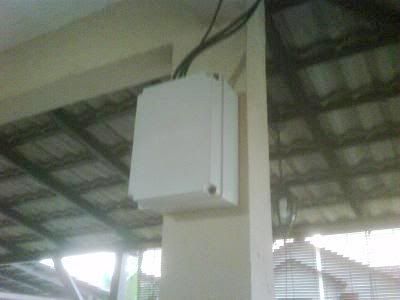
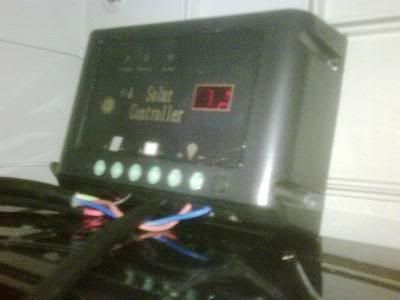


 Plan to do some DIY for Outdoor spotlight with sensor

 0.0413sec
 0.48
0.48
 7 queries
 GZIP Disabled