22 years have passed since 1989 when the Soviet troops have finally pulled out of Afghanistan. The war has ended but the reminiscences are still alive.
The first days of bringing Soviet troops into Afghanistan: an armored cavalry squadron is driving along the road to the South. The Afghan campaign is only beginning but the roadside sign is already riddled with bullets.

The Tadzh-Bek palace served as a residence for the Afghan government. But after bringing Soviet troops it became its main headquarters where the Directorate of Intelligence was located.

Approaching Gerat city. A concrete road of great quality paved by Americans. A good highway let Russain military squadrons quickly take control of all the administrative centers, bridges, passes and other key objects.

A reconnaissance company on the road to the Baglansky gorge. At the very beginning of the war a long conduit has been built here to provide Russian troops with diesel oil and aviation kerosene.

The main feature of all recon vehicles was a quadriradiate star within a white circle. All requires were abroad – spare parts, additional units of fire, sleeping bags, blankets, tools and containers with water.

On the road near Samangan province.
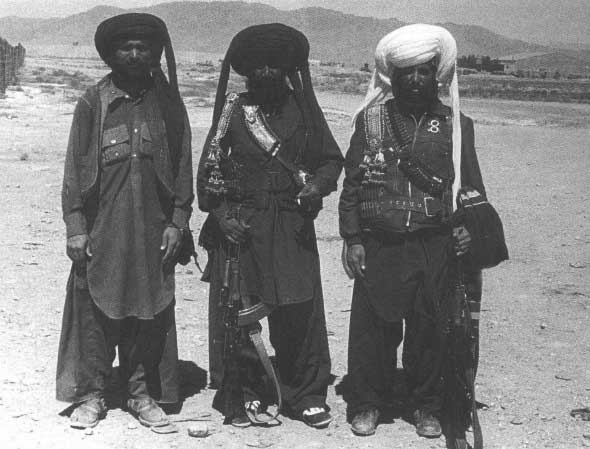
The Baluchi beduins, residents of the South provinces, were always quite friendly, though never apart from their arms. They agreed to assist and accompany Russians wherever they wanted, and the best price for their services was arms they loved and appreciated so much.

Special recon arms included shooting knives with several bullets, night and telescopic sights for Kalashnikov assault rifles and silencers for both rifles and pistols.

A rifle-attached grenade launcher has been on hand of the Russian army since 1985. Antipersonnel grenades were also quite popular.

Special belts and bags served for the rifle-attached grenade launchers carrying. But there was also enough empty space inside them for storing “frog” grenades which exploded and covered the victim with lots of splinters from above.
sosej

 Military Thread V6, Selamat Hari Raya dan Kemerdekaan ke-54
  Feb 18 2011, 10:38 PM


 Quote
Quote


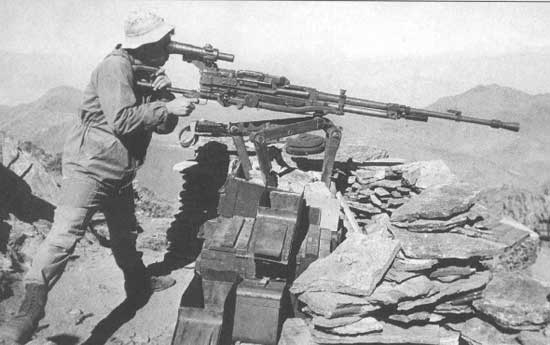


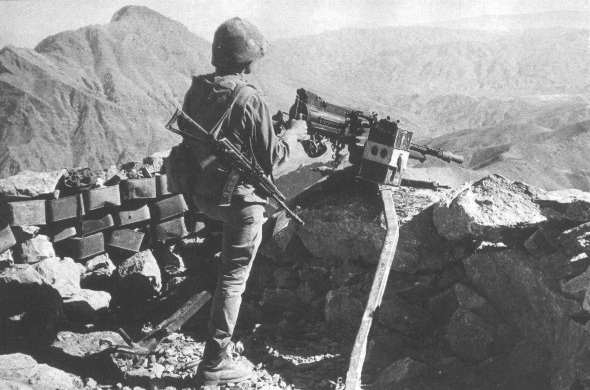 he top of the mountain – an observation post, at its foot – a cover for machinery, barracks and a storage.





 0.0278sec
 0.80
0.80
 5 queries
 GZIP Disabled