

 Sep 29 2010, 03:36 PM


http://www.anandtech.com/show/3949/oczs-fa...erface-reviewed
QUOTE
Dubbed the High Speed Data Link (HSDL), OCZ’s new interface delivers 2 - 4GB/s (that’s right, gigabytes) of bi-directional bandwidth to a single SSD.
It’s an absolutely absurd amount of bandwidth, definitely more than a single controller can feed today - which is why the first SSD to support it will be a multi-controller device with internal RAID.
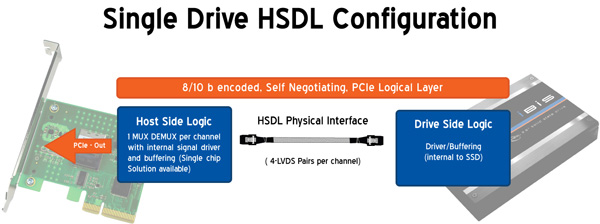
Instead of relying on a SATA controller on your motherboard, HSDL SSDs feature a 4-lane PCIe SATA controller on the drive itself. HSDL is essentially a PCIe cable standard that uses a standard SAS cable to carry a 4 PCIe lanes between a SSD and your motherboard. On the system side you’ll just need a dumb card with some amount of logic to grab the cable and fan the signals out to a PCIe slot.
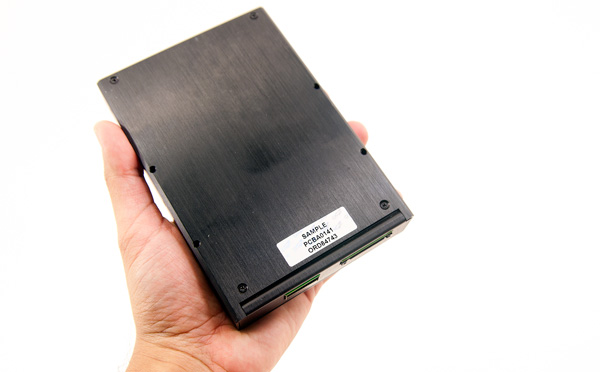
The first SSD to use HDSL is the OCZ IBIS. As the spiritual successor to the Colossus, the IBIS incorporates four SandForce SF-1200 controllers in a single 3.5” chassis. The four controllers sit behind an internal Silicon Image 3124 RAID controller. The four PCIe lanes stemming from the controller are combined and sent over the HSDL cable to the receiving card on the motherboard. The signal is then demuxed by a chip on the card and passed through to the PCIe bus.
It’s an absolutely absurd amount of bandwidth, definitely more than a single controller can feed today - which is why the first SSD to support it will be a multi-controller device with internal RAID.
Instead of relying on a SATA controller on your motherboard, HSDL SSDs feature a 4-lane PCIe SATA controller on the drive itself. HSDL is essentially a PCIe cable standard that uses a standard SAS cable to carry a 4 PCIe lanes between a SSD and your motherboard. On the system side you’ll just need a dumb card with some amount of logic to grab the cable and fan the signals out to a PCIe slot.
The first SSD to use HDSL is the OCZ IBIS. As the spiritual successor to the Colossus, the IBIS incorporates four SandForce SF-1200 controllers in a single 3.5” chassis. The four controllers sit behind an internal Silicon Image 3124 RAID controller. The four PCIe lanes stemming from the controller are combined and sent over the HSDL cable to the receiving card on the motherboard. The signal is then demuxed by a chip on the card and passed through to the PCIe bus.
 Quote
Quote
 0.0418sec
 0.32
0.32
 7 queries
 GZIP Disabled