

 May 8 2010, 11:03 PM, updated 16y ago


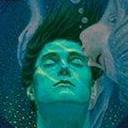
Existential clips from the movie: Waking Life.
Richard Linklater returned to the semi-improvised approach and philosophical themes of his debut feature Slacker while embracing a new and groundbreaking visual technology in his sixth feature film, Waking Life. Linklater and cameraman Tommy Pallotta shot the film on location in Austin, TX, using digital video equipment. Linklater and digital animator Bob Sabiston then used newly developed computer software to transform the images through a process called "interpolated rotoscoping"; the result merges the naturalism of live action with a stylized look that resembles a cartoon or a painting in motion. Waking Life's flexible, non-narrative approach follows a young man (Wiley Wiggins) who arrives in Austin and hitches a ride with a stranger, who engages him in a conversation about rarely considered facets of existentialism. As the visitor drifts through the city, he encounters a variety of people and finds himself absorbing their views on art, philosophy, society, and numerous other issues of contemporary life. Linklater's cast is dotted with well-known actors (Ethan Hawke, Julie Delpy, Adam Goldberg, Nicky Katt) and pop-culture notables (filmmaker Steven Soderbergh, Martin Scorsese associate Steven Prince, comic Louis Black), alongside a large number of relatively little-known players. Waking Life received its world premiere at the 2001 Sundance Film Festival; Linklater's next film, Tape, was also screened at the same festival. ~ Mark Deming, All Movie Guide
- Excuse me. - Excuse me.
Hey. Could we do that again?
I know we haven't met, but I don't want to be an ant. You know?
I mean, it's like we go through life...
with our antennas bouncing off one other,
continuously on ant autopilot,
with nothing really human required of us.
Stop. Go. Walk here. Drive there.
All action basically for survival.
All communication simply to keep this ant colony buzzing along...
in an efficient, polite manner.
" Here's your change." " Paper or plastic?" "Credit or debit?"
"You want ketchup with that?"
I don't want a straw. I want real human moments.
I want to see you. I want you to see me.
I don't want to give that up. I don't want to be an ant, you know?
Yeah. Yeah, I know.
I don't want to be an ant, either.
Yeah, thanks for kind of, like, jostling me there.
I've been kind of on zombie autopilot lately.
I don't feel like an ant in my head, but I guess I probably look like one.
It's kind of like D.H. Lawrence had this idea of two people meeting on a road...
And instead of just passing and glancing away,
they decided to accept what he calls "the confrontation between their souls."
It's like, um-- like freeing the brave reckless gods within us all.
Then it's like we have met.
The reason why I refuse to take existentialism...
as just another French fashion or historical curiosity...
is that I think it has something very important to offer us for the new century.
I 'm afraid we're losing the real virtues of living life passionately,
the sense of taking responsibility for who you are,
the ability to make something of yourself and feeling good about life.
Existentialism is often discussed as if it's a philosophy of despair.
But I think the truth is just the opposite.
Sartre once interviewed said he never really felt a day of despair in his life.
But one thing that comes out from reading these guys...
is not a sense of anguish about life so much as...
a real kind of exuberance of feeling on top of it.
It's like your life is yours to create.
I've read the post modernists with some interest, even admiration.
But when I read them, I always have this awful nagging feeling...
that something absolutely essential is getting left out.
The more that you talk about a person as a social construction...
or as a confluence of forces...
or as fragmented or marginalized,
what you do is you open up a whole new world of excuses.
And when Sartre talks about responsibility,
he's not talking about something abstract.
He's not talking about the kind of self or soul that theologians would argue about.
It's something very concrete. It's you and me talking.
Making decisions. Doing things and taking the consequences.
It might be true that there are six billion people in the world and counting.
Nevertheless, what you do makes a difference.
It makes a difference, first of all, in material terms.
Makes a difference to other people and it sets an example.
In short, I think the message here is...
that we should never simply write ourselves off...
and see ourselves as the victim of various forces.
It's always our decision who we are.
Creation seems to come out of imperfection.
I t seems to come out of a striving and a frustration.
And this is where I think language came from.
I mean, it came from our desire to transcend our isolation...
and have some sort of connection with one another.
And it had to be easy when it was just simple survival.
Like, you know, "water." We came up with a sound for that.
Or, "Saber-toothed tiger right behind you." We came up with a sound for that.
But when it gets really interesting, I think,
is when we use that same system of symbols to communicate...
all the abstract and intangible things that we're experiencing.
What is, like, frustration? Or what is anger or love?
When I say "love,"
the sound comes out of my mouth...
and it hits the other person's ear,
travels through this Byzantine conduit in their brain,
you know, through their memories of love or lack of love,
and they register what I'm saying and say yes, they understand.
But how do I know they understand? Because words are inert.
They're just symbols. They're dead, you know?
And so much of our experience is intangible.
So much of what we perceive cannot be expressed. It's unspeakable.
And yet, you know, when we communicate with one another,
and we--
we feel that we have connected,
and we think that we're understood,
I think we have a feeling of almost spiritual communion.
This post has been edited by Deadlocks: May 9 2010, 12:19 AM
 Quote
Quote




 0.0223sec
 0.89
0.89
 5 queries
 GZIP Disabled