Welcome Guest ( Log In | Register )

Bump Topic Topic Closed RSS Feed

Outline · [ Standard ] · Linear+

 Fighting Spider Hunting Adventures Part 2, Share ur Exp in catching Fighting Spider

views
     
Mangrovejumper
post Jul 18 2010, 01:32 AM

Getting Started
**
Junior Member
240 posts

Joined: Jan 2008
From: Seattle, WA
Just got back from a vacation at Melbourne and Sydney. Had a chance to briefly check out the "fauna" of the area. My tour was quite packed with activities so I didn't have time to spend hours looking at jumpers.

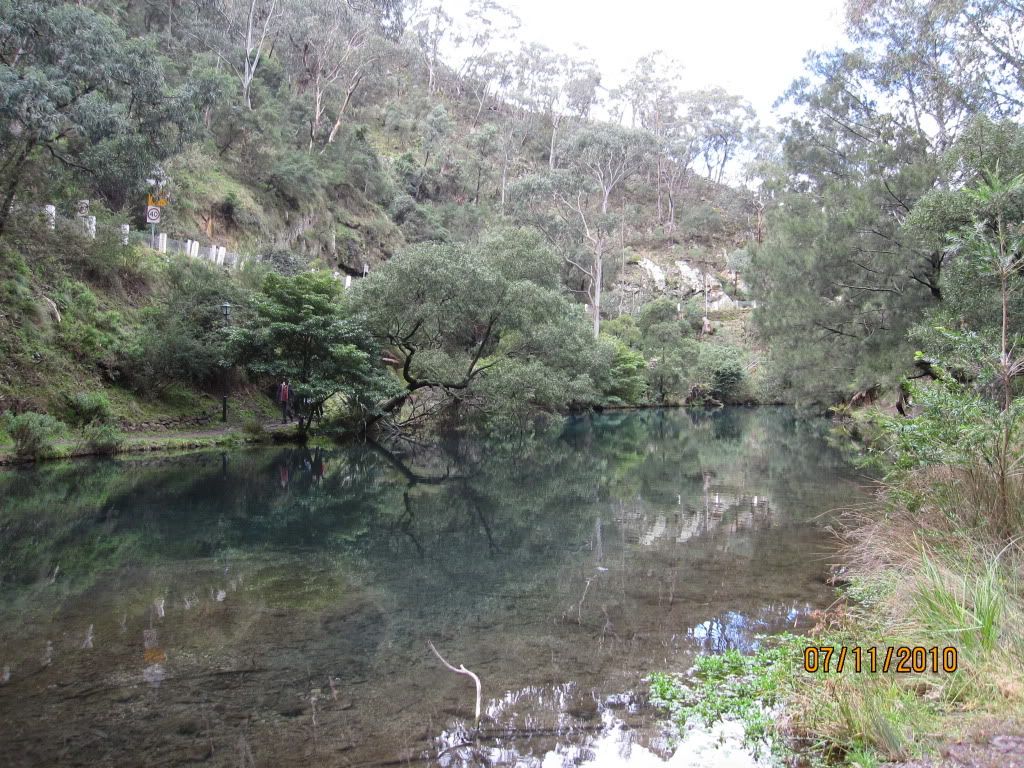
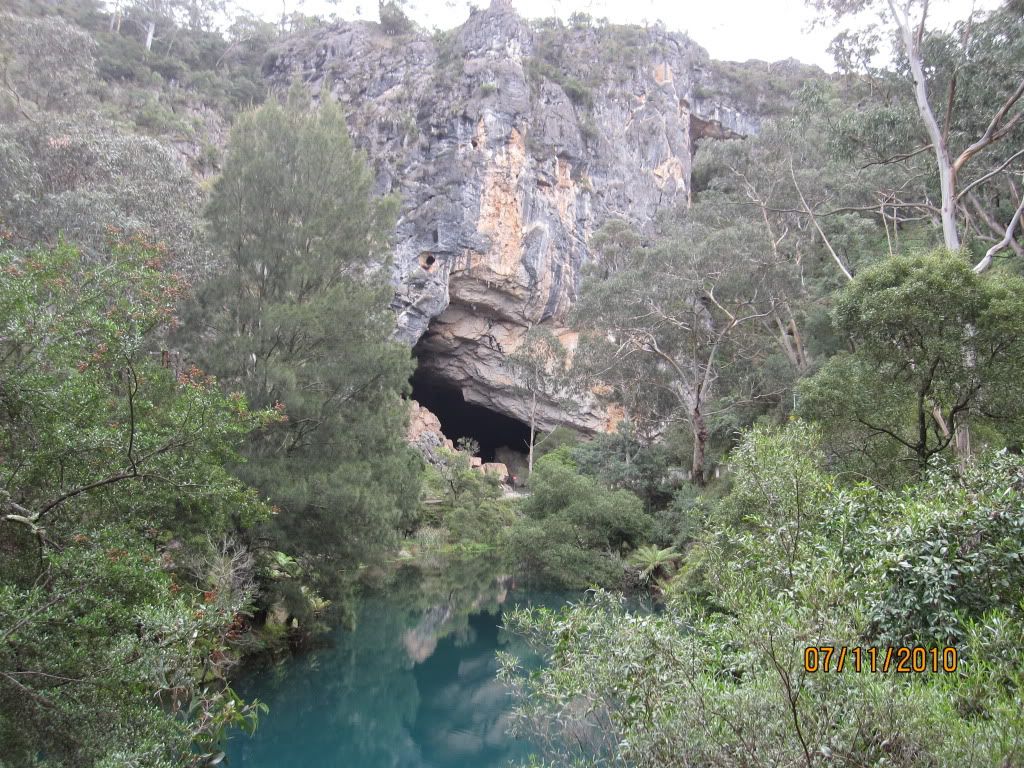
However when I went on a day trip to the popular Jenolan Caves (3 hours drive from Sydney), I spotted some nests among the bushes and trees on the bank of the nice blue lake. Saw a platypus bobbing up and down the lake but couldn't get a clear picture of it.

user posted image

user posted image
The underground river drains into the lake and carries minerals that colors the lake blue.

user posted image
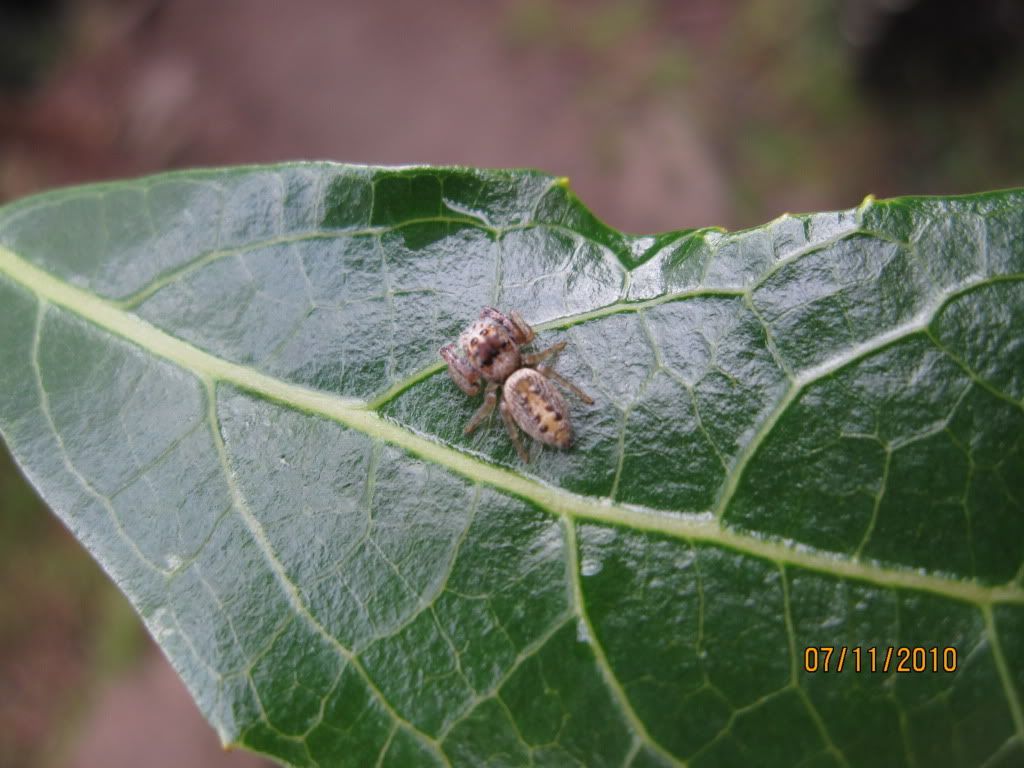
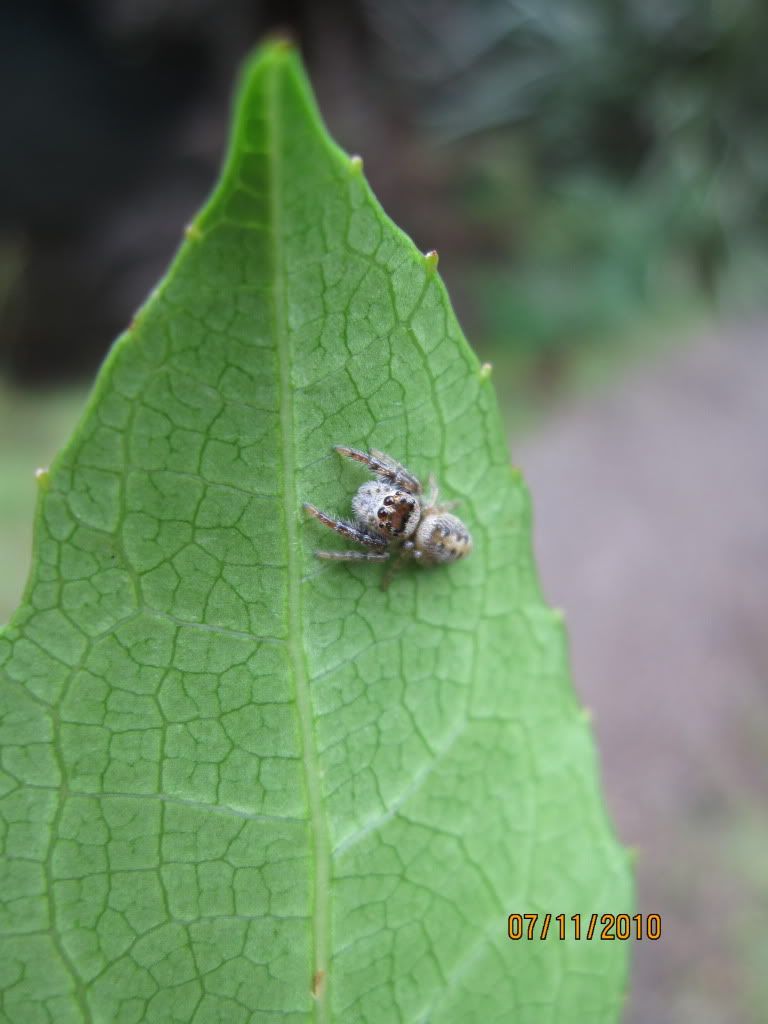
I pried open a nest and a jumper dropped out right into my hand. Perhaps it was a bit cool, but it seemed to be quite inactive and hand friendly. I liked it almost immediately. Looks like a female. Small by our standards although I'm not sure if it's fully grown yet. I have no idea how to ID it.

user posted image
Another close up. I had no vials with me, so I put it into my floss container. It's now safe and sound in a bottle here.

BTW as a followup, my Eris militaris female is still alive and kicking. She was caught as a subadult in July 2009.


Mangrovejumper
post Jul 23 2010, 08:54 AM

Getting Started
**
Junior Member
240 posts

Joined: Jan 2008
From: Seattle, WA
QUOTE(Urahinuk @ Jul 22 2010, 07:29 AM)
Today went to measure Royal's body length, was surprised to see that he is measuring at 8mm approximately.
Some new pictures to share. biggrin.gif

» Click to show Spoiler - click again to hide... «
Great size. Should try to get the genes passed along by offering some virgin females and then releasing the pregnant females nearby.
Mangrovejumper
post Aug 8 2010, 10:15 PM

Getting Started
**
Junior Member
240 posts

Joined: Jan 2008
From: Seattle, WA
QUOTE(mindstorm @ Aug 6 2010, 11:10 AM)
halo faiz, u have a beautiful hyllus diardi female there! where are u from and where did u manage to find her?

yeah, u can feed ur jumping spider daily or minimum once every 2 days.
i find my hyllus semi will eat flies, small crickets and they seem to love moths.

Make sure u let them drink water EVERYDAY. U can use a spray to mist its enclosure.
*
Faiz's Hyllus is not fully grown yet, IMHO. It will get bigger. Beautiful spider.

Nice video of H. Semi mating. I think some types of jumping spider females don't put up a fight like the Thianias do. Even golden spider (Ligurra latidens) females willingly let the males mate them.
Mangrovejumper
post Nov 7 2010, 03:47 PM

Getting Started
**
Junior Member
240 posts

Joined: Jan 2008
From: Seattle, WA
Nice job, Mindstorm. Very well done.

Rare video of Ligurra males facing off. The magic of the internet. It's now available to be shared with the world. I think the ant spider male fights are very similar in that they also try to lock the fangs and then lifting.

I wish we have video footage of the "long legs" fight and also the natural predator sequence from Seremban. It's an experience that cannot be described. Have to be seen to be believed.

This post has been edited by Mangrovejumper: Nov 7 2010, 03:55 PM
Mangrovejumper
post Mar 9 2011, 05:06 PM

Getting Started
**
Junior Member
240 posts

Joined: Jan 2008
From: Seattle, WA
QUOTE(mindstorm @ Mar 4 2011, 11:10 AM)

Added on March 5, 2011, 2:49 amstudying jumping spider(phidippus) fighting in the lab.... shocking.gif
http://www.youtube.com/watch?v=wzsOcX_P71k&feature=related
http://www.youtube.com/watch?v=zxLg-0bLVPA
*
Alrighty man. You got the genie out of the bottle. Got any you did a face off yet?

user posted image
user posted image

Any challengers for my Phidippus regius? Size about 19 mm.

Just kidding. Haha.
Mangrovejumper
post Jun 5 2011, 12:20 AM

Getting Started
**
Junior Member
240 posts

Joined: Jan 2008
From: Seattle, WA
QUOTE(Urahinuk @ Jun 4 2011, 07:30 AM)
Guys, now let's take a Close Look at the few Thiania Groups we have encountered.
I will be using the Female's Photos since i dun have the Male's Photos for most of the Thiania Groups.
Total 8 different Thiania Groups so far.. but still short of Groups of Rindaman and Genji for the Female's Photos, in fact i still dunno how their Females look like.. so i will be showing 6 Different Thiania Females now..
[attachmentid=2254500]
T.Bha
[attachmentid=2254508]
T.Black
[attachmentid=2254511]
T.Blue
[attachmentid=2254514]
T.Red
[attachmentid=2254512]
T.Cam
[attachmentid=2254516]
T.Sub
While surfing on the net for Thianias, also found this unknown Thiania Group.
Luckily found photos of both the Male and Female.. biggrin.gif

[attachmentid=2254519][attachmentid=2254520]
*
T. red looks like the same as T. sub.
Anyway, some/all of these spiders may already have been previously named. There were arachnologists of the past that
have done the research. Unfortunately, I don't think macro existed then! wink.gif

Thiania species

Thiania abdominalis Zabka, 1985 — Vietnam
Thiania aura Dyal, 1935 — Pakistan
Thiania bhamoensis Thorell, 1887 — Burma to Sumatra
Thiania cavaleriei Schenkel, 1963 — China
Thiania chrysogramma Simon, 1901 — Hong Kong
Thiania cupreonitens (Simon, 1899) — Sumatra
Thiania demissa (Thorell, 1892) — Indonesia
Thiania formosissima (Thorell, 1890) — Borneo
Thiania gazellae (Karsch, 1878) — New Guinea
Thiania humilis (Thorell, 1877) — Sulawesi
Thiania inermis (Karsch, 1897) — Hong Kong
Thiania jucunda Thorell, 1890 — Sumatra
Thiania luteobrachialis Schenkel, 1963 — China
Thiania pulcherrima C. L. Koch, 1846 — Sri Lanka, Vietnam, Malaysia, Sulawesi
Thiania sinuata Thorell, 1890 — Malaysia
Thiania suboppressa Strand, 1907 — China, Vietnam, Hawai'i
Thiania subserena Simon, 1901 — Malaysia
Thiania viscaensis Barrion & Litsinger, 1995 — Philippines

Another interesting factoid is that T. bhamoensis means "north of Burma", therefore Bhamo-ensis.

Mangrovejumper
post Jun 12 2011, 11:54 AM

Getting Started
**
Junior Member
240 posts

Joined: Jan 2008
From: Seattle, WA
QUOTE(exspiderking @ Jun 10 2011, 10:32 PM)
 
Saw the earlier post by Mangrovejumper and what struck my mind was '"Thiania bhamoensis Thorell, 1887 — Burma to Sumatra ". That means way back in 1887, Ang Mohs were hunting and probably fighting FS??? I then started to day-dream of hunting with our local Fs team and Ang Mohs in jungles in the 19th century......catching 8 mm males... nice to know that our type of FS are available from Burma to Sumatra. Well these places may be my next holiday destinations.  rclxms.gif 
*
Bear in mind that when most of those spiders were first discovered (1880 to early 1900s), the countries as we know them didn't exist.
So don't put too much weight in where the spiders came from. Spider locations do not depend on country borders.
Mangrovejumper
post Jun 22 2011, 06:13 AM

Getting Started
**
Junior Member
240 posts

Joined: Jan 2008
From: Seattle, WA
Heck of a post, Urahinuk.

You get a scientist award for your time and diligence. Thanks for the info.

Only thing I may add is, there's a belief out there that the more you feed the spiders, the faster they grow and the faster they die.
Don't know if it's true or not though.

I agree that temperature has a major influence on the growth rate and life span of jumpers, cold blooded creatures that they are. Everything is just faster when it's warm.
Mangrovejumper
post Dec 19 2011, 02:00 PM

Getting Started
**
Junior Member
240 posts

Joined: Jan 2008
From: Seattle, WA
BTL:

For getting females, I think your better option may be to find sub-adult females and let them moult in captivity. You're then guaranteed virgin females that will be receptive to mating. If you can get 10-12 subadult females, it will be a good start to your project. You won't have to worry about space because the pregnant females will typically stay in one spot.
Mangrovejumper
post Jan 15 2012, 09:01 AM

Getting Started
**
Junior Member
240 posts

Joined: Jan 2008
From: Seattle, WA
QUOTE(Spideric @ Jan 12 2012, 09:16 AM)
My 10yrs old boy said to me:"Daddy your Fs so lame,too small compare to my new ones."

user posted image
user posted image

I must learn fr him how to catch tis fella..faint lar.
Ricky
*
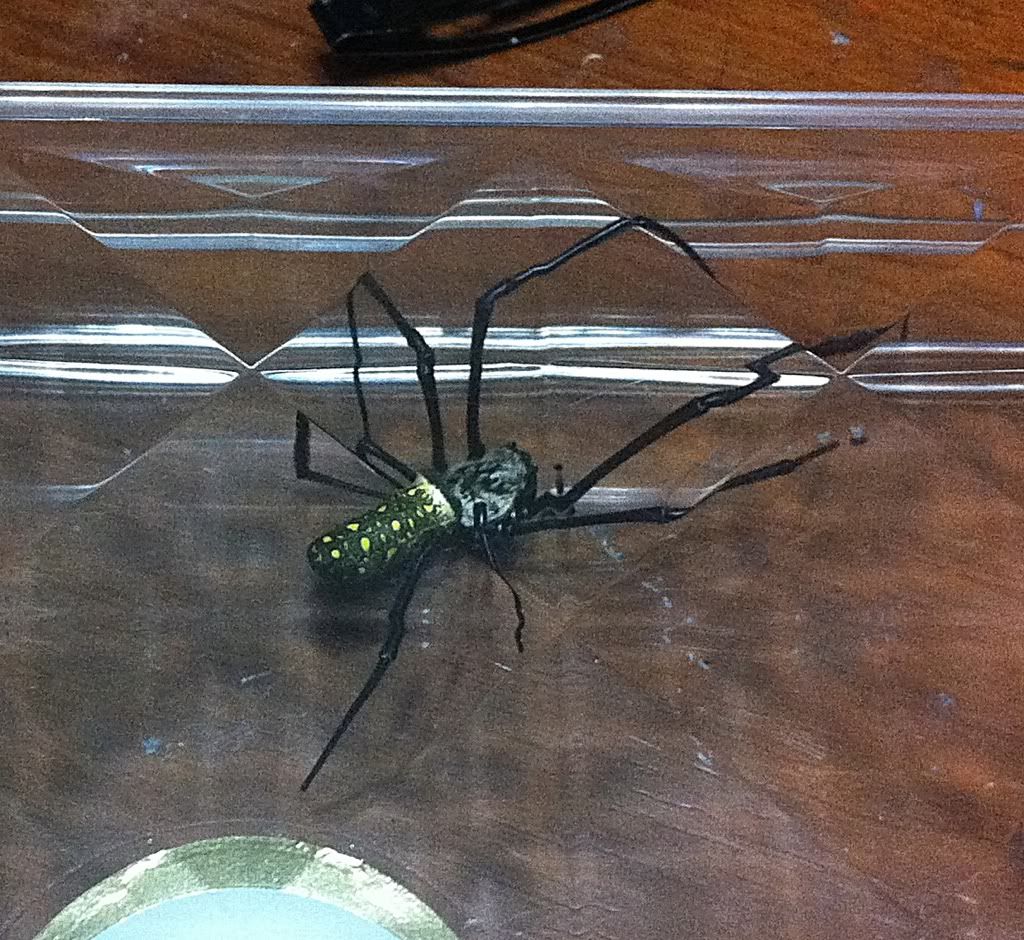
Nephila species, likely to be Nephila antipodiana.
Very big web weaver, not a jumping spider. The nests can reach up to 4 ft in diameter.

http://en.wikipedia.org/wiki/Nephila
Mangrovejumper
post Feb 13 2012, 02:13 AM

Getting Started
**
Junior Member
240 posts

Joined: Jan 2008
From: Seattle, WA
QUOTE(1dollar @ Feb 8 2012, 08:23 PM)
Pic sourced
http://greenborneo.net/Spider/Salticidae_Marpissinae.htm

Genus name : Simaetha & lingura

Thiania will not come close to these brown spiders. Have to admit that Thiania Sp are the common and easy found ones. Used to call it pandan spiders cause we always catch it in Pandan bushes.
*
1dollar:

Ligurra latidens/Spider besi/Golden spider used to be relatively common. They're no longer easy to find.
You are right that they are very fierce and will chase off most other species of similar size.

I do not know the other spiders on that page.
Mangrovejumper
post Apr 15 2012, 03:03 AM

Getting Started
**
Junior Member
240 posts

Joined: Jan 2008
From: Seattle, WA
QUOTE(viper88 @ Apr 11 2012, 11:26 PM)
Both Rhino and Cobra really top class strong TBha FS.  rclxms.gif
Their fighting will to win all the 3 round fights really really high.

For me both FS also winner because fought outstandingly reflecting the true TBha strong fighting skill.   thumbup.gif

Added on April 12, 2012, 2:54 pmT-sub physical look and fight pattern alot diff.

Both are strong T-Bha FS.
For me, T-Bha have the most amazing and exciting fights both in strong and chopster types.
Can see from the FS fighting style, both engaged in fast arm pushing, arm lock, grap, bites, strong strength and fighting will to win fights.  rclxms.gif
Both FS fought using their strength more to defeat each other.

Chopster fought differently.. they will focus most of their attack on bites to kill or injured its opponent badly when saw them at 1st sight.
*
Utility47's guess is a good one.

They're neither T-bha or T-sub. I don't think they're Thiania at all. Look at the teeth. They're totally different from the Thiania teeth structure.
I would guess they're Ligurra sp. Not Ligurra latidens, but another type of Ligurra with longer legs.
Only way to know is to ask the Armortail73 where he got them.

Compare the behaviour, angry stance and teeth structure with Mindstorm's Ligurra latidens.
Ligurra

This post has been edited by Mangrovejumper: Apr 15 2012, 03:13 AM
Mangrovejumper
post Jun 13 2012, 02:46 PM

Getting Started
**
Junior Member
240 posts

Joined: Jan 2008
From: Seattle, WA
As requested by Mindstorm, I'm adding a post on my project. Got a female brown Thiania from my last trip back.
I didn't know the female was gravid. Didn't even know if she was an adult. Lo and behold she laid 2 batches of eggs a few months ago.
The first batch dried up but the 2nd batch hatched into 20 babies.

user posted image

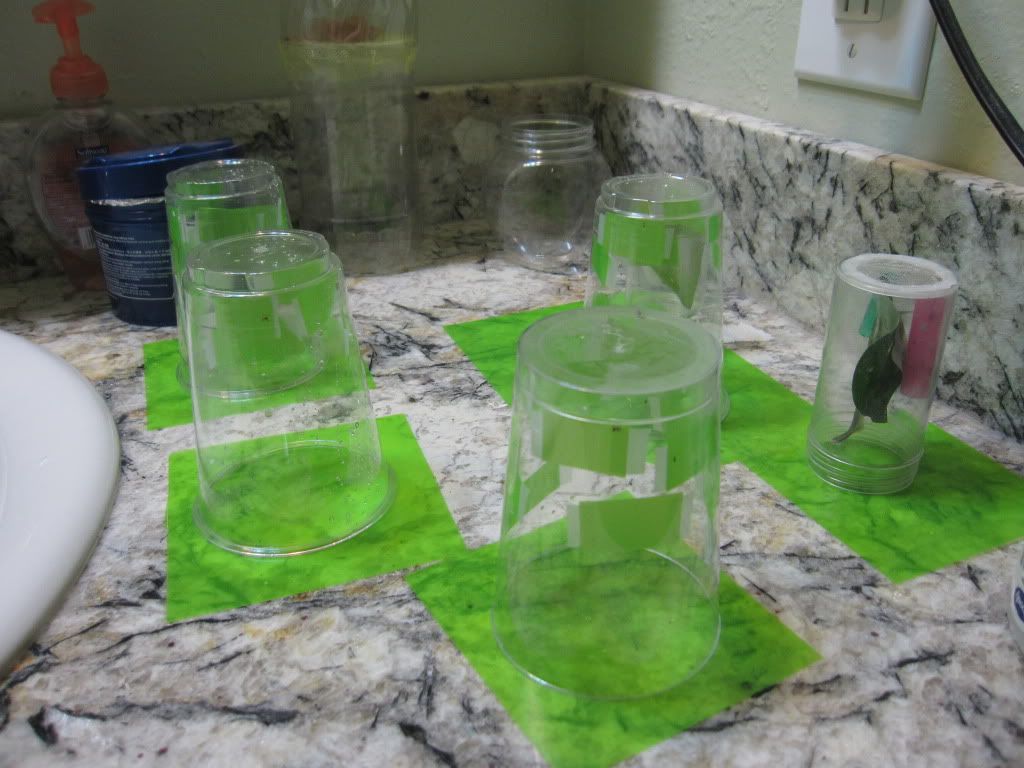
It took many days for the slings to vacate the original nest but one by one they eventually braved the world. They were sequentially transferred to disposable clear plastic cups. Using the experience of Mindstorm, I stuck hard plastic into the walls of the cups with tape. Quite artificial but works pretty well. The slings quickly recognized and hid in the slits between the plastic and the wall of the cups.

user posted image

user posted image

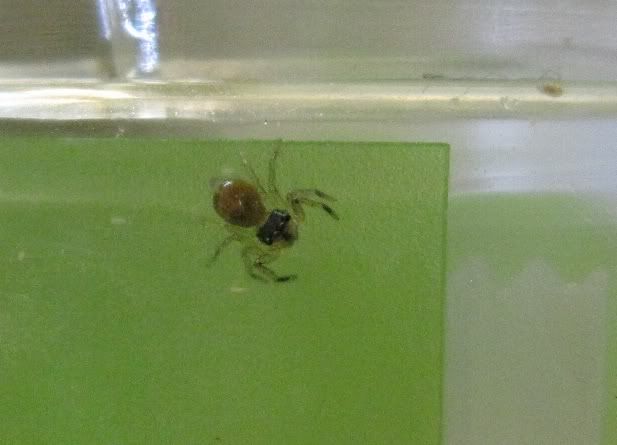
The greatest concern is obviously food. How do you find food for spiders so small? Thiania are typically not aggressive hunters, which means they are not good at hunting prey their size or bigger than them.

Fortunately, it's summer and my search out in the garden was rewarded. I found plenty of thrips flourishing in the yellow dandelion flowers. And the slings love thrips. A few days of flicking dandelion flowers over the cups to release the thrips and I have mostly fat slings.

user posted image

Since I've been keeping the slings indoors, I've found that they are only active when there is light. Best way to feed is to keep them in a dark room and turn on the lights only when ready to feed them. In that way I can manipulate the cups without the slings trying to escape. Of course, the lights must be left on for the duration of the feed to allow the slings to hunt for food.

I expect them to grow much slower here due to the cooler temperatures but as long as I have food, I should be able to keep them healthy.

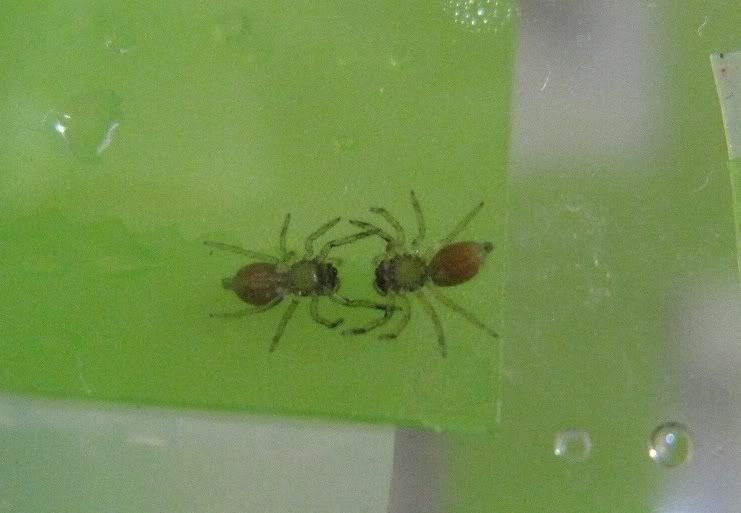
They do bicker quite a bit among each other even in the 1st instar. They will grapple first before pushing. No damage done though, as the fangs are too small to cause harm.

user posted image

Will they grow to the same size as their mother from Asia? Or will they be bigger or smaller? Time will tell.


Mangrovejumper
post Apr 25 2013, 02:24 PM

Getting Started
**
Junior Member
240 posts

Joined: Jan 2008
From: Seattle, WA
I found plenty of T. subs in Taiwan. I've not seen a T.bha there though. It's possible that T. bhas never made it to the island.
Mangrovejumper
post Jul 14 2013, 02:53 PM

Getting Started
**
Junior Member
240 posts

Joined: Jan 2008
From: Seattle, WA
This looks similar to the male counterpart of Viper's pic on April 7th (post #2871). Not 100% sure due to the phenotypic variation in color. HKC, can you macro your spider again in broad daylight instead of inside the house?
Mangrovejumper
post Jul 16 2013, 12:20 PM

Getting Started
**
Junior Member
240 posts

Joined: Jan 2008
From: Seattle, WA
There is a good chance they may be the same species, considering the size and body pattern.
Definitely not Thiania bhamoensis.

Attached Image Attached Image

Topic ClosedOptions
 

Change to:
| Lo-Fi Version
0.1446sec    0.53    7 queries    GZIP Disabled
Time is now: 4th December 2025 - 01:12 PM