

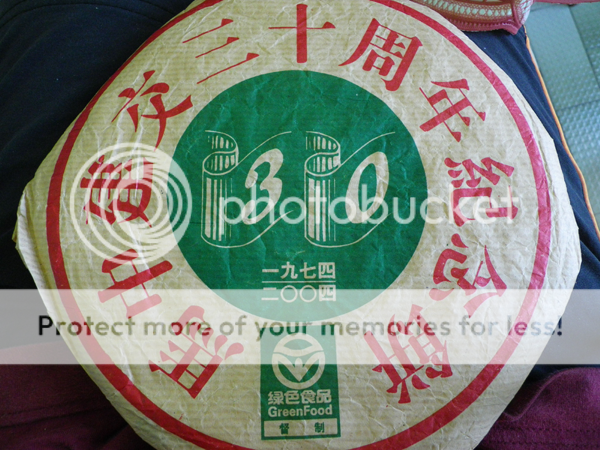
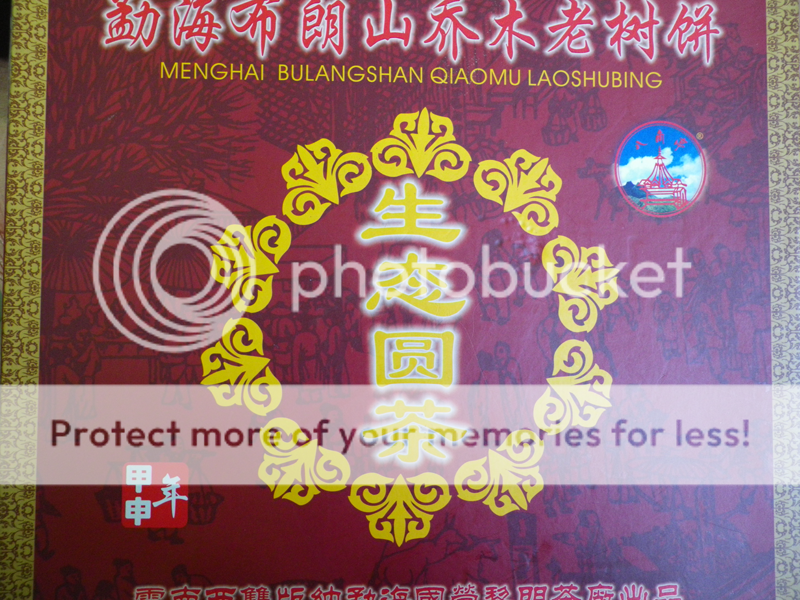
7262 (901) Ripe - 7+2

Tea (Chinese/ Oriental/ Japanese /Green), Come share your experience
|
|
 Nov 23 2010, 02:23 PM Nov 23 2010, 02:23 PM
|
 
Senior Member
1,008 posts Joined: Mar 2008 From: Kuala Lumpur  
|
How can my collection be without a popular classic like this.
7262 (901) Ripe - 7+2 |
|
|
|
|
|
Nov 23 2010, 08:35 PM
|

Junior Member
99 posts Joined: Apr 2006 From: Lurkingland
|
Good to have year partially printed on package. As I usually forget when I brought it
   |
|
|
Nov 23 2010, 11:44 PM
|
|
Senior Member
1,008 posts Joined: Mar 2008 From: Kuala Lumpur
|
I start keeping a document of when I bought my pu, price, which year, picture of the pu, etc. Easier reference in the future
|
|
|
Nov 23 2010, 11:47 PM
|
|
Junior Member
99 posts Joined: Apr 2006 From: Lurkingland
|
QUOTE(auhckw @ Nov 23 2010, 11:44 PM) I start keeping a document of when I bought my pu, price, which year, picture of the pu, etc. Easier reference in the future nice work! Well, i don't really bother much as I drank all my tea  maybe share with friend but mostly drink maybe share with friend but mostly drink  |
|
|
Nov 24 2010, 03:03 PM
|
|
Junior Member
116 posts Joined: Jul 2007
|
Wow... alot of info regarding tea here, what a good sharing..
i am not so much into chinese tea, i would prefer green tea and flower tea.. just bought 3 bottle of flower tea from the curve, loving them!!! some sharing about flower tea? |
|
|
Nov 24 2010, 03:37 PM
|
|
Senior Member
1,008 posts Joined: Mar 2008 From: Kuala Lumpur
|
QUOTE(ahfish7 @ Nov 24 2010, 03:03 PM) Wow... alot of info regarding tea here, what a good sharing.. Flower tea? as in those that will blossom out into a nice flower in the pot? I have seen it before but have never taste it before.i am not so much into chinese tea, i would prefer green tea and flower tea.. just bought 3 bottle of flower tea from the curve, loving them!!! some sharing about flower tea? What 3 bottle of flower tea that you bought? Got photo? |
|
|
|
|
|
Nov 24 2010, 04:00 PM
|
|
Junior Member
116 posts Joined: Jul 2007
|
not exactly that kind, but would like to know where u seen them and roughly how much^^
i bought chrysanthemum, good for eye as facing pc for long time. osmanthus (good for lung if not mistaken) and lavender (for relaxing), i mix this two together, so for those who dun like lavender can try too, the smell is good... and taking flower tea will not affect ur sleeping too and also a pot with burner and 3 cups, spent less than 120, not bad...haha |
|
|
Nov 24 2010, 04:27 PM
|
|
Senior Member
1,008 posts Joined: Mar 2008 From: Kuala Lumpur
|
QUOTE(ahfish7 @ Nov 24 2010, 04:00 PM) not exactly that kind, but would like to know where u seen them and roughly how much^^ I saw it at Hojo (The Gardens). They have photos taken of their flower tea, but I have never seen it in real. Price, didn't notice.i bought chrysanthemum, good for eye as facing pc for long time. osmanthus (good for lung if not mistaken) and lavender (for relaxing), i mix this two together, so for those who dun like lavender can try too, the smell is good... and taking flower tea will not affect ur sleeping too and also a pot with burner and 3 cups, spent less than 120, not bad...haha Oh, I never tried osmanthus and lavender before. Sounds girlish... haha.. Will try to get it for my wife next time. The shop you mentioned in the curve is next to watson? |
|
|
Nov 24 2010, 04:36 PM
|
|
Junior Member
116 posts Joined: Jul 2007
|
yaya...next to watson. girlish meh? haha
|
|
|
Nov 25 2010, 12:27 AM
|

Senior Member
992 posts Joined: Aug 2006 From: Bolehland
|
I got my Lavender more than 1 year ago there and I still not finish it. Haha
|
|
|
Nov 25 2010, 08:59 AM
|
|
Senior Member
1,008 posts Joined: Mar 2008 From: Kuala Lumpur
|
India's share in world tea exports declines 2% in 2005-09
http://www.thehindubusinessline.com/2010/1...12450961800.htm Kolkata, Nov. 23, 2010 Between 2005 and 2009, India's share in world tea exports declined from 15 per cent to 13 per cent, while China's share during the same period increased from 16 per cent to 19 per cent and Kenya's from 19 to 22 per cent, according to a study by the Indian Tea Association (ITA). In 2005, China pipped India to become the world's largest producer of tea. In 2009, China's export was around 300 million kg including 230 million kg of green tea as against India's 197 million kg, entirely black tea. In 2010, China's exports, according to official sources, will rise two per cent over 2009 figure. The major buyers of Indian tea are Iraq and CIS (21 per cent each), Iran and the United Arab Emirates (13 per cent), the UK and Ireland (11 per cent), Pakistan (7 per cent), the US and Canada (4 per cent), Afghanistan (4 per cent), Kenya (4 per cent), Germany and the Netherlands (3 per cent), Poland and Australia (2 per cent each) and others (7 per cent). China's major export markets are Morocco, the European Union, Japan and the US. China's exports of flower tea and fermented tea produced in South-West Yunan province are showing a downward trend, according to the country's first tea report launched by the China Social Science Academy Press. The ITA report identifies India's export bottlenecks as dominance of large producers (as much as 74 per cent) saddled with high cost structure owing to high fixed overheads and social cost, seasonality of the bulk of production (as much as 75 per cent), heavy dependence on weather with climatic variations resulting in inconsistent quality and location of tea estates being away from ports raising the transport and freight costs. India's export strategy, according to ITA, therefore should aim at increasing the ratio of value-added to bulk tea exports, increasing the unit price of both bulk and value-added tea and broad-basing the export markets instead of overdepending on a few countries. Other initiatives should include creation of infrastructure like tea parks, residue tasting laboratories, improving quality of tea, more incentives for larger production of orthodox tea including organic tea, individual scheme for exporters such as DEPB (duty entitlement pass book scheme), Vishesh Krishi and Gram Udyog Yojana, and brand-building and promotion. |
|
|
Nov 25 2010, 09:02 AM
|
|
Senior Member
1,008 posts Joined: Mar 2008 From: Kuala Lumpur
|
Chinese tea exports to increase: report
http://business.globaltimes.cn/china-econo...-11/592930.html 18 November 17 2010 China's tea exports will increase 2 percent year on year this year after exports exceeded 300,000 tonnes for the first time last year, the first China tea industry report released Wednesday here said. The China Social Science Academy Press report said China's tea planting area has reached 1.86 million hectares, about half of the world total. Representatives of Peking University, the Development and Research Center of the Fujian Provincial Government and Wuyi Academy - all organizers of the industry investigation - attended a ceremony in Wuyi Mountain in east China's Fujian Province, where much of China's tea is grown, Wednesday to mark the report's release. The report said green tea is China's most favored tea, noting that exports of the tea totaled 230,000 tonnes last year. Exports of flower tea and Pu'er tea (a fermented tea produced in southwest China's Yunnan Province) have begun to fall, the report said. China exceeded India to become the world's largest tea producer in 2005. Output reached 1.3 million tonnes last year, accounting for 31 percent of the world total. China's major tea export markets are Morocco, European Union countries, Japan and America. |
|
|
Nov 25 2010, 09:09 AM
|
|
Senior Member
1,008 posts Joined: Mar 2008 From: Kuala Lumpur
|
Pu'er may help diabetics: Research
http://news.xinhuanet.com/english2010/inde.../c_13608763.htm 2010-11-16 10:12:49 BEIJING, Nov. 16 (Xinhuanet) -- It’s well known that dark, mellow Pu'er tea reduces blood fat, lowers cholesterol, aids in weight loss and assists digestion. Research shows that regularly drinking Pu'er, made from broad leaf tea in southwest China, has additional health benefits. Experts at the recent China Pu'er Tea Festival in Shanghai reported that to some extent, Pu'er can work as secondary therapy for certain disease conditions caused by diabetes. It also indicates that Pu'er may help prevent certain cancers and diseases of aging, thus helping to prolong life. To find out more about Pu'er's effectiveness, research was carried out in Pu'er city in Yunnan Province, where virtually all China's Pu'er tea is grown. Professor Sheng Jun, vice president of Yunnan Agriculture University, said at the festival in Shanghai that for one year 520 patients drank 1g "instant" Pu'er with 200ml water three times a day, half an hour before meals. Results showed drinking the tea helped relieve symptoms of more than 70 percent of patients with dyslipidemia, an abnormal amount of lipids (cholesterol and/or fat) in the blood, which usually leads to diabetes. As for patients with a positive albuminuria index, about 40 percent of them showed a negative index after drinking Pu'er tea for one year. Almost all of the patients with high blood fat and cholesterol had reduced symptoms. Surprisingly, according to Sheng, the patients showed increased high-density lipoprotein cholesterol (good cholesterol) and decreased low-density lipoprotein cholesterol (bad cholesterol) at the end of the research. And the changes started to occur after three months of drinking. "Most of the drugs we use to lower cholesterol today decrease both good and bad cholesterol at the same time," says Sheng. "It is quite interesting to find that Pu'er can work in the ideal way of increasing the good while decreasing the bad." He says Pu'er tea also effectively reduces some complications of diabetes, citing a recent experiment in mice by Professor Zhang Wensheng at the Resource Institute of Beijing Normal University. His research found that Pu'er helped diabetic mice lose weight and prevent damage to kidneys and brain function (learning and memory), both common side effects of diabetes. But Zhang reported that blood sugar is only found decreased in blood sugar two hours after dinner, while remaining the same in blood sugar on an empty stomach. Thus, drinking it after a meal appeared more effective than drinking on an empty stomach. Green tea is widely known as an antioxidant that helps prevent cancer. Pu'er tea has also been shown to possibly help prevent lung cancer and prolong the lives of lung cancer patients, according to Professor Luo Ying of the College of Life Science and Technology at the Kunming University of Science and Technology. She released results of her latest mouse experiment at an experts forum at the tea festival. Genetic mutation of P53 gene is widely accepted as a major trigger of lung cancer caused by smoking and passive smoking. Pu'er was found to restrict the genetic mutation and induce apoptosis (disintegration or cell death) of the cancer cells but do no harm to normal cells, according to Luo's experiment on both cells in mice that drank Pu'er tea. "Of course, quitting smoking is the most effective way to prevent cancer, yet most people cannot manage it," said Luo. "Drinking Pu'er tea may be a good intervention." Regular daily drinking of Pu'er was is enough to prevent genetic mutation in the mice, while the amount needed for cancer patients is not known, Luo said. Research is expected to continue and focus on other cancers as well. Sheng, from the Yunnan Agriculture University, advises drinking 3g instant Pu'er powder in warm water daily, three times a day, half an hour before meals. As for tea bricks and loose tea, he says 5g tea leaves could be cooked in 300ml water for five minutes each time. Fermented tea is better than raw tea as it is milder on the stomach lining. Like wine, Pu'er tea smells better over time. It is most beneficial with long-time storage for fermenting, at least 10 years, says Sheng. Modern technology can also ferment good tea in a far shorter time. Since Shanghai is damp, tea bricks should be stored in an airy place; it is placed in a box, the cover should be open. It should not be stored in the refrigerator. Since Pu'er tea is considered "warm" (yang energy) in traditional Chinese medicine, some people may suffer excessive internal "heat" with symptoms such as thirst and dry lips. Drinking more water helps relieve symptoms. A very few people, about 1-2 percent, may get headaches after drinking Pu'er, but symptoms usually disappear after a week of drinking, according to Sheng. (Source: Shanghai Daily) |
|
|
|
|
|
Nov 25 2010, 07:47 PM
|
|
Senior Member
992 posts Joined: Aug 2006 From: Bolehland
|
QUOTE(auhckw @ Nov 25 2010, 09:09 AM) Pu'er may help diabetics: Research This is true. I know of a person whose diabetes are gone after he started drinking ripe puer tea. Now he is a tea seller in Ipoh.http://news.xinhuanet.com/english2010/inde.../c_13608763.htm (Source: Shanghai Daily) |
|
|
Nov 25 2010, 11:21 PM
|
|
Senior Member
1,008 posts Joined: Mar 2008 From: Kuala Lumpur
|
Supper for today...
  |
|
|
Nov 26 2010, 07:48 AM
|
|
Senior Member
1,008 posts Joined: Mar 2008 From: Kuala Lumpur
|
The most expensive tea bag has 280 diamonds on it and costs about $12,000.
http://www.omg-facts.com/view/Facts/19577 Nov 20, 2010 11:00 PM  This was designed in celebration of UK tea company PG Tips’ 75th birthday in 2005. As a promotion, they had a contest, and participants could win the diamond-studded tea bag estimated at about £7,500 (roughly $12,000). According to spokesman Pete Harbour “As it's our 75th birthday, we wanted to do something special to remind people just how much they love the great British cup of tea." Runners-up received a limited edition teapot and a year’s supply. No word yet on how the diamond-studded tea tasted. |
|
|
Nov 26 2010, 07:53 AM
|
|
Senior Member
1,008 posts Joined: Mar 2008 From: Kuala Lumpur
|
Expensive Da Hong Pao
http://www.facebook.com/note.php?note_id=1...22691978&ref=mf The most expensive tea in the world is the original Da Hong Pao (Big Red Robe) from Wuyi China. In 2002, 20 grams of Da Hong Pao sold for 180,000 RMB, which is approximately £16,000 ($23,000 US). In 2004, this same quantity sold for 166,000 RMB, or about £14,500 ($21,000 US). The original Da Hong Pao tea trees are over 350 years old. The tea has only been available for a public auction sale three times (1998, 2002 and 2004). Previously, it has only been offered to leaders of government, emperors, religious leaders, etc. In 1972, Mao Zedong gave President Richard Nixon 50 grams of this tea during his visit to China. As the story goes, Nixon was apparently insulted with such a "small" gift. That is, until someone pointed out that 50 grams represented 50% of all the Da Hong Pao harvested that year. Fortunately for tea connoiseurs, cuttings (i.e. genetic clones) of Da Hong Pao have been taken from the original plants and grown commercially. Due to this clonal propagation, "secondary" Da Hong Pao tea is readily available at an affordable price to everyday consumers. http://red-luxury.com/2010/09/29/chinas-la...-rare-tea-rage/ Looking for the world’s most expensive tea for your sipping pleasure…or perhaps to invest? The most expensive tea in the world is the original Da Hong Pao (known as Big Red Robe) from Wuyi, China. A form of Oolong tea, it is one of the most famous Chinese teas with an intriguing legend. As the legend has it — the mother of a Ming Dynasty emperor was cured of an illness by a certain tea, and the emperor sent great red robes to clothe the four bushes from which that tea came from. The tea was first produced on Wuyi Mountain in the north of China’s Fujian Province. Da Hong Pao’s attraction is its rarity. The authentic Da Hong Pao comes from cuttings of three of the original Da Hong Pao Tea trees that are still living on Wuyi Mountain and are believed to date back to the Song Dynasty (960-1279). Some of the tea harvested go directly to the President of China while the rest are sold at auction. In 2002, 20 grams (about 2/3 of an ounce) of Da Hong Pao sold for 180,000 RMB or about US$23,000 at the time. The tea has only been available for public auction three times in 1998, 2002 and 2004. Previously, it has only been offered to leaders of government, emperors, and religious leaders. According to some reports, Mao Zedong gave President Richard Nixon 50 grams of Da Hong Pao during his visit to China in 1972. As the story goes, Nixon was apparently insulted with such a “small” gift. That is, until someone pointed out that 50 grams represented 50% of all the Da Hong Pao harvested that year. Recently CCTV, the Chinese state television, reported that Da Hong Pao is becoming a hot commodity in China. Since last year, “prices of certain types of Da Hong Pao have increased tenfold. According to one expert interviewed by CCTV, the wholesale price for mid-range varieties of the tea has risen from between 200 and 400 yuan to around 4,000 yuan per kilogram, with retail prices reaching 20,000 yuan or more. CCTV found one retail shop in the Fujian city of Xiamen that claimed to be selling one variety for 200,000 yuan, or roughly $30,000, per kilogram.” Like anything rare…fine wine, art, and cars…wealthy connoisseurs will pay top money, as will investors. Looking to diversify from the uncertain real estate and stock markets, eager Chinese investors have found their latest investment rage in this rare tea. The real Da Hong Pao is not sold in regular market. Fortunately for tea lovers, you can find grades of Da Hong Pao for your sipping pleasure. The quality of the leaves is graded depending on how close to the original trees those trees are located with the best grades commanding top prices. |
|
|
Nov 27 2010, 04:11 PM
|

Senior Member
1,744 posts Joined: Nov 2007
|
QUOTE(ahfish7 @ Nov 24 2010, 04:00 PM) not exactly that kind, but would like to know where u seen them and roughly how much^^ thhe osmanthus can be used to make desserts too?how does it taste like?i bought chrysanthemum, good for eye as facing pc for long time. osmanthus (good for lung if not mistaken) and lavender (for relaxing), i mix this two together, so for those who dun like lavender can try too, the smell is good... and taking flower tea will not affect ur sleeping too and also a pot with burner and 3 cups, spent less than 120, not bad...haha |
|
|
Nov 27 2010, 05:19 PM
|

Junior Member
63 posts Joined: May 2010
|
I prefer chinese tea. u can try '' long jin cha'' or ''tien guan ying''
|
|
|
Nov 28 2010, 06:22 AM
|

Senior Member
1,346 posts Joined: Sep 2007
|
Went to Mines Exhibition for the Sixth SEA Pu-Er Trade Fair yesterday and bought myself 1 carton (10pcs) + 2 pcs 2010 Lincang raw Pu-er (临沧永德大雪山原生茶) and also 2pcs of 2003 Yaole raw Pu-Er (攸乐古茶)
Here about Linchang raw pu-er article (in chinese) - http://www.lctea.gov.cn/plus/view.php?aid=526 I have had chance to test Lincang raw Pu-er for an hour. The 2010 Lincang raw Pu-er's taste is not as good as 2008 Yihu raw Pu-er when you first taste it, but the after taste (韵味) is really good (甘甜)  This post has been edited by auronthas: Nov 28 2010, 06:27 AM |
| Change to: |  0.0204sec 0.0204sec
 0.63 0.63
 6 queries 6 queries
 GZIP Disabled GZIP Disabled
Time is now: 9th December 2025 - 06:19 PM |
 Quote
Quote