

3D IN HOME WILL death sooner if the hardware price is not go down.This is main reason is still slow selling on 3D hardware in U.S.
3D Technology, Come n share
3D Technology, Come n share
|
|
 Nov 13 2010, 04:34 PM Nov 13 2010, 04:34 PM
Return to original view | Post
#1
|
 
Junior Member
39 posts Joined: May 2007  
|
3D IN HOME WILL death sooner if the hardware price is not go down.This is main reason is still slow selling on 3D hardware in U.S.
|
|
|
Nov 14 2010, 07:53 AM
Return to original view | Post
#2
|
|
Junior Member
39 posts Joined: May 2007
|
QUOTE(writesimply @ Nov 14 2010, 12:29 AM) You might wanna have your eyes looked at. Especially before Tron Legacy, since most of that film will be light and dark. For you info...It's not about the contrast between light and dark scenes. Each 3D installation has its own convergence setting. The projectionist can set it by himself but usually it's best not to meddle with it since it would have been calibrated beforehand. While I do notice the lack of depth is more prevalent in the morning show times than afternoons and evenings (the digital projector could be slow to warming up), each 3D film will ALWAYS have a sense of depth in any given scene. you just have to know where to look. In the case of Sammy's Adventures, it's everywhere! You only use silver screen with RealD 3D systems. You don't need it with Dolby 3D Digital. RealD polarizes light for the left and right images; therefore it needs a silver screen that can maintain the polarization before it gets to your eyes. Dolby separates each RGB color into their own frequencies which is why it doesn't need a silver screen; in fact, a silver screen may make a Dolby installation look horrible. If our cinemas want to maintain the screen but increase the lumens, they need to install TWO Dolby 3D Digital projectors per hall. RealD installation has to balance between the projector and the silver screen to increase lumens but avoiding hot spots. 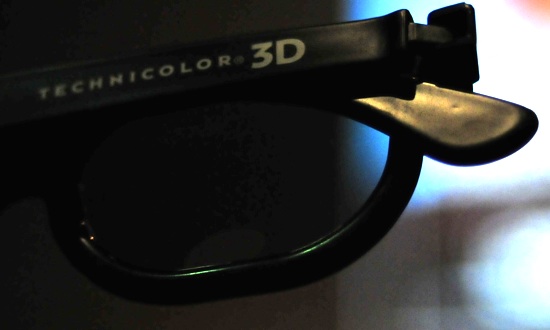 Technicolor has also introduced their method of showing 3D but using regular 35mm. The hall MUST have a silver screen but not a digital projector. The 35mm frame is divided into left and right eye images, stacked on top of each other. Using a Technicolor special split lens - which polarizes the light for left and right images, the projector will be able to show 3D. Technicolor does not deem this as a 3D digital replacement but more like a buffer for cinema chains that already have silver screens but are on waiting lists for digital projectors or can't afford one.   I definitely think that upgrading the equipment would be advisable. Maybe the Technicolor solution would work well in Malaysia, seeing how cheap-skate theater chains are. At. Home. Die. Does. The. Why. It. Selling. Slowly. Delete. Delete. Delete. It's not selling well because Americans, who are still wary about the economy, are not ready to pay its premium price. If the price is high but they can still afford it, they'd buy it. That's why the retailers are cutting down prices like mad over there for Black Friday. Content is also lacking. But it is hoped that next year more content will come to homes in terms of 3D channels, 3D games (the potential is enormous) and non-exclusive 3D BDs. fuad 3D is already adopted long time history ago and has FAILED in marketing segment. Because consumer dont need such a "3D" content to be view at home. Invest a high money in owning 3D hardware is not reasonable at this moment. You go to AVscience forum.What are the AV expert say about this 3D thing? |
|
|
Nov 14 2010, 02:49 PM
Return to original view | Post
#3
|
|
Junior Member
39 posts Joined: May 2007
|
Why 3D TV is just a pointless gimmick
According to the industry, 3D is the next big thing. TV manufacturers are chomping at the bit to sell us new monitors. Sky is planning a huge 3D blitz this year, including the launch of a dedicated 3D TV channel. Games are an obvious contender for the 3D treatment, thanks to the fact that they have all the data they need to produce an effective world already built in. Verily, the planet is on the cusp of an incredible 3D revolution and we should all be excited! But I'm not. To hell with 3D. If I could change one thing about the cinema-going experience – other than shooting bloody Pearl & Dean into the sun – it would be to watch every blockbuster in IMAX. That would be a genuine improvement. 3D is just another gimmick, right down there with Smell-O-Vision, electric shocks coming through the seat, vibrating cinema chairs and, of course, the last 17 times that the industry has tried to make 3D into the Next Big Thing. And we still don't need it. I've never, ever seen a 3D movie that so much as breathed softly on my socks, never mind blew them off. Realistically, the technology offers exactly two tricks of note. There's the annoying one, as demonstrated in Monsters vs Aliens, which opens with a guy batting a ball at the screen just to go, 'Ooooh! 3D in your face!' If I never see that trick again, it'll be too soon. The other one, which is largely pushing the 3D revolution, is all about adding depth to scenes. This trick can work, I'll admit, and it can also be effective. You definitely notice it – especially in a film such as Avatar – but, more importantly, you can actively not notice it and still get some benefit, which is what really matters. At least, in theory. Expensive headaches The problem is that, for all the potential benefits, 3D just seems to be Hollywood's most expensive way to give me a headache, even including the Bourne movies and the continued acting career of Shia LaBeouf. Yes, this is probably just a question of my rubbish eyes, all maggoty with astigmatism and myopia as they are, but I don't care. By the end of Avatar's seven-hour running time, my whole face felt as though someone had just opened the Ark of the Covenant over on the next row. My eyes oozed blood and gooey eyeball juice into my popcorn. Still, at least it stopped anyone else from stealing any. Even before that point, though, Avatar only gave me about five minutes of genuine 3D 'Oooh!' before the effect faded, as any effect inevitably does. From that point on, the glasses, the popping tricks and the background shimmer – in fact, all the pieces of technology that were meant to be immersing me in the action – served only as a constant lingering reminder that I wasn't in fact on a distant jungle planet with lots of sexy blue people, but in a cinema and in need of some aspirin. The trade-off simply wasn't worth it, especially when coupled with the dark tint that the obnoxious 3D glasses put over all the film's beautiful bright colours. Also, the film was a bit rubbish. Even watching great 3D movies, such as Pixar's Up, I've never been able to settle in and just enjoy the film or get completely lost in the action, not with every background shimmering away like a desert mirage and each character popping into the screen. I quite often lift up the glasses just to compare the two images and every time it's the same: any power that the 3D version of the film has ultimately comes from the 2D version being exquisitely made. I've never wanted for that extra half a dimension as much as I craved the brighter colours and a lack of intense eye-trauma after leaving the cinema. The industry wants 3D Of course, it's no wonder that the industry desperately wants 3D technology to be a big deal. Right now, it's the only real benefit cinemas can offer over home theatre systems, aside from ever-more obnoxious advertising and snot-smeared pick 'n' mix. Looking ahead, hardware companies see it as the next big reason to make us all upgrade our kit. And good for them. It's still not an upgrade I can see myself rushing out to make, or can imagine recommending anyone else to go and do likewise. When we finally get TVs that can add that illusion of depth without needing glasses, we'll have a genuine step forward. Until then, it's just a gimmick – an effect we'll all get accustomed to and subsequently bored of in a couple of weeks. If anything, the best thing for 3D would be for it to stay as popular as it is now – an occasional treat for people who like it, something that's to be savoured and allowed to maintain what power it has. Taking it mainstream can only ruin the effect in ways that my astigmatism and quick-drying contact lenses can only dream of – and you can bet that losing the magic won't come cheap. |
| Change to: |  0.0191sec 0.0191sec
 0.48 0.48
 7 queries 7 queries
 GZIP Disabled GZIP Disabled
Time is now: 5th December 2025 - 11:50 AM |
 Quote
Quote