

A boxing glove like thing on matured male's pedipalph
If im nt mistaken its use to store the sperm b4 mating with female
Tarantula Thread V11, Either you love em or hate em
Tarantula Thread V11, Either you love em or hate em
|
|
 Jun 12 2009, 08:44 PM Jun 12 2009, 08:44 PM
|
 
Senior Member
2,313 posts Joined: May 2008   
|
A boxing glove like thing on matured male's pedipalph
If im nt mistaken its use to store the sperm b4 mating with female |
|
|
|
|
|
Jun 12 2009, 09:44 PM
|

Junior Member
502 posts Joined: May 2009
|
Are tarantulas communal?
This post has been edited by HyourinMaru: Jun 12 2009, 09:45 PM |
|
|
Jun 12 2009, 09:46 PM
|

Senior Member
984 posts Joined: Feb 2006 From: Here and There.
|
Depends on what sp you're talking about.
|
|
|
Jun 12 2009, 09:47 PM
|
|
Junior Member
502 posts Joined: May 2009
|
OBT and Brachypelma Albopilosum?
|
|
|
Jun 12 2009, 09:51 PM
|
|
Senior Member
984 posts Joined: Feb 2006 From: Here and There.
|
OBT, Avics , Pokies.. and some other that I don't know ;P.
|
|
|
Jun 12 2009, 09:55 PM
|
|
Junior Member
235 posts Joined: Sep 2008 
|
aphonopelma seemani comunal?
|
|
|
|
|
|
Jun 12 2009, 09:58 PM
|
|
Junior Member
502 posts Joined: May 2009
|
Hmm...I read this somewhere about communality of scorpion is that some sp. can more tolerate others than other sp..So Ts also the same?
|
|
|
Jun 12 2009, 10:46 PM
|

Newbie
0 posts Joined: Apr 2009 From: Roseville, California
|
QUOTE(HyourinMaru @ Jun 12 2009, 06:58 AM) Hmm...I read this somewhere about communality of scorpion is that some sp. can more tolerate others than other sp..So Ts also the same? Yeah, there have been keepers that have setup communal tanks, but just a handful of T species. So far the trick is to find sac mates. I've heard it done with some pokies, avics, Holethele incei and the famous chicken spider is also rumored to be communal. There was also someone who tried to do a communal tank experiment with a bunch of rare/expensive t's (don't remember the species). Don't know how that one turned out. This post has been edited by Oldfart: Jun 12 2009, 10:47 PM |
|
|
Jun 12 2009, 10:48 PM
|
|
Junior Member
502 posts Joined: May 2009
|
So the best is separate them...Dun wan any cannibalism happen
 |
|
|
Jun 12 2009, 11:17 PM
|

Junior Member
34 posts Joined: Jun 2009
|
guys, i c u all say dat we should remove watever left after de Ts ate n i dint c anything left inside... I feed my Ts v mealworms. Arent they jst suck de juice from it?
|
|
|
Jun 12 2009, 11:41 PM
|
|
Newbie
0 posts Joined: Apr 2009 From: Roseville, California
|
QUOTE(*FallenAngel* @ Jun 12 2009, 08:17 AM) guys, i c u all say dat we should remove watever left after de Ts ate n i dint c anything left inside... I feed my Ts v mealworms. Arent they jst suck de juice from it? T's secrete enzymes that reduce their prey's flesh into a soupy cocktail that they drink. Not everything is reduced though so you do end up with a small ball of leftovers which can be hard to see on the substrate surface. Here's a pic of a juvie P. regalis almost done with its meal. Even in its fangs, it's barely recognizable. Before  And after... 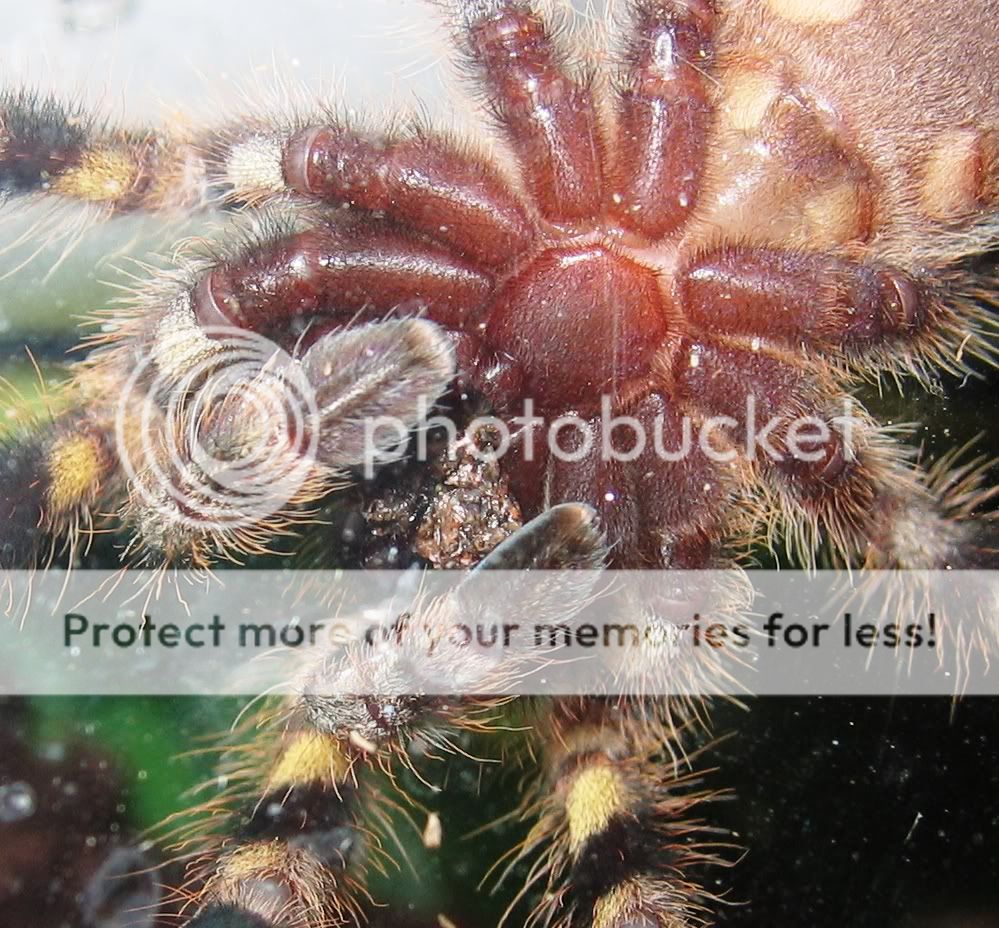 |
|
|
Jun 13 2009, 01:41 AM
|

Junior Member
19 posts Joined: Mar 2009
|
true
 remove the leftover 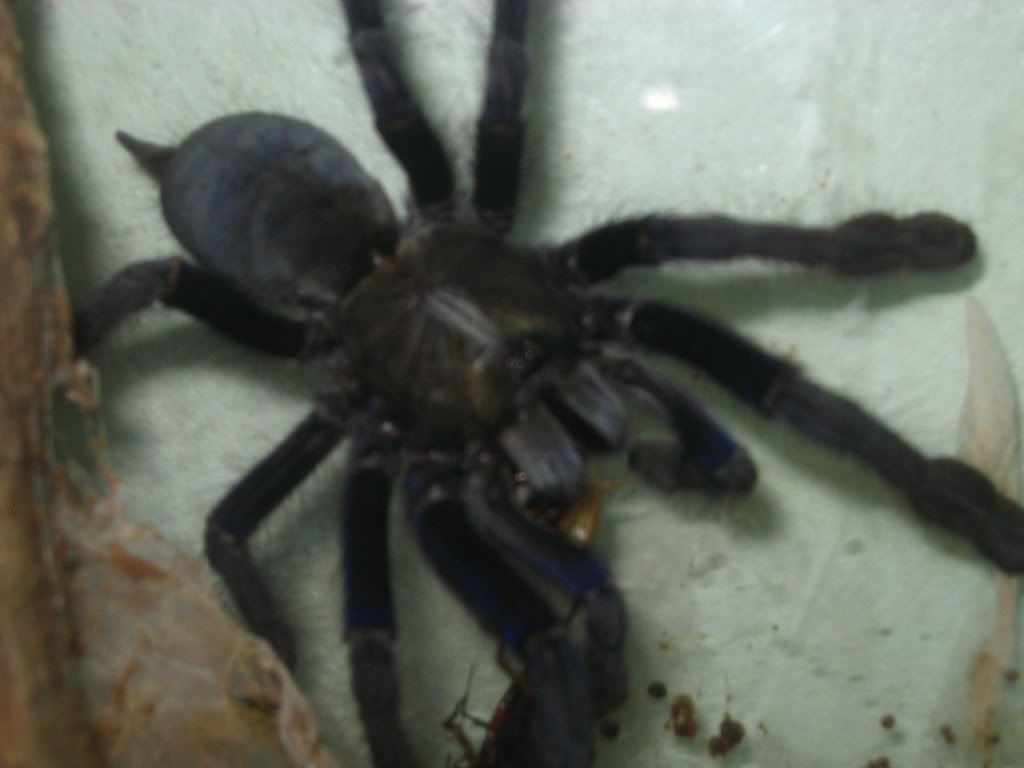 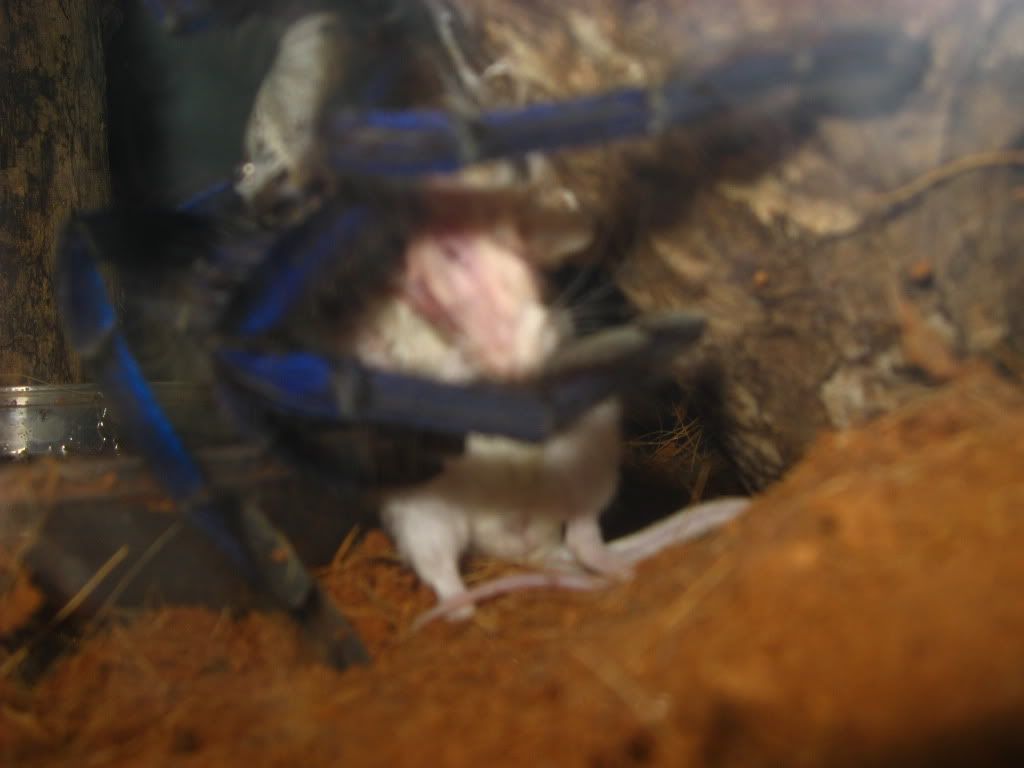 |
|
|
Jun 13 2009, 02:07 AM
|
|
Junior Member
34 posts Joined: Jun 2009
|
QUOTE(aros @ Jun 13 2009, 01:41 AM) true kk, thx guys... learn my lessons... hehe... will try hard 2 find de leftover... remove the leftover |
|
|
|
|
|
Jun 13 2009, 05:27 AM
|
|
Newbie
0 posts Joined: Apr 2009 From: Roseville, California
|
QUOTE(*FallenAngel* @ Jun 12 2009, 11:07 AM) kk, thx guys... learn my lessons... hehe... will try hard 2 find de leftover... Actually, I wasn't telling you to remove the leftover, just trying to show you what the leftovers look like. I suspect a mealworm bolus is even smaller and harder to find. Personally I rarely remove the bolus from my enclosures. My eyesight is so bad I have a hard time finding it.  If you can be bothered to remove what's left, kudos to you! If you can be bothered to remove what's left, kudos to you!  I do remove uneaten dead crickets though. It is recommended that you remove uneaten stuff and the boluses as they can attract mites and/or grow fungus. But the choice is yours- I have not had any problems leaving the boluses in there other than the occasional fungus (these I can see!) But if you ever feed your T's a mouse like my friend Aros I do remove uneaten dead crickets though. It is recommended that you remove uneaten stuff and the boluses as they can attract mites and/or grow fungus. But the choice is yours- I have not had any problems leaving the boluses in there other than the occasional fungus (these I can see!) But if you ever feed your T's a mouse like my friend Aros  , I'd definitely recommend removing what's left. , I'd definitely recommend removing what's left.  |
|
|
Jun 13 2009, 06:29 AM
|
|
Junior Member
235 posts Joined: Sep 2008
|
QUOTE(Oldfart @ Jun 13 2009, 12:41 AM) T's secrete enzymes that reduce their prey's flesh into a soupy cocktail that they drink. Not everything is reduced though so you do end up with a small ball of leftovers which can be hard to see on the substrate surface. Here's a pic of a juvie P. regalis almost done with its meal. Even in its fangs, it's barely recognizable. female?Before And after... |
|
|
Jun 13 2009, 07:10 AM
|
|
Newbie
0 posts Joined: Apr 2009 From: Roseville, California
|
QUOTE(junshern222 @ Jun 12 2009, 03:29 PM) female? Nope- male.  Got four pokies- all turned out male! Got four pokies- all turned out male!  |
|
|
Jun 13 2009, 07:32 AM
|

Senior Member
1,111 posts Joined: Jan 2005 From: somewhere in the universe
|
Just wondering something, since T's can endure for not eating for a long period, does that apply to the sling too ? i mean not in the period of molting of course. Given an example that a sling abdomen is still bigger than its head. Is it ok to not feeding it til its abdomen get a bit smaller?
|
|
|
Jun 13 2009, 08:20 AM
|
|
Junior Member
235 posts Joined: Sep 2008
|
well,i will not feed her so frequent as to prevent rupture or bursting of abdomen,may be i will try one week one cricket drumstick for slings and a week a cricket for adults or juvenile
|
|
|
Jun 13 2009, 11:46 PM
|

Junior Member
49 posts Joined: Oct 2008 From: Malaysia / USA / Scorpion Land
|
one Brachypelma Smithi sling molted
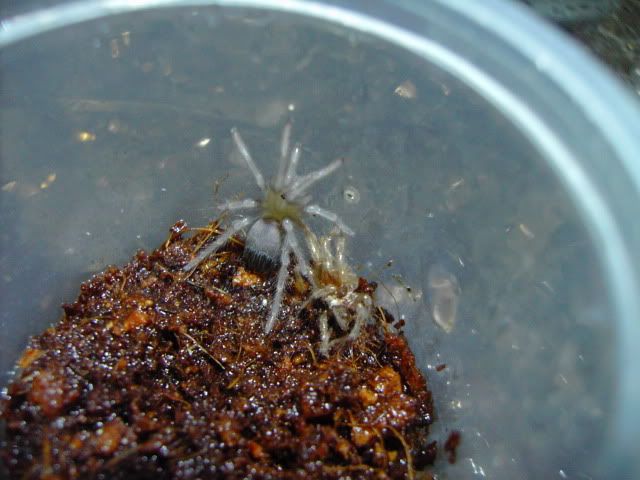 one Pterinochilus Murinus molted 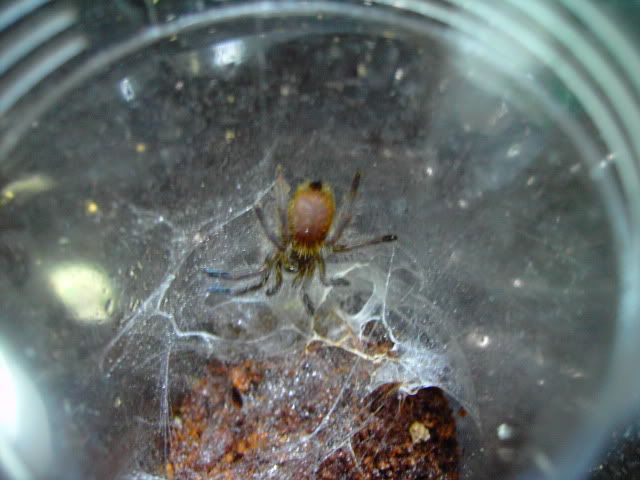 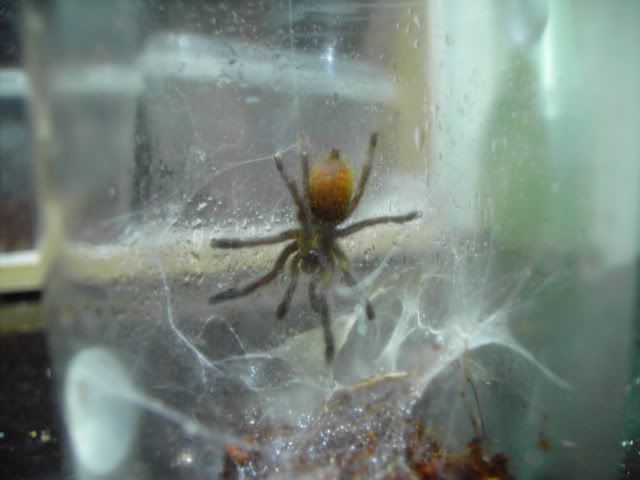 |
|
|
Jun 13 2009, 11:54 PM
|
|
Junior Member
19 posts Joined: Mar 2009
|
congrats, its getting more velvety and the other is just more tangeriney. lol
|
|
Topic ClosedOptions
|
| Change to: |  0.0194sec 0.0194sec
 0.74 0.74
 6 queries 6 queries
 GZIP Disabled GZIP Disabled
Time is now: 9th December 2025 - 02:57 PM |
 Quote
Quote